
view point
Can Obi Break Tinubu’s Incumbency, and Can Northern Alliances Unseat Jagaban?

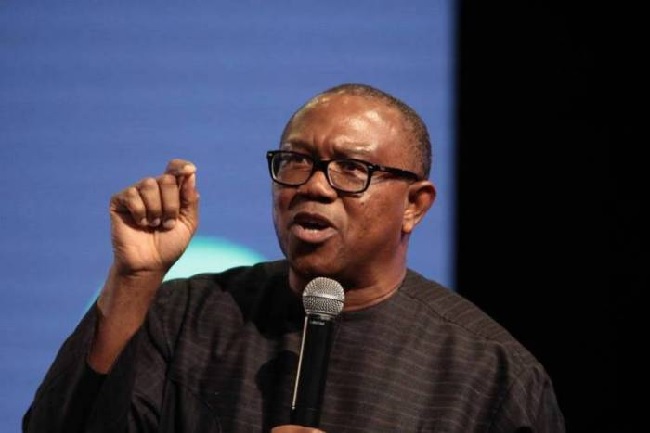
By Daniel Nduka Okonkwo
As Nigeria gradually moves toward the 2027 presidential election, political conversations across the country are increasingly dominated by one central question: Can opposition forces rally strongly enough to defeat incumbent President Bola Ahmed Tinubu and the ruling All Progressives Congress?
At the heart of the debate stands Peter Obi, the former Labour Party presidential candidate whose unexpected rise in the 2023 elections transformed Nigeria’s political landscape and galvanized millions of young voters under the now-famous “Obidient” movement.
Political analysts, party strategists, and civil society observers remain sharply divided over Obi’s chances.
While supporters insist that the worsening economic realities facing many Nigerians have strengthened his appeal, critics argue that defeating an incumbent president backed by Nigeria’s powerful political machinery remains an enormous challenge.For many Nigerians, the current political climate is being shaped largely by economic realities. Rising inflation, fuel subsidy removal, currency instability, and the increasing cost of living have generated frustration across several regions of the country.
Supporters of Obi believe these conditions may significantly reshape voter behavior ahead of 2027. They argue that public dissatisfaction with economic hardship could strengthen the appetite for alternative leadership, particularly among young voters and urban populations that already formed the backbone of Obi’s support base during the 2023 elections.
Obi’s image as a disciplined manager and businessman continues to resonate with sections of the electorate seeking economic reforms, accountability, and transparent governance.
However, public frustration alone may not automatically translate into electoral victory. Nigeria’s elections are historically influenced not only by popularity but also by political structures, grassroots mobilization, regional alliances, and elite negotiations.
Perhaps the most decisive factor in the 2027 calculations is that Obi’s path to victory may depend heavily on building a formidable Northern alliance capable of weakening the APC’s traditional dominance in the region.
Some political observers argue that a Southern candidate paired with a credible Northern political figure could create a competitive national ticket capable of challenging the ruling party. Obi’s reported openness to serving only a single term is also viewed by some analysts as a strategic attempt to reassure Northern stakeholders concerned about power rotation.
Political watchers are closely monitoring efforts by Obi and allied political actors to consolidate opposition forces under a more coordinated national structure.
Still, questions remain over whether such alliances can move beyond elite negotiations and translate into actual electoral strength across Nigeria’s diverse voting blocs.
Despite growing opposition discussions, the APC continues to project confidence.
Party loyalists insist that President Tinubu’s incumbency advantage, combined with the APC’s nationwide political structure, remains a powerful electoral weapon. The ruling party retains significant influence through governors, federal appointments, party networks, and institutional leverage that have historically provided strong advantages during elections.
Supporters of the administration also argue that some of the government’s economic reforms may begin yielding measurable results before the next election cycle. They point to gradual improvements in foreign exchange management, agricultural initiatives, and investment policies as possible factors that could improve public perception before 2027.
The Presidency has repeatedly dismissed claims that opposition coalitions pose a serious threat to the Tinubu-Shettima ticket, maintaining that fragmented opposition parties lack the cohesion necessary to defeat the APC.
While Obi remains one of Nigeria’s most visible opposition figures, questions persist over whether popularity on social media alone can guarantee electoral success.
He still faces difficulties expanding his influence in parts of Northern rural communities, where voting patterns are often shaped by long-established political structures, religious considerations, and local alliances.
Obi’s relatively calm and gentlemanly political approach may struggle against the aggressive and highly strategic political culture traditionally associated with Nigerian power politics.
Political commentators have previously warned that, without a united and strategic coalition, opposition forces could suffer what some describe as a “humiliating defeat.”
There are also arguments from some conservative Northern circles questioning whether Obi’s business background and investments in breweries may limit his appeal among certain demographics in the region. Although supporters dismiss such criticisms as politically motivated, they remain part of the wider political conversation ahead of the election. Nigerian political analysis
Across political camps, one point of consensus appears increasingly clear: the 2027 presidential race is likely to become one of Nigeria’s fiercest democratic contests in recent history.
Whether President Tinubu secures re-election or Peter Obi emerges as the face of a united opposition may ultimately depend on several critical factors, including economic realities, voter turnout, coalition-building, Northern alliances, grassroots mobilization, and the opposition’s ability to avoid fragmentation.
For now, Nigeria’s political atmosphere remains fluid, unpredictable, and intensely competitive.
As political maneuvering accelerates and alliances continue to evolve, the road to 2027 is shaping into a defining contest not only about personalities and political parties, but also about the future direction of Africa’s largest democracy.
Nigerians want credible leaders who will fulfill their campaign promises and build a greater Nigeria founded on unity, fairness, security, and opportunity for all. Nigerians are not asking for too much. They simply want leaders who will govern responsibly, improve living conditions, and place national interest above personal or political interests.
Daniel Nduka Okonkwo is a Nigerian investigative journalist, publisher of Profiles International, human rights advocate, and policy analyst whose work focuses on governance, institutional accountability, and political power.

By Abujah Racheal
Malaria elimination in West Africa is no longer hindered by a lack of solutions, but by execution.
Validated strategies and tools exist; the focus, stakeholders say, must now be on immediate, widespread deployment.
At the 27th Ordinary Session of the Assembly of Health Ministers of the Economic Community of West African States (ECOWAS), held in Freetown, the malaria question took centre stage.
Behind the formal speeches, technical presentations, and policy frameworks, one message echoed: West Africa does not lack plans; it struggles to consistently implement them.
Tales from the grassroots expose the menace of malaria and the urgency of evolving from promises to action.
In a small, dust-swept village in Kebbi State, 27-year-old Malama Maimuna Salisu watches her two-year-old son, Shehu, shiver under a thin blanket, his body burning with malaria fever.
In spite of repeated campaigns and the distribution of insecticide-treated nets, the realities of daily life often get in the way.
The heat makes the nets uncomfortable; the nearest primary healthcare centre is far; transport costs eat into the family’s modest farming income.
For Salisu, malaria is not just a disease, it is a cycle.
Her son is one of the nearly 110 million clinically diagnosed malaria cases recorded annually in Nigeria.
Records indicate that Nigeria carries the heaviest malaria burden globally, accounting for about a quarter of all cases and nearly a third of deaths worldwide.
In West Africa alone, Nigeria represents more than half of reported cases.
Malaria is responsible for more than 36 per cent of under-five mortality in Nigeria, with more than 300,000 deaths recorded each year.
For families like Salisu’s, repeated infections drain household income, reduce productivity, and deepen poverty.
At a nearby primary healthcare centre, community health worker Mrs Ruth Bala sees the consequences every day.
“We know the preventive methods, but behavioural change is slow, and resources are limited.
“We see too many children like Shehu when it could have been prevented,” Bala said.
Her experience reflects a broader reality across rural communities, where awareness exists, but access, affordability, and social factors continue to undermine progress.
With nearly 97 per cent of Nigerians at risk and a child dying every five minutes from malaria, the scale of the challenge remains staggering.
It is against this backdrop that regional leaders gathered in Freetown recently.
Speaking on behalf of the President of Sierra Leone at the Opening session, the Chief Minister, Dr David Sengeh, called for a shift from commitments to measurable results, highlighting malaria and maternal mortality as urgent priorities.
For Sierra Leone’s Minister of Health, Dr Austin Demby, the message was clear: “We have all we need to eradicate malaria; there is no reason why we should not; the time to end it is now.”
At the centre of discussions was a renewed push for coordinated regional action.
The West African Health Organisation (WAHO), led by Dr Melchior Aissi, Director-General of WAHO, emphasised that malaria could not be tackled in isolation.
The Regional Malaria Elimination Framework, presented by Dr Virgil Lokossou, Director of Healthcare Services at the West African Health Organisation (WAHO), sets ambitious targets, including a 90 per cent reduction in malaria incidence and elimination in at least three countries by 2035.
Complementing this is the Freetown Charter, introduced by Sattie Kenneth, which promotes real-time data systems and stronger accountability in health governance.
Back in Nigeria, new interventions are beginning to emerge.
The rollout of the R21 malaria vaccine in states like Kebbi and Bayelsa offers a glimmer of hope, particularly for children like Shehu.
Yet, for many families, access remains uneven, and the gap between innovation and impact persists.
One of the most pressing concerns raised during the assembly was sustainability.
Mr Aruna Fallah, Acting Director for Administration and Finance, WAHO, pointed to the risks of continued reliance on donor funding.
At the same time, the technical and financial partners, Mr Dionke Fofana, Lead of the WAHO partner, called for stronger domestic investment and institutional stability.
Without it, experts warn, progress may stall.
Increasingly, experts are recognising that malaria control is not just technical, it is deeply social.
Dr Monique Murindahabi, senior public health expert specialising in malaria control and elimination in Africa, highlighted the need to integrate community realities into interventions, from engaging traditional leaders to addressing gender dynamics and behavioural barriers.
Experts say, ultimately, the success of any intervention depends on whether it is accepted and used.
As Dr Alie Wurie, Director of Primary Health Care at the Ministry of Health and Sanitation (MOHS) in Sierra Leone, noted, cross-border surveillance and coordinated responses are essential in tackling malaria and emerging resistance.
As the meeting concluded, commitments were renewed and frameworks adopted.
But the real work lies ahead.
As Prof. Charles Senessie, Deputy Minister of Health, Sierra Leone, observed, the region had an opportunity to align ambition with action.
For Salisu in Kebbi, success will not be measured by declarations in Freetown.
It will be measured by whether her son survives, and thrives.
There is a consensus that ending malaria in West Africa will require more than plans; it will demand consistent action, sustained investment, and health systems that reach even the most remote communities.
Until that happens, analysts argue that the distance between policy and people will remain, and children like Shehu will continue to pay the price. (NAN)

By Isaac Asabor
Artificial intelligence has become the lightning rod of modern creativity. In every corner of the literary and publishing world, debates rage about whether AI-generated text undermines the craft of writing or democratizes it. Critics often frame AI as a looming threat, a machine poised to churn out endless streams of soulless prose, leaving human writers obsolete.
Yet this criticism frequently stems from a misunderstanding of how AI technology works and a misplaced fear of devaluation, rather than an objective assessment of its output.The truth is simpler, and more empowering: AI is not a replacement for writers, it is a tool that magnifies their abilities.
But here is the catch: to use AI effectively, one must already possess strong writing skills. Without them, AI becomes a blunt instrument, producing generic, uninspired text. With them, however, AI transforms into a powerful assistant that can elevate creativity, streamline workflows, and expand the boundaries of storytelling.This article explores why foundational writing skills are essential for effective AI usage, and why the future of writing belongs not to machines, but to those who know how to wield them.
At the heart of AI usage lies a deceptively simple concept: prompt engineering. This is the art of communicating with an AI model through carefully crafted instructions. A prompt is not just a command; it is a miniature act of writing.
Those with strong writing skills excel at prompt engineering because they understand clarity, context, and nuance. They know how to frame a question, set a tone, and provide the right level of detail. For example, a vague prompt like “Write about history” will yield a bland, surface-level response. But a precise prompt such as “Write a 500-word essay on how the printing press transformed political discourse in 16th-century Europe, focusing on its role in democratizing access to information” produces a far richer, more targeted output.
This ability to guide the AI mirrors the skills of a seasoned editor directing a junior writer. The AI can generate words, but only a skilled human can steer those words toward meaning. In this sense, writing ability becomes the key that unlocks AI’s potential.
Even the most advanced AI models struggle with certain aspects of writing: logical structure, emotional depth, and contextual awareness. AI can mimic style, but it cannot truly feel. It can generate plausible arguments, but it often lacks the subtlety of human judgment.
This is where expert editing comes in. Writers act as the sculptors of AI drafts, refining raw material into polished art. They identify gaps in logic, smooth transitions, and inject genuine emotion. Without this intervention, AI-generated text risks sounding robotic, repetitive, or hollow.
Consider a scenario where AI produces a draft of motivational speech. The sentences may be grammatically correct and even inspiring at first glance, but they often lack rhythm, cadence, and emotional resonance. A skilled writer can transform that draft into something memorable by adjusting phrasing, adding anecdotes, and weaving in rhetorical devices.
So, editing is not just about fixing mistakes, it is about imbuing text with humanity. And that is something no algorithm can replicate.
However, for critics who are growingly becoming concerned in the digital age of what is now mockingly been referred to as “AI pollution”, they cannot be blamed to be. People are unduly afraid that AI will replace writing because it excels at mimicking the structure of writing, such as speed, grammar, and volume, while humans often underestimate the irreplaceable value of lived experience, emotional truth, and original thought in their own work. While generative AI can produce basic, formulaic content, it cannot replicate the human “spark” that creates authentic, deeply resonant, and memorable writing.
In fact, AI technology has unduly been blamed, but the phenomenon critics blame it for occurs when users treat AI as a replacement rather than as an assistant, or rather as a writing tool just the way a mathematician uses a calculator or four figure table. Good and skilled writers know when to accept an AI suggestion and when to discard it. They can spot clichés, challenge assumptions, and push the narrative into fresh territory.
In this way, writers serve as the “quality control” mechanism of AI-generated content. Without them, the digital landscape risks becoming a wasteland of statistical word predictions. With them, AI becomes a tool for originality rather than conformity.
AI models are powerful, but they are not infallible. They can “hallucinate”, producing fictional facts or misrepresenting information. They can reflect biases embedded in their training data. They can generate text that sounds authoritative but is subtly misleading. Writers with strong language skills are better equipped to recognize these limitations. They understand nuance, context, and the importance of accuracy. They know how to fact-check, cross-reference, and ensure that tone aligns with purpose.
For example, an AI might confidently assert that a historical figure lived in a certain year, when in fact the dates are wrong. In fact, it might be prompted to write about Nigerian president, and it would write about late president Muhammadu Buhari in the stead of writing about Nigeria’s current president, Bola Ahmed Tinubu. Caught in the foregoing situation or similar situation, a writer with research skills will catch the error and correct it. Similarly, AI might produce content that unintentionally perpetuates stereotypes. A thoughtful writer will recognize the bias and adjust the narrative. In this sense, writers act as guardians of truth in the age of AI. They ensure that technology serves knowledge rather than distorts it.
Be that as it may, it is expedient to opine in this context that AI is a creative partner, not a rival. In fact, the fear that AI will replace human creativity is misplaced. Creativity is not just about generating words, it is about connecting ideas, emotions, and experiences in ways that resonate with others. AI cannot replicate lived experience, cultural context, or personal perspective. Instead, AI functions best as a creative partner. It can brainstorm ideas, suggest alternative phrasings, or help overcome writer’s block. It can fix grammar, polish syntax, and provide inspiration. But it cannot replace the spark of human imagination.
Think of AI as a co-pilot in the writing process. It can handle routine tasks, freeing writers to focus on higher-order thinking. It can accelerate drafting, but the writer remains the driver of narrative. The relationship is symbiotic, not competitive.
In fact, the emerging consensus among experts is clear: AI assists the writer, not the other way around. The future of writing will be hybrid, blending machine efficiency with human creativity. In this future, strong writing skills will be more valuable than ever. Writers who understand the craft will be able to harness AI to amplify their voices, expand their reach, and explore new genres. Those without such skills will struggle, producing generic content that fails to stand out.
This shift mirrors other technological revolutions. Just as photographers adapted to digital cameras and musicians embraced digital recording, writers must learn to integrate AI into their workflows. Technology does not eliminate the craft, it evolves it.
Without a doubt, AI poses no threat to a good and skilled writer as writing skills remain the compass in the ongoing AI era. In fact, the debate about AI and writing often misses the point. The question is not whether AI will replace writers, but whether writers will learn to use AI effectively. And the answer depends on writing skills. This is as prompt engineering, editing, judgment, and fact-checking all require a deep understanding of language. Without these skills, AI becomes a liability. With them, AI becomes a powerful ally.
Critics who fear the devaluation of writing overlook this reality. AI does not diminish the craft, it rewards it. Those who master writing will find themselves better equipped to harness AI, while those who neglect the craft will be left behind.
In the end, AI is not the enemy of writers. It is a mirror that reflects their skill. The stronger the writer, the more powerful the tool. And that is why, in the age of AI, writing skills are not optional; they are essential.
By Daniel Nduka Okonkwo
For decades, citizens endured the tyranny of a broken electricity system, an aging national grid crippled by corruption, debt, and chronic neglect. Nigerians were forced to buy their own transformers for their residences, while businesses hemorrhaged billions of naira on diesel.
Across the country, survival depended on what many now describe as the “generator economy,” a costly and unsustainable substitute for reliable public power.In a country where billions have been poured into a faltering national grid, the decision to install a ₦10 billion solar mini-grid at the Presidential Villa is more than a technical upgrade. It is a symbolic rupture.
It signals that even the seat of power no longer trusts the system meant to electrify the nation. What was once dismissed as theory, renewable energy as a lifeline, is now a practical and urgent reality in Nigeria. The Villa’s raison d’être to solar is both an indictment of failed privatization and a declaration that the future of power lies beyond the grid.More than a technical upgrade, the move sends a powerful signal. If the seat of government can abandon unreliable grid power, then institutions, industries, and communities across the country can do the same.
Nigeria’s electricity sector is under immense strain. The national grid, much of it built over half a century ago, suffers from weak transmission infrastructure, outdated equipment, and inadequate maintenance. Frequent system collapses, several recorded in early 2026 alone, have left millions without consistent access to power.
An estimated 90 million Nigerians remain unconnected to the grid, while those with access often receive only a few hours of electricity daily, sometimes enduring outages that stretch for days.
Small and medium-sized enterprises, the backbone of the economy, face soaring operational costs and reduced productivity due to unreliable power supply. Households struggle with rising fuel expenses as they depend on petrol and diesel generators to meet basic energy needs. For many families, persistent outages mean spoiled food, disrupted routines, and a general decline in quality of life.
Critical sectors are equally affected. Hospitals face interruptions that threaten patient care, while schools experience disruptions that undermine learning outcomes. In northern regions, where extreme heat has intensified, the absence of reliable electricity compounds already difficult living conditions.
At the institutional level, privately operated generation and distribution companies remain burdened by debts exceeding ₦6.8 trillion, alongside technical and operational limitations that hinder effective service delivery. Unlike Nigeria’s telecommunications sector, which prioritizes continuous investment and maintenance, the power sector has often transferred infrastructure responsibilities to already burdened communities.
The Federal Government has begun prioritizing renewable energy as a pathway to stability and growth. In the 2025 fiscal framework, ₦500 billion has been allocated for the solarization of public institutions, alongside ₦70 billion dedicated to solar mini-grids in universities.
International partnerships are also playing a critical role. A 750 million dollar World Bank-backed program aims to provide distributed solar electricity to approximately 17.5 million Nigerians, particularly in underserved and off-grid communities. In parallel, a 400 million dollar investment is being directed toward developing local solar manufacturing capacity, an effort that could reduce import dependence while creating jobs and strengthening the domestic energy value chain.
These initiatives reflect a deliberate move away from a centralized, fragile grid toward decentralized energy solutions. Mini-grids and standalone solar systems are emerging as viable alternatives, capable of delivering reliable electricity directly to homes, businesses, and institutions without relying on overstretched national infrastructure.
The solarization of the Presidential Villa is, at its core, both practical and symbolic.
Practically, it demonstrates the cost-saving potential of renewable energy by reducing long-term expenditure on diesel and maintenance. Symbolically, it represents a shift in governance, an acknowledgment that the existing system can no longer meet the country’s needs.
For ordinary Nigerians, this transition carries significant implications. Reduced dependence on diesel generators could lower energy costs, improve air quality, and enhance public health. Reliable electricity would support economic productivity, enable small businesses to thrive, and improve living standards across urban and rural communities alike.
The collapse of the traditional power system has exposed decades of systemic failure, but it has also created an opportunity for transformation. Renewable energy, particularly solar, offers a pathway not only to energy security but also to economic resilience and environmental sustainability.
Sustained investment, regulatory reform, and transparent implementation will determine whether these ambitious initiatives translate into real and lasting change. Without accountability and technical capacity, even the most promising policies risk falling short.
Yet, if successfully implemented, the current shift could mark the beginning of a new era, one in which access to reliable electricity is no longer a privilege, but a standard.
For millions of Nigerians, energy is more than infrastructure. It is opportunity, dignity, and survival.
Transitioning to solar and decentralized power is more than an energy shift. It is a declaration of resilience, innovation, and hope. By harnessing the boundless light above us, nations can illuminate pathways to prosperity, empower communities, and secure a sustainable future. The dawn is no longer a promise deferred; it is a reality within reach. As this new age of light unfolds, it carries with it the assurance that progress, equity, and opportunity will shine on every corner of the land.
Daniel Nduka Okonkwo is a Nigerian investigative journalist, publisher of Profiles International Human Rights Advocate, and policy analyst whose work focuses on governance, institutional accountability, and political power. He is also a human rights activist, human rights advocate, and human rights journalist. His reporting and analysis have appeared in Sahara Reporters, African Defence Forum, Daily Intel Newspapers, Opinion Nigeria, African Angle, and other international media platforms. He writes from Nigeria and can be reached at dan.okonkwo.73@gmail.com.




Letting Di’ja Go Was Most Difficult Decision of My Career – Don Jazzy
ShareRecord producer and music executive, Michael Collins Ajereh, popularly known as Don Jazzy, has revealed that letting former Mavin artist,...

Can Obi Break Tinubu’s Incumbency, and Can Northern Alliances Unseat Jagaban?
ShareBy Daniel Nduka Okonkwo As Nigeria gradually moves toward the 2027 presidential election, political conversations across the country are increasingly...


Excellence Award and Alia’s Transformational Impact for Greater Benue
ShareBy Bridget Tikyaa Just last week, Accolades Dynamics Limited bestowed an award of excellence for Governor Hyacinth Alia on his...


Alia: 60 Years of Purposeful Life, Leadership
ShareRev. Fr Hyacinth Iormem Alia is marking his 60 years today in this wonderful world. It has been 60 years...

Happy Birthday to a Visionary Leader
ShareYour Excellency, Rev. Fr. Dr. Hyacinth Iormem Alia (Asortar ù Tiv) Today, history pauses; not merely to count years, but...
Gov Alia Believes in High Standards and Capability in Leadership of Benue State – Iorpev
ShareThe Technical Adviser to Benue State Governor on Media, Publicity and Strategic Communication, Chief Solomon Terver Iorpev, spoke with our...
2027: Mags Picks NDC Nomination Form for Bogoro-Dass-Tafawa-Balewa Constituency
ShareFrom Ajiya Ayuba, Bauchi A businessman, Isaiah Alhamdu Mags on Thursday picked nomination form under the platform of the Nigeria...


PenCom Clears PFAs to Invest in Dangote Refinery’s $50bn IPO
ShareBy Tony Obiechina, Abuja The National Pension Commission (PenCom) has granted Pension Fund Administrators (PFAs) a special regulatory waiver permitting...
Tinubu Calls for Unity, Fair Play as APC Begins Primaries Today
ShareBy David Torough, Abuja President Bola Tinubu has called on members of the All Progressives Congress (APC) to uphold unity,...


Antiquity Protection Unit, Panacea for Museum’s Risk Management
ShareBy Tahirm Zakari According to ICOM, Museum is not-for-profit, permanent institution in the service of society that researches, collects, conserves, interprets, and...