
NEWS
Excellence Award and Alia’s Transformational Impact for Greater Benue

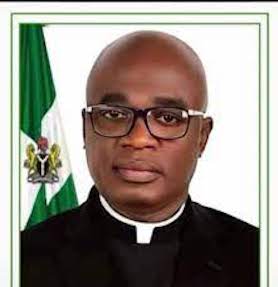
By Bridget Tikyaa
Just last week, Accolades Dynamics Limited bestowed an award of excellence for Governor Hyacinth Alia on his infrastructure revolution and impactful economic development of Benue State. To discerning minds, this is a recognition well deserved.
A recognition of impact and commitment to turning the sordid history of Benue State, which was run aground by the immediate past administration of the state. In fact, the governor, on assumption of duty in 2023, described the situation in the state as very dire, but was quick to make a commitment: “My administration will not fail the Benue people. A lot of things went wrong in the State, but my government is here to rebuild and make it better for all.”This he has been doing boldly, without doubt. So, when the Governor won the Accolade Yellow Ball award as the best Governor in Infrastructure and Economic Development, it was an apt recognition of a leader who has vowed to raise Benue from the doldrums, a leader whose commitment to greater Benue is etched on solid infrastructure, human capital development, entrepreneurship, industrial revival, agricultural and educational transformation,a vibrant healthcare system, among others.
Those who issued the award said, under the leadership of Hyacinth Alia, Benue State has witnessed a remarkable wave of infrastructural renewal aimed at reconnecting communities and stimulating economic growth.
The recognised has massive road construction and urban renewal projects across the state, the completion and ongoing construction of dozens of intra city roads in Makurdi and other major towns, as well as hundreds of kilometers of rural road networks, bridges, and drainage systems designed to mitigate flooding, improve transportation, trade, and access to essential services.
Justifying the award further, they stated that the Governor’s infrastructure drive has transformed public facilities and government institutions through the renovation of schools, public offices, and key state structures, pointing out projects such as the Makurdi and Gboko underpasses, modernization of the State Secretariat, and rehabilitation of critical public infrastructure that reflect his vision of giving Benue a modern and functional outlook.
In all these, they were right because Governor Alia’s administration has been quite busy with several major infrastructure projects in Benue State. Some notable ones include over 390km of roads under construction across the 23 Local Government Areas, with 16 township roads completed and 25 more underway in Makurdi. There is also the multi-billion Naira Cancer Centre being built at the Benue State University Teaching Hospital, and the Otobi Water works in Benue South Senatorial District, which has been completed.
In the education sector, the government is undertaking the renovation and construction of schools, including a new university at Ihugh in Vandeikya LGA, as well as the massive recruitment and training of teachers.
In the area of industrialisation, the governor has revitalised the Benue Brewery Limited, producers of Zeva Premier Beer, the Benue Fruit Company, and the Taraku oil mill.
In digital transformation, three key digital platforms have been introduced: Benue State Geographic Information System (BENGIS) Portal, Electronic Document Management System (EDMS), and Benue Youth Startup and Innovation Support Portal.
These projects and more aim to improve access to healthcare, education, and public utilities while boosting economic growth and mobility in the state.
Governor Alia’s administration has also been working on several other initiatives to boost Benue State’s economic development. In agriculture, the government has subsidized fertilizers, provided tractors at affordable rates, and launched initiatives to boost agricultural productivity, aiming to restore Benue’s national lead as an agro-industrial hub.
Security and job creation are at the heart of any development. These are being pursued relentlessly. The dire security situation in the state when the administration came in 2023 has now been confined to three out of seventeen local government areas facing existential threats from armed groups and terrorists. The government not only set up a 5,000-strong Benue Civil Protection Guards but also created jobs through youth empowerment programs.
No doubt, these projects have improved the quality of life for Benue citizens, drive economic growth, and positioned the state as a hub for innovation and investment.
Governor Alia’s infrastructure projects are transforming Benue State, bringing numerous benefits to local communities, enhancing mobility and access to markets, schools, and healthcare facilities, providing clean water to residents, enhancing access to education, and ensuring overall economic growth.
Indeed, these projects have not only improved infrastructure but also restored confidence among the grassroots, with local people praising the governor’s inclusive governance and visible development. Benue is indeed in a safe hand, marching to unprecedented greatness under the able leadership of Rev. Fr. Hyacinth Iormem Alia.
Bridget Tikyaa Is the Principal Special Assistant to the Governor on Media, Publicity and Communications Strategy
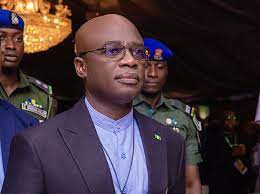
Your Excellency, Rev. Fr. Dr. Hyacinth Iormem Alia (Asortar ù Tiv)
Today, history pauses; not merely to count years, but to honour consequence, vision and the enduring power of purposeful leadership.
On this landmark occasion of the 60th Birthday of Your Excellency, Rev.
Fr. Dr. Hyacinth Iormem Alia, the Executive Governor of Benue State and Visitor to the University of Agriculture, Science and Technology (UAST), Ihugh, I, Professor Qrisstuberg Msughter Amua, Pioneer Vice-Chancellor, on behalf of Management, Senate, Faculty, Staff and Learners of UAST Ihugh, proudly join the good people of Benue State, Nigeria and friends of progress everywhere in celebrating a leader whose convictions have transcended rhetoric to become visible institutions of hope and transformation.Your Excellency, the establishment of UAST Ihugh shall endure as one of the most visionary intellectual and developmental interventions in the contemporary history of Benue State; after the first 50 years of creating the state. At a defining moment when many still approached agriculture through the narrow lens of subsistence and nostalgia, you discerned with remarkable clarity that the future of Benue must be built differently; through knowledge, science, technology, innovation and the deliberate cultivation of human capacity.
You understood that no society truly rises by raw potential alone. It rises when knowledge becomes infrastructure; when research becomes policy; when innovation becomes culture; and when education becomes directly connected to productivity, industry and the future of its people.
Thus, you conceived UAST Ihugh; not as another conventional university content with routine traditions and ceremonial existence, but as a bold new intellectual frontier: a research-driven, digitally conscious, innovation-intensive and future-facing institution designed to reposition Benue State within the rapidly evolving global knowledge economy.
In Ihugh, Your Excellency planted far more than a university.
You planted a generational idea.
An idea that agriculture must become precision-driven.
That science must resolve real challenges.
That technology must serve society.
That universities must become engines of production, innovation and transformation; not mere factories of certificates.
Today, that vision steadily rises into reality.
From the rapid emergence of the take-off campus, to the National Universities Commission recognition, pioneering academic programmes, expanding digital infrastructure, emerging centres of excellence, research ecosystems, growing learner population and the unfolding culture of Production – Research – Innovation – Training – Enterprise (PRITE) already taking root within the institution, the evidence is increasingly visible that UAST Ihugh was never designed merely for the present moment, but for the future history of this State and nation.
Perhaps even more remarkable has been your personal commitment to the institution. Your leadership has not been distant or symbolic. It has been practical, visible and deeply invested; reflected in your repeated visits to the campus, your insistence on standards and timelines, and your unwavering determination to ensure that this bold vision does not remain trapped in paperwork, but rises tangibly from the soil of Benue.
Indeed, long after today, the story of UAST Ihugh shall remain one of the clearest statements that Benue State chose to think ahead; that development must be intellectually engineered; and that the prosperity of our people can no longer be separated from science, research, innovation and strategic education.
As Your Excellency marks this remarkable milestone of sixty years, we pray that Almighty God shall continue to strengthen you with multiplied grace, wisdom, peace, sound health and enduring clarity of purpose. May your years ahead be crowned with greater strength and deeper fulfilment. And may the seeds you have planted through UAST Ihugh continue to grow into forests of discovery, prosperity and generational impact for our people and for humanity.
Happy 60th Birthday, Your Excellency; the “Talk-and-Do” Governor; the Builder of Possibilities; the Visitor of a University imagined for tomorrow, and is already shaping it today.
Prof. Qrisstuberg Msughter Amua, Pioneer Vice-Chancellor, University of Agriculture, Science and Technology (UAST), Ihugh.

By Tony Obiechina, Abuja
The National Pension Commission (PenCom) has granted Pension Fund Administrators (PFAs) a special regulatory waiver permitting them to invest pension assets in the planned Initial Public Offering (IPO) of Dangote Petroleum Refinery & Petrochemicals FZE (DPRP).
A circular by the Commission on Thursday, said the approval represents a one-off regulatory dispensation designed specifically for the Dangote Refinery IPO due to its strategic economic importance, strong financial structure and potential impact on Nigeria’s industrial growth.
According to the circular signed by A.M. Saleem Director, Surveillance Department.
The move is expected to deepen institutional participation in what could become one of Africa’s largest public offerings.The Commission, in a circular, said the approval represents a one-off regulatory dispensation designed specifically for the Dangote Refinery IPO due to its strategic economic importance, strong financial structure and potential impact on Nigeria’s industrial growth.
Under the waiver, PFAs will be allowed to participate in the IPO despite the company not fully meeting some of the conventional eligibility requirements ordinarily imposed on equity investments under pension fund regulations, including profitability track record and dividend payment history.
PenCom stressed that the decision followed a detailed assessment of the refinery’s investment fundamentals, broader economic significance and the established performance record of its majority shareholder, Dangote Industries Limited.
According to the Commission, the refinery forms part of a wider $40 billion industrial expansion initiative covering oil refining, petrochemicals, fertiliser production and related industries, all of which are expected to contribute significantly to Nigeria’s economic diversification agenda.
“The Commission has carefully evaluated the strategic investment opportunity and the economic impact of the proposed Initial Public Offering (IPO) of Dangote Petroleum Refinery & Petrochemicals FZE (DPRP) on the pension industry and the wider economy,” PenCom stated.
“In light of these considerations, the Commission has reviewed the request for a special dispensation that would permit Pension Fund Administrators (PFAs) to invest pension fund assets in the IPO.”The regulator noted that the waiver should not be interpreted as a permanent relaxation of investment rules or a precedent for future IPOs, emphasizing that the approval applies solely to the Dangote Refinery offer because of its exceptional scale and national economic significance.
The Dangote Refinery IPO, expected to open in mid-2026, will reportedly offer about 10 per cent of the company’s equity to the investing public as part of efforts by the Dangote Group to raise fresh capital for further industrial expansion and debt optimisation.
Market analysts estimate that the offering could value the refinery at approximately $50 billion, equivalent to about N70 trillion, making it one of the most valuable corporate listings ever contemplated in Africa’s capital market history.
The development is expected to attract significant interest from institutional investors, including pension fund managers, insurance firms and asset management companies seeking long-term infrastructure and industrial investment opportunities.
Nigeria’s pension industry currently manages assets valued at over N20 trillion, with a substantial portion invested in Federal Government securities due to strict regulatory safeguards designed to preserve contributors’ funds.
Industry observers believe PenCom’s approval could broaden investment diversification within the pension sector while simultaneously supporting local participation in strategic national infrastructure assets.
However, the Commission maintained that PFAs must continue to uphold strict fiduciary responsibilities in evaluating the investment. PenCom directed pension fund operators to independently assess their exposure to the IPO using their internal risk management and investment governance frameworks before committing contributors’ funds.
The regulator also warned that PFAs would remain fully accountable to pension contributors for the outcome of their investment decisions, adding that all existing capital market rules and investor protection mechanisms would remain fully applicable throughout the IPO process.
The Dangote Petroleum Refinery, located in the Lekki Free Trade Zone in Lagos, is regarded as Africa’s largest single-train refinery, with installed refining capacity of 650,000 barrels per day. The facility was established to reduce Nigeria’s dependence on imported refined petroleum products and strengthen energy security while supporting foreign exchange savings and industrial development.
Analysts say the planned listing could further deepen Nigeria’s capital market by increasing market capitalisation, boosting liquidity and providing domestic institutional investors with access to a major industrial asset prev
By David Torough, Abuja
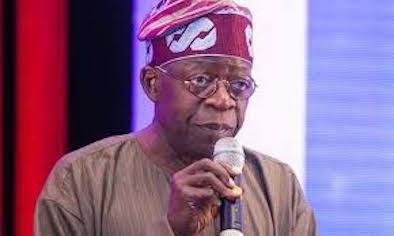
President Bola Tinubu has called on members of the All Progressives Congress (APC) to uphold unity, fairness and sportsmanship as the party begins nationwide primaries for the 2027 general elections on Friday.
In a statement personally signed yesterday, Tinubu described the primaries, which commence with House of Representatives elections and end with presidential primaries on May 25, as a critical test of the ruling party’s cohesion and democratic values.
The President said the APC primaries were more than exercises to select candidates, stressing that they represented “a referendum on our unity, resilience and strength as a party.
”Tinubu expressed pride that the APC was entering its fourth election cycle since its formation, noting that the party was built on “progressive politics, consensus democracy, personal devotion and sacrifice.”
He commended ongoing efforts by party leaders and stakeholders to adopt consensus arrangements in line with the Electoral Act 2026 and the APC constitution, saying such moves would help reduce bitterness and internal divisions.
“I note the impressive progress made in this regard and encourage fellow party members to make the most of this window to ensure a seamless process and a more unified party,” he said.
The President, however, maintained that where consensus fails, members should participate peacefully in the primaries and avoid conduct capable of undermining party unity and democracy.
“All participants in the primaries, whether contestants or voters, must keep the peace and act as sportsmen and women in the overall interest of the party and our country,” Tinubu stated.
Warning against “do-or-die politics,” Tinubu urged winners not to gloat and advised unsuccessful aspirants to accept outcomes in good faith and remain loyal to the party.
“Our opponents are waiting for us to be against each other; we should disappoint them,” he said, while urging victorious candidates and party leaders to extend olive branches to aggrieved members.
The President also charged governors and party leaders to remain fair and impartial during the exercise, insisting that all aspirants must be given a level playing field.
“To the party leadership, our governors and other leaders, I urge you to be fair and just. You must rise above sentiment to offer all aspirants participation without let or hindrance,” he added.
Tinubu further called for greater inclusion of women and youths in the party’s internal processes, describing them as critical stakeholders in the nation’s democracy.
He also cautioned security agencies to remain professional and restrict their roles to maintaining peace and order throughout the primaries.
Meanwhile, the Oyo State Governor, Seyi Makinde, has officially declared his intention to contest the 2027 presidential election on the platform of the Allied Peoples Movement.
The governor made this known on Thursday at the joint mega-rally of the Peoples Democratic Party and the Allied Peoples Movement held at Mapo Hall in Ibadan, the state capital.
“The time to reset Nigeria is now. Therefore, today, I, Oluseyi Abiodun Makinde, announce my candidacy for the position of the president of the Federal Republic of Nigeria,” he said.
Makinde said the country’s situation has “continued to deteriorate, putting the majority of Nigerians on survival mode daily.
The governor added that government officials responsible for citizens’ welfare have abdicated their duties.
“This is why, for the past several months, one question has been at the top of my mind: where do we go from here? Is this how we should continue as a nation?
“We have been pushed to the wall with the belief that we will turn against ourselves or worse still, that we will become too weary to survive on a daily basis to fight back.
“They said the opposition cannot unite, but I am here today to say that it is a miscalculation. The opposition in Nigeria is not just a political party. The opposition is the everyday Nigerian for whom the country does not work,” Makinde said.
Makinde said the alliance between the PDP and APM would enable the former ruling party to field candidates for all positions in the 2027 general election.
“So today in Ibadan, the first grand alliance was formed. The alliance of the Peoples Democratic Party (PDP) and the Allied Peoples Movement (APM).
“This handshake will allow us to field candidates at all levels. We will field candidates from top to bottom. We will field candidates from the presidency to state assemblies, and everything in between,” Makinde said.
Makinde had earlier led the Taminu Turaki faction of the PDP in Oyo State to sign a Memorandum of Understanding with the APM as part of a strategic alliance for the forthcoming elections.
The governor and the National Chairman of the APM, Yusuf Dantalle, signed the agreement on behalf of both parties.
Under the agreement, candidates of the PDP faction contesting for governorship, Senate, House of Representatives and State House of Assembly seats are expected to run on the platform of the APM rather than the PDP in the 2027 elections.



Letting Di’ja Go Was Most Difficult Decision of My Career – Don Jazzy
ShareRecord producer and music executive, Michael Collins Ajereh, popularly known as Don Jazzy, has revealed that letting former Mavin artist,...

Can Obi Break Tinubu’s Incumbency, and Can Northern Alliances Unseat Jagaban?
ShareBy Daniel Nduka Okonkwo As Nigeria gradually moves toward the 2027 presidential election, political conversations across the country are increasingly...


Excellence Award and Alia’s Transformational Impact for Greater Benue
ShareBy Bridget Tikyaa Just last week, Accolades Dynamics Limited bestowed an award of excellence for Governor Hyacinth Alia on his...

Alia: 60 Years of Purposeful Life, Leadership
ShareRev. Fr Hyacinth Iormem Alia is marking his 60 years today in this wonderful world. It has been 60 years...

Happy Birthday to a Visionary Leader
ShareYour Excellency, Rev. Fr. Dr. Hyacinth Iormem Alia (Asortar ù Tiv) Today, history pauses; not merely to count years, but...
Gov Alia Believes in High Standards and Capability in Leadership of Benue State – Iorpev
ShareThe Technical Adviser to Benue State Governor on Media, Publicity and Strategic Communication, Chief Solomon Terver Iorpev, spoke with our...
2027: Mags Picks NDC Nomination Form for Bogoro-Dass-Tafawa-Balewa Constituency
ShareFrom Ajiya Ayuba, Bauchi A businessman, Isaiah Alhamdu Mags on Thursday picked nomination form under the platform of the Nigeria...


PenCom Clears PFAs to Invest in Dangote Refinery’s $50bn IPO
ShareBy Tony Obiechina, Abuja The National Pension Commission (PenCom) has granted Pension Fund Administrators (PFAs) a special regulatory waiver permitting...
Tinubu Calls for Unity, Fair Play as APC Begins Primaries Today
ShareBy David Torough, Abuja President Bola Tinubu has called on members of the All Progressives Congress (APC) to uphold unity,...


Antiquity Protection Unit, Panacea for Museum’s Risk Management
ShareBy Tahirm Zakari According to ICOM, Museum is not-for-profit, permanent institution in the service of society that researches, collects, conserves, interprets, and...