
NEWS
NCDMB Host Oil Industry Players, Academia on Research Innovation


From Mike Tayese, Yenagoa
Oil and Gas Industry Stakeholders and leading Academics on Tuesday began a three-day Research and Development (R&D) Zonal Workshop at the Niger Delta University (NDU), Amassoma, with special focus on needs-driven research and deepening of collaboration and linkages, sponsored by the Nigerian Content Development and Monitoring Board (NCDMB).
The workshop was to provide a forum for discussions and demonstration of research breakthroughs on software and hardware as they relate to oil and gas industry needs, bioremediation and related oil field chemicals solutions, such as additives and drilling fluids, and renewable solutions to meet industry needs.
Scheduled to be hosted in the six geopolitical zones of the country by NCDMB Centres of Excellence in six universities, the workshop is also intended to enhance capacity building of research directors and lecturers, particularly in writing and reading compelling research proposals.
In a keynote address at the Workshop, the Executive Secretary of the NCDMB, Engr. Felix Omatsola Ogbe, said the Board is empowered by Sections 36-39 and 70 (m) of the Nigerian Oil and Gas Industry Content Development (NOGICD) Act, 2010, to “coordinate and superintend over research and development towards the further attainment of the goal of developing Nigerian content in the Nigerian oil and gas industry.”
According to him, critical gaps hampering the research climate in our sector, notably, lack of research infrastructure, funding and weak commercial frameworks, had been identified in the Board’s 10-Year Strategic Road Map, which had been developed in 2017.
He noted that “the establishment of Research Centres of Excellence in the six geopolitical zones of the country and establishment of the R&D Fund to stimulate research in the oil and gas sector” were some of the measures recommended to remedy the identified gaps. The Nigerian Content Research and Development Fund,” he explained, was launched by the Board in 2021 “with an initial seed capital of $50 million.”
Highlighting a major success in research-related endeavours of the NCDMB, Engr. Ogbe said the actualization of the commissioning of the Amal Technology Printed Circuit Board Manufacturing Facility in Abuja was a result of research commercialisation, “amplified in the NCDMB Technology Innovation and Incubation policy which created the Technology Innovation and Incubation Centre inside the Nigerian Content Towers at Yenagoa, Bayelsa State.
The Executive Secretary was represented by the Director of Planning, Research and Statistics, NCDMB, Mr Isaac Yalah, he pointed out that the Board created six research centres of excellence hosted by tertiary institutions in different geopolitical zones.
These are Niger Delta University, which hosts a Centre of Excellence for Engineering Studies; Federal University of Technology (FUT), Akure; FUT, Owerri, and FUT, Minna, with Centres of Excellence in Geology and Geophysical Studies, Local Raw Materials Substitution, and Technology Development, Studies, respectively.
Modibbo Adama University of Technology, Yola, hosts Safety and Environment Studies, while Usman Dan Fodio University, Sokoto, hosts Renewable Energy.
In setting the context of the event, NCDMB’s Director of Planning, Research and Statistics, Mr Isaac Yalah, described the Workshop as “a journey towards fostering collaboration and linkage between industry, academia and government,” which he noted are critical to the nation’s quest for economic development.
In a Welcome Remarks, the Vice Chancellor, NDU, Professor Allen Aziba-Odumosu Agih, represented by the Deputy Vice Chancellor (Administration), Professor Jonah Akekere, expressed the joy of the institution’s Management in playing host to participants, while commending the NCDMB for its initiatives in human capital development.
Earlier in a programme overview, the Managing Director, Wider Perspectives Ltd., facilitators of the event, Mrs. Edughom Hanson, said interactions between oil and gas industry players, academics and policy-makers are vital for the successes the country seeks in national development.
By Laide Akinboade, Abuja
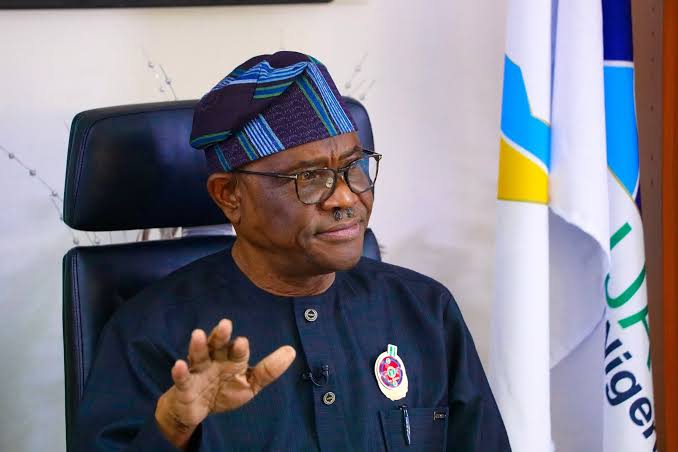
The Minister of the Federal Capital Territory (FCT), Nyesom Wike, has declared that he will step down from his cabinet position if President Bola Tinubu fails to secure victory in both the FCT and Rivers State in the upcoming 2027 presidential election.
Speaking during an engagement with leadership and members of the Apo Mechanics and Traders Association in Abuja, Wike stated that his continued tenure as a cabinet minister is directly tied to his ability to deliver political results for the president in his primary areas of influence.
Setting a specific timeline, the Minister announced that should the ruling party lose in the FCT and Rivers State at the presidential poll scheduled for January 16, 2027, he will formally tender his resignation the very next day.
“If I cannot deliver where I work, then I’m not worthy to be here,” Wike said, emphasizing that his political mandate requires concrete electoral success.
“If I lose FCT, I’m not supposed to be FCT Minister. By January 17, 2027, I will announce my resignation as FCT Minister should the President lose in Rivers State and the FCT,” he stressed.
Outlining his political strategy for the territory, Wike revealed that the administration is building a multi-party coalition to secure victory across various elective offices in the FCT.
He explicitly endorsed candidates across legislative tiers while reiterating total support for the president’s re-election bid.
“Let us be clear on direction: for the Presidency, it is Bola Ahmed Tinubu! For the Senate, Philip Aduda is a man of the people, unlike those who only appear on television. The two House of Representatives candidates we are supporting are also here. They are former Area Council chairmen.
“In the FCT, we are running a unified coalition across parties to deliver results.
“If I cannot deliver FCT as Minister, then I am not qualified to hold this office. We have a firm agreement, and today is the final affirmation.”
The announcement comes amid ongoing efforts by the FCT Administration to resolve the long-standing relocation and land allocation exercise for thousands of traders and mechanics operating within the Apo Mechanic Village corridor.

The Joint Admissions and Matriculation Board (JAMB) has extended the deadline for candidates with outstanding admission offers from the 2021 to 2025 admission exercises to Nov. 30, 2026.
JAMB spokesman, Dr.
Fabian Benjamin, made this known in a statement on Wednesday in Abuja.Benjamin said the extension followed the temporary unavailability of the Central Admissions Processing System (CAPS) for about 96 hours.
He said the extension would give affected candidates a final opportunity to either accept or reject their outstanding admission offers.
“The Board has approved Nov. 30, 2026 as the final deadline for candidates in this category to indicate whether they wish to accept or reject their outstanding admission offers,” he said.
He recalled that the Board extended the deadline to Sept. 30, 2026, adding that the recent disruption to CAPS necessitated the further extension.
Benjamin warned that candidates who failed to act by Nov. 30 would no longer be allowed to accept or reject the outstanding offers within the current window.
“Any subsequent request to update an admission record relating to these previous years will attract the applicable penalty fee,” he said.
He said candidates whose admissions were not on the matriculation list could face difficulties accessing benefits, including participation in the National Youth Service Corps (NYSC) scheme.
The spokesman advised all affected candidates to take action before the deadline rather than wait until the last day.
He said candidates who accepted their offers would be able to print their admission letters, while those who rejected them would have their dashboards reverted to “Not Admitted”.
According to him, the process would enable JAMB to update its records and ensure that the national admission database accurately reflected candidates’ current status.
Benjamin said candidates no longer studying at the institutions where they were offered admission could accept the offer and later apply for correction or deletion, where applicable.
He added that candidates currently pursuing a second degree programme, but still having an unaccepted admission offer from a previous year could reject the old offer and continue with their current programme.
“Candidates who have been offered admission in the 2026 admission exercise but still have an outstanding admission offer from an earlier year have no cause for apprehension.
“Such candidates may reject the previous admission offer, and doing so will not affect their 2026 admission,” he said.
Benjamin said the extension was also aimed at helping JAMB maintain accurate and reliable national admission records.
He reiterated that Nov. 30, 2026 was the final deadline for accepting or rejecting outstanding admissions from the 2021 to 2025 admission exercises.
“At the expiration of the deadline, all outstanding admission offers from these years that have neither been accepted nor rejected will automatically revert to ‘Not Admitted’ status on the Board’s records,” he said.
He urged all affected candidates to take immediate action, stressing that failure to accept an admission offer within the stipulated period could render the offer invalid.(NAN)
From Attah Ede, Makurdi
The Board of Directors of the Benue Investment and Property Company Limited (BIPC) has inspected the ongoing maintenance and rehabilitation works at Taraku Mills Limited, ahead of the planned test run of the factory.
The inspection, led by the Group Managing Director of BIPC, Dr.
Raymond Asemakaha, CFA, provided members of the Board with an opportunity to assess the level of work carried out at the facility and preparations for the commencement of operations.Conducting the Board around the factory, Dr. Asemakaha explained the progress made so far and assured that the facility would be test-run during the weekend as part of efforts to prepare the mill for full-scale production.
The Board Chairman, Lady Elizabeth M.N. Shuluwa, commended the GMD, the technical team and staff of Taraku Mills for their commitment and dedication towards restoring the facility to productive use.
Lady Shuluwa also expressed appreciation to the Benue State Governor, Rev. Fr. Dr. Hyacinth Iormem Alia, for his support and commitment to the revival of the state’s industrial assets.
She called on the people of Benue State to support the efforts to revive Taraku Mills and other state-owned industries, stressing the importance of collective ownership and support for initiatives aimed at creating jobs, boosting economic activities and improving the state’s industrial base.




Insecurity: FCTA Completes Ushafa, Saburi Divisional Police Headquarters, 10 Underway
ShareBy Laide Akinboade, Abuja In order to boost security, the Federal Capital Territory Administration (FCTA) on Wednesday said it has...

2027: I ‘ll Resign As Minister If Tinubu Loses FCT, Rivers – Wike
ShareBy Laide Akinboade, Abuja The Minister of the Federal Capital Territory (FCT), Nyesom Wike, has declared that he will step...

JAMB Extends Deadline for 2021–2025 Outstanding Admissions to Nov 30
ShareThe Joint Admissions and Matriculation Board (JAMB) has extended the deadline for candidates with outstanding admission offers from the 2021...

BIPC Board Inspects Taraku Mills Preparatory to Test Running
ShareFrom Attah Ede, Makurdi The Board of Directors of the Benue Investment and Property Company Limited (BIPC) has inspected the...


UBEC Renovates 287 Schools, over 4,000 Classrooms Nationwide
ShareThe Universal Basic Education Commission (UBEC) said it has renovated 287 schools and more than 4,000 classrooms across the country...


Nigeria at 66: FG Declares Thursday, Public Holiday
ShareThe Federal Government has declared Thursday as a public holiday to mark Nigeria’s 66th Independence Anniversary. The Minister of Interior,...


Tinubu Signs 2025 Budget Amendment Bill
ShareBy David Torough, Abuja President Bola Tinubu has signed the Appropriation (Amendment) (No. 4) Bill, 2025, extending the implementation period...


NAN Backs Insurance Sector’s Transformation Agenda, hails NAICOM
ShareBy Tony Obiechina, Abuja The National Association of Nigerian Students (NANS) National Secretariat, the umbrella body representing over 40.1 Million...


Don Calls for More Investment in Entrepreneurship/Innovation in Nigeria
ShareFrom Joseph Amedu, Lokoja A Professor of Entrepreneurship and Corporate Strategy at the Federal University, Lokoja, John Alabi has called...


Tinubu Submits NDDC 2026 Appropriation Bill
SharePresident Bola Tinubu has submitted the 2026 Statutory Budget Proposal of the Niger Delta Development Commission (NDDC) to the House...