
DEFENCE
NDA Attack: We Need Action – Ex-defence Minister


A former Minister of State for Defence, Prince Adetokunbo Kayode, has called for action in the wake of Tuesday’s attack at the Nigerian Defence Academy (NDA), Kaduna.
Some yet-to-be apprehended gunmen stormed the residential quarters of the NDA, killed two people and abducted a military officer in the attack.
Kayode, in an interview with the News Agency of Nigeria (NAN) on Thursday in Akure, said the attack on one of the military’s “most sacred places“ called for an urgent action to tackle the security challenges facing the country.
The former minister, who described the attack as “very unfortunate and embarrassing“, said the security issue had become a recurring one and called on the international community to help Nigeria.
“The attack at the NDA is very unfortunate and embarrassing but more importantly I feel so sad because of the young men who lost their lives and one other who was kidnapped.
“Security challenges are not peculiar to Nigeria and Africa; they are all over the world but this (the attack at the NDA) is going too far,’’ he said.
He urged the Federal Government and security agencies to rejig their approach to the tackling of security matters.
“Government must rejig its strategy about how to tackle this as it has gone too far and I believe that something has to be done because the NDA is a very sacred place for us.
“The whole world now must understand the kind of challenges Nigeria is passing through now, we need support, every country gets support for security.
“The international community must rally round Nigeria to give us support and although we alone cannot do it alone, we must do our best.
“We must show that we can help ourselves, we must show commitment,’’ the former defence minister said. (NAN)
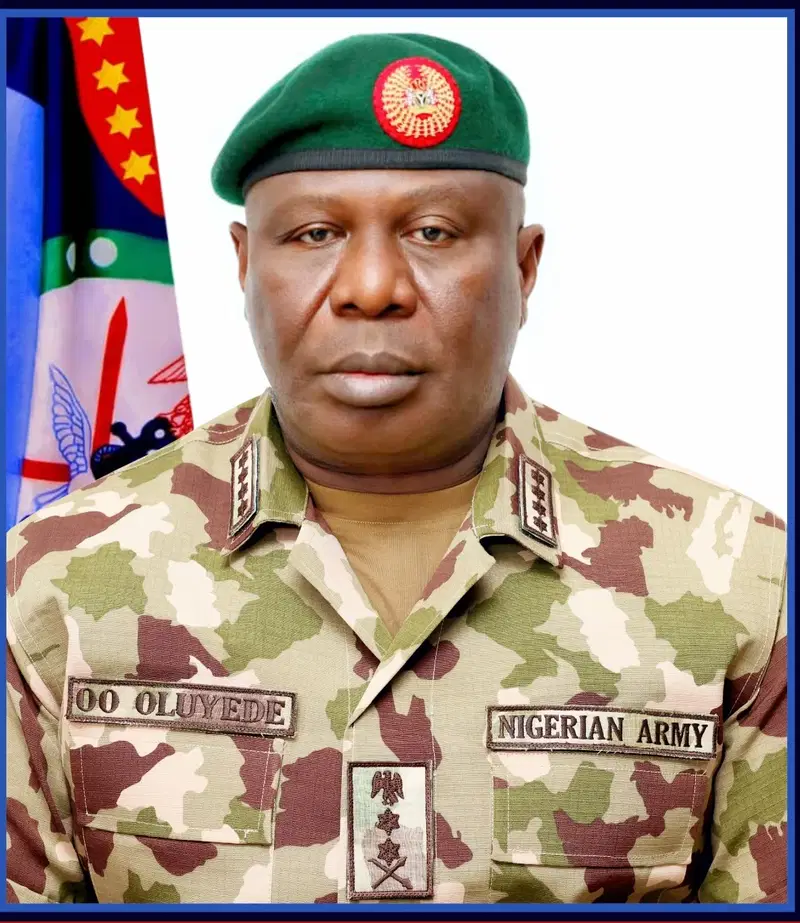
The United Kingdom has reaffirmed its commitment to deepening defence and security cooperation with Nigeria, with emphasis on military training, technology transfer and institutional capacity building.
The British High Commissioner to Nigeria, Pete Vowles, reiterated the commitment during a courtesy visit to the Chief of Defence Staff (CDS), Gen.
Olufemi Oluyede, at the Defence Headquarters, Abuja.This was contained in a statement by the Director of Defence Information, Maj.-Gen. Samaila Uba, on Tuesday in Abuja.
Vowles reaffirmed the UK’s commitment to sustaining existing security initiatives and exploring new areas of collaboration to address evolving regional and global security challenges.
He described defence and security cooperation as critical pillars of the longstanding bilateral relationship between both countries.
The high commissioner also stressed the need for a mutually beneficial partnership that would promote regional stability and strengthen Nigeria’s capacity to tackle contemporary security threats.
In his response, Oluyede highlighted the longstanding historical ties between Nigeria and the UK, noting that both countries had sustained productive defence relations over several decades.
He said the two countries had continued to collaborate in addressing shared security concerns.
The CDS emphasised the need to sustain and expand existing areas of cooperation, particularly in professional military education, technology transfer and institutional capacity building.
According to him, ongoing defence agreements and training programmes have contributed to improving the professional competence and operational capabilities of the Armed Forces of Nigeria.
Oluyede emphasised that continued collaboration with strategic international partners remained vital to strengthening the military’s capacity to respond effectively to emerging threats.
He added that such partnerships would also promote greater self-reliance, institutional resilience and operational efficiency within the Armed Forces.
Both parties expressed optimism about the future of the UK-Nigeria defence and security partnership, reaffirming their commitment to consolidating existing achievements and exploring further areas of cooperation for mutual benefit.
By Tambaya Julius, Abuja
Nigeria and Rwanda are exploring new areas of military cooperation, including personnel exchanges, specialised training and local defence equipment production, as both countries seek to strengthen regional security.
The proposals were presented by the Chief of Army Staff (COAS), Lieutenant General Waidi Shaibu, during an official working visit to Rwanda, where he held talks with the Army Chief of Staff of the Rwanda Defence Force, Major General Vincent Nyakarundi.
In a statement, the Acting Director of Army Public Relations, Colonel Appolonia Anele, said the discussions focused on expanding professional military cooperation and improving the operational capacity of both armies.
Shaibu proposed that two cadets of the Nigerian Defence Academy (NDA) undertake a four-year training programme at the Rwanda Military Academy, with similar opportunities to be made available to Rwandan cadets in Nigeria.
He also called for collaboration between the Defence Industries Corporation of Nigeria (DICON) and relevant Rwandan institutions to boost local defence production and encourage technology development.
Other areas identified for cooperation include logistics, Military Police training, pre-deployment preparation for peace support operations and the exchange of operational experience in counterterrorism and counterinsurgency.
The Army Chief said both countries could draw on their respective military experiences to tackle emerging security threats, improve operational readiness and promote stability across the region.
He further stressed the need for closer ties between DICON and Rwanda’s defence engineering and procurement institutions to support indigenous equipment manufacturing, technological advancement and greater self-reliance.
During the visit, Shaibu paid tribute to the courage and sacrifices of the Rwandan Patriotic Army, particularly the 600 personnel who defended Kigali during the 1994 Genocide against the Tutsi.
He described their resilience and patriotism as enduring lessons in national determination and military leadership.
In his response, Nyakarundi commended the Nigerian Army for providing specialised Military Police and Intelligence training to Rwandan personnel.
He called for expanded professional military education through institutions such as the Armed Forces Command and Staff College, Army War College Nigeria and the National Defence College.
The Rwandan Army chief also welcomed the proposed cadet exchange programme and defence industrial partnership, describing the visit as a reflection of growing mutual trust and professional solidarity between the two armies.
The proposed initiatives are expected to provide a framework for deeper military engagement between Nigeria and Rwanda, particularly in training, defence technology and regional security cooperation
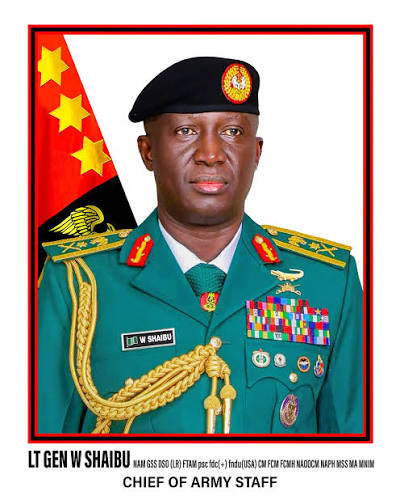
The Nigerian Army is strengthening its aviation quality management systems to improve flight safety, aircraft reliability and operational readiness.
The Chief of Army Staff (COAS), Lt.-Gen. Waidi Shaibu, stated this at the opening of the Nigerian Army Aviation Command Workshop on Aviation Quality Management Systems on Monday in Abuja.
Represented by the Chief of Standard and Evaluation, Maj.
-Gen. Thompson Ugiagbe, the COAS said the effectiveness of army aviation depended on robust quality management systems.“The effectiveness and sustainability of these capabilities depend not only on the availability of aircraft and trained personnel, but also on robust quality management systems that ensure safe, standardised and reliable aviation operations,” he said.
Shaibu said aviation operations required the highest standards of discipline, professionalism, standardisation and continuous improvement.
He said the systems would help identify risks, ensure compliance with approved standards and prevent recurring deficiencies.
“As Nigerian Army Aviation continues to expand its operational and technical capabilities, institutionalising such a system is essential to building a resilient aviation organisation and sustaining operational readiness,” he said.
The army chief noted that since the re-establishment of Nigerian Army Aviation in 2014, efforts had been made to develop the platforms, personnel, infrastructure and systems required to support land operations.
He said the workshop would provide an opportunity for participants to examine practical approaches to quality assurance, safety management, maintenance practices, documentation and standardisation.
Shaibu expressed confidence that the deliberations would produce actionable recommendations for institutionalising an effective quality management system across Nigerian Army Aviation.
He urged participants to develop sustainable measures to strengthen aviation safety culture, improve operational processes and enhance the reliability of aviation assets.
The Commander, Nigerian Army Aviation Command, Brig.-Gen. Al-Amin Ibrahim said quality management was fundamental to aviation safety, aircraft availability, mission effectiveness and combat readiness.
“For the Nigerian Army Aviation Command, quality is not merely an administrative requirement; it is fundamental to operational safety, aircraft availability, mission effectiveness, accountability and sustained combat readiness,” Ibrahim said.
He said the workshop was designed to establish a structured framework for standardisation, accountability, disciplined documentation, effective monitoring and continuous improvement across the Command.
The commander stressed that quality management should be embraced as a shared responsibility by all personnel involved in aviation operations.
“Quality must also be embraced as a culture. It is not the sole responsibility of an inspectorate or quality assurance office.
“Rather, it is the responsibility of every officer, soldier and civilian staff member involved in planning, flying, maintenance, logistics, administration, training and support,” he said.
Ibrahim said the Command must prioritise preventing deficiencies rather than waiting for them to occur before taking corrective action.
He urged participants to develop practical recommendations with measurable outcomes that could be implemented and monitored across the Command.
“Our emphasis must be on prevention through discipline, effective supervision, risk awareness, adherence to approved procedures, timely reporting and organisational learning,” he said.
Ibrahim added that the proceedings and recommendations would be compiled into a compendium to guide the implementation, monitoring and periodic review of quality management initiatives.
The five-day workshop, which began on Monday, ends on Friday, brought together stakeholders to strengthen quality management and promote a culture of operational excellence in Nigerian Army Aviation. (NAN)




UK, Nigeria to Deepen Defence, Security Cooperation
ShareThe United Kingdom has reaffirmed its commitment to deepening defence and security cooperation with Nigeria, with emphasis on military training,...


2027: INEC Steps Up Preparations, Completes Nine Activities
ShareBy Tambaya Julius, Abuja The Independent National Electoral Commission (INEC) has completed nine of the 14 activities on its timetable...


2027: Tinubu Accords Benue Security Top Priority, Tompolo Tells Supporters
ShareLeader of the PBAT Door-to-Door Movement, Government Tompolo, has called on the people of Benue state to come out enmasse...


Senate Demands Compulsory Screening of Foreign Arrivals
ShareBy Eze Okechukwu, Abuja The Senate yesterday ordered mandatory health screening for every international passenger arriving Nigeria airports, seaports, land...

Reps Summon Telecom Operators over Poor Network Services
ShareBy Ubong Ukpong, Abuja The House of Representatives on Wednesday, summoned telecommunication operators in the country to appear before it...


Bill to Design, Manufacture, Commercialize Drones Passes Second Reading in Reps
ShareBy Ubong Ukpong, Abuja A bill for an Act to move the nation to developing the capacity to design, manufacture...


Otu Presents N987.8bn Budget Estimate to Assembly
ShareFrom Ene Asuquo, Calabar Cross River State Governor, Sen. Bassey Edet Otu, has presented a proposed budget of ₦987, 808,...

Borno Police Arrest Six Suspects over Mobile Phone Theft, Recover N5.65m
ShareThe Police Command in Borno has arrested six suspects over alleged mobile phone theft and fraudulent withdrawal of ₦5.65 million...

Election Campaigns: FRSC Bars Officers from Politicians’ Escort
ShareThe Federal Road Safety Corps (FRSC) has barred its personnel from escorting politicians during campaigns for the 2027 general elections....

2027: NITDA Raises The Alarm Over AI-driven Election Manipulation
Share By Elijah Oguche, Abuja The National Information Technology Development Agency (NITDA) has warned that artificial intelligence (AI)-powered misinformation, deepfake...