
Oil & Gas
NDDC Board: Sylva, Akpabio Maintain Good Relationship – Aide

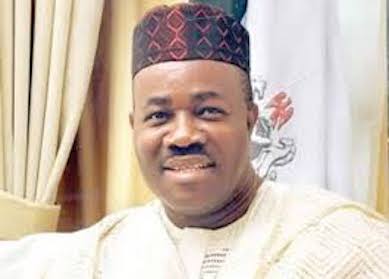
The Minister of State for Petroleum Resources, Chief Timipre Sylva, says there is no rift between him and Minister of Nigeria Delta Affairs, Sen. Godswil Akpabio, over the constitution of board of the Niger Delta Development Commission (NDDC).
Sylva disclosed this in a statement by his Media Aide, Mr Julius Bokoru, in Abuja on Tuesday. He said that those concocting the rift were enemies of progress and urged the general public to discountenance the rumour. He added that the story that Mr Sylva was also attempting to truncate the chances of certain individuals from being Managing Director of the region’s apex interventionist body was false. “The story is false and nothing more than a string of poorly thought-out and poorly crafted lies that should be totally disregarded and discarded. “Sylva has maintained excellent relations with Sen. Akpabio through the years. “The duo consider themselves brothers and comrades in the quest for building a more prosperous Niger Delta and a stronger Nigeria. “Sylva is currently hosting the Nigeria International Petroleum Summit (NIPS) and while he has the development of the Niger Delta at heart, he is not fixated on who becomes who in the formation of the NDDC board. “He rather hopes and prays that for the sake of the development of the region, competent, committed, compassionate and patriotic people get appointed,” he said. He said that the appointment of the board and executive members of the NDDC “is strictly the prerogative of the President of the Federal Republic of Nigeria. “The fake, divisive article is intended to create anxiety in the Niger Delta region to the desperate ends of its sponsors which is to create needless tension and chaos. “The public is thereby advised to disregard the report as it is totally untrue, malicious and engineered purely for mischief. “Sylva will continue building harmony amongst Niger Delta leaders and will attract even more develoment to the region, as he is doing, and will keep working toward a more peaceful South-South region.” ( NAN)


The Nigerian Upstream Petroleum Regulatory Commission (NUPRC) has opened discussions with Indonesia on petroleum investments, with Indonesian national oil company Pertamina expressing interest in Nigeria’s 2026 Licensing Round.
The development followed a meeting between the NUPRC Chief Executive, Oritsemeyiwa Eyesan, Indonesia’s Vice Minister of Foreign Affairs, Arif Havas Oegroseno, and Toriq Abdat, Vice President, Upstream Business Development, Pertamina.
Head, Corporate Communications and Media, NUPRC, Eniola Akinkuotu, made this known in a statement on Sunday.
Nigeria and Indonesia shared similar priorities, including energy security, resource utilisation and investments into the sector as both countries seek to increase oil production, with Nigeria targeting three million barrels per day (bpd) by 2030.
Nigeria currently produces about 1.6 million to 1.7 million bpd, while Indonesia produces about 600,000 bpd and is also seeking to increase output.
Abdat said Pertamina had been mandated to expand its operations internationally and was exploring opportunities in countries including Malaysia, Iraq and Nigeria.
“In Indonesia, we are producing only around 600,000 barrels. We are working on exploration towards deepwater but we found more gas than oil.
“That is why we go outside Indonesia, Malaysia, then the Middle East, Iraq and Nigeria,” he said.
Abdat said Pertamina was seeking producing assets, projects nearing production or opportunities ahead of Final Investment Decision (FID).
He said the company was open to both competitive bidding and bilateral arrangements with governments.
“We would like to be in projects with governments, producing assets, near production or before FID.
“Now we are looking at how we can help you reach the three million, and also help us provide more energy for our own consumption,” Abdat said.
He expressed interest in opportunities beyond crude oil and natural gas, particularly in the fertiliser sector, adding that Pertamina was developing a fertiliser plant to reduce Indonesia’s dependence on supplies from the Middle East amid disruptions caused by global conflicts.
He linked food security to the oil and gas sector, noting the importance of phosphate and other elements used in fertiliser production.
Responding, Eyesan said Nigeria’s production target was ambitious, adding that the 2026 Licensing Round was one of the strategies being deployed to achieve it.
“We have very aggressive targets, three million barrels per day by 2030, and today we are at 1.6, 1.7.
“We are committed to the objective and the licensing round is one of the strategies we are utilising,” she said.
Eyesan said licensing rounds had become a recurring exercise in Nigeria rather than an occasional process, following their institutionalisation under the Petroleum Industry Act (PIA) 2021.
She said the most recent commercial bid conference, held in July, featured 50 assets, with 37 awarded.
The NUPRC boss said Nigeria had also reviewed its fiscal terms in response to competition for the same pool of global investment capital.
She said the country had reduced entry barriers, including signature bonuses, to encourage investment in the upstream sector.
Nigeria, in turn, is diversifying its phosphate sources, including through a long-term transatlantic pipeline project with Morocco aimed at serving West Africa.
The meeting ended with both sides agreeing to sustain commercial and diplomatic engagements on potential areas of cooperation.(NAN)

By Tony Obiechina, Abuja
The Revenue Mobilisation Allocation and Fiscal Commission (RMAFC) has inaugurated a Planning Committee to coordinate preparations for the forthcoming Oil and Gas Investment forum scheduled to take place in China later this year.
The Chairman of the Commission Dr.
Mohammed Bello Shehu represented the Investment Monitoring Committee and Federal Commissioner representing Anambra State, Hon. Ekene Enefe, chaired the inaugural meeting held at the Commission’s headquarters in Abuja.In his remarks, Dr. Shehu underscored the importance of strategic planning, effective coordination and strong institutional collaboration in ensuring the successful implementation of the program.
He noted that the forum would provide a credible platform for showcasing Nigeria’s investment opportunities across the oil and gas value chain and attracting meaningful investments into the country.He charged the Planning Committee to develop a comprehensive framework for the event, identify priority investment opportunities, coordinate stakeholder participation, and facilitate strategic engagements with prospective investors and partners in China.
According to him, the Investment forum would feature business-to-business engagements, investment matchmaking, technical presentations and policy dialogue aimed at promoting sustainable partnerships and strengthening cooperation between Nigeria and China in the oil and gas sector.
The Chairman reaffirmed the Commission’s commitment to collaborating with relevant institutions and stakeholders within its constitutional mandate, to support initiatives that strengthen investment, improve revenue generation and promote sustainable economic development.
According to a statement by Maryam Umar Yusuf, Head, Information and Public Relations Unit the inauguration of the Planning Committee marks an important step towards the9 coordinated preparation for the China oil and gas Investment forum aimed at promoting Nigeria’s investment opportunities in the international oil and gas market.
The Committee comprises representatives of the Nigerian Upstream Petroleum Regulatory Commission (NUPRC), Nigerian Midstream and Downstream Petroleum Regulatory Authority (NMDPRA), Nigerian Investment Promotion Commission (NIPC), Federal Ministry of Industry, Trade and Investment, Oil and Gas Free Zone Authority, Nigeria-China Business Council, the Director of the Gas and Investment Department, RMAFC, and staff members of the Department.
Also in attendance were the Federal Commissioner representing Kogi State, Hon. Abdulaziz Idris King and other members of the Investment Monitoring Committee.
The Federal Government is firming an initiative that will boost oil and gas swap plan, embedded with a regulator-mandated netting mechanism, the first of its kind around the world, to enable refiners to bring down refining costs.
The finer details of this complicated swap mechanism, pitched forward by the present administration, are being worked out by the various stakeholders
The spur is volatility in retail petrol prices, which have rocketed more than sixfold since President Bola Tinubu terminated decades-old fuel subsidies on his inauguration day in May 2023, and the promise the move holds for the affordability of the product, and other fuels.
Retail petrol has been defenceless against external pressures that have driven it to extreme price levels in Nigeria, since the US-Iran war started in February, up by 22.7 per cent.
This has continued to weigh on consumer budgets so profoundly that regulators are now stepping up consultations more tenaciously to introduce reforms to ease the pressure on businesses and households.
In August, the idea of a crude oil and gas swap system that pairs domestic producers up with refineries with a view to compressing input costs and delivery time was discussed at a meeting between the midstream sector’s top watchdog and the Nigerian Upstream Petroleum Regulatory Commission (NUPRC) in Abuja.
The structure is in the works. The proposal is currently engaging other players, with Eyesan noting that discussions on the crude oil component of the swap are still rudimentary.
The operational asset-exchange framework of the swap allows two distant producers, who are close to each other’s delivery points (refineries in this case), to switch volumes.
This gives them ample room to leverage the proximity of their bases to such destinations to save the massive logistics expenses involved in shipping crude across the supply chain.
The volume differences, quality API differentials, as well as delivery margins, are then netted off at a proposed commercial clearing house.
At the time, 27 of the 63 companies producing gas in the country had approved quotas to supply the market. However, just 23 of them were actively doing so.
The gas swap framework, on that score, permits operators unable to evacuate their gas for certain technical constraints to get a leg-up from counterparts with the facilities to supply the gas where it is needed.
It raises hope that the savings on logistics the swap is out to guarantee will directly impact the pump price of locally sold petrol, should the plan fly.
The scheme advances to the drafting stage, once consultation is over, where the energy sector’s technical committees will compose the credit-settlement laws, commercial netting-off guidelines and grade quality valuation standards, setting it up for adoption.
Implementation, if reasonably successful, might institutionalise a model from which oil-producing nations, especially those battling spikes in fuel costs internally, could borrow a leaf.
The netting-off feature of the scheme uniquely endows it with a luxury, which similar swap structures in other markets don’t offer.
Under the US crude location/quality swaps, which come closest, midstream operators can exchange cargoes of crude through clearing houses like ICE to avoid physical pipeline backhauls, based on mutual agreements between parties. However, regulation does not obligate such deals.
Dangote Petroleum Refinery, the continent’s largest, based in Lagos, added to the urgency to tame soaring refining costs recently when it revealed that involvement of middlemen raises feedstock costs by USD 3 to USD 4 per barrel in Nigeria.
That is so because crude pricing under Nigeria’s petroleum industry law is tied to Free-on-Board Dated Brent. Producers often claim that not factoring in international freight differentials while selling oil to the home market puts them at a disadvantage, unlike if it is exported.
Much as that is a regulation-backed practice, it unfairly leaves local refiners bearing a cost they are not actually liable for.
Beyond stretching logistics spending for refiners, the pass-on effect of the extra cost on fuel prices complicates affordability for consumers.
The refinery holds the biggest slice of the domestic fuel market, accounting for 87.6 per cent of petrol supply in May, according to the Nigerian Midstream and Downstream Petroleum Regulatory Authority (NMDPRA).
That affirms the overpowering implications a slight rise in the refining expenses of a refinery of that scale can have on the majority of Nigeria’s 242.4 million population, the continent’s largest.
The global costs of processing crude feedstock into finished products are accelerating to unprecedented levels across regions, due to a refining shortfall.
A note by Goldman Sachs, cited by Bloomberg in a report on August 31, suggested that the trouble has been compounded by attacks on refineries in the Middle East and Russia that are driving margins to new highs.
Russia had, in the last week of July, elongated its ban on petrol and diesel exports until January of the year ahead, making the global fuel market tighter.
Diesel is projected to be the worst-hit, with the New York-based investment bank anticipating the refining margins to reach $63 per barrel in the US and an average of USD 49 in the EU in 2027.
It marks a 133.3 per cent surge for US refiners and 157.9 per cent for their EU peers from previous forecasts.
As of August 26, the daily time rates of chartering a tanker from the Middle East to China had surpassed USD 600,000, the second time in history that has happened, Reuters stated, citing LSEG data, pressuring refining costs.
In India, a shortage of physical oil supply is pointing refiners to the expensive spot market as traders request premiums of USD 3 to USD 4 per barrel amid a narrow supply condition that shows no signal of improving soon.
The risk factor of transporting cargoes through troubled maritime routes is giving traders grounds to price crude higher.
Brazil’s state-owned oil company Petrobras, the largest in South America, reported in its half-year 2026 corporate results that average refining cost rose 15.1 per cent to USD 3.21 per barrel, compared to a year ago.




Tinubu Submits NDDC 2026 Appropriation Bill
SharePresident Bola Tinubu has submitted the 2026 Statutory Budget Proposal of the Niger Delta Development Commission (NDDC) to the House...


Senate Passes Bill Extending 2025 Capital Budget Implementation to Dec 31
ShareThe Senate on Tuesday passed a bill extending the implementation of the capital component of the 2025 Appropriation Act from...
CANEX 2026 to Unlock Investment, Jobs in Nigeria’s Creative Economy — FG
ShareThe Federal Government said Nigeria’s hosting of the 2026 Creative Africa Nexus (CANEX) Weekend will attract investment, deepen market access...


NNPC Posts N7.2trn Profit amid Revenue Decline
ShareThe Nigerian National Petroleum Company Ltd. (NNPC Ltd.) recorded N7.2 trillion Profit After Tax (PAT) in 2025, a 33 per...


Wike Approves Contracts for Digitization of FCT High Courts
ShareThe Minister of the Federal Capital Territory (FCT), Nyesom Wike, has approved the award of contracts for the digitisation of...


OPay Names Top 10 Teams in N18m National Innovation Challenge
ShareIn a bid to empower young Nigerians with the skills, opportunities and support needed to build solutions for real-world challenges,...


CBN Sets Agenda for Post-Recapitalisation Banking
ShareBy Tony Obiechina, Abuja The Central Bank of Nigeria (CBN) said recent reforms in the foreign exchange market, monetary policy...

Gunmen Abduct 18 Women in Benue, 47 Niger Farmers
ShareFrom Attah Ede, Makurdi, and Dan Amasingha, Minna Fresh fears over the worsening insecurity across the country emerged on Tuesday...


NASS Extends 2025 Capital Budget Again, Adjourns to Oct 13
ShareBy David Torough, Abuja The National Assembly on Tuesday extended the implementation of the capital component of the 2025 Appropriation...


Police Detain Woman for Alleged Killing of Co-wife in Bauchi
ShareThe police command in Bauchi State, said it has apprehended a housewife over alleged killing of her co-wife following a...