
POLITICS
NERC to Spend N2bn on Computers in 2023

The Nigerian Electricity Regulatory Commission (NERC) says it has earmarked N2 billion for the purchase of computers and related accessories in 2023.
Mr Sanusi Garba, the Chairman, NERC, said this at a hearing on the Medium Term Expenditure Framework (MTEF) in Abuja on Monday.
Garba said that in utility regulation, information technology was very important as it was not proper to rely on information given by licensees alone.
“So we are investing heavily in technology so we have credible information about quality of service. Without technology, we can not know that a feeder in an area is out for 48 hours and people are in darkness.
“So over the next few years, we will be investing heavily on technology for data aggregation in 2021, the budget for computers, not just hardware but the software that drives the machine is N1.5 billion.
“And we are spending N2.5 billion in 2023 and N1 billion in 2025 and we will be done; we want to see what is happening in all the feeders directly from the commission and not relying on licensees.
“So investing N5 billion on technology today is nothing,’’ he said.
Garba said that the commission had engaged auditors to audit its account for the 2021 financial year and should be completed in October.
He said that the operating surplus of the commission in 2019 upon reconciliation, amounted to N3.5 billion in addition to a surplus balance of N900 million, the commission remitted N4.65 billion.
For 2020, he said that the auditor’s report revealed that the commission’s operating surplus was N3.8 billion and that reconciliation was ongoing with the Office of the Account General of the Federation after which remittances would be made.
Earlier, Rep. Stanley Olajide (APC-Oyo) observed that the projection of NERC for 2023, that N2 billion had been earmarked for computer equipment and over N1 billion for training.
He said that the committee was interested in knowing what was spent in previous years on computers to justify the amount budgeted for 2023 and earn value for money.
He said that the country was going to borrow to fund the 2023 budget and it was important that Nigerians get value for any amount spent by government agencies.
The Chairman, Rep. Abdullahi Saidu (APC-Niger) directed the Office of the Accountant General (OAGF) and Fiscal Regulatory Commission (FRC) to sit with NERC and reconcile the 2021 account.
He said that the country was in need of funds frowning at the delay in reconciliation which was impeding funds from going into the federation account.
“We want a comprehensive report on NERC, and that must involve OAGF, FRC and NERC, we will give you between now and next Monday to do the reconciliation.
“Let us endeavour to quickly close out on their reconciliation, we need the funds, the country needs the fund; we want to see the funds remitted latest by month end.
“We are going to heavily carry out oversight on NERC, all we are interested in is to ensure efficiency in your operations and cost management, it is something we can do together to better the lot of our people,’’ he said. (NAN)


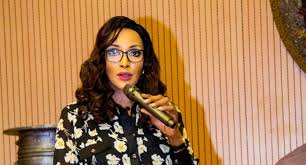
The Minister of Foreign Affairs, Ambassador Bianca Odumegwu-Ojukwu, has warned foreign diplomatic missions against making unguarded comments, disparaging remarks or unsolicited lectures on democracy as Nigeria prepares for the 2027 general elections.
The minister issued the warning on Thursday at a diplomatic briefing with members of the Diplomatic Corps at the Ministry of Foreign Affairs in Abuja.
Odumegwu-Ojukwu, who described Nigeria as Africa’s largest democracy, said developments in the country had regional and international implications, urging diplomatic missions to respect Nigeria’s sovereignty and established diplomatic channels.
She said, “As the 2027 general elections draw near, the Ministry of Foreign Affairs would request that missions remain guided. Recognising the fact that Nigeria is the largest democracy in Africa, and that developments in Nigeria have regional and international complications and implications, we would not look kindly upon unguarded comments, disparaging remarks, or unsolicited lectures on democracy.”
The minister assured the diplomatic community that the administration of President Bola Ahmed Tinubu was committed to democratic governance and delivering a credible election.
“The Government of President Bola Ahmed Tinubu is committed to democracy and to delivering an election that will be peaceful, free, fair, and credible in all ramifications,” she stated.
The briefing marked Odumegwu-Ojukwu’s first formal engagement with the Diplomatic Corps since her appointment as Minister of Foreign Affairs.
She called for closer cooperation between the ministry and foreign missions, emphasising the importance of dialogue, mutual respect and adherence to established diplomatic procedures.
“I want us to speak frankly, to engage constructively, and to resolve issues through dialogue, established diplomatic channels, and mutual respect,” she said.
The minister also urged diplomatic missions to route official communications and requests intended for the Presidency, ministries, departments, agencies and other government institutions through the Ministry of Foreign Affairs.
She explained that the ministry’s role was to facilitate, rather than obstruct, diplomatic engagement with the Nigerian Government.
“Let me emphasize that the Ministry is not an obstacle between you and the Nigerian Government; we are your bridge to the Nigerian Government,” she said.
Odumegwu-Ojukwu said the ministry would pay renewed attention to inactive Joint Commissions and Bi-National Commissions to strengthen bilateral cooperation in trade, investment, security, education, technology, health and agriculture.
She said diplomatic relations should be assessed by the tangible benefits they delivered to citizens rather than by the number of meetings held or communiqués issued.
“The true measure of our relationships will not be the number of meetings we hold, neither will it be the number of communiqués we issue. It will be the progress we achieve for our peoples, the investments we facilitate, the opportunities we create, the challenges we resolve, and the friendships we strengthen,” she stated.
The minister reiterated that Nigeria’s foreign policy under Tinubu was anchored on the four Ds—Demography, Development, Democracy and Diaspora.
According to her, the policy seeks to place Nigerians at the centre of the country’s international engagements while maintaining its commitment to Africa and constructive relations with the wider international community.
She said Nigeria would continue to pursue strategic autonomy in its international relations, stressing that the policy did not amount to isolation.
“Strategic autonomy does not mean isolation; it means preserving Nigeria’s sovereign right to determine the relationships and positions that best serve our people,” she said.
On consular services, Odumegwu-Ojukwu urged Nigerian and foreign authorities to improve efficiency in handling diplomatic correspondence, document authentication, legalisation and visa applications.
She appealed to foreign missions to review their visa processes for Nigerian applicants, noting that prolonged waiting periods could affect legitimate travellers, students, businesspersons and families.
“While we fully respect the sovereign right of every country to determine its visa policy, excessively long waiting periods can create considerable difficulties for legitimate travellers, students, businesspersons, and families,” she said.
The minister further assured members of the Diplomatic Corps that the safety and welfare of diplomatic personnel, their families and their premises remained a priority of the Nigerian Government.
“On security, welfare, and cultural diplomacy, Excellencies, please be assured the safety and the well-being of the Diplomatic Corps remain a priority of the Government. Nigeria remains fully conscious of its obligations under the Vienna Conventions, including the protection of diplomatic and consular personnel, their families, their premises, and property.
“Whenever you have security concerns or other issues affecting your stay in Nigeria, please bring them promptly to our attention. The Ministry will engage the appropriate government and security agencies to ensure that legitimate concerns are addressed. We want you to feel safe, enjoy your assignments, and ultimately leave Nigeria with positive memories of our country and our people”.
The minister said Nigeria possesses extraordinary cultural richness while urging the diplomats to experience the country beyond official engagements.
She said Nigeria would continue to work with diplomatic missions to deepen trade and investment, promote peace and security, advance education, health and technological innovation, and create opportunities for citizens.
‘Excellencies, Nigeria is open to trade, investment, tourism, technology, knowledge, and meaningful partnerships. At the heart of these engagements must be reciprocity, sovereign equality, and mutual respect.
“At a time of increasing geopolitical complexity, conflicts, terrorism, climate change, cyber insecurity, irregular migration, and economic uncertainty remind us that in these times, no country can confront today’s challenges alone,” She said.
Odumegwu-Ojukwu also reaffirmed Nigeria’s commitment to dialogue, multilateralism and the peaceful resolution of disputes through its engagements with ECOWAS, the African Union, the United Nations, the Commonwealth and other international institutions.
“Nigeria will, therefore, continue to champion dialogue, multilateralism, and peaceful resolution of disputes while remaining active within ECOWAS, the African Union, the United Nations, the Commonwealth, and other international institutions.
“We will continue to advocate an international system in which Africa’s voice is heard, and the continent participates meaningfully in shaping global decisions.
“We are ready to work with each of you to deepen trade and investment, strengthen cooperation on peace and security, advance education, health, and technological innovation, and create greater opportunities for our peoples,” Odumegwu-Ojukwu stressed.
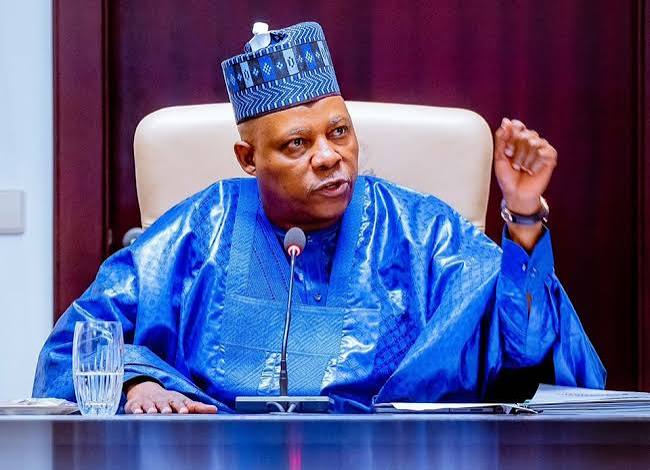
Senior Special Assistant to the President on Media and Communications, Stanley Nkwocha, said Vice President Kashim Shettima holds northern governors in high regard.
Nkwocha said this in a statement on Thursday in Abuja, clarifying recent remarks by Shettima concerning the support President Bola Tinubu received from northern governors.
He said Shettima recognised the individual and collective contributions of northern governors and other APC leaders to the party’s success and Tinubu’s emergence in 2023.
Nkwocha explained that Shettima’s reference to six northern governors who supported Tinubu concerned political consultations and alignments before the APC presidential primary in June 2022.
“The Office of the Vice President wishes to clarify remarks by Vice President Kashim Shettima concerning the support President Bola Tinubu received from northern governors in the build-up to his emergence as the APC presidential candidate.
“It was not a comment on the position of northern APC governors following President Tinubu’s emergence as the party’s candidate, nor was it intended to question their support during the 2023 presidential election,” he said
The presidential aide said that after the presidential primary, APC governors in the North rallied around the party’s candidate.
He added that the northern governors played important roles in the campaign and electoral efforts that culminated in Tinubu’s victory in the 2023 general election.
“Indeed, it is worthy of note that it was after the declaration of President Tinubu as winner of the 2023 presidential primary that all other governors across the country rallied round and followed suit.
“That declaration by the northern governors hence became the aligning moment across all political divides in the quest for power shift,” he said.
Nkwocha said Shettima regretted any interpretation of his remarks that may have suggested otherwise and hoped the clarification would place the comments in proper context.
“VP Shettima also appreciates the Nigerian media for its longstanding professionalism and constructive engagement with his office.
“He urges continued accuracy and context in the reporting of public remarks as the country approaches another political season,” he said. (NAN)
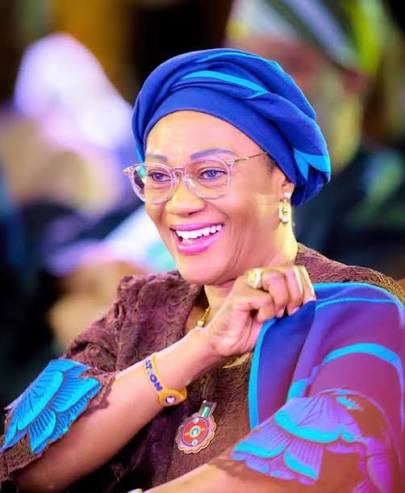
The First Lady, Sen. Oluremi Tinubu on Thursday in Abuja, welcomed the endorsement of the President for a second term by the Former Presiding Officers of State Houses of Assembly of Nigeria (FOPSHAN).
The First Lady spoke at the National Summit of the Forum of All Progressives Congress Former Presiding Officers of State Houses of Assembly of Nigeria (APC-FOPSHAN), held at the Banquet Hall of the State House, Abuja.
During the summit, the forum endorsed President Tinubu for a second term in the 2027 general elections.
She said that former Speakers and Deputy Speakers were well placed to appreciate the difficult choices of governance and the courage required to pursue reforms in the national interest.
“Since the inception of this administration, Mr President has worked tirelessly to reposition our economy and lay a solid foundation for sustainable national development.
“Nation-building is a continuous process, and the gains already recorded must be consolidated for the benefit of present and future generations”, she said.
She also commended the National Chairman of the forum, Sen. Wasiu Sanni-Eshilokun, for his vision in establishing the forum, and the Board of Trustees and the entire leadership of the forum.
”I especially acknowledge and appreciate your endorsement of President Tinubu, for a second term in office.
”Coming from men and women who have themselves presided over legislative institutions, your endorsement carries special significance.
”You understand the demands of governance, the difficulty of making critical decisions, and the courage required to pursue reforms in the national interest,” she said.
”On behalf of Mr President, I thank you for this expression of confidence, support and goodwill,” she said.
Oluremi further said that the decision by the former lawmakers is valid and timely nothing that they understood what governance is.
”As former Speakers and Deputy Speakers, you have occupied critical positions in our democratic institutions and have contributed significantly to legislation, governance, and the development of your respective states.
”This Summit is a celebration of service, leadership, experience, and sacrifice. Leaving political office should never mean leaving public service. Nigeria still needs your wisdom, experience, and networks.
”I therefore urge you to use this forum as a platform for preserving institutional memory, mentoring younger legislators, promoting democratic stability and continuing to contribute to the development of the various communities where you served.”
The First Lady also appreciated the forum for honouring her as the National Grandpatron.
She described their presence at the forum as a demonstration of commitment to the objectives of the forum and to the continued service of the nation.
”I am particularly humbled for the honour extended to me to act as the Grand Patron of this forum.
”I pray to the Almighty God to give me the necessary wisdom to be of service to the ideals of the forum.
”I salute the leadership of the forum and the entire members for organising this historic Summit. Many of you have travelled from different parts of the country to converge here in Abuja for this important event.
”May this Summit strengthen the bonds among you and open a new chapter of meaningful contribution to our nation, promote national unity and strengthen our democracy.” (NAN)



Minister Warns Envoys against Unguarded Comments Ahead 2027 Elections
ShareThe Minister of Foreign Affairs, Ambassador Bianca Odumegwu-Ojukwu, has warned foreign diplomatic missions against making unguarded comments, disparaging remarks or...

Shettima Holds Northern Governors in High Regard, Aide Clarifies
ShareSenior Special Assistant to the President on Media and Communications, Stanley Nkwocha, said Vice President Kashim Shettima holds northern governors...


World Bank Mobilises $112bn Private Capital in FY26
ShareThe World Bank Group said it mobilised a record 112 billion dollars in private capital in fiscal year (FY) 2026,...

Oluremi Welcomes FOPSHAN’s Endorsement of Tinubu for Second Term
ShareThe First Lady, Sen. Oluremi Tinubu on Thursday in Abuja, welcomed the endorsement of the President for a second term...


Why APC Govs Oppose Wike — Tinubu’s Ex-spokesman
ShareA former South-East spokesman to President Bola Tinubu, Denge Onoh, has attributed the growing face-off between the Minister of the...
Nigeria, State Capture and the Implications on 2027 Elections
ShareBy Uche Igwe An interesting trend is going on in Nigeria in the name of democracy. Many observers have noticed...

Wike, His Rainbow Coalition and the Politically Lazy Governors
ShareBy Hajia Hadiza Mohammed Nyesome Wike, the current Minister of the Federal Capital Territory (FCT) will go down in Nigeria...


2027: INEC Appeals for Peaceful Conduct, Promises Neutrality
ShareThe Independent National Electoral Commission (INEC) has appealed to political parties, candidates and voters to ensure peaceful conduct before, during...

DAILY ASSET Loses Political Editor, Mike Odiakose at 63
ShareBy David Torough, Abuja The management and staff of DAILY ASSET have announced the death of the newspaper’s Political Editor,...


Nigeria Nears 66: Why is Leadership Failing a Generation That Refuses to Give Up?
ShareBy Daniel Nduka Okonkwo Walk through any Nigerian city before sunrise and you will meet the youth of this country...