
Environment
NGO Calls for Effective Sensitisation on Waste Management

Clean-Up Nigeria (CUN) an NGO, on Tuesday urged all tiers of government and relevant stakeholders to engage in effective sensitisation for positive result on waste management in the country.
Mr Ene Baba-Owoh, CUN’s National Coordinator made the call while speaking with the News Agency of Nigeria (NAN) in Abuja.
Baba-Owoh said that the sensitisation would go a long way to address environmental problems as well as improve waste management.
“Waste management is a major problem that has affected significant number of people in the country.
“I so much believe that something good can be done through sensitisation by government, individuals, groups, relevant stakeholders, to improve the quality of the Nigerian environment.
“Waste management is one of my organisation’s mission, because we have discovered that it is a challenge that affects everybody and is supposed to be everyone’s problem.
“We generate waste everyday so, the way and manner we generate waste determines the way we should tackle it.
“We all have roles to play, part of it is to educate people around us, let them know the importance of ways and manners we dispose our waste.
“Let them also know the importance of keeping waste bins around to enable them dispose their waste properly.
“Also, we should educate people on three ways of disposing their waste; let them know that waste can be reduced, reused, and recycled.
“In reducing, reusing and recycling the waste, you select waste such as plastic, papers, metals, nylon, among others.
“These waste can be sold to recycling companies who will as well convert the waste to useful materials, thereby turning waste to wealth.
“Meanwhile, there are other waste which cannot be used or converted; in this case, you gather them in a landfill, bury them.
“In the process of burying them, you are trying to bring them to a usable position, thereby turning them to manure in future.
“By doing this, you will discover that waste generates wealth and there is no waste that is a waste,” he explained.
Baba-Owoh advised all tiers of government to commercialise waste management and ensure that experts were strongly engaged in the business.
The national coordinator said that the CUN was committed in ensuring that waste management was tackled effectively in the country.
Baba-Owoh said that the organisation decided to create a National Technical Study Group with the support of global project partners from Canada, USA, Germany, France and Australia.
He said that the group was conducting a study on waste management in the 36 states including the FCT.
Baba-Owoh said that the organisation had embarked on various environmental activities such as establishment of environmental clubs in schools.
“We carry out sensitisation on waste management and other environmental activities across the country.
“All these activities are part of our own effort to support the government in ensuring that environmental challenges are tackled in Nigeria,” he said. (NAN)




In a bid to tackle environmental degradation impacting negatively on communities in Kaduna state, Bridge That Gap Hope for Africa Initiative (BTG), in partnership with the Network of Civil Society in Environment (NCSE) has launched a transformative project aimed at empowering women and advancing sustainable climate governance.
Executive Director Bridge that Gap Hope for Africa Initiative (BTG), Gloria Kasang Bulus, who dropped the hint in Kaduna during the week, regretted that environmental disasters and shocks have deepened poverty and eco-anxiety among women who remain grossly under-represented in decision-making.
The project is tagged “Women Empowerment and Climate Resilience Initiative”While revealing that the project would focus on three Local Government Areas of Zaria, Chikun, and Zango Kataf, Ms Bulus stated that reports from these three local councils were troubling because “they show high levels of environmental degradation, food insecurity and limited female representation in governance structures”
“Kaduna state faces a troubling mix of environmental, social, and economic challenges.
From extensive deforestation and desertification to resource shortages and ecosystem breakdowns, the impacts of climate change have become severe. A report by Global Forest Watch shows that in 2023 alone, the state lost over 5,400 hectares of natural forest, leading to 1.94 million metric tons of CO₂ emissions.These environmental shocks have worsened poverty and eco-anxiety, especially among women who are disproportionately affected but remain underrepresented in decision-making. Although women play important roles in agriculture, small businesses, and household sustainability, they often lack access to platforms and resources that could help them influence climate policies and local development strategies.
The project focuses on LGAs with some of the worst environmental records:
- Zaria LGA suffers from massive vegetation loss due to fuelwood consumption, which accounts for nearly 40% of its deforestation. According to satellite data from 1973 to 2014, over 80% of vegetation in the area has been degraded, highlighting the urgent need for clean energy alternatives and community-led environmental restoration (Global Forest Watch).
- Zango Kataf LGA faces challenges from erratic rainfall, rising temperatures, and soil degradation. Women and internally displaced persons are especially vulnerable to water shortages and land conflicts, worsened by deforestation caused by agricultural practices.
- Chikun LGA, especially communities like Kakau Daji, is experiencing rapid environmental decline due to firewood collection and industrial pollution from nearby petrochemical plants. The ecosystem has suffered from biodiversity loss, soil erosion, and toxic emissions.
With women at the forefront
focusing on gender inclusion and environmental sustainability, the project aims to strengthen women-led coalitions by improving their policy advocacy skills, providing them with energy-efficient cookstoves, and developing a climate action plan that considers gender and Persons with Disabilities (PWD) in line with the Kaduna State Climate Change Policy.
“Women are central to community life. They manage natural resources, care for households, and make significant contributions to the economy.
“However, they still face marginalization in important decisions about the environment and development. By providing women with advocacy tools and encouraging cooperation among policymakers, civil society, and the private sector, the project aims to change this situation”, Bulus volunteered.
According to her, the goals of the initiative is built around four core objectives:
*Enhancing Policy Advocacy Capacity – Training women’s groups to participate in governance structures and advocate for inclusive climate strategies.
*Developing Inclusive Climate Action Plans – Ensuring that gender and PWD perspectives are prioritized in environmental policies.
*Promoting Climate Adaptation – Implementing grassroots solutions like reforestation, clean energy use, and climate-smart agriculture.
*Strengthening Multi-Stakeholder Collaboration – Fostering collaboration among women’s coalitions, government agencies, and environmental stakeholders.
She assured that her organization remains determined to build sustainable communities by removing barriers to basic rights of vulnerable populations.
The organization has also concluded preparations to plant 15,000 trees in the state. To date, over three thousand (3000) economic and forest trees have been planted in Chikun LGA and its environs.
She further disclosed:
“Journalists in Kaduna will also receive training to enhance their skills in effective writing and reporting on climate change-related issues.
“The Partnership for Agile Governance and Climate Engagement (PACE) Project supports coalitions that influence governments to address climate and governance issues affecting the poorest and most vulnerable communities. It aims to boost state government revenue from internal sources, integrate climate actions into state policy, planning, and budgets, and enhance election delivery and credibility.
The program, she stated, is being carried out in Kaduna, Kano, and Jigawa in northwestern Nigeria, with focused strategic engagement at both federal and regional levels.

The First Lady, Sen. Oluremi Tinubu has called for a lasting solution to eradicate environmental pollution caused by plastic wastes.
In her message to mark the year 2025 World Environment Day, with the theme ‘Ending Plastic Pollution’, in Abuja on Thursday, the first lady also advised people to curtail the way they consume food and drinks packaged in plastics.
“I join millions of Nigerians and the world in calling for urgent and united action to safeguard our environment.
Plastic pollution has become one of the most pressing environmental challenges of our time, affecting our health, our environment, and our future.“In Nigeria, we must rise to this challenge by changing how we consume packaged food items and how we dispose of plastic containers and bags.
“I particularly want to speak to our youths, the leaders of tomorrow, be it in schools or within our neighborhoods, each of you has a role to play in creating a cleaner, healthier and greener Nigeria,” she said.
Mrs Tinubu had recently promised to introduce environmental solutions clubs to schools through her NGO, Renewed Hope Initiative (RHI).
“I want to use this opportunity to introduce our students to two programmes that the RHI will be launching soon.
“First is the Environment Club for Secondary School Students and the Environment Society for Students in Tertiary institutions nationwide to help us clean up our environment and grow more trees.
“Second is the “Flow with Confidence” for our girls in rural communities.
“This programme is to provide one year’s supply of disposable sanitary pads to our adolescent girls to support them to remain in school during their menstrual cycle,” She said.
NAN further reports that some of the functions of RHI environmental clubs in schools would include raising environmental awareness; fostering social and life skills; empowering students to take action and promoting sustainable behaviours.
The clubs can also enhance critical thinking and creativity, encourage healthy lifestyles, and strengthen communities.
The club would encourage students to participate in various environmental projects, like tree planting, recycling, and garden projects, gaining practical experience and deeper understanding.(NAN))

Abia Government says it will offset the hospital bills of the Aba Billboard accident victims.
Mrs Victoria Onwubiko, Managing Director, Abia State Signage and Advertising Agency (ABSAA) made this known on Thursday in Aba at the Salad Market entrance, the site of the accident.
A big billboard fell on some passengers in five tricycles in Aba on Wednesday, following a boisterous wind, killing one person and injuring seven others.
Onwubiko said the governor had given the necessary approval for procedures regarding the victims’ treatment without hindrances.
“So, we are glad there are not going to be any more deaths; from what we have seen, the victims in the hospital are recovering and doing well.
“We understand that about eight persons were involved in the accident; five are at the Abia University Teaching Hospital, two have been discharged and one is died,” she said.
Onwubiko added that the governor had sent his Chief of Staff to the hospital for the proper management of the victims at ABSUTH, Aba.
According to her, there is no hoping that any one of them will go to the court as the state government is doing everything to take care of them.
He said ABSAA would ensure such accidents did not reoccur noting that henceforth the agency would inspect every advertising site in the state.
“We are going to ask the owners of sites like this to give us the technical drawings with which they built their sites.
“If we don’t see them, the bill board will come down for them to redo it to ensure safety,” she said.
The ABSAA MD said every site, whether high or low, which is not sound, will go down.
Mr Chinedu Nwibo, an eye-witness and a vulcaniser for tricycle operators, said there were seven persons at the entrance of the Salad Market on that Wednesday when the accident occurred.
“We were inside a little makeshift shop I had set up for my work when the rain started on Wednesday.
“The wind was very boisterous and some of the tricycle operators went into their tricycles to stay for the rain to stop.
“No sooner had they ran into their tricycles than a big iron pipe used to hoist a billboard fell on them.
“One Destiny Uguru, 27, from Izzi in Ebonyi state died from the accident while seven persons sustained injury,” he said.
Nwibo called on the government to come to the aid of the victims especially by replacing their tricycles.
“The man that lost his life has an expectant wife and two children,” he said. (NAN)


Is Community Parenting Still Relevant?
ShareBy Dorcas Jonah In the Nigerian culture, extended families and communities play a crucial role in care-giving, instilling values, and...


Tinubu’s Ambassadors Should Undergo Rigorous Senatorial Scrutiny
ShareMore than two years after terminating the services of all ambassadors, appointed by the previous administration; precisely on September 2,...


Former Liverpool Co-owner Hicks Dies at 79
ShareFormer Liverpool co-owner Tom Hicks has died at the age of 79. The American, who owned the club alongside George...


NGX Says Reforms Set to Strengthen Nigeria’s Investment Climate
ShareChairman, Nigerian Exchange Group (NGX), Dr Umaru Kwairanga, said ongoing regulatory reforms are positioning țhe nation’s capital market to attract...


Adebayo, Obi Have Capacity, Knowledge Determination to Lead Nigeria – Pastor Ituah Ighodalo
SharePastor Ituah Ighodalo is a prominent man of God who supritends Trinity House, a non denominational Christian fellowship centre. He...


SDP Leader, Adebayo Celebrates Tanko Yakasai at 100
ShareBy Mike Odiakose, Abuja The National leader and former presidential candidate of the Social Democratic Party (SDP), Prince Adewole Adebayo,...


PDP BoT Vows to Restore Confidence, Holds
ShareBy Laide Akinboade, Abuja The Peoples Democratic Party (PDP) Board of Trustees (BoT), Wike’s fraction on Sunday, vowed to restore...


LP Reps Accuse Tinubu, APC of Choosing 2027 over Citizens’ Security, Welfare
ShareBy Ubong Ukpong, Abuja The Labour Party Caucus in the House of Representatives has accused President Bola Tinubu and his...
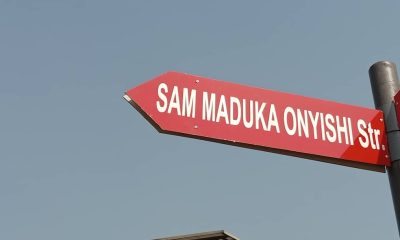

Street Named After Business Mogul, Sam Maduka Onyishi Unveiled in Asokoro
ShareBy David Torough, Abuja Authorities in the Federal Capital Territory on Saturday honoured renowned entrepreneur and philanthropist, Chief Dr. Sam...
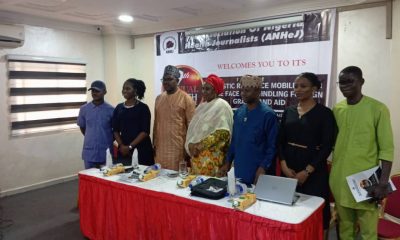

Experts Task Government on Increase in Domestic Funding
ShareBy Laide Akinboade, Abuja Experts in the health sector, at the weekend agreed that even though foreign grants and aid...