
NEWS
Niger Electoral Comission, Members Sworn – in.


From Dan Amasingha, Minna
Despite protestations from the opposition, the Chairman and Members of the Niger State Independent Electoral commission(NSIEC) were sworn into office yesterday.
The ceremony held at Senior Magistrate Court 7, where Halima Yusuf administered the oath of office and allegiance to the Commission’s Chairman and members.
Niger state Governor, Mohammed Bago commended the newly appointed officials for their reputation noting their distinguished service across various levels within Niger State singled them out for appointment
He emphasized the importance of their roles as they prepare to oversee the upcoming 2025 Local Government Council elections, urging them to begin preparations immediately.
The Governor reaffirmed the State Government’s commitment to providing all necessary support to ensure the commission’s success.
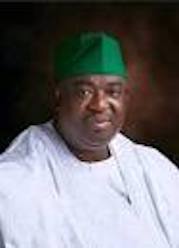
The newly appointed Chairman of the Commission, Engr. Mohammed Jibrin Imam said he was grateful to the Governor for entrusting them with this critical responsibility.
Acknowledging the challenges ahead, he assured the Governor that the commission would rise to the occasion and adhere to all prescribed electoral guidelines.
From Jude Dangwam, Jos
Plateau State Governor, Caleb Mutfwang has convened a strategic meeting with former governors of the state towards addressing the security challenges bedevilling the state.
The meeting held on Thursday at the News Government House Little Rayfield had the presence of former Governor Samuel Bitrus Atukum, former Governor Fidelis Tapgun, former Governor Joshua Dariye, former Governor Jonah David Jang and Former Governor Simon Lalong respectively.
Mutfwang maintained that the high-level engagement critically reviewed the prevailing security situation, particularly the recent violent attacks in rural communities across the state.
He noted that discussions were focused on fostering sustainable peace, strengthening unity, and promoting harmonious coexistence among all residents.
According to Governor Mutfwang, “I convened a strategic meeting with distinguished leaders and former Governors of Plateau State on Tuesday at the Government House, Little Rayfield, Jos. The meeting deliberated extensively on matters concerning the well-being, welfare, progress, and overall prosperity of the people of Plateau State.
“The high-level engagement critically reviewed the prevailing security situation, particularly the recent violent attacks in rural communities across the state. Discussions were focused on fostering sustainable peace, strengthening unity, and promoting harmonious coexistence among all residents.
“The leaders collectively resolved to pursue justice for all and to establish robust frameworks that reflect the enduring courage, discipline, hospitality and patriotism of the Plateau people within the Nigerian project,” he stated
The Governor reiterated that, “Emphasis was also placed on rebuilding fractured relationships and restoring trust, with the aim of reinforcing Plateau State’s longstanding identity as the Home of Peace and Prosperity,” says Mutfwang.

Pope Leo has criticised leaders who spend billions on wars and said the world was “being ravaged by a handful of tyrants” in unusually forceful comments during a visit to Cameroon.
The pontiff blasted those he said had manipulated “the very name of God” for their own gain, while touring a region ravaged by a deadly insurgency.
The remarks come just days after a high-profile spat with US President Donald Trump, who posted a lengthy attack on the Pope, a vocal critic of the US-Israeli military operation in Iran.
The Pope had voiced his concern about Trump’s threat that “a whole civilisation will die” if Iran did not agree to US demands to end the war and open the Strait of Hormuz.
Leo, who last year became the first US-born Pope, has previously also questioned the Trump administration’s approach to immigration.
“Leo should get his act together as Pope,” Trump wrote in a Truth Social post at the time.
The Pope told reporters at the start of his Africa tour that he did not want to get into a debate with Trump but would continue to promote peace.
Speaking in Cameroon, the Pope criticised leaders who “turn a blind eye to the fact that billions of dollars are spent on killing and devastation, yet the resources needed for healing, education and restoration are nowhere to be found”.
“The masters of war pretend not to know that it takes only a moment to destroy, yet often a lifetime is not enough to rebuild,” he said on Thursday.
The Pope also condemned “an endless cycle of destabilisation and death” in a “bloodstained” region of Cameroon that has been gripped by insurgency for nearly a decade.
“Those who rob your land of its resources generally invest much of the profit in weapons, thus perpetuating an endless cycle of destabilisation and death,” he told those gathered at a cathedral in the north-western city of Bamenda – the centre of the violence that has left at least 6,000 people dead and displaced many more.
“Peace is not something we must invent: it is something we must embrace by accepting our neighbour as a brother and as our sister,” the Pope said.
Separatist insurgents in Cameroon’s two Anglophone regions have been fighting the predominantly Francophone government since 2017.
Following Leo’s address, the Archbishop of Canterbury, Sarah Mullally, said that she stood with the Pope in his “courageous call for a kingdom of peace”.
The war in Iran has increasingly placed the Pope and the Trump administration at odds.
Soon after the first US and Israeli attacks on Iran, US Defence Secretary Pete Hegseth recited a highly controversial prayer at a Pentagon worship service that talked of “overwhelming violence” and “justice executed swiftly and without remorse”.
Then, during a Palm Sunday Mass in St Peter’s Square, the Pope said the conflict between Iran, Israel and the US was “atrocious” and that Jesus could not be used to justify war.
“This is our God: Jesus, king of peace, who rejects war, whom no one can use to justify war,” he told tens of thousands of worshippers gathered in Vatican City.
“He does not listen to the prayers of those who wage war, but rejects them.”
The pontiff also quoted the Bible passage Isaiah 1:15: “Even though you make many prayers, I will not listen: your hands are full of blood.”
Earlier this week, Trump launched a scathing attack on the Pope on social media, in which he described the leader of the Catholic Church as “WEAK on Crime and terrible for Foreign Policy” while portraying himself as a Jesus-like figure.
He later doubled-down on his criticism and refused to apologise – but deleted the AI-generated image of himself.
Asked about the US president’s remarks as he arrived in Algiers, the Pope said he had “no fear” of the Trump administration and that he would continue to speak out against war.
The Catholic leader’s wide-ranging Africa tour will include stops in 11 cities across four countries. It is his second major foreign visit since being elected to the papacy last year, and reflects the importance of Catholicism in Africa.
More than a fifth of the world’s Catholics – some 288 million people – live in Africa, according to figures from 2024.
By Raphael Atuu, Abuja
Residents of Waru District in Apo, within Nigeria’s Federal Capital Territory, are raising the alarm over what they describe as a prolonged and frustrating lack of electricity supply in the area.
Located not far from Abuja’s Central Area, Waru remains in near constant darkness, a situation many residents say has worsened over time despite the district’s proximity to key parts of the capital.
According to findings, electricity supply in Waru is not only irregular but nearly non-existent. In some cases, residents report going up to three consecutive days without power.
When electricity does come, it is often in the late hours of the night and lasts only for a few minutes or, at best, a couple of hours before being cut off again.The district, which hosts notable residential estates such as Efab Sunshine Estate, operates largely on prepaid metering systems. However, residents argue that paying for electricity upfront has not translated into reliable service delivery.
“It is frustrating to keep recharging meters without actually enjoying power,” a resident lamented. “We see nearby areas like Apo Resettlement and Kabusa enjoying stable electricity, yet Waru is left in darkness most of the time.”
This perceived disparity in power distribution has sparked questions among residents about fairness and accountability. Many are now openly questioning the operations of the Abuja Electricity Distribution Company (AEDC), the agency responsible for power supply in the area.
“Is AEDC selectively supplying electricity to certain areas?” another resident queried. “Why should a well-fast developing district like Waru, contributing significantly to Abuja’s growth both in population and infrastructure, be neglected?”
Multiple stakeholders and community representatives have reportedly visited AEDC offices in Apo to lodge complaints and seek explanations. However, these efforts have yielded little to no improvement, leaving residents feeling ignored and helpless.
Beyond the inconvenience, the erratic power supply poses serious security concerns. With prolonged darkness, the district becomes vulnerable to criminal activities, as street lighting and residential security systems are often rendered ineffective.
Businesses in the area are also bearing the brunt of the situation. Small and medium-scale enterprises, which depend heavily on electricity, are forced to rely on generators, leading to increased operational costs and reduced profitability. Some business owners say they are on the verge of shutting down.
The situation has also affected students and remote workers who rely on stable electricity for studying and online engagements.
Health implications have been noted as well, as residents struggle to preserve food and access basic cooling systems in the face of intense heat.
Observers argue that the persistent blackout in Waru reflects broader systemic issues within the power distribution network, including possible infrastructure deficits, load shedding practices, or administrative inefficiencies.
Residents are now calling for urgent intervention by relevant authorities, including the Federal Capital Territory Administration (FCTA) and regulatory bodies in the power sector, to investigate and address the root causes of the problem.
They are also demanding transparency from AEDC regarding electricity allocation and distribution patterns in Apo and its surrounding districts.
For many in Waru, the question remains unanswered: why does darkness persist in a district so close to the heart of Nigeria’s capital?
Until concrete action is taken, residents say they will continue to endure what has become a daily struggle living without reliable electricity in one of the country’s most important cities.


Mutfwang Holds Close Door with Former State Governors
ShareFrom Jude Dangwam, Jos Plateau State Governor, Caleb Mutfwang has convened a strategic meeting with former governors of the state towards addressing the security challenges bedevilling the state. The meeting held...

Lobi Stars Trim Squad to Push for Promotion
ShareThe Nigerian National League (NNL) side, Lobi Stars Football Club of Makurdi, has trimmed its squad and retained a few quality players to push for promotion to the...

Pope Criticises ‘Tyrants’ Who Spend Billions on Wars after Trump Spat
SharePope Leo has criticised leaders who spend billions on wars and said the world was “being ravaged by a handful of tyrants” in unusually forceful comments during a...


Nigerian Men Scared of Bold, Confident Women, Phyna Claims
ShareFormer Big Brother Naija winner, Josephine Otabor, popularly known as Phyna, has claimed that she is still single because Nigerian...

Residents Decry Persistent Power Outage in Abuja Community
ShareBy Raphael Atuu, Abuja Residents of Waru District in Apo, within Nigeria’s Federal Capital Territory, are raising the alarm over what they...

2027: Tinubu Meets Coordinators, Renews Plea for Unity, Rule of Law
ShareBy David Torough, Abuja President Bola Tinubu has called for unity, resilience and renewed commitment to nation-building, urging Nigerians to...

Gunmen Abduct 14 UTME Candidates in Benue Enroute Exams Centre
ShareFrom Attah Ede, Makurdi A wave of concern has trailed the ongoing Unified Tertiary Matriculation Examination (UTME) nationwide following the...

Army Honours Fallen Heroes as Brig. Gen. Braimah, Others Laid to Rest in Maiduguri
ShareFrom Muhammad Muhammad Al-amin, Maiduguri The Nigerian Army has conducted a solemn burial ceremony for Brigadier General Oseni Braimah, Captain...

Yusuf Congratulates Abubakar on Election as Int’l Academy of Food Science, Technology Fellow
ShareFrom Rabiu Sanusi, Kano The Governor of Kano State, Abba Yusuf has congratulated Professor Hafiz Abubakar on his election as...
NCA Urges Christians to Exercise Restraint amid ‘Rising Religious Provocations’
ShareFrom Agbo Emmanuel, Kaduna Chairman, Northern Christian Association (NCA) Rev. Joseph John Hayab has called on believers across Nigeria to...