
COVER
Nigeria ’ll Defeat Terrorism, Build Stronger Partnerships, Tinubu Vows

By David Torough, Abuja
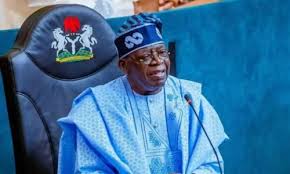
President Bola Tinubu has reaffirmed his administration’s commitment to defeating terrorism and strengthening diplomatic ties with Nigeria’s global partners.
“We are engaging the world diplomatically, and we assure all of you that we will defeat terrorism.
The task ahead is to move forward with clarity of purpose guided by the Renewed Hope agenda to build a prosperous Nigeria,” the President declared just before the Federal Executive Council entered a closed-door session on Thursday.The meeting, held yesterday at the Council Chamber of the Aso Rock Villa, Abuja, is the first gathering of the council since July.
His remarks come days after U.S. President, Donald Trump designated Nigeria as a ‘Country of Particular Concern,’ a move the Federal Government has described as a misrepresentation of the nation’s security situation.
In his first public comments on the matter, Tinubu said his government is engaging the international community to advance security, stability and economic growth.
“Despite political headwinds and fears, we will continue to engage with our partners.
“The success of the $2.3bn Eurobond, which was oversubscribed, is a sign of confidence in our economy.
“The task ahead is immense, but we are resolved to move forward with unity and purpose,” he said.
The president also assured Nigerians that the country remains united and resolute in its pursuit of peace and prosperity.
Tinubu commended members of his cabinet for their commitment to his Renewed Hope Agenda, emphasising the need for unity and focus in implementing government reforms.
Meanwhile,the House of Representatives on Thursday commenced an investigation into all security intervention funds disbursed by the Federal Government from 2020 to date, promising to be guided by transparency and accountability in examining how resources allocated for the protection of lives and property have been managed.
The Chairman of the Ad Hoc Committee on the Expenditure of All Intervention Funds on Security, Zakaria Nyampa, disclosed this during the inauguration of the committee at the National Assembly Complex, Abuja.
The Adamawa lawmaker said the probe was necessitated by the widening gap between the huge budgetary allocations to the security sector and the continuing wave of insecurity across the country.
“This is not a witch-hunt. Our duty is to ensure that every naira released for security serves its purpose to safeguard lives and property,” he said.
Nyampa explained that the probe would cover all intervention heads, special allocations, and procurement processes undertaken by beneficiary agencies.
The committee, he added, would also assess the impact of the spending on security outcomes nationwide.
“We are determined to follow the money with diligence, objectivity, and patriotism,” he said.
To ensure credibility and openness, the committee pledged to collaborate with the Ministry of Finance, the Budget Office, the Office of the National Security Adviser, defence and police authorities, as well as anti-graft agencies, to expose any shady transactions.
He further noted that the mismanagement of funds meant for security has grave consequences for national stability.
“When money meant to secure our nation is diverted, the cost is not just in naira and kobo—it’s in human lives. We owe it to Nigerians to get this right,” he said, assuring all that the committee’s report would help strengthen security governance and restore public trust.
The Speaker of the House of Representatives, Tajudeen Abbas, reaffirmed the House’s commitment to accountability, probity, and proper utilisation of all security intervention funds.
Abbas, represented by the Deputy Chief Whip, Ibrahim Isiaka, said the creation of the committee demonstrated the House’s unwavering resolve to ensure transparency in matters of national security.
He urged the committee members to uphold accountability, effectiveness, and fairness—values which, he said, are the core principles of the House of Representatives.
The Speaker commended Nyampa for accepting to lead the assignment with integrity and urged the committee to discharge its duties diligently.
Nigeria’s persistent security challenges—including insurgency, banditry, terrorism, and communal conflicts—have compelled successive governments to create special financial mechanisms known as security intervention funds. These funds are designed to provide swift financial responses to security emergencies and to support infrastructure projects that enhance safety nationwide.
The initiative gained prominence as part of federal efforts to complement regular budgetary allocations to security agencies and state governments. In recent years, the Federal Government has disbursed substantial sums to states and the Federal Capital Territory under the Infrastructure and Security Intervention Fund.
Between March 2024 and May 2025 alone, approximately ₦1.6 trillion was released to states from non-oil revenue savings. The fund was intended to strengthen internal security, improve public infrastructure, and cushion fiscal pressures following the removal of fuel subsidies.
In addition to federal disbursements, state governments also maintain security votes—monthly allocations meant to address state-level security concerns. These funds, however, have long been criticised for lacking transparency and accountability, as their utilisation often falls outside legislative oversight.
Despite the huge financial commitments, there are widespread concerns that the intervention funds have not significantly improved security outcomes.
Observers argue that misuse, poor coordination, and weak monitoring mechanisms have hindered their effectiveness. Civil society organisations have repeatedly called for greater transparency and clearer guidelines to ensure that the funds achieve their intended purpose.


By Tony Obiechina, Abuja
The Development Bank of Nigeria Plc (DBN) has launched DAWN: DBN Action for Women in Nigeria, unveiled its Impact Report and presented MSME Data Assets at the seventh edition of Annual Lecture held in Abuja.
DBN, in a statement on Thursday, said while delivering a welcome address, its Managing Director and Chief Executive Officer, Dr Tony Okpanachi, said the central challenge was no longer reforms themselves but ensuring benefits reach businesses at end of the chain.
He asked how to make sure benefits reach traders in Onitsha, fabricator in Aba, farmer in Kebbi and young founder in Yaba, noting that MSMEs accounted for about half of Nigeria’s GDP and more than eight in every ten jobs, adding that when reform works for MSMEs it works for most Nigerians.
He explained that reform becomes prosperity only when entrepreneurs can act on it whether through long tenor loans to buy equipment, banks willing to take risk or skills and records needed to grow.
He said working through Participating Financial Institutions DBN provides longer term funding, partial credit guarantees through subsidiary Impact Credit Guarantee Limited and capacity building including Entrepreneurship Training Programme.
He disclosed that as at December 2025 DBN had disbursed a cumulative N1.4 trillion to MSMEs through 84 Participating Financial Institutions creating about 1.6 million jobs nationwide.
Under the new five year strategy, the Bank aims to reach more than two million MSMEs with deliberate targets for women led businesses, youth led businesses and underserved states.
On DAWN, Okpanachi said finance alone had not enabled enough women-led businesses to scale.
He said initiative brings together financing, guarantees and credit support, technical assistance, outcome linked grants and market linkages delivered through banks, microfinance institutions, fintechs, aggregators, cooperatives and direct channels.
Its priority sectors are agriculture and exports, healthcare, arts and creatives, technology and green business.
He said DAWN is about moving gender focused lending beyond intention and turning access into opportunity.
On the sidelines of the lecture DBN and African Development Bank held a signing ceremony of AfDB DBN 61 million United States dollars Gender Line of Credit development that reinforces Bank commitment to women led enterprises.
Okpanachi urged Participating Financial Institutions to extend lending into sectors and states where access to finance has been limited, policymakers and regulators to measure reform by what changes for business at end of chain and MSMEs to formalise, keep good records and use support now available.
The Vice President as Special Guest of Honour was represented by Dr Fred Iklaga Senior Technical Adviser in the Office of Special Adviser to the President on Economy.
Keynote speakers were Chief Executive Officer of MTN Nigeria, Dr Karl Toriola, and Chairman of Nigeria Sovereign Investment Authority, Dr Segun Ogunsanya.
Fireside chat featured Chief Executive Officer of Sterling Bank Abubakar Suleiman, manufacturing and trade entrepreneur Mrs Omoyemi Chukwurah and by video Kola Masha of Babban Gona.
The Secretary to the Government of Federation, represented by Augusta Warren Bekaredebo, said 2026 tax reforms would bring relief to many small businesses expressing optimism that a lot of businesses will be smiling by next year because they will be exempted from tax.
By Tambaya Julius, Abuja
The Nigeria Labour Congress (NLC) has threatened possible nationwide industrial action following the failure of talks with the Federal Government over workers’ welfare, petrol prices and other outstanding labour demands.
The warning came after a meeting between the government and organised labour at the Ministry of Labour in Abuja on Thursday, October 22, ended without an agreement.
The congress has given the Federal Government until Tuesday, October 27, to make meaningful progress on the issues, warning that its relevant organs would decide the next line of action if the next meeting fails to produce concrete commitments.
The NLC has also directed its affiliates, state councils and civil society allies to begin mobilising members for possible nationwide action.
In a statement issued after the meeting, the NLC Acting General Secretary, Benson Upah, expressed disappointment over what he described as the government delegation’s lack of preparedness for the negotiations.
According to the congress, organised labour presented its demands in good faith but left the meeting without any concrete commitments from the government.
The demands include a reduction in petrol prices to 2024 levels, renegotiation of the national minimum wage, implementation of agreed tax relief measures and resolution of the terms of settlement involving the Joint Health Sector Unions (JOHESU).
The congress also called for the resolution of issues raised by the Joint Public Service Negotiating Council (JPSNC) over peculiar allowances, wage awards and hazard allowances.
The NLC said the government delegation lacked the necessary authority to engage meaningfully on the issues presented by labour representatives.
“The meeting between the Federal Government and organised labour, convened at the Ministry of Labour in Abuja on 22nd October 2026, has ended without resolution,” the statement said.
It added that the Minister of Labour requested that the meeting be adjourned until October 27 to allow the government to prepare adequately for further discussions.
The preparations, according to the statement, would include bringing relevant ministers and heads of departments and agencies to the negotiating table.
The congress said it remained open to dialogue but would not accept continued delays in addressing workers’ concerns.
“We will report back to our organs, and if no meaningful progress is made on Tuesday, the relevant organs of the NLC will decide the next line of action,” it said.
The labour body urged workers and members of the public to remain calm while the negotiations continue, even as it directed its affiliates and allies to prepare for possible industrial action.
“However, we urge all affiliates of NLC and TUC; all state councils and our civil society allies to be alert and start mobilising for a possible action across the nation while we hope that the tenets of our demands are met by the government,” the statement added.
The October 27 meeting is expected to provide another opportunity for both sides to address the outstanding issues and prevent a possible escalation of the dispute.
However, the NLC’s decision to begin mobilisation suggests that tensions could rise if the next round of talks fails to produce meaningful progress.
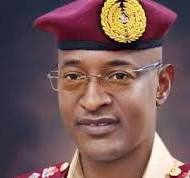
The Federal Road Safety Corps (FRSC) has barred its personnel from escorting politicians during campaigns for the 2027 general elections.
Zonal Commanding Officer, RS6, ACM Abimbola Owolabi, gave the directive during her maiden visit to the Cross River Command in Calabar on Wednesday.
Owolabi said patrol vehicles and sirens must not be used for political activities or private engagements, including weddings and funeral processions.
She directed officers deployed to campaign venues to focus exclusively on traffic management to prevent congestion and road crashes.
The zonal head warned personnel against leading political convoys or providing escorts for politicians, stressing that official vehicles must not be used for unauthorised purposes.



WAHO Steps Up Regional Health Surveillance After Ebola Case Confirmed in Abuja
ShareBy David Torough, Abuja The West African Health Organisation (WAHO) has intensified regional health surveillance following the confirmation of an...

2027: Ex-Nigeria Amb, Tarzoor Tackles Wike, Ortom over Comments on Benue, Alia
ShareFrom Attah Ede, Makurdi Ex -Nigeria’s Ambassador to Namibia, Terhemen Tarzoor, has warned the immediate past Governor of Benue State...

2027: Don’t Call Benue People Shenanigans, Alia not answerable to you- Ex- Amb, Tarzoor Tells Ortom, Wike.
ShareFrom Attah Ede, Makurdi Ex -Nigeria’s Ambassador to Namibia, Terhemen Tarzoor, has warned the immediate past Governor of Benue State...

DBN Signs $61m Credit Deal With AfDB, Unveils Support Initiative Report
ShareBy Tony Obiechina, Abuja The Development Bank of Nigeria Plc (DBN) has launched DAWN: DBN Action for Women in Nigeria,...

NLC Threatens Nationwide Action as Talks With FG Collapse
ShareBy Tambaya Julius, Abuja The Nigeria Labour Congress (NLC) has threatened possible nationwide industrial action following the failure of talks...

Top10 Magazine Names Umaru Kwairanga as Man of the Year 2026
ShareAlh. (Dr) Umaru Kwairanga, Group Chairman, Nigerian Exchange Group (NGX Group), has been named as the Top10 Magazine’s Man of...

UK, Nigeria to Deepen Defence, Security Cooperation
ShareThe United Kingdom has reaffirmed its commitment to deepening defence and security cooperation with Nigeria, with emphasis on military training,...


2027: INEC Steps Up Preparations, Completes Nine Activities
ShareBy Tambaya Julius, Abuja The Independent National Electoral Commission (INEC) has completed nine of the 14 activities on its timetable...

2027: Tinubu Accords Benue Security Top Priority, Tompolo Tells Supporters
ShareLeader of the PBAT Door-to-Door Movement, Government Tompolo, has called on the people of Benue state to come out enmasse...


Senate Demands Compulsory Screening of Foreign Arrivals
ShareBy Eze Okechukwu, Abuja The Senate yesterday ordered mandatory health screening for every international passenger arriving Nigeria airports, seaports, land...