
BUSINESS
Nigeria to Become Gold Jewelry Destination — Minister


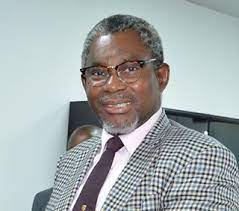
Mr Olamilekan Adegbite, Minister of Mines and Steel Development (MMSD), has stated that Nigeria will soon become gold jewelry making destination. Adegbite made this know on Friday in Abuja while conducting graduation ceremony for 21 selected youths trained on jewelry making.
According to him, Federal Government is making effort to make sure value is added to raw gold mined locally to attract foreigners and make Nigeria gold jewelry destination.
He said that the training as first of its kind was organised to strengthen the local production of jewelry, create jobs, increase livelihood standards and the creativity of Nigerians.He said that the training they acquired would also serve as import substitution as Nigeria is a large consumer of jewelry products from the United Arab Emirates, India, China and Europe.
He noted that gemstone and jewelry industry in the country remains underdeveloped, as gems are mined by artisanal operators and sold as rough stones in Germany, Indonesia, Sri Lanka and the United States.
He said that value addition to Nigerian gold and gemstone was critical to the diversification of the current government, as it moves away from over-dependence on oil. “We discovered that our gold is leaving Nigeria shore on a daily basis in raw form to other countries and after the gold is converted to jewelry the price will become so high that common man cannot afford it.
“We are going to retain our raw gold and add value to it and sell to our people. “We are currently building Gold Souk in Kano and Gemstone in Ibadan where our raw gold will be converted to jewelries and we can also export them.
“We have trained 21 youths as first set selected across the country to also train others in jewelry making and they will be empowered with starter packs,’’ he said. Dr Sallim Salaam, the Coordinator, Mineral Sector Support for Economic Diversification (MinDiver) Project, said that the training that started in October 2021 was sponsored by the MMSD and the World Bank.
Salaam said that the trainers were drawn from different countries such as: Begium, Germany, among others, adding that the trainees were certified upon completion of their training. “We expect them to go back to their states and open clusters with the assistance of the state governments to also train more people on gemstone cutting, polishing among others,’’ he said.
Mr Peter Vermandere, a Belgian trainer, said that the training was a big project, adding that the trainees had learnt new ways of improving and designing jewelries. A trainee from Edo, Ms Jessica Ogiuva, who spoke on behalf of other participants, appreciated the opportunity given to them. She promised that they would share the knowledge acquired with others in their respective states. (NAN)



By Tony Obiechina, Abuja
The Commissioner for Insurance/CEO, Mr. Olusegun Ayo Omosehin, and his management team have met with the members of the Constitutional Committee on “Mobilisation and Diversification” of the Revenue Mobilisation Allocation and Fiscal Commission ( RMAFC) led by Engr.
During their working visit to NAICOM Headquarters, Mr. Olusegun Ayo Omosehin, in his opening remarks, reaffirmed the critical role of the insurance sector regulator in supervising, regulating, and safeguarding the interests of insurance policyholders.
He highlighted insurance’s pivotal role in mobilising savings for long-term developmental projects and enabling businesses to thrive while managing risks effectively.
He also stressed the Commission’s commitment to ensuring insurance companies meet their obligations, thus contributing to the sustainability of the economy.
Speaking, Mohammed Baba emphasised the importance of revenue generation, institutional expansion, and employment creation for Nigerians through collaborative efforts.
The Commissioner for Insurance also acknowledged President Bola Ahmed Tinubu’s ambitious goal of growing the Nigerian economy to One Trillion United States Dollars ($1 trillion) by 2026.
He expressed the insurance sector’s intent to significantly contribute to this objective. Additionally, he mentioned ongoing efforts to embed insurance within the National Credit Scheme to ensure its sustainability.
Mr. Omosehin stressed the need for continuous advocacy and sensitization of government institutions about the vital role of insurance in national economic development.
From Joseph Amedu, Lokoja
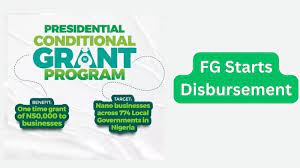
No fewer than 22,000 beneficiaries in Kogi will get N50,000 each, under the Presidential Conditional Grant Scheme (PCGS) to boost Micro, Small and Medium Enterprises (MSMEs) in the state
The Managing Director and Chief Executive Officer (MD/CEO) of Kogi Enterprise Development Agency (KEDA), Hon.
Okeji said the PCGS was being implemented by the Federal Ministry of Industry, Trade and Investment through the Bank of Industry (BOI) in partnership with the Kogi Government in line with the Renewed Hope Agenda of President Bola Tinubu.
He noted that the PCGS enrollment for beneficiaries of Nano businesses was flagged by Kogi Government simultaneously on Wednesday across the three senatorial districts in Okene, Ankpa and Kabba respectively.
He disclosed that over 22,000 beneficiaries across the 21 local government areas of Kogi would receive N50,000 each as grant to boost their nano businesses and improve sustainability.
According to him, about 1070 beneficiaries would get the grant from each of the 21 local government areas across the state.
“The PCGS is aimed at ameliorating the harrowing effects of the fuel subsidy removal, to provide a one-off grant of N50,000 to over 22,000 Nano business owners across Kogi State.
“We are grateful to Mr President for the impactful initiative at a time of stiff economic challenges for both businesses and the generality of Nigerian citizens.
“Mr President’s gesture is a sensitive step towards safeguarding the small business ecosystem which is the lifewire of the nation’s economy,” he said.
Okeji expressed gratitude to Gov. Ahmed Ododo for keying into the initiative and providing the adequate resources required to draw down the benefits to thousands of Kogi Nano businesses.
This, he said the governor was fulfilling his determination to strengthen the MSMEs which remained the backbone of the nation’s economy.
He added: “We thank our governor for swinging into action to provide the needed resources to complement the effort of the federal government in flagging off the scheme across Kogi.
“As we embark on this journey of empowering our Nano businesses today, let me remind you that you are the backbone of our economy.
“As such, the government of our dear Gov. Ahmed Ododo is determined to provide all the support that will boost your capacity and survival. We will not let you fail”, Okeji assured.
In his remarks, the Ohinoyi of Ebiraland, HRM Alh. Ahmed Tijani-Anaje, commended President Tinubu for the timely initiative, and eulogised the governor for ensuring that a larger number of Kogi citizens benefited from the scheme.
Our Correspondent reports that Okeji subsequently went round the state to monitor the enrollment exercise in Kabba and Lokoja.
Okeji further said that the enrollment exercise which was being conducted by officials of BoI, was expected to continue till Friday, while disbursement follows immediately.
One of the beneficiaries, Oyiza Bajeh from Adavi, thanked the President for the gesture, and appreciated the Governor for deeming it fit to bring the program to the grassroots.
“When I received a text message from BOI to come for data capture, I dismissed it as one of those scams. But upon a second thought, I decided to give it a tryer.
“Surprisingly, I met a huge crowd of market women, youth and even people with disabilities gathered here at the Ohinoyi palace for the exercise.
“We are very grateful to President Tinubu and Governor Ododo for the gesture,” Bajeh said.
By Ubong Ukpong, Abuja
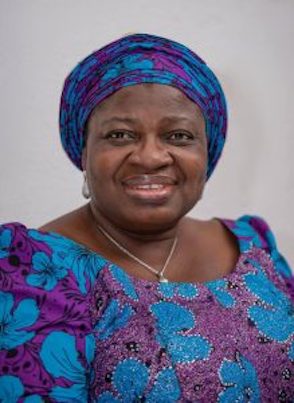
The Accountant General of the Federation, Mrs Oluwatoyin Madein on Wednesday said total revenue inflows to the Federal Government in the first quarter of 2024 amounted to N318.5 billion.
She disclosed this in a hearing by the House of Representatives Committee on Finance to monitor the revenue by agencies of the Federal Government.
Represented by the Director, Revenue Expenses, Felix Ogundayero, she said this was against a total expected revenue of N2. 591 trillion for the year 2024.
She added that a reconciliation of the figures was still ongoing and what was declared is what is available at the moment.
Madein expressed confidence that it would be an exceptional year in terms of revenue for the country based on the policies of the present administration.
She said the bottom up cash planning policy would be adopted in implementing the 2024 budget.
She said, “Reconciliation is still being done but the total revenue inflows to the federal government for January to March amounts to N318. 5 billion as against a total budget of 2.691 trillion.
“For the budget, the bottom up cash planning policy is on course and the 2024 budget is going to be implemented via that policy and officers have been retained and sensitization is ongoing to ensure that MDAs are well equipped on the modalities and conditionalities,” he said.
Chairman of the Committee, Hon James Faleke, said the essence of the sitting was in line with their duty as a parliament to oversee to ensure that the revenue estimates which were submitted by each agency before the 2024 appropriation bill was passed into law are met.
He said, “We have to ensure that those estimates are met. The Appropriation has become a law and so that revenue that you proposed to generate in the year we take it upon ourselves to do it on a quarterly basis to measure your performance.
“We want to ensure that revenue activities from January to March are in line with your appropriation. When you are giving us your figure, you tell us what the figure was expected for the generation and what you have achieved. Also tell us your expenditure,” Faleke said.
Chief Executive Officer of the Ministry of Finance Incorporated (MOFI), Dr Armstrong Takang, also disclosed that so far N101 billion have been declared as dividends by some agencies under it.
He said the report presented was not comprehensive as some agencies were yet to declare their dividends due to various factors.
He said, “So far we have received dividends declared by some companies. But for many others their reports are either being prepared and have not been completed or have been completed but they have not gone to their boards for approval and subsequently the AGM and as such we cannot use the number of their dividends until that has been done based on the corporate governance rules.
“Based on the number so far, it’s about N101 billion from the entities we have identified. We continue with other entities whose dividends have not been paid to ensure we go through the process of them passing it at the board level and the AGM before the figures are sent to us and the money rendered to the treasury.”
The Chairman of the Committee, Faleke, directed that all the agencies under MOFI should produce their annual report for the past 10 years.
“All organisations under MOFI should produce their annual report for the past 10 years and the dividend that ought to have been paid, what ought to have been paid, and what was paid by each of the agencies, and of course evidence of payments,” Faleke said.
The House also berated the Nigerian Agricultural Insurance Corporation for performing far below expectations.
The Corporation, represented by Dr Philip Ashunze, had said out of a total expected revenue of N10 billion, it had only generated N70 million so far.

Para Badminton: Bolaji, Chigozie qualify for Paris 2024 Paralympics
ShareThe duo of Mariam Eniola Bolaji and Jeremiah Chigozie have qualified for the Paris 2024 Paralympic Games coming up from...


FCTA Moves to Curb Medical Tourism
ShareBy Laide Akinboade, AbujaFederal capital Territory Administration (FCTA) has pledged to provide the necessary support for the successful completion and...


Ortom, Ode, Asemakaha Felicitates With Alia on 58th Birthday
ShareFrom Attah Ede, Makurdi Former Governor of Benue State, Chief Samuel Ortom, the incumbent Deputy Governor, Barr Sam Ode and...

NAICOM, RMAFC Collaborate on Economic Diversification
ShareBy Tony Obiechina, AbujaThe Commissioner for Insurance/CEO, Mr. Olusegun Ayo Omosehin, and his management team have met with the members...

22,000 Beneficiaries to Get N50,000 Nano Businesses Grant in Kogi
ShareFrom Joseph Amedu, LokojaNo fewer than 22,000 beneficiaries in Kogi will get N50,000 each, under the Presidential Conditional Grant Scheme...

CBN Unveils Strategy to Boost Remittances
ShareBy Tony Obiechina, AbujaThe Central Bank of Nigeria (CBN) has activated plans to double foreign-currency remittance flows through formal channels...


Accountant General Declares N318.5b Revenue Inflow in First Quarter
ShareBy Ubong Ukpong, AbujaThe Accountant General of the Federation, Mrs Oluwatoyin Madein on Wednesday said total revenue inflows to the...

Senate Charges Army, Police to Increase Presence in Uzo-Uwani to Forstall Peace
ShareBy Eze Okechukwu, AbujaThe Senate yesterday charged the Inspector General of Police (IGP) Kayode Egbetokun and Chief of Army Staff...


Ebonyi LG Polls: EBSIEC Gives 3rd June Ultimatum for Political Parties to Conclude Primaries
ShareBy Godwin Okeh, AbakalikiEbonyi State Independent Electoral Commission, EBSIEC, on Wednesday gave 3rd June 2024 ultimatum for all political parties...

Reps Member Calls for Urgent Intervention in Federal Teaching Hospitals
ShareBy David Torough, AbujaThe Chairman, House of Representatives Committee on Health Institutions, Amos Magaji has called for an urgent financial...