
Oil & Gas
Nigeria Tops Global Index as LNG Supply to Surge From 2027


Global Liquified Natural Gas (LNG) supply is set to reach record level from 2027, driven by new projects and expanded production in the U.S., Qatar, and key African producers such as Nigeria, Algeria and Morocco.
According to Bloomberg’s Global LNG Market Outlook 2030, global supply will reach 594 million tons by 2030—a 42 per cent increase from 2024—with a projected 15-million-ton oversupply in international markets.
While geopolitical risks and potential project delays could alter this outlook, the prospect of a sustained LNG surplus raises a pressing question for Africa: how can the continent strengthen domestic gas value chains to shield itself from global market volatility?
Recent developments indicate progress toward a more integrated African gas economy.
Nigeria is expanding cross-border and power generation infrastructure as captured by the report.
Major pipeline projects include the $25 billion Nigeria-Morocco Gas Pipeline, spanning 13 West African states, the Trans-Saharan Gas Pipeline connecting Nigeria to Algeria, and the $1.5 billion Mozambique-Zambia pipeline announced in 2025.
Also, LNG terminals designed for domestic and regional access are under construction at Richards Bay in South Africa and the Port of Nador in Morocco. Ethiopia recently signed a landmark agreement to advance the Gas-by-Rail Economic Corridor Initiative, a 75,000-kilometre freight railway system set to deliver LNG to more than 40 sub-Saharan nations.
Senegal is developing a multi-phase gas network linking offshore production to power plants, industrial zones, and urban centres, while Ghana plans five multi-purpose petrochemical plants producing 90,000 barrels per day of chemicals, including fertilisers and lubricants.
A continental push toward gas-to-power is increasingly evident, backed by policy reforms and initiatives to expand electricity access.
The African Energy Chamber (AEC) outlook projects natural gas supplying 45 per cent of Africa’s power by 2050.
Countries such as Nigeria, South Africa, Angola, Senegal, Ghana, and Mozambique have incorporated gas-to-power targets into national strategies, aiming to translate rising production into reliable electricity, cleaner cooking solutions, and broader economic growth.
With domestic gas demand increasing, infrastructure projects underway, and export markets becoming increasingly competitive, African Energy Week 2026 will serve as a strategic platform to reposition gas not merely as an export commodity but as a foundation for long-term energy security, industrial development, and inclusive growth across the continent
Africa’s natural gas production is on the rise, with multiple LNG projects under development across the continent.
Currently, North Africa—including Algeria and Morocco—accounts for two-thirds of Africa’s gas output, but the African Energy Chamber’s (AEC) State of African Energy 2026 Outlook projects this share falling to 40 per cent by 2035 as sub-Saharan production accelerates.
By 2050, sub-Saharan LNG supply could quadruple, while African gas demand is expected to grow 60 per cent, from 55 billion cubic meters (bcm) in 2020 to 90 bcm.
Despite this growth, the majority of Africa’s gas continues to be exported. Limited pipeline networks, underdeveloped transmission systems, and inadequate processing and storage infrastructure prevent gas from reaching domestic markets.
Consequently, LNG exports remain the most viable monetisation route, supported by international offtake contracts and financing structures. Domestic infrastructure projects often face financing challenges, as patient capital, government backing, and credit enhancements are required—factors more readily available for export-focused LNG developments.
Analysts argue that closing this gap will require an infrastructure-led strategy linking production to domestic pipelines, power generation, and regional interconnections.
International oil companies operating in Nigeria add other African countries are making significant progress in providing economic growth support to host communities which is now reducing restiveness in oil bearing regions.
According to Africa Energy Week, global energy companies’ now expanding local engagement reporting frameworks, depends on whether local engagement principles translate into local economic participation, infrastructure development and technology transfer.
Chevron, one of the continent’s longest-standing operators, that balance is particularly visible across its operations in Nigeria, Angola and the wider region.
Chevron’s sustainability reporting highlights community investment, environmental protection and workforce development.
In Nigeria, Chevron has made local supply chains a central pillar of its local engagement commitments. Over the past decade, Chevron has spent an estimated $1 billion annually on Nigerian suppliers and service providers, directing more than $10 billion to domestic contractors and businesses. The spending supports Nigeria’s local content framework while helping build indigenous capacity across engineering, logistics and oilfield services.
Across Africa, however, local engagement reporting by IOCs is often criticized for emphasizing corporate social responsibility projects rather than deeper economic integration. While community investment and environmental initiatives remain important, African policymakers increasingly prioritize local participation in project development, procurement and energy infrastructure.
Chevron’s project portfolio illustrates both the opportunities and the challenges of bridging this gap.
In Angola – where the company has operated for nearly 70 years through its subsidiary Cabinda Gulf Oil Company more than 90 per cent of the workforce is Angolan, reflecting long-term efforts to localize employment and technical expertise. Over the years, Chevron and its partners have invested more than $250 million in social and community development programs across the country, supporting healthcare, education and economic initiatives.
In Angola, the Sanha Lean Gas Connection Project linking offshore gas fields in Blocks 0 and 14 to the Angola LNG facility demonstrates how major energy infrastructure can contribute to domestic value creation. The project allows associated gas to be monetized rather than flared while strengthening Angola’s gas value chain and supporting long-term energy security.
Beyond Angola, Chevron continues to expand its footprint across the continent. The company maintains active exploration programs in Nigeria, holds stakes in producing assets in Equatorial Guinea and is evaluating offshore opportunities in markets such as Namibia and Algeria. As African countries look to expand oil and gas development while building stronger domestic industries, pressure is growing on international operators to ensure local engagement commitments translate into tangible economic impact.
This growing focus on implementation is one reason industry platforms are playing a larger role in shaping the conversation.
“Africa doesn’t need more sustainability reports sitting on shelves,” says NJ Ayuk, Executive Chairman of the African Energy Chamber. “What we need are partnerships that build industries, train African workers and keep more of the value from our resources on the continent. African Energy Week provides a platform for stakeholders not only to promote projects, but to ensure sustainability commitments translate into measurable outcomes.” Adding that Chevron is leading the way through its actions on the continent.
“We need partnerships that build industries, and that is exactly what Chevron is doing.”
As local engagement expectations continue to evolve, international operators like Chevron face increasing scrutiny over whether sustainability commitments translate into real economic participation. In Africa’s energy sector, the most meaningful local engagement metric may ultimately be local content and the extent to which global companies help build lasting industries alongside their projects.
“Chevron’s training and development initiatives across Africa have significantly empowered local communities. Many individuals trained by Chevron have gone on to assume roles in public service, bringing enhanced capabilities and best practices to their work,” Ayuk states.
Furthermore, a substantial number of alumni have entered the private sector, successfully leading world-class companies, a testament to the valuable skills acquired during their time with Chevron.
“By fostering entrepreneurship, Chevron is inspiring many Africans to establish and manage their own businesses,” he concludes.
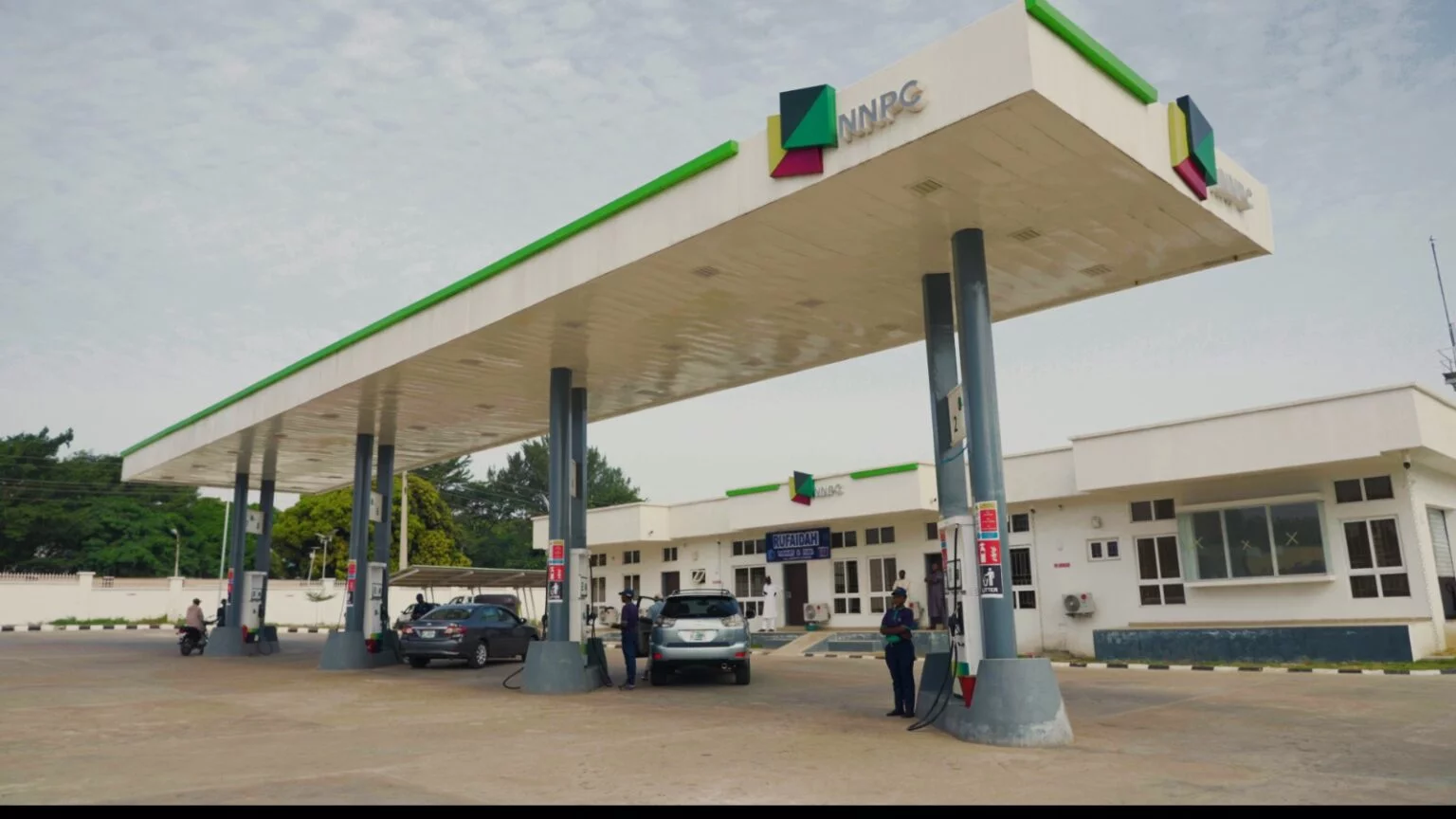
The Nigerian National Petroleum Company Limited has reduced the pump price of petrol at its retail outlets to N1,130 per litre in Lagos and N1,165 per litre in Abuja.
The new pricing reflects a N100 reduction from the previous N1,230 per litre in Lagos and a N95 decrease from N1,260 per litre in Abuja.
Checks showed that the revised price was being dispensed at several NNPC retail stations in Lagos, including outlets along Isheri Oshun Road, Apple Junction and Ago Palace Way.
Similarly, some stations operated by the national oil company in the Federal Capital Territory were selling petrol at N1,165 per litre, including outlets in Jabi, Lifecamp, Wuse Zone 5 and Wuse Zone 4.
The price adjustment follows a recent reduction in the ex-gantry price of petrol by the Dangote Refinery, which lowered its rate to N1,075 per litre amid easing global oil prices.
According to OilPrice.com, Brent crude prices recorded a sharp reversal on Tuesday, falling by nearly 27 per cent from the previous day’s high of $119 per barrel to about $87 per barrel.
Similarly, diesel is now priced at N1,430 per litre at the gantry, representing a N190 reduction from the earlier price of N1,620 per litre.
The Dangote Refinery on Tuesday reduced its petrol gantry price by N100, from N1,175 to N1,075 per litre.
The move followed a slump in global oil prices, with Brent crude dropping to $89 per barrel from over $100 on Monday.
Officials of the refinery confirmed the development to our correspondent, adding that diesel prices have also been reduced.
They stated that petrol supplied via coastal distribution channels will now sell for N1,050 per litre, reflecting a slight differential for marine logistics.
Similarly, diesel is now N1,430 per litre at the gantry, representing a N190 reduction from the earlier price of N1,620 per litre.
According to oilprice.com, Brent crude prices witnessed a dramatic reversal on Tuesday, plunging nearly 27 per cent from the previous day’s high of $119 per barrel to as low as $87 per barrel.
The Dangote Refinery reportedly blamed global crude volatility for the repeated price hikes, citing tensions arising from the US-Iran conflict.



Kano Gov’t Says Emir Sanusi will Lead Sallah Durbar
ShareBy Aliyu Askira, Kano The Kano State Government has finally announced that the Emir of Kano, Muhammadu Lamido Sanusi II, will lead this year’s Eid-el-Fitr Durbar,...

Labour Party Fixes May 23 for Presidential Primary
ShareThe National Executive Council (NEC) of the Labour Party has fixed May 23 for its presidential primary. Senior Special Adviser (Media) to the Interim National Chairman,...


FG Seeks Partnerships to Transform Correctional Farms Into Productive Agricultural Hubs
ShareThe Federal Government has called for more partnerships with private sector operators in the transformation of the Correctional Farm Centres into highly productive agricultural hubs. Minister of Interior Dr. Olubunmi...
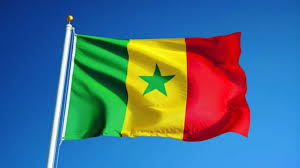

Senegal Government Alleges corruption over Afcon CAF Ruling as Morrocco Celebrates
ShareThe Senegalese government has called for an “independent international investigation” into “suspected corruption” at African football’s governing body after it stripped Senegal of the...


Service Chiefs Storm Maiduguri as Tinubu Orders Crackdown on Renewed Insurgency
ShareFrom Muhammad Muhammad Al-amin, Maiduguri The Chief of Defence Staff (CDS), General O.O. Oluyede, alongside the Chief of Army Staff (COAS), Lieutenant General Waidi...


FG Secures Coventry University Deal to Deliver UK Degrees in Nigeria
ShareThe Federal Government has secured a partnership deal with Coventry University under a Transnational Education (TNE) arrangement to establish a...
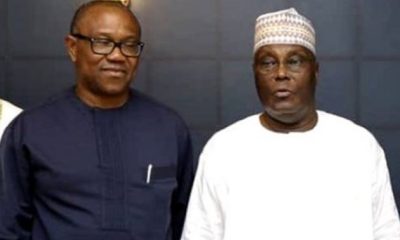

Malami Regains Freedom, Salutes Atiku, Obi, El Rufai, Tambuwal, Others
ShareFormer Attorney-general of the Federation (AGF) and Minister of Justice, Abubakar Malami who has been granted bail after meeting bail...
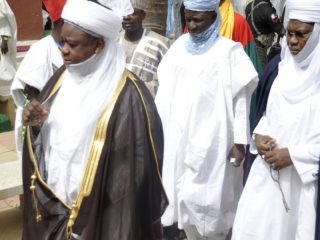
Sultan Announces Friday, Eid-el-Fitr as FG Declares Two- day Holidays
ShareThe Sultanate Council of Sokoto has declared Friday, March 20, 2026, as the first day of Shawwal 1447AH, marking the...


U.S./Israel-Iran War: Lessons for Nigeria from Gulf War Oil Windfall
ShareBy Emmanuella Anokam During the Gulf War which took place between Aug. 2, 1990 and Feb. 28, 1991, Nigeria reportedly...


Safeguarding Nigerians against AI Fakes and Digital Fraud
ShareBy Tolu Aiyegbusi As Artificial Intelligence (AI) continues to advance, creating highly realistic voices, faces, and even emotions, Nigerians are...