
Foreign News
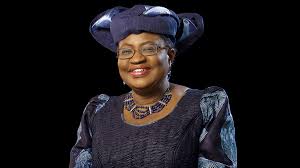
Nigerian Economist Okonjo-Iweala Becomes First Female, First African WTO Chief


The World Trade Organisation (WTO) members on Monday elected Nigerian economist, Dr Ngozi Okonjo-Iweala, to be the next director-general of the organization.
She will be the first woman and the first African to lead the WTO.
“WTO members have just agreed to appoint Dr Okonjo-Iweala as the next Director-General of the WTO.
The decision was taken at a special meeting today of the organisation’s General Council.
“Dr Okonjo-Iweala will become the first woman and the first African to head the WTO,” the WTO said in a statement.
Okonjo-Iweala will assume duties on March 1, while her term will expire on Aug. 31, 2025, but it could be renewed, the organisation noted.
Fellow female leaders, such as European Commission’s President Ursula von der Leyen and President of the European Central Bank Christine Lagarde, have already congratulated Okonjo-Iweala on the appointment.
“This is an historic moment for the entire world. I’m so glad to see a woman from Africa at the head. Europe is fully behind you.
“We support the reform of the WTO and will help you protect the rules-based multilateral trading system,”Von der Leyen said on Twitter.
Lagarde noted that she has “known Ngozi for many years. Her strong will and determination will drive her to tirelessly promote free trade to the benefit of people worldwide.”
Okonjo-Iweala’s appointment follows months of deadlocked discussions between the WTO members on who should be chosen as the next director-general since former chief Roberto Azevedo stepped down in August, a year earlier than his second four-year term was set to end.
The delays in the appointment of WTO chief reportedly stemmed from the reluctance of former U.S. President Donald Trump to approve the Nigerian economist’s candidacy.
The Trump administration favoured South Korean Trade Minister Yoo Myung-hee.
However, after Joe Biden assumed presidency, the South Korean minister decided to quit the race paving the way for Okonjo-Iweala’s selection.
The economist and expert in international finance and development is regarded as a skilled negotiator and consensus builder, having gathered experience in Africa, Asia, Europe, Latin America and North America.
The 66-year-old chairs the GAVI Vaccine Alliance and sits on the board of Twitter.
She was recently appointed African Union Special Envoy for the continent’s access to the COVID-19 tools accelerator.
Okonjo-Iweala spent 25 years as a development economist at the World Bank, during which she quickly rose through the ranks to become managing director of operations.
She spearheaded several World Bank initiatives to assist low-income countries during both food and financial crises, generating more than 40 billion dollars for the International Development Association (IDA), the World Bank’s grant and soft credit arm.
Okonjo-Iweala twice served as Nigerian finance minister (2003-2006 and 2011-2015) and briefly acted as foreign minister in 2006. She was the first Nigerian woman to hold both positions.
She earned an economics degree from Harvard University (1976), graduating magna cum laude, a doctorate from the Massachusetts Institute of Technology (MIT) and received 15 honorary degrees from universities across the world.
Okonjo-Iweala is the author of numerous books and articles on finance and economics.
Transparency International named her one of eight inspirational female anti-corruption fighters in 2019, while Fortune Magazine called her one of the 50 greatest world leaders in 2015.
In 2014, Time Magazine listed her among the top 100 most influential people in the world.
Okonjo-Iweala is married with four children and has three grandchildren. (Sputnik/NAN)





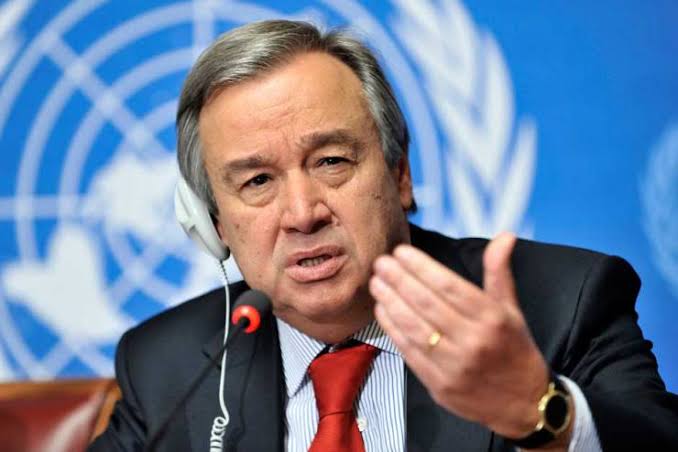
UN Secretary General António Guterres on Monday called for a peaceful future for Israelis and Palestinians ahead of the third anniversary of the Oct. 7 attacks by the militant organisation Hamas on Israel.
“Let this anniversary mark not only another year of mourning, but also a renewed determination to build a different future,” Guterres said in New York.
He said Israelis and Palestinians should be able to “live side by side in peace and security, with their rights, dignity, and aspirations fulfilled. “These horrors must never be repeated, “He added.On October 7, 2023, Hamas and other armed groups killed more than 1,200 Israelis and foreign nationals and abducted 251 people to Gaza.The attacks triggered the Gaza war, in which more than 74,000 Palestinians have since been killed, according to the Hamas-controlled health authority in Gaza.
A ceasefire has been in place since October 2025, although deadly attacks have continued.
Relations between the Israeli government and the United Nations remain deeply strained, with Israel accusing Guterres of bias and the UN chief repeatedly criticising Israel’s conduct in Gaza.
Guterres also paid tribute to the victims of the Oct. 7 attacks.
“Nothing can justify these atrocities,” he said.
“Their suffering, and the enduring grief of their families, must never be forgotten.”
The UN chief also highlighted the suffering of Palestinians in Gaza following the war.
“Their suffering, too, demands an end, now,” he said.
Guterres said the ceasefire had brought some relief but had yet to deliver security, adequate humanitarian assistance or a credible path to recovery and peace.
He urged all sides to fully implement their commitments and move to the next phase of the ceasefire.
“It is time for the ceasefire to become permanent. It is time to allow humanitarian assistance at scale.
“And it is time to respect international law,” he said.
“We must build the political path to lasting peace across the whole region.”
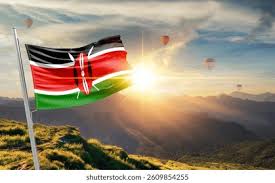
Kenya has confirmed its first case of Ebola, a Kenyan citizen who has been living in the Democratic Republic of Congo for the past seven years.
Health Minister Aden Duale said the patient, who fell ill a month ago, and was treated in several hospitals in DR Congo, died days after arriving in Nairobi.
Duale said the patient boarded a flight on Saturday and underwent normal public screening at the main airport in Nairobi before he was transferred by a relative to a hospital in the city.
More than 4,000 people have died from Ebola in DR Congo this year, in what is the second most deadly known outbreak of the disease.
Shortly after DR Congo declared an outbreak of Ebola in May, it was also reported in Uganda, where two people have died. However, the World Health Organization (WHO) declared the county free of the disease in August.
Since then, all cases of the disease have been declared in DR Congo.
The current outbreak has been caused by the Bundibugyo species of Ebola, which is relatively rare, with no known vaccine.
Duale confirmed that the Kenyan national had tested positive for the Bundibugyo species.
According to the minister, the patient first travelled by road from DR Congo to the Ugandan capital Kampala, where he boarded a flight to Nairobi
Duale said that after being taken to the Nairobi Hospital, the patient was transferred to an isolation facility which was built during the Covid-19.
It was there that the patient “developed fever, chills, intense fatigue and weakness, painful swallowing, muscle pain and bleeding under the skin”.
The patient died at 23:30 (20:30 GMT) on Monday and his burial is planned for later on Tuesday in line with public health safety protocols.
At least 28 contacts, including family members and healthcare workers, have been identified, while health authorities are tracing a further 23 passengers and four crew members who travelled on the same flight.
So far, WHO has recorded 4,082 deaths out of 8,463 cases since the emergence of the Bundibugyo species of the virus.
There are currently no approved vaccines or treatments for the species, which is highly infectious.
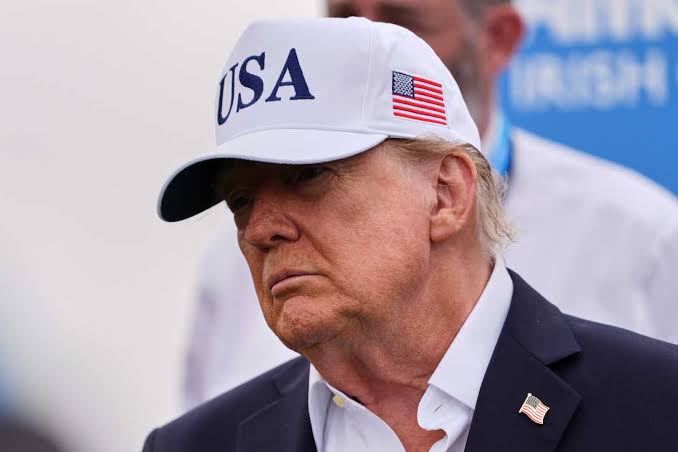
President Donald Trump has infused his ongoing feud with the White House press with a new level of acrimony.
Journalists from three major media outlets – CNN, Politico and MS Now – were denied access and had their press credentials confiscated on Saturday morning as they attempted to enter the White House grounds for work.
As media watchdog organisations and the White House Correspondents Association cry foul, Trump appears set to press ahead with a sweeping effort to punish these outlets.
In his Truth Social post announcing his decision on Friday, he said he was “banning” the organisations because “of their constant ‘reporting’ of fake news”.
In remarks later that day, he complained that “something is wrong with a country that can allow people to write purposely negative stories”.“If they want to write them, that’s fine,” he continued. “I don’t have to let them into the people’s house”, he said, referring to the White House.
The president’s frustration at the media, however, came after a week of setbacks in which major institutions handed him a series of losses across his agenda.
First, the Supreme Court blocked his plan to restrict mail-in voting ahead of the midterms. This prompted Trump to lash out at the court’s justices including those he had appointed. “These are not the people I interviewed to serve on the United States Supreme Court,” he said.
The Federal Reserve, the US central bank, then raised interest rates after Trump had spent months arguing they should be cut. This was followed by a judge ordering his administration to give 30 days’ notice before making any changes to the Kennedy Center arts venue in Washington DC after the president warned it could be “ripped down”.
These headlines, combined with approval ratings that recently sunk to record lows for his second term, suggest Trump is facing challenging political headwinds.
His latest attack on the press, however, raises clear legal questions.
The First Amendment to the US Constitution forbids Congress from “abridging” the freedom of the press. It is language that courts have long interpreted as preventing the government from discriminating against the media based on the content of their coverage.
All three targeted news outlets have promised to file lawsuits challenging Trump’s decision.
Although the breadth of this move is unprecedented, it is far from the first time the Trump administration has attempted to limit or deny access to the White House to members of mainstream media outlets.
In his first term, the administration revoked CNN correspondent Jim Acosta’s press credentials, setting off a legal battle that was ultimately resolved in the journalist’s favour. It also temporarily suspended the pass of a reporter who had a heated argument with White House adviser Sebastian Gorka – a move that also was subsequently blocked by the courts.
Last year, the White House banned reporters for the Associated Press from participating in the president’s press pool – which allows media outlets access to smaller in-town and travelling presidential appearances – because the newswire service would not follow Trump’s move to rename the Gulf of Mexico as the Gulf of America.
That dispute also led to a protracted – and yet to be fully resolved – legal battle, prompting the White House to change press pool rules to drop the guaranteed spot for all wire services.
The White House bans, however, represent a dramatic escalation.
The restrictions include access to the entirety of the White House grounds, not just the press pool. And they target entire news organisations, not just a single disfavoured correspondent.
While Trump has been clear about the motives behind his decision, he has shed little light on why he has acted now. He has regularly criticised his press coverage since he first entered national politics more than a decade ago, but he said on Friday there was no specific incident that prompted his announcement.
At the moment, however, the president is embattled.
Even beyond the week of clear setbacks, he is in the midst of an unpopular and difficult-to-resolve war of choice in Iran, which has led to a surge in energy and other consumer prices, deflating his standing with the American public.
Polls also suggest his party faces an uphill battle to retain control of the House of Representatives and perhaps the Senate in November’s crucial midterm congressional elections.
His attempts to improve the public’s mood by touting his accomplishments in campaign events and at his Republican Party’s convention earlier this month in Texas have, at least so far, proven ineffective.
There may be more behind Trump’s decision to lash out at the media this weekend. But it could also simply be an indication of presidential frustration in the face of events and circumstances, some of his own making, that are turning against him.


ASUSS Opposes NUT Strike in FCT, Urges Teachers to Ignore Stay-at-home Directive
ShareBy Laide Akinboade, Abuja The Academic Staff Union of Secondary Schools (ASUSS), Federal Capital Territory (FCT) Chapter, has dissociated itself...
Edo Varsity Lecturer Dies after Sex Romp in Hotel
ShareA senior lecturer at the Ambrose Alli University, Ekpoma in Edo State, Dr. Matthew Uwuigbe, has died under mysterious circumstances...

Over 84 Per Cent Nigerians willing to Vote During 2027 Elections – Yiaga
ShareYiaga Africa said 84 per cent of Nigerians intend to vote during the 2027 general elections, urging political parties to...

PNC 2026: NCDMB, DMG Affirm Collaboration with Bayelsa, Unveil New Activities
ShareFrom Mike Tayese, Yenagoa As preparations intensify for the 2026 edition of the Practical Nigerian Content (PNC) Forum, slated for...

Tinubu’s $700 Billion Mineral Resources Deal With America at Whose Interest?
ShareBy Hajia Hadiza Mohammed For some time now the hottest issue of debate in the Nigeria media space has been...

Atiku’s Production Subsidy: Has politics overtaken economics?
ShareBy Kayode Oladele Alhaji Atiku Abubakar, former Vice President of Nigeria and presidential candidate of the African Democratic Congress, (ADC),...

2027: Governors’ Backing Boosts Tinubu’s Chances, says Presidency
ShareBy Tambaya Julius, Abuja The Presidency has said the growing number of governors backing President Bola Tinubu has strengthened his...


Security Operatives Rescue 20 Abducted NYSC Members in Imo
ShareBy Tambaya Julius, Abuja Security operatives have rescued 20 members of the National Youth Service Corps (NYSC) who were abducted...

Nigeria’s Oil Reforms will Unlock $50bn Deep Offshore Investments – Tinubu
SharePresident Bola Tinubu said recent reforms in Nigeria’s oil and gas sector are designed to unlock up to 50 billion...
Ododo Condoles Families of NAF Personnel, Armed Forces Over Ondo Crash
ShareFrom Joseph Amedu, Lokoja Kogi State Governor, Ahmed Ododo has commiserated with the families of the Nigerian Air Force personnel...