
NEWS
Nigerians Using Social Media to Instigate Violence, Buhari Laments

By Mathew Dadiya, Abuja
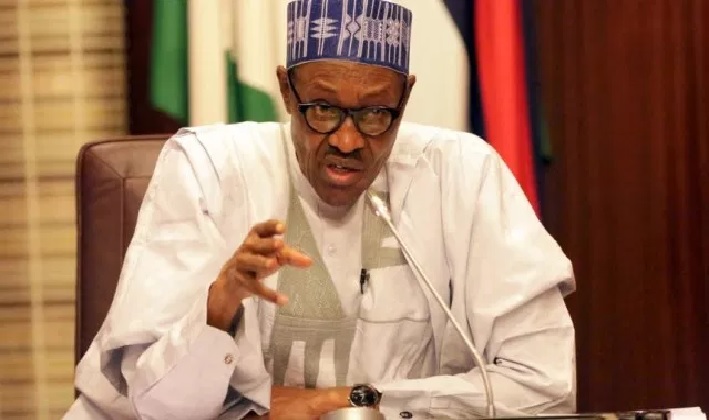
President Muhammadu Buhari has said that technology has been abused as a tool for instigating violence, instead of its good intent.
The President made the assertion on Friday, when he received in audience the Chairman and Board members of the Federal Radio Corporation of Nigeria FRCN, at the State House, Abuja.
The President said: “Generally, technology has been enabler for good.
However, in recent times, we are seeing this platform more and more being used to instigate violence and hate.“Nowhere is this disturbing trend more apparent than in the various media platforms, where fake news is gaining momentum and is being used to divide and destabilise communities and indeed nations around the world.
“We see images being manipulated to give legitimacy to lies. We hear voices on radio preaching falsehood and hatred. We also read stories that are already sponsored by individuals who stand to gain at the expense of truth, peace and harmony,” he said.
The Nigerian leader said that despite all these, the powerful weapon that can counter such manipulations is truth.
“Like I mentioned a few months ago, at the World Economic Forum in Jordan, since digital information age is borderless, this means we must be ready to respond with the best weapon we have; truth,” he said.
The president therefore, urged journalists to save their profession by tackling the growing trend of fake news.
“Journalism as a profession is primarily based on being truthful. With the growing increase in fake news, the future of your profession is under threat and therefore you must be ready to correct this and safeguard your professionalism and reputation,” the President advised.
The President charged the FRCN to proactively develop programmes based on truth, facts and broader national interest.
“You should also have strategies to react to fake information and sensitise our citizens not to believe stories at face value especially when the source is unknown or not credible, where supporting facts are not available.”
Commenting on the requests presented by the FRCN Board, the President advised the Corporation to make a formal presentation through their supervising ministry.
In his remarks, the Board Chairman of FRCN, Aliyu Hayatu, advocated more funding for the broadcast outfit, in order to compete favourably with its equals.
“It should be noted here, Mr President, that powerful foreign countries such as Germany, China, Britain France and the US, spend the equivalent of billions of Naira of their tax payers’ money to broadcast in local Nigerian languages.
“Only recently the British government set aside about two hundred and seventy million pounds sterling, the equivalent of one hundred and thirty-five billion naira, to enable the BBC expand and boost its foreign languages broadcast. As part of this expansion, the BBC is now broadcasting in lgbo, Yoruba and Pidgin English, in addition to the well establish Hausa language broadcast which has now been on, for well over fifty years.
“The sponsors of these foreign broadcast outfits are not competing with each other in broadcasting to Nigerians for immediate gains in terms of Naira and Kobo. The competition is for the soul and mind of Nigerians. The regrettably disturbing result is that because of the very weak transmission capability of particularly, the FRCN, Nigerians are left with no option but to listen more and more to these foreign radio broadcasts,” he said.
He pledged FRCN’s unwavering support for the success of the current administration’s next level agenda.








By David Torough, Abuja
Precious Adugbo, a member of The Master’s Place International Church, has condemned what he described as a misleading portrayal of Pastor Korede Komaiya’s sermon titled “Supernatural Speed,” urging the public to listen to the full message before drawing conclusions.
Adugbo, who said he was present at the service, argued that portions of the sermon currently circulating online had been taken out of context and presented in a way that distorted the overall message.
The controversy followed a testimony in which Pastor Komaiya spoke about the transformative power of God and made statements including: “If you do what I teach, you will be a millionaire in 90 days, if not shorter.
If you do what I teach, you will cross billions in six months.”According to Adugbo, focusing exclusively on those remarks without considering the broader spiritual context of the sermon has created what he described as a “false narrative.”
“People must take the time to listen to Pastor Komaiya’s teachings for themselves. Anyone who does will discover that his messages are impactful, transformational, and entirely free from the ambiguity being forced upon them,” Adugbo said.
He called on Nigerians to disregard what he characterized as agenda-driven publications and instead seek the complete sermon from the original source.
Adugbo further defended Pastor Komaiya’s contribution to society, describing him as a leader whose work extends beyond social media controversies.
“Men like Pastor Korede Komaiya are not theorists, neither are people who are chasing social media validation,” he said, adding that such leaders “deserve our prayers, our support, and our protection from reckless misrepresentation.”
Adugbo’s comments come amid ongoing online discussions surrounding the sermon, with the debate highlighting the importance of considering public statements in their full context rather than relying solely on isolated excerpts.
By Attah Ede, Makurdi
The Benue State Government has reaffirmed its commitment to protecting the dignity and rights of Adolescent Girls and Young Women (AGYW), ensuring equality and improving their access to justice and non-discriminatory healthcare services.
The Attorney General and Commissioner for Justice, Benue State, Prof.
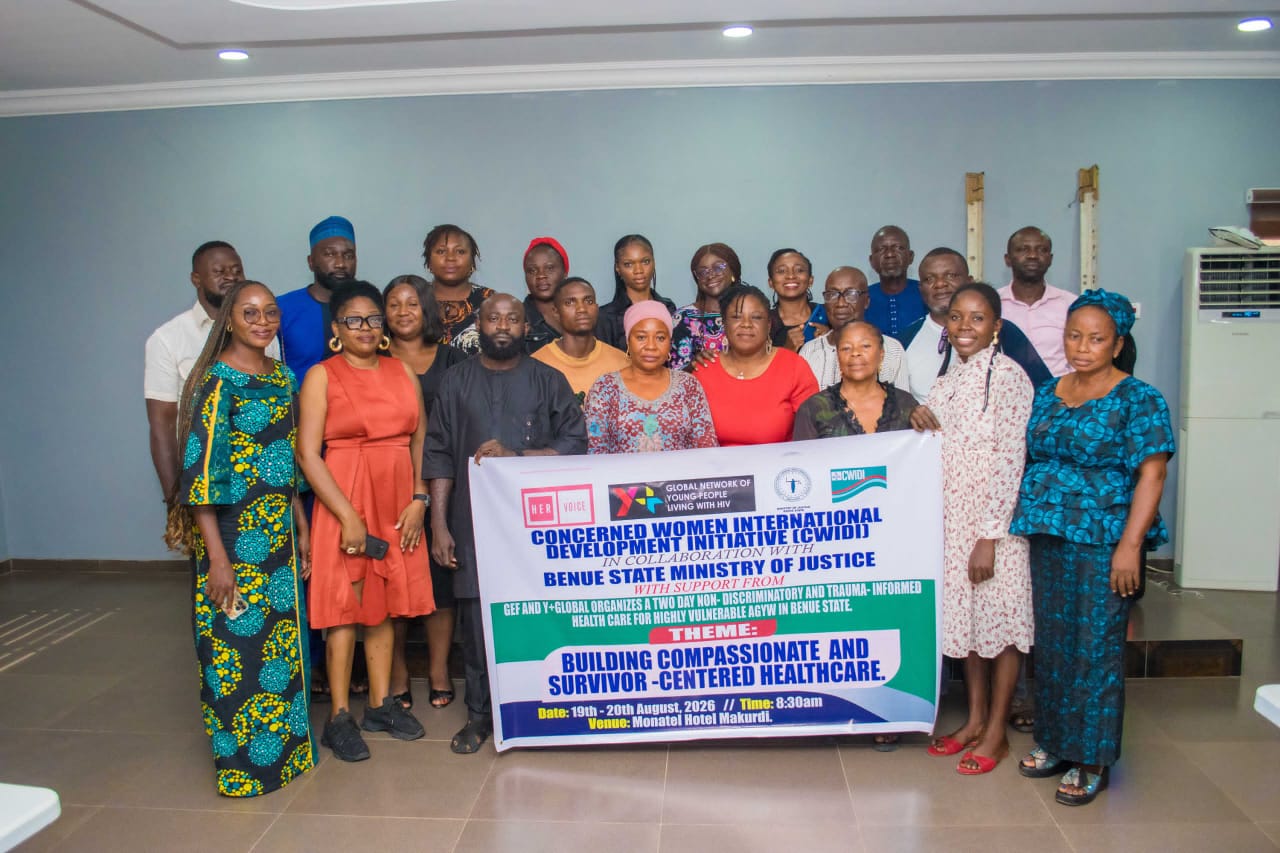
Timothy Ornguga, stated this in Makurdi during a two-day training on “Non-Discriminatory and Trauma-Informed Healthcare for Highly Vulnerable AGYW in Benue State.”The training, organised by the Concerned Women International Development Initiative (CWIDI) in collaboration with the Benue State Ministry of Justice, with support from GEF and Y+ Global, was held at Monatel Hotel, Makurdi, under the theme: “Building Compassionate and Survivor-Centred Healthcare.
”Addressing participants, facilitators, partners and other stakeholders, Ornguga said healthcare workers have a responsibility to ensure that every girl or young woman who seeks medical attention is treated with dignity, regardless of her circumstances.
“It gives me pleasure to welcome all participants, facilitators, partners and stakeholders to this important training. For healthcare workers, this means that a girl or young woman who comes to a health facility must be received as a person with rights and dignity, not as a problem, moral offender or mere case file,” he said.
The Commissioner stressed that no AGYW should be discriminated against on the basis of age, sex, clothing, marital status, disability, economic circumstances, displacement, alleged conduct or any other personal circumstance.
He urged healthcare workers to limit questioning to information necessary for safe care, documentation and appropriate referral, warning against questions or comments that could embarrass, shame or morally judge survivors.
According to him, the health facility is often a survivor’s first point of contact before the police, lawyer or court, and the treatment received at that stage can determine whether the survivor feels safe enough to pursue protection and justice.
Ornguga cited a recent decision of the Delhi High Court of India in State vs. Sajid Ali, delivered on August 10, 2026, by Hon. Justice Chandrasekharan Sudha, saying the court condemned cross-examination focused on a survivor’s clothing and emphasised that a woman’s choice of attire should not be regarded as justification or condonation for unlawful conduct.
“That principle has a wider lesson for every professional institution: clothing is not consent, and a survivor’s dignity must not become collateral damage in the search for an explanation for another person’s misconduct,” he said.
He noted that Benue State’s legal framework, including the Violence Against Persons (Prohibition) Law and the Child Rights Law, provides important safeguards against violence, abuse and exploitation.
However, he stressed that the protections contained in these laws must be translated into everyday professional practice.
The Justice Commissioner urged healthcare workers to uphold confidentiality, informed communication, accurate documentation, respectful treatment and effective referral pathways. He also encouraged participants to approach the training with openness and a willingness to critically examine existing practices.
He said healthcare facilities should be places where survivors can seek help without fear of humiliation, stigma or blame.
Ornguga commended CWIDI for organising the programme and said the fight against gender-based violence could not succeed if healthcare workers, the Ministry of Justice, psychosocial service providers and social protection agencies worked in isolation.
He pledged the continued support of the Ministry of Justice for partnerships and programmes aimed at improving access to justice and protection for women, girls and other vulnerable persons.
Speaking on the objective of the training, the Executive Director of CWIDI, Becky Gbihi, said the programme was designed to ensure that healthcare workers protect human dignity while providing services to AGYW, particularly those considered highly vulnerable.
She identified adolescent orphans, girls with disabilities, sex workers and girls living in Internally Displaced Persons (IDP) camps among those who may face heightened vulnerability.
“Those categories are more vulnerable, and because they are already traumatised, whenever they receive negative treatment or comments from health workers, they withdraw, and this could cause them to break down further.
“So, the essence is for health workers to deliver services with a human face by respecting and protecting the dignity of AGYW seeking healthcare, ensuring that they have access to holistic healthcare and referring them appropriately,” Gbihi explained.
She expressed optimism that the training would equip participants to go beyond immediate medical treatment by appropriately directing survivors to other essential services, including psychosocial support.
In a presentation titled “Understanding Gender, Equality, Gender-Based Violence, GBV, and Violence Against Women and Girls,” a representative of the Ministry of Justice, Timothy Tion, explained gender roles, social norms, equality and the different forms of gender-based violence.
Tion also took participants through relevant provisions of the Benue State Violence Against Persons Prohibition (VAPP) Law of 2019 and the Child Rights Law of 2008.
He stressed the importance of equal opportunities, noting that denying people opportunities on the basis of gender violates fundamental human rights and perpetuates inequality.
Also speaking, Dr. Kwasedoo Ngbea, a Senior Lecturer in the Department of Psychology, Moses Orshio Adasu University, Makurdi, delivered a paper titled “Understanding the Health, Psychological and Social Impact of GBV on AGYW and Principles of Survivor-Centred Care: Safety, Confidentiality, Respect, Non-Discrimination and Informed Consent.”
Ngbea said the rights, needs, safety, dignity, choices and autonomy of survivors must remain paramount in the provision of healthcare.
She advocated respectful, confidential and non-judgmental support for survivors, noting that the health, psychological and social consequences of gender-based violence on AGYW can be severe and long-lasting when not properly addressed.
Participants at the training commended the organisers for strengthening their capacity and called for increased awareness campaigns to educate young girls about their rights and available support services.
They said equipping frontline workers with the right knowledge and skills would help reduce stigma, encourage reporting and ensure that survivors receive holistic care without fear of discrimination, humiliation or judgment.
NEWS
UNICEF Training: Communication experts charge media practitioners to champion child-rights protection

From Attah Ede and Sylvia udegbunam, Port Harcourt
Seasoned communication experts and veteran broadcasters, on Thursday, enjoined media practitioners both in broadcast and print media to remain upright and act as child-rights champions to ensure that the dignity and the rights of every child are fully respected in every circumstance.
They also said journalists must prioritize a child’s psychological and social well-being over the “newsworthiness” or financial gains of a catchy headline and obtain valid parental or guardian consent alongside the child’s personal assent before conducting any media interview or engagement.
They thrown the challenge during the two-day UNICEF Zonal Workshop on Ethical Reporting of Children held in Port Harcourt, Rivers State, capital.
Key experts including; Dr. Jide Johnson (Deputy Provost of the Nigerian Institute of Journalism), Lanre Idowu (CEO of Diamond Awards for Media Excellence and rights activist), ex- broadcaster with Nigerian Television Authority, Nansel Nimyel and Dr. Geoffrey Njoku led the presentations, raging from newsroom protocols, media responsibility, regulatory requirements and trauma-informed journalism as well as NUJ code press council legal consequences and rewriting harmful headlines into ethical alternatives.
Dr Jide Johnson, in his presentation on the Media and Child Rights – Call to Action, described the media as an important actor in promoting and protecting children’s rights.
He reminded media practitioners on their watchdog role, stressing that they have constitutional responsibilities under Section 22 of the 1999 Constitution as amended, noting that its gatekeeping and agenda-setting roles gave it enormous influence over societal perceptions.
“The one who writes the story frames the world,” he said, urging journalists to use quality data, statistics, features, cartoons, jingles and local languages to draw attention to issues affecting children.
He called on journalists to become advocates for children by reporting issues such as out-of-school children, infant mortality, malnutrition, child labour and inadequate educational facilities
Presenting a paper on Drafting Newsroom Guidelines on Child Reporting Protocol, Nansel Nimel maintained that journalists narratives could either protect children or expose them to further harm.
He insisted that newsrooms to establish dedicated child-reporting desks, assign trained correspondents and introduce child-sensitive language and pre-publication reviews for reports involving minors.
“Reporting can either protect the child or harm the child,” Nimel said, stressing the need to protect children’s identities through measures such as pseudonyms, voice masking and image blurring.
He also advocated regular staff training, internal complaints mechanisms, newsroom audits and collaboration with child-protection agencies.
On the legal and regulatory consequences of unethical reporting, the facilitators highlighted provisions of the Nigerian Broadcasting Code and the codes of the Nigerian Union of Journalists and Nigerian Press Council.
They stressed that the identities of children involved in criminal or legal matters should not be disclosed, while journalists must avoid interviews or programming that could expose minors to ridicule, stigma, exploitation or psychological harm.
The facilitators noted that the principle of the “best interest of the child” remained central to ethical reporting, adding that Nigerian broadcasting standards were consistent with broader international principles.
The workshop also examined trauma-informed journalism, with Johnson warning that repeated exposure to accidents, violence, sexual assaults, malnourished children and displaced persons could affect journalists’ mental health.
He advised journalists to prioritise their well-being, develop accountability partners and approach traumatised sources with care, allowing them to determine which questions they are comfortable answering.
The communication gurus noted that ethical child reporting requires journalists to cross-check accounts, avoid re-traumatising victims and balance stories by highlighting children’s resilience rather than portraying them only as victims.
They urged journalists to always mask or hide the identities, names, and faces of child victims of abuse, trafficking, or conflict to avoid lifetime stigmatization and always reporting away from “pity-driven” individual exposure and move toward highlighting broader, systemic institutional failures.




Precious Adugbo Condemns Alleged Distortion of Pastor Komaiya’s ‘Supernatural Speed’ Sermon
ShareBy David Torough, Abuja Precious Adugbo, a member of The Master’s Place International Church, has condemned what he described as...


Military Rescues 48 Kidnap Victims, 47 Terrorist Family Members Surrender Nationwide – DHQ
ShareBy David Torough, Abuja The Armed Forces of Nigeria (AFN) rescued at least 48 abducted persons, neutralised several terrorists and...


Atiku Slams Tinubu Over Fuel Subsidy Policy
ShareBy David Torough, Abuja Former Vice President Atiku Abubakar has criticised President Bola Tinubu over the removal of petrol subsidy,...
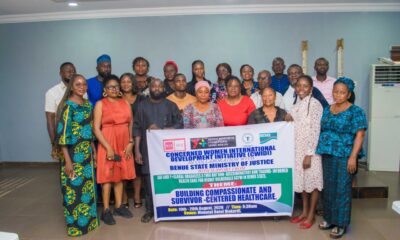

Benue Gov’t Restates Commitment to Protection of AGYW, Non-Discriminatory Healthcare
ShareBy Attah Ede, Makurdi The Benue State Government has reaffirmed its commitment to protecting the dignity and rights of Adolescent...
UNICEF Training: Communication experts charge media practitioners to champion child-rights protection
ShareFrom Attah Ede and Sylvia udegbunam, Port Harcourt Seasoned communication experts and veteran broadcasters, on Thursday, enjoined media practitioners both...


UNICEF Trains Journalists on Ethical Reporting
ShareFrom Attah Ede and Sylvia Udegbunam, Port Harcourt The United Nations Children’s Fund (UNICEF), on Wednesday, opened a two- day...


Grammy-winning Singer, Angelique Kidjo Immortalised on Hollywood Walk of Fame
ShareFive-time Grammy winner, Angelique Kidjo, has become the first African musician to be honoured with a star on the Hollywood...


Singers Wande Coal, Davido Clash over Unreleased Collaboration, ‘Come My Way’
ShareNigerian singers Wande Coal and Davido have clashed on social media over an unreleased collaboration,“Come My Way”. The disagreement was...


Tonto Dikeh to Renovate Churches in Birthday Tribute to Pastor Jerry Eze
ShareActress and humanitarian Tonto Dikeh has announced a church support initiative through The New Wine Prophetic Tabernacle to mark the...


BBNaija S11: Kamsy Reveals Plans after Reality Show Exit
ShareEvicted Big Brother Naija Season 11 housemate, Kamsy Uzoma, has revealed her plans for life after leaving the reality show,...