
Oil & Gas
Nigeria’s Crude Oil Production Dropped to 1.354mb/d in March – OPEC

The Organisation of the Petroleum Exporting Countries (OPEC) says Nigeria’s crude oil production declined to an average of 1.354 million barrels per day in March 2022.
OPEC made this known in its Oil Market Report for April 2022 which was obtained by newsmen on Tuesday in Lagos.
The report said the figure showed a decrease of 24, 000 barrels per day when compared to the 1.
378mb/d produced averagely in the month of February 2022.“According to secondary sources, total OPEC-13 crude oil production averaged 28.56 mb/d in March 2022, higher by 57 tb/d month-on-month.
“Crude oil output increased mainly in Saudi Arabia, Kuwait and the United Arab Emirates while production in Libya, Nigeria and Congo declined,” it said.
The report noted that following a contraction of 1.8 per cent year-on-year in 2020, Nigeria’s economy expanded by 3.6 per cent in 2021.
It said this economic recovery was most likely to continue over the course of 2022 with support from improvements in the hydrocarbons sector and energy prices.
The report said: “Recent official data suggested that the annual inflation rate edged up slightly to 15.7 per cent in February 2022 from 15.6 per cent in January 2022, although food inflation remained elevated.
“Indeed, higher food costs related to geopolitical tensions could further fuel inflation.
“In March 2022, the overall business improvement softened as Stanbic IBTC Bank Nigeria’s Purchasing Managers’ Index suggested, indeed it dropped to 54.1 from 57.3 in February.
“Yet, the overall prospects for Nigeria’s short-term economic outlook remain positive, despite concerns over inflationary pressures amid disruptions to global trade flows and supply shortages.”(NAN)




Analysts have warned of significant crude oil price hikes which would further erode global economic prospects.
Top grade Brent crude could surge to $200 a barrel if the Iran conflict drags on through the end of June and the Strait of Hormuz remains largely closed to shipping traffic, Macquarie strategists warned in a note.
These fears were echoed by Egyptian President Abdel Fattah al-Sisi, who warned at an energy conference in Cairo that supply disruptions and rising prices could push oil above $200 per barrel, calling such projections realistic rather than exaggerated.
Egypt, which maintains close ties with the U.
S. and Gulf states, has condemned Iran’s attacks on Gulf Arab nations and is actively supporting diplomatic efforts to prevent a broader regional conflict.Macquarie laid out two scenarios for the oil market. In the more likely case, assigned a 60 per cent probability, the war winds down soon, prices fall relatively quickly from current levels near $108 a barrel, and the economic damage remains contained.
But in the second scenario, which Macquarie puts at a 40 per cent chance, the disruption proves far more durable, with consequences the strategists describe as historically unprecedented.
“With the global economy much less oil-intensive than 50 years ago, we would not be surprised if that would require historically high real prices ($200) for a time,” strategists led by Peter Taylor said in the note.
The scale of the supply disruption is already striking. With the Strait of Hormuz mostly closed, Macquarie estimates around 13% of global oil production will be shut in by end of March, a hit already larger than the peak seen in either of the 1970s oil shocks or the first two Gulf Wars. In 2025, the world consumed almost 105 million barrels per day of oil and products.
Emergency stockpiles held by IEA members over 1.2 billion barrels would provide some buffer, but the strategists note these can only be released slowly. Some countries in Asia are already facing physical shortages of diesel and jet fuel.
“If the Strait were to stay closed for an extended period, prices would need to move high enough to destroy an historically large amount of global oil demand,” the strategists wrote.
Should prices reach $200, the team projects that talk would quickly turn to global recession, with growth slowing by around one percentage point relative to 2025. Central banks would face a stagflationary environment with weak growth alongside elevated inflation with echoes of the 1970s.
In the U.S., the Fed would be confronted with near-zero or negative employment growth alongside rising prices, according to Macquarie.
That said, the strategists suspect a full global recession could be narrowly avoided, partly because governments would likely step in to subsidize energy costs, as several already have. Japan and Italy have already moved in that direction.
Overall, Macquarie’s base case remains a relatively swift resolution. With around 15% of global oil supply at risk of being held back indefinitely, the economic incentive to reach a deal is enormous.
“It is that reality that underpins our view that a deal must eventually be made,” the strategists said.

Sri Lanka has issued guidelines to government institutions on the prudent use of fuel and energy amid possible disruptions to fuel imports caused by escalating tensions in the Middle East.
The Office of the Commissioner General of Essential Services issued the guidelines to ministry secretaries, provincial and district secretaries, and heads of government and statutory institutions and called for measures to reduce fuel and electricity consumption across the public sector.
Officials have been advised to avoid using individual vehicles to commute to work and instead use public transport or group transport whenever possible, according to the office.
Government institutions have also been instructed to prepare daily transport plans to reduce the number of vehicles used for field duties.
The guidelines set out steps to conserve electricity and energy, including maximising natural lighting, reducing the use of air conditioning by relying more on electric fans, and limiting elevator use by encouraging people to take the stairs.
Local government authorities have been directed to switch off street lights during unnecessary hours and temporarily turn off street lighting in non-high-security areas as a precautionary measure, the office said.
The guidelines further encourage heads of institutions to allow staff to work remotely where technological facilities are available instead of requiring physical attendance.
The office urged all public officials to act responsibly, set an example for the public, and extend maximum support to national energy conservation and security efforts.
International oil companies operating in Nigeria add other African countries are making significant progress in providing economic growth support to host communities which is now reducing restiveness in oil bearing regions.
According to Africa Energy Week, global energy companies’ now expanding local engagement reporting frameworks, depends on whether local engagement principles translate into local economic participation, infrastructure development and technology transfer.
Chevron, one of the continent’s longest-standing operators, that balance is particularly visible across its operations in Nigeria, Angola and the wider region.
Chevron’s sustainability reporting highlights community investment, environmental protection and workforce development.
In Nigeria, Chevron has made local supply chains a central pillar of its local engagement commitments. Over the past decade, Chevron has spent an estimated $1 billion annually on Nigerian suppliers and service providers, directing more than $10 billion to domestic contractors and businesses. The spending supports Nigeria’s local content framework while helping build indigenous capacity across engineering, logistics and oilfield services.
Across Africa, however, local engagement reporting by IOCs is often criticized for emphasizing corporate social responsibility projects rather than deeper economic integration. While community investment and environmental initiatives remain important, African policymakers increasingly prioritize local participation in project development, procurement and energy infrastructure.
Chevron’s project portfolio illustrates both the opportunities and the challenges of bridging this gap.
In Angola – where the company has operated for nearly 70 years through its subsidiary Cabinda Gulf Oil Company more than 90 per cent of the workforce is Angolan, reflecting long-term efforts to localize employment and technical expertise. Over the years, Chevron and its partners have invested more than $250 million in social and community development programs across the country, supporting healthcare, education and economic initiatives.
In Angola, the Sanha Lean Gas Connection Project linking offshore gas fields in Blocks 0 and 14 to the Angola LNG facility demonstrates how major energy infrastructure can contribute to domestic value creation. The project allows associated gas to be monetized rather than flared while strengthening Angola’s gas value chain and supporting long-term energy security.
Beyond Angola, Chevron continues to expand its footprint across the continent. The company maintains active exploration programs in Nigeria, holds stakes in producing assets in Equatorial Guinea and is evaluating offshore opportunities in markets such as Namibia and Algeria. As African countries look to expand oil and gas development while building stronger domestic industries, pressure is growing on international operators to ensure local engagement commitments translate into tangible economic impact.
This growing focus on implementation is one reason industry platforms are playing a larger role in shaping the conversation.
“Africa doesn’t need more sustainability reports sitting on shelves,” says NJ Ayuk, Executive Chairman of the African Energy Chamber. “What we need are partnerships that build industries, train African workers and keep more of the value from our resources on the continent. African Energy Week provides a platform for stakeholders not only to promote projects, but to ensure sustainability commitments translate into measurable outcomes.” Adding that Chevron is leading the way through its actions on the continent.
“We need partnerships that build industries, and that is exactly what Chevron is doing.”
As local engagement expectations continue to evolve, international operators like Chevron face increasing scrutiny over whether sustainability commitments translate into real economic participation. In Africa’s energy sector, the most meaningful local engagement metric may ultimately be local content and the extent to which global companies help build lasting industries alongside their projects.
“Chevron’s training and development initiatives across Africa have significantly empowered local communities. Many individuals trained by Chevron have gone on to assume roles in public service, bringing enhanced capabilities and best practices to their work,” Ayuk states.
Furthermore, a substantial number of alumni have entered the private sector, successfully leading world-class companies, a testament to the valuable skills acquired during their time with Chevron.
“By fostering entrepreneurship, Chevron is inspiring many Africans to establish and manage their own businesses,” he concludes.



SDP Leader, Adebayo Urges Nigeria to Reconnect With Independence-era Ideals at Stakeholders’ Summit
ShareBy Mike Odiakose, Abuja The national leadership and former presidential candidate of the Social Democratic Party (SDP), Prince Adewole Adebayo,...


Ododo Flags Off 728 Government-owned Renovated Public Schools in Kogi
ShareFrom Joseph Amedu, Lokoja Kogi state Governor, Usman Ododo has launched the renovation of 728 Government-owned Public Schools under the Adolescent Girls Initiative for Learning...


Super Eagles Set for Poland, Portugal Friendlies Ahead of World Cup
ShareThe Super Eagles will face Poland and Portugal in international friendlies in June as part of preparations for upcoming global competitions, the Nigeria Football...


Iran Threatens U.S, Israel with Harsher Attacks
ShareIran has warned the United States (U.S.) and Israel that it would launch further and more severe attacks, escalating tensions amid ongoing hostilities. A spokesman for...
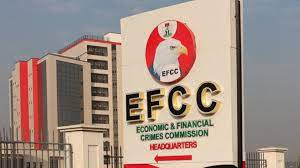

EFCC Seeks Final Forfeiture of 57 Properties Linked to Malami
ShareThe Economic and Financial Crimes Commission, on Thursday, urged the Federal High Court in Abuja to order the permanent forfeiture...


Easter: NSCDC Deploys 57,000 Personnel Nationwide
ShareThe Nigeria Security and Civil Defence Corps (NSCDC) has deployed 57,000 operatives nationwide to ensure security of lives and property...


NSIA Grows Net Asset Value to $3.40bn in 2025
ShareBy Tony Obiechina, Abuja Nigeria Sovereign Investment Authority(NSIA) has announced its 2025 Group Financial Performance posting a net Asset value...


ADC, APC Clash over INEC Role as Leadership Crisis Deepens
ShareBy David Torough, Abuja A fresh political storm erupted on Thursday as the African Democratic Congress (ADC) and the All...


Tinubu Directs High-Tech Surveillance, Troop Surge to Tackle Plateau Killings
ShareFrom Jude Dangwam, Jos In a sweeping response to the renewed wave of violence in Plateau State, President Bola Tinubu...


Daniel Kanu Defends Abacha-era Role, Petitions IGP over Defamation
ShareBy David Torough, Abuja Prominent businessman and philanthropist, Daniel Kanu, has said he has no regrets about his activities during...