
Business News
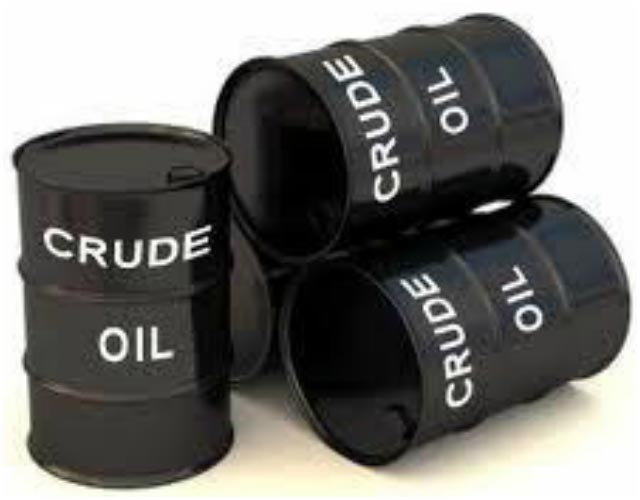
Nigeria’s Crude Palm Oil Production Hits 1.029m mt Annually

By Joseph Chibueze, Abuja
Nigeria’s quest to achieve self-sufficiency in palm oil production is
gaining traction as the nation’s crude palm oil production now stands
at 1.029 million metric tonnes annually.
This is a visible improvement over the previous production level of
0.
Minister of Agriculture and Rural Development, Alhaji Muhammad Sabo
Nanono disclosed this in his opening remarks at the farmers’ field
school organised by the Oil Palm Value Chain of the FMA&RD in
collaboration with NIFOR for oil palm farmers on nursery establishment
and field development, harvesting, processing and marketing held at
Enugu.
The minister said the federal government is committed to improving the
Oil Palm Value Chain which is why it is among the Commodity Value
Chains being promoted by the Federal Ministry of Agriculture and Rural
Development.
According to him, “So far, we have procured and distributed over
451,500 improved tenera sprouted nuts to accredited oil palm
farmers/Association in the 27 oil palm producing States at no cost.
“The Ministry also procured automated oil palm mills, oil palm cargo
tricycles, and oil palm motorised harvesters which will be distributed
to oil palm farmers/Associations that applied formally to the Ministry
at subsidised rates.” He said the ministry has also continued to
partner with stakeholders such as local, private and foreign investors
for development of the oil palm industry. “The value chain will also
continue to build the capacities of farmers in Goop Agricultural
practices (GAP), Good Management practices, as well as support for
Research and development of oil palm,” he said.
Also speaking at the event, the Permanent Secretary in the Ministry,
Dr. Ernest Umakhihe, represented by Deputy Director, Tree and Crop
Division, Federal Ministry of Agriculture and Rural Development, Mr.
Chukwuemeka Utattah, said the main objectives of the value chain are;
to expand areas under improved oil palm, achieve import substitution,
improve the productivity of farmers (by increasing the yield), support
upstream and downstream processing activities to produce quality crude
palm oil and vegetable oil products, create employment opportunities
for the youth and build the capacities of farmers along the entire
value chain in the 27 oil palm producing States.
The states include: Abia, Akwa Ibom, Cross River, Rivers, Bayelsa,
Imo, Anambra, Ebonyi, Enugu, Delta, Edo, Ondo, Ogun, Osun, Oyo, Ekiti,
Benue, Kwara, Kogi, Nasarawa, Plateau, Taraba, Adamawa, Kaduna, Niger,
Lagos and FCT.
“The aim of this stakeholders meeting is to critically examine/discuss
issues that can contribute to Nigeria’s sustainable exploitation of
oil palm for economic development, address challenges faced by farmers
as well as fashion out a robust roadmap for oil palm industry,” the
Permanent Secretary said.
In his goodwill message, President, Oil Palm Growers Association of
Nigeria (OPGAN), Mr. Joe Onyiuke, while thanking the ministry for the
support it has been giving the oil palm sub-sector in recent times,
said it is time to think outside the box on strategies to develop oil
palm on a sustainable basis.
In his words, “OPGAN appreciates the incremental improvement being
recorded in the oil palm yields courtesy of the Nigerian Institute for
Oil Palm Research (NIFOR), an affiliate of the Federal Ministry of
Agriculture and Rural development, they are indeed doing exploits in
cultivating global best practices and standards for which we now enjoy
new improved seedlings that can increase yields.
“We at OPGAN strongly believe that a thriving Oil Palm sub-sector is
an imperative for economic growth and development of the country. It
is not only critical for achieving a robust growth trajectory but also
essential in realizing the much desired inclusive growth and
development of our country. I am pretty certain from all indications,
that Oil Palm value chain do not only contribute significantly to the
economy but can also serve as an impetus for economic
diversification.”







By Jennifer Enuma, Abuja
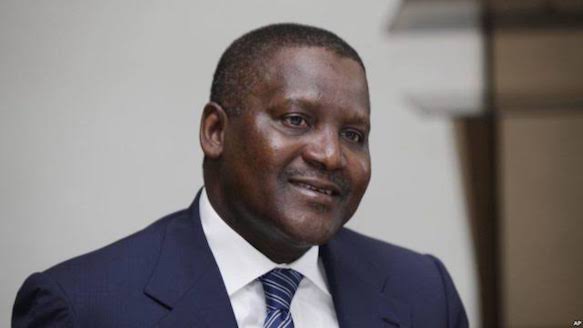
President Bola Tinubu has congratulated Alhaji Aliko Dangote, the President of Dangote Group, on his appointment to the World Bank’s Private Sector Investment Lab, a body tasked with promoting investment and job creation in emerging economies.
In a statement by Special Adviser on Media and Publicity, Bayo Onanauga, the President described the appointment as apt, given Dangote’s rich private sector experience, strategic investments, and many employment opportunities created through his Dangote Group.
The Dangote Group became one of Africa’s leading conglomerates through innovation and continuous investment.
Dangote Group’s business interests span cement, fertiliser, salt, sugar, oil, and gas. However, the $20 billion Dangote Petroleum Refinery and Petrochemicals remains Africa’s most daring project and most significant single private investment.
“President Tinubu urges Dangote to bring to bear on the World Bank appointment his transformative ideas and initiatives to impact the emerging markets across the world fully” the statement said.

The World Bank announced Dangote’s appointment on Wednesday, as part of a broader expansion of its Private Sector Investment Lab. The lab now enters a new phase aimed at scaling up solutions to attract private capital and create jobs in the developing world.
The CEO of Bayer AG, Bill Anderson, the Chair of Bharti Enterprises, Sunil Bharti Mittal, and the President and CEO of Hyatt Hotels Corporation, Mark Hoplamazian, are on the Private Sector Investment Lab with Dangote.
The World Bank said the expanded membership brings together business leaders with proven track records in generating employment in developing economies, supporting the Bank’s focus on job creation as a central pillar of global development.
By Joel Oladele, Abuja
The Nigeria Customs Service (NSC) has generated an impressive N1,751,502,252,298.05 in revenue during the first quarter of 2025.
The Comptroller-General (CG) of the Service, Bashir Adeniyi, disclosed this yesterday, during a press briefing in Abuja.
According to Adeniyi, the achievement not only surpasses the quarterly target but also marks a substantial increase compared to the same period last year, reflecting the effectiveness of recent reforms and the dedication of customs officers across the nation.
“This first quarter of 2025 has seen our officers working tirelessly at borders and ports across the nation.
I’m proud to report we’ve made real progress on multiple fronts—from increasing revenue collections to intercepting dangerous shipments,” Adeniyi stated.He attributed this success to the reforms initiated under President Bola Tinubu’s administration and the guidance of the Honourable Minister of Finance and Coordinating Minister of the Economy, Olawale Edun.
The CG noted that the revenue collection for Q1 2025 exceeded the quarterly benchmark of N1,645,000,000,000.00 by N106.5 billion, achieving 106.47% of the target. This performance represents a remarkable 29.96% increase compared to the N1,347,705,251,658.31 collected in Q1 2024.
Adeniyi highlighted the month-by-month growth, noting that January’s collection of N647,880,245,243.67 surpassed its target by 18.12%, while February and March also showed positive trends.
“I’m pleased to report the Service’s revenue collection for Q1 2025 totaled N1,751,502,252,298.05.
“Against our annual target of N6,580,000,000,000.00, the first quarter’s proportional benchmark stood at N1,645,000,000,000.00. I’m proud to announce we’ve exceeded this target by N106.5 billion, achieving 106.47% of our quarterly projection. This outstanding performance represents a substantial 29.96% increase compared to the same period in 2024, where we collected N1,347,705,251,658.31.
“Our month-by-month analysis reveals even more encouraging details of this growth trajectory,” Adeniyi said.
In addition to revenue collection, Adeniyi said the NCS maintained robust anti-smuggling operations, recording 298 seizures with a total Duty Paid Value (DPV) of ₦7,698,557,347.67.
He stated that rice was the most seized commodity, with 135,474 bags intercepted, followed by petroleum products and narcotics.
“From rice to wildlife, these seizures show our targeted approach,” Adeniyi remarked, noting the NCS’s commitment to combating smuggling and protecting national revenue.
Adeniyi also highlighted key initiatives, including the expansion of the B’Odogwu customs clearance platform and the launch of the Authorized Economic Operators Programme, which aims to streamline processes for compliant businesses. The NCS’s Corporate Social Responsibility Programme, “Customs Cares,” was also launched, focusing on education, health, and environmental sustainability.
Despite these achievements, the CG noted that the NCS faced challenges, including exchange rate volatility and non-compliance issues. Adeniyi acknowledged the need for ongoing adaptation and collaboration with stakeholders to address these challenges effectively.
Looking ahead, the NCS aims to continue its modernization efforts and enhance service delivery, ensuring that it remains a critical institution in Nigeria’s economic and security landscape.
“Results speak louder than plans; faster clearances through B’Odogwu, trusted traders in the AEO program, and measurable food price relief from our exemptions. We’ll keep scaling what works,” he concluded.
 |
By Tony Obiechina Abuja
The Nigeria Sovereign Investment Authority (NSIA) yesterday disclosed that its net assets grew from N156bn in 2013 to N4.35 trillion in 2024.
Similarly, the Authority has remained profitable for 12 consecutive years, leading to cumulative retained earnings of N3.
74 trillion in 2024.Managing Director and Chief Executive Officer of NSIA, Aminu Umar- Sadiq made these disclosures at a media engagement in Abuja, highlighting its audited financial results for the 2024 fiscal year.
According to him, the results underscored the resilience of the authority’s investment strategy and the strength of its earnings, driven by a well-diversified revenue base and robust risk management practices, despite a challenging global macroeconomic and geopolitical environment.
Total operating profits, excluding share of profits from associates and Joint Venture (JV) entities, increased from N1.17 trillion in 2023 to N1.86 trillion in 2024, driven by the strong performance of
NSIA’s diversified investment portfolio, infrastructure assets, gains from foreign exchange movements, and derivative valuations.
In addition, Total Comprehensive Income (TCI), inclusive of share of profits from associates and JV entities, reached N1.89 trillion in 2024, reflecting a 59 per cent increase from N1.18 trillion in 2023.
Core TCI (excluding foreign exchange and derivative valuation gains) rose by 148 per cent to N407.9 billion in 2024 compared to N164.7 billion in 2023, supported by robust returns on financial assets measured at fair value through profit and loss, including collateralised securities, private equity, hedge funds, and Exchange-Traded Funds (ETFs).
Umar-Sadiq said the authority’s outstanding financial performance in 2024 reflected the “strength of our strategic vision, disciplined execution and unwavering commitment to sustainable socio-economic advancement.”
He said, “By leveraging innovation, strategic partnerships and sound risk management, we have not only delivered strong returns but also created value for our stakeholders
“As we move forward, we remain focused on driving economic transformation, expanding opportunities, scaling transformative impact and ensuring long-term prosperity for current and future generations of Nigerians.”
The CEO reaffirmed the authority’s commitment to managing the country’s SWF, and delivering the mandates enshrined in the NSIA Act.
He said NSIA remained poised to continually create long-term value for its stakeholders by delivering excellent risk-adjusted financial results, developing a healthy and well-diversified portfolio of assets and large-scale infrastructure projects, and enhancing the desired social outcomes.
He noted that NSIA was committed to its mandate of prudent management and investment of Nigeria’s sovereign wealth.
“In adherence to its Establishment Act, NSIA prioritises transparency, disclosure, and effective communication with all stakeholders and counterparties,” he said.
He pointed out that in the year under review, a new board, led by Olusegun Ogunsanya as Chairman, was appointed by President Bola Tinubu, in accordance with the provisions of the NSIA Act.
The new board will provide strategic direction and oversight, in addition to playing a pivotal role in critical decision making.
He remarked that under the guidance of the Board, the Authority will retain focus on its primary mandate of creating shared value for all stakeholders based on its continued adoption of corporate governance practices.
“NSIA prides itself an investment institution of the federation established to manage funds in excess of budgeted oil revenues and its mission is to play a pivotal role in driving sustained economic development for the benefit of all Nigerians through building a savings base for the Nigerian people, enhancing the development of the county’s infrastructure, and providing stabilisation support in times of economic misadventure,” he added.
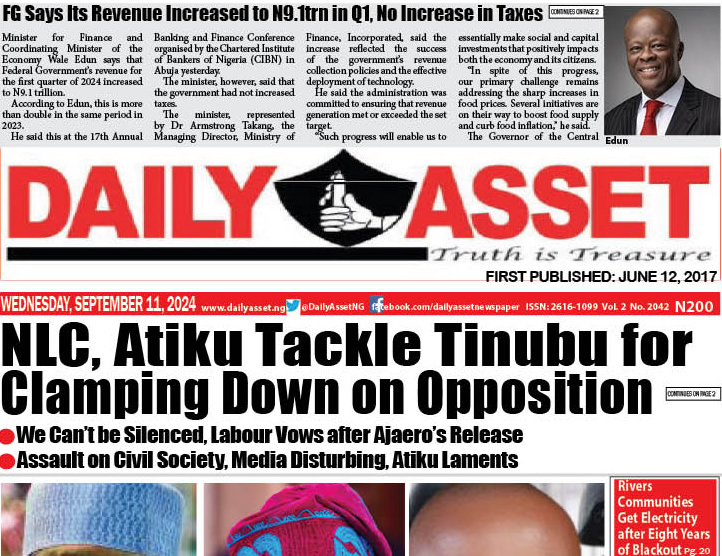


Tinubu Congratulates UNIJOS Graduands, Pledges Support for Education
ShareFrom Jude Dangwam, Jos President Bola Tinubu has congratulated graduands of the University of Jos (UNIJOS) at the institution’s 35th...


2027 Election: Igbo’s Community Promises Votes for Eno
ShareFrom Christopher Tom, Uyo Non-indigence in Akwa Ibom State especially the Igbo’s community has promised to give the highest number...


Zamfara Reaffirms Commitment to Address Gender-based Violence
ShareBy Ifeanyichukwu Nwannah, Gusau The Zamfara State Government has reaffirmed its commitment to addressing gender-based violence (GBV) and other forms...


Nentawe, Alia, Suswam, Others Bag Chieftaincy Titles from Tiv Kingdom
ShareFrom Attah Ede, Makurdi The Tiv Kingdom has conferred honorific chieftaincy titles on prominent sons, daughters and friends of the...


World Human Rights Day: NGO Takes Medical Outreach to Okaka Correctional Center
ShareFrom Mike Tayese, Yenagoa The 8th edition of Prof. Seiyefa Brisibe Outreach has celebrated the 2025 World Human Rights Day...

Coup in Guinea-Bissau and the Dilemma of ECOWAS
ShareBy Hakeem Jamiu In his seminal work, Political Order in Changing Societies (1968), Professor Samuel P Huntington argues that political...


Chelsea End Winless Run with Comfortable Brighton Victory
ShareChelsea ended their four-game winless streak in the Women’s Super League with a comfortable 3-0 away victory against Brighton. A...


Liverpool ‘United as One’ after Salah Return – Van Dijk
ShareCaptain Virgil van Dijk said Liverpool “are absolutely united and go forward as one” after Mohamed Salah returned to the...
Mikaelian Beats Jack to Regain WBC Title
ShareNoel Mikaelian beat Badou Jack by a unanimous points decision in Los Angeles to regain the WBC cruiserweight title. Mikaelian...

Mobile Phone Association Pillar of Modern Commerce, Driving communication, Says Mamas
ShareFrom Ayinde Akintade, Osogbo The National President of Association of Mobile Phone and Allied Products Traders of Nigeria (AMPAT), Hon....