
FEATURES
Nigeria’s Fight To Eliminate Hepatitis In Prisons

By Rachea Abuja
In Nigeria, estimates from the National AIDS, STIs and Hepatitis Control Programme (NASCP) show that 8.1 per cent of adults aged 15–64 live with hepatitis B, and 1.1 per cent with hepatitis C.On a worrisome note, more than 80 per cent of those infected are unaware of their status, enabling the virus to spread silently, in homes, hospitals, and correctional facilities.
Public health experts say correctional centres are among the highest-risk environments for viral hepatitis due to overcrowding, unsafe medical practices, limited access to testing, and stigma. According to the World Health Organisation (WHO), viral hepatitis, particularly types B and C, is a global public health threat that kills approximately 1.3 million people each year, making it second only to tuberculosis among infectious diseases.In spite of its deadly toll, hepatitis is often overlooked, especially in low- and middle-income countries like Nigeria.More than 91 million people in the WHO African region live with hepatitis B or C, representing 26 per cent of the global burden.Shared razor blades, contaminated injection equipment, and poor sanitation all contribute to the spread.When 34-year-old Malam Musa Danladi was arrested, tried and sentenced in 2022, he knew prison would be tough; but what he did not expect was that a place of punishment would become a place of diagnosis, for a disease he had never heard of.“They called me to the clinic one morning; I was confused; the nurse said I had hepatitis B; I did not even know what that meant.”He is one of thousands of Nigerians living with viral hepatitis, a disease that often shows no symptoms until it causes irreversible damage to the liver.Danladi is also among the few who discovered their status within prison walls.“We used to share everything, razors, clippers, even toothbrushes; Nobody told us we were at risk.“Incarcerated people face a triple burden: poverty, stigma, and disease, with few resources or pathways to care,” Danladi said.In a bid to reverse this trend, the Nigerian government, in July, unveiled Project 365, a year-long national campaign to test, treat, and vaccinate millions of Nigerians for hepatitis, including those in prison settings.The unveiling coincided with World Hepatitis Day, with the theme: “Hepatitis Can’t Wait- Test. Treat. Eliminate.”According to Prof. Muhammad Ali Pate, Coordinating Minister of Health and Social Welfare, Nigeria is losing between ₦10.3 trillion and ₦17.9 trillion annually to hepatitis-related productivity and healthcare costs.“Project 365 is about saving lives and saving our economy,” he said.Pate said that the project 365 aimed to screen every federal constituency in Nigeria, totaling 360, and to deliver curative treatment for hepatitis C as well as vaccination for hepatitis B.He said it also sought to expand outreach to prisons, internally displaced persons (IDP) camps, rural communities, and other underserved regions.The minister said it would ensure sustainable financing for testing and treatment, and the initiative established the Viral Elimination Fund (VEL).Additionally, he said that the project 365 would promote local production of hepatitis diagnostics and medications, supported by tax incentives and regulatory reforms, to reduce reliance on imports.At Kuje Medium Security Custodial Centre, a pilot hepatitis programme under the Viral Hepatitis Action in Correctional Services screened 830 inmates between December 2024 and June 2025.Dr Ibrahim Ehizogie, a clinician with the Nigerian Correctional Services, said that many inmates were already infected with the disease while in custody.Ehizogie said that the programme was now being scaled across Nigeria’s six geopolitical zones, with a target to reach all 300 custodial centres in the country.However, experts warn that without continued funding, education, and policy enforcement, these gains may be short-lived.According the 2024 INHSU Global Guideline on the Elimination of Hepatitis C in Prisons, incarcerated individuals have the same right to healthcare as the general population, and that denying hepatitis services in custody violates international human rights standards.The guideline recommends that inmates should be tested and initiated on treatment within seven days of incarceration.It also emphasises the integration of harm reduction services, such as safe injection practices and opioid substitution therapy, to reduce transmission.Furthermore, the guideline advocates for peer-led education and community-based screening models to increase uptake and reduce stigma, and stress the importance of ensuring continuity of care upon release, so that individuals can maintain their treatment and health outside prison walls.Dr Mya Ngon, WHO Team Lead for Communicable and Non-Communicable Diseases, commended Nigeria’s efforts.Ngon said that screening must be linked to treatment, and treatment must be linked to continuity of care, even after prison.Since his release, Daladi has become a community advocate, telling others about hepatitis, its transmission, and the importance of testing.“I did not die in prison; so, I want to use my voice; people need to know it is not a death sentence; you can treat it; you can live; but stigma remains.“Some people say I brought prison sickness home; some would not even shake my hand,” he said.According to him, at present, he works in his community to support reintegration and health education, urged the government to expand outreach to ex-inmates and low-income communities.In spite of the progress of Project 365, experts identify critical gaps in Nigeria’s hepatitis response; they say female inmates and pregnant women in custody are often excluded from routine hepatitis screening, leaving a critical gap in care.Prof Taiwo Lateef, Professor at ABU and Africa Lead for Lifeline International, said that harm reduction services, such as access to sterile injecting equipment or safe drug treatment options, were largely absent in correctional centres.In many cases, Lateef noted that the continuity of treatment after release remained uncertain, making long-term management of the disease difficult.He said that youth offenders and first-time detainees typically received little to no education on hepatitis prevention, increasing their vulnerability.Lateef said that Nigeria did not have a national hepatitis registry for prisons, making it challenging to track disease prevalence, monitor treatment coverage, or evaluate outcomes in custodial settings.Dr Adebola Bashorun, National Coordinator for NASCP, said that without structured data and legal protections, prison health reform would remain incomplete.Bashorun said that Nigeria’s hepatitis elimination strategy was ambitious and commendable.He said that success would require multisectoral partnerships, political will, and a people-first approach.According to, Dr Titilola Munkail, Technical Officer at Africa CDC, one cannot talk about ending hepatitis if one ignores people behind bars.Munkail said that prisons were not separate from public health.“They are central to it,” he said.As Nigeria races toward the 2030 elimination goal, stakeholders urge the government, civil society, and citizens to act.They say there is need for the government to institutionalise hepatitis services in all correctional facilities and primary healthcare centres (PHCs) to ensure consistent and equitable access to care. (NANFeatures)FEATURES
Victor Okoli: The Young Nigerian Tech Founder Building Digital Bridge Between Africa and America

Victor Chukwunonso Okoli, founder of Vnox Technology Inc. (USA) and Vnox Limited (Nigeria), is steadily emerging as one of the most promising new voices in global travel-tech. His mission is clear: bridge the technological gap between Africa and the United States, redefine global travel systems, and empower a new generation of skilled youths through innovation-driven opportunities.
In a statement issued in Onitsha, Anambra State, by Vnox Limited (Nigeria), the company emphasized Okoli’s growing influence as a Nigerian international graduate student contributing meaningfully to U.
S. innovation. His rising travel-technology platform, FlyVnox, currently valued at an estimated $1.7 million, is positioning itself as a competitive player in the global travel ecosystem.Okoli explained that Vnox Technology was founded to “train, empower more youths, create global employment opportunities, and drive business growth through our coming B2B portal inside the FlyVnox app.” The platform’s new B2B system aims to support travel agencies, entrepreneurs, and businesses across Africa and the diaspora—giving them access to modern tools, previously inaccessible technologies, and global opportunities.
Several young men and women are already employed under the expanding Vnox group, with more expected to join as the brand grows internationally.
Born and raised in Eastern Nigeria, Okoli’s early life exposed him to the realities and frustrations faced by international travelers and diaspora communities. After moving to the United States for graduate studies, he transformed those experiences into a bold technological vision—building systems that connect continents and create seamless mobility for users worldwide.
At the center of that vision is the FlyVnox app, a modern airline-ticketing platform built with global users in mind. Combining American engineering precision with African mobility realities, FlyVnox offers international flight search, multi-currency support, secure payments, transparent pricing, and a clean, intuitive interface.
Beyond FlyVnox, Okoli has built a growing tech ecosystem under Vnox Technology Inc., which oversees several innovative ventures, including: Vnox TravelTech Solutions LLC (FlyVnox App), VnoxPay (fintech), VnoxShop / Zyrlia (e-commerce)
VnoxID / Nexora (digital identity and smart business card solutions)
Vnox Limited (Nigeria) anchors African operations, media services, and talent development—ensuring the brand remains rooted in its home continent even as it grows globally.
Okoli’s work has broad significance for both Africa and the United States. He represents the powerful impact of immigrant entrepreneurship on global competitiveness—creating new jobs, driving innovation, strengthening U.S.–Africa commercial ties, and contributing to the development of practical, scalable technologies.
The statement concludes that Vnox Technology is a brand to watch. As FlyVnox gains international traction and the Vnox group expands its footprint, Victor Okoli stands as a symbol of a rising generation: African-born, globally minded, and building technologies that connect and serve the world.

From Leo Zwanke, Lafia
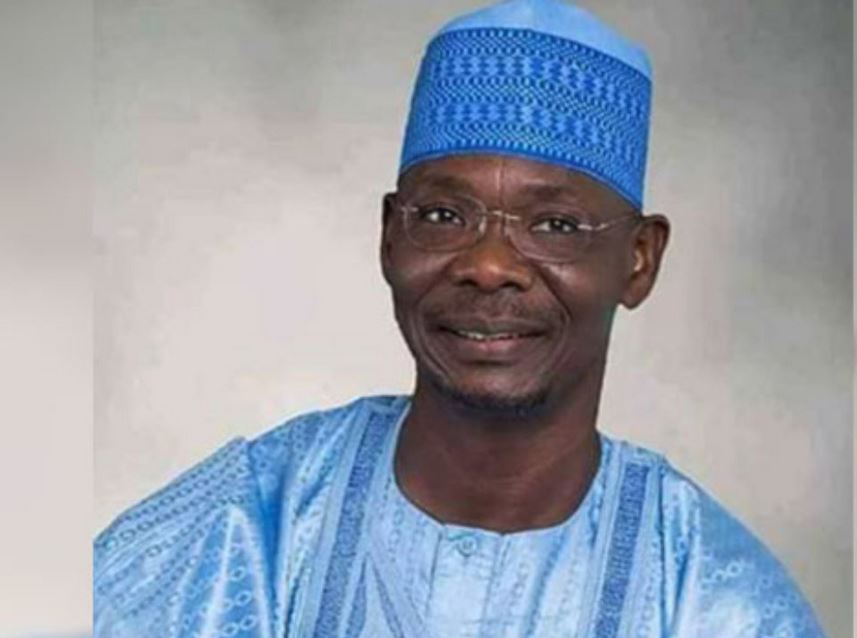
In Nigeria’s evolving governance, few leaders have gained as much recognition for reform-driven innovation at the subnational level as Governor Abdullahi Sule of Nasarawa State. From fiscal prudence to industrialisation, agricultural transformation to human capital development, the engineer-turned-technocrat has steadily positioned Nasarawa as a model for how subnational governments can translate macroeconomic reforms into tangible benefits for their citizens.
At the recent Nigeria Development Update (NDU), organised by the World Bank in Abuja with the theme “From Policy to People: Bringing the Reform Gains Home,” Governor Sule was a panellist alongside national and international development leaders.
He was introduced as a governor whose economic insight and governance style exemplify how reform implementation at the grassroots can sustain the federal government’s policy direction.“Governor Sule represents the bridge between Nigeria’s macroeconomic reforms and how these policies are domesticated at the state level,” said Shubham Chaudhuri, the World Bank Country Director for Nigeria. “He’s not only talking about reforms; he is implementing them in ways that citizens can feel.”
Before venturing into politics, Abdullahi Sule built a career in engineering, energy, and industry—serving as Managing Director of Dangote Sugar Refinery and leading other private sector initiatives. His private sector exposure, as many observers note, shaped his pragmatic approach to governance.
“The Governor came into office with a technocrat’s mind,” noted Dr. Ahmed Mohammed, an economist and lecturer at Nasarawa State University, Keffi. “He understands that policy documents mean little unless they are converted into livelihood gains.”
That philosophy—bridging policy with the people—is evident across his governance initiatives, aligning seamlessly with the World Bank’s recent development theme.
Agriculture remains Nasarawa’s economic backbone, engaging over 70 percent of its population. Governor Sule’s administration has revitalised the sector through targeted mechanisation, input distribution, and market linkage interventions.
Through partnerships with the African Development Bank (AfDB) and the World Bank’s Agro-Climatic Resilience in Semi-Arid Landscapes (ACReSAL) project, the state has distributed modern tractors, improved seedlings, and irrigation facilities to thousands of farmers.
In Yamaltu Deba, a community in Awe Local Government Area, farmer Mallam Abdullahi Umar explained how the tractorisation scheme has transformed their operations.
“Before, we used hoes and cutlasses. It took us two weeks to plough a hectare. Now, with tractors, we do that in one day. Our yields have doubled,” he said proudly.
Governor Sule himself often emphasises the need for “commercially viable farming” and “agriculture as a business, not a subsistence activity.” His administration has created a framework for farmer clusters, linking smallholder producers with large-scale processors, thereby addressing one of Nigeria’s major agricultural bottlenecks—post-harvest loss.
These interventions are not isolated. They feed into the national agenda of improving food security, generating rural employment, and reducing inflation. In Nasarawa, farmers are reporting higher incomes and expanded market access, a reflection of the governor’s commitment to inclusive growth.
Often called the “Home of Solid Minerals,” Nasarawa State is richly endowed with tin, lithium, barite, and other minerals. Yet, for decades, the sector remained largely informal, with little contribution to state revenue.
Governor Sule has changed that narrative through policy reforms that encourage private sector participation and responsible mining. Under his administration, Nasarawa has developed a solid minerals development policy, created a one-stop investment office, and attracted both domestic and foreign investors.
Earlier this year, the governor led an investment mission to India, where he met with industrial leaders and promoted opportunities in Nasarawa’s mining, energy, and agricultural value chains. The result was a flurry of interest from companies seeking to establish operations in the state.
“Governor Sule’s investment drives are opening Nasarawa to the world,” said Mr. Nabil Saleh, a consultant in mining development. “For the first time, there’s a clear structure and transparency around mining licences, community agreements, and environmental safeguards.”
In Karu and Keffi, local youths who previously relied on artisanal mining now participate in formalised mining cooperatives supported by state-led training programmes. This not only ensures environmental safety but also helps the state retain a greater share of mining revenue.
Additionally, Governor Sule’s administration has set up an Industrial Development Plan anchored on the establishment of industrial parks in Lafia, Doma, and Karu. The parks are designed to host agro-processing, mineral refining, and light manufacturing industries. This initiative ties directly into the World Bank’s message of translating macro-level reforms into job creation and improved livelihoods at the subnational level.
Economic reforms cannot thrive without functional infrastructure. In Nasarawa, infrastructure development has been a cornerstone of the Sule administration.
From the dualisation of major highways connecting the state to Abuja, to the ongoing construction of feeder roads linking rural communities with markets, the administration has prioritised roads as key drivers of commerce.
The Mararaba–Udege–Uke feeder road, completed in 2024, now connects thousands of farmers to urban markets, significantly reducing transport costs and spoilage.
“It used to take us two hours to reach Lafia with our goods; now it’s less than 40 minutes,” said Mrs. Asabe Luka, a tomato farmer from Obi LGA. “We no longer lose our produce on bad roads.”
Power and energy are also central to Nasarawa’s reform narrative. Through collaboration with the Nigeria Electrification Project (NEP) and independent power producers, the state is expanding rural electrification, powering small businesses and industries.
Governor Sule’s energy policy aims to make Nasarawa a net supplier of power to neighbouring states, leveraging its hydro and solar potential.
“Access to power is central to our industrial ambition,” the governor said at a recent state economic forum. “Without energy, reforms remain theoretical. That’s why we’re integrating renewable energy solutions into our development plan.”
For Governor Sule, economic growth is only sustainable when accompanied by human capital development. The state has, therefore, increased investment in education, healthcare, and social protection programmes.
In 2025, the governor flagged off the integrated Measles-Rubella and Polio Immunisation Campaign in Akwanga, with support from UNICEF and the World Health Organisation (WHO). This campaign, which is said to reaching over 1.37 million children, was part of the administration’s wider commitment to preventive healthcare.
“We are determined to eliminate vaccine-preventable diseases and ensure that every child in Nasarawa can live a healthy life,” Governor Sule declared during the flag-off.
The state has also revitalised its primary healthcare centres, constructed new hospitals, and initiated the Nasarawa Health Insurance Scheme (NHIS), which now covers over 120,000 residents.
In education, Nasarawa has built and renovated hundreds of classrooms, recruited teachers, and introduced digital learning tools in partnership with donor agencies.
Mrs. Rachael Musa, a teacher in Keana, described how digital education is changing learning outcomes:
“We now use tablets to teach basic science and mathematics. The children are more interested, and parents are beginning to value education even more.”
The Nasarawa State Scholarship Board has been revamped to ensure fair and transparent allocation of bursaries, especially for female students pursuing science and technology courses.
According to the chief press Secretary to the Governor, Ibrahim Addra who noted that the Nasarawa State Governor, His has been honoured with the prestigious Platinum Award and recognition as Education Ambassador in Lagos Nigeria.
He said the honour bestowed on Governor Sule is at the instance of the Independent Newspaper which referenced the Governor’s “investment, advocacy and promotion of child education in Nasarawa State which resonate across the country.”
In a letter notifying the Governor of the award, Independent Newspaper said, “If Sir Ahmadu Bello were to look back from his grave, he would no doubt be proud of Governor Abdullahi Sule for sustaining the legacy of free primary education.”
The award ceremony was held on Thursday, October 9, 2025, at the Eko Hotel and Suites, Victoria Island, Lagos.
Governor Sule has since expressed gratitude to the Daily Independent for recognising the efforts of his administration to give the education sector the deserved attention through huge budgetary provision, innovation, supervision, and uncommon commitment.
These social investments and Educational Reforms directly support the World Bank’s reform agenda, which emphasises human capital as the foundation of economic transformation.
Under Governor Sule, Nasarawa has emerged as one of the most fiscally disciplined states in Nigeria. The State Fiscal Transparency, Accountability, and Sustainability (SFTAS) initiative—a joint programme of the Federal Government and the World Bank—ranked Nasarawa among the top-performing states in financial reporting, budget transparency, and citizens’ engagement.
The administration has digitised the state’s revenue collection system, introduced e-procurement, and created a Public Procurement Bureau to monitor contract awards. These reforms have improved public trust and investor confidence.
“Governor Sule’s approach to governance is evidence-based,” noted Dr. Joy Adamu, a governance analyst. “His administration publishes budget details online and invites civil society to track spending. That’s rare in many states.”
The 2025 budget, valued at over ₦149 billion, focuses heavily on capital expenditure, targeting agriculture, infrastructure, and education. The governor has described it as a ‘budget of continuity and consolidation’, aimed at completing legacy projects and sustaining fiscal reforms.
The Nigeria Development Update’s message is the need to ensure that macroeconomic reforms such as subsidy removal, foreign exchange unification, and fiscal tightening translate into visible improvements in citizens’ welfare.
Governor Sule’s Nasarawa model aligns perfectly with this philosophy. His state’s economic agenda mirrors national priorities while remaining locally driven.
“Reforms must touch the lives of people directly,” the governor said during the World Bank panel. “That is why we design our programmes to impact farmers, traders, miners, and small businesses, not just government statistics.”
By investing in production, transparency, and human capital, the Sule administration demonstrates that subnational governments can serve as catalysts for national reform success.
In Nasarawa, the story of reform is not just told in government memos—it’s lived by ordinary people.
In Doma, cassava processor Mrs. Maimuna Adogi recounted how a state grant enabled her to expand her processing mill.
“Before the grant, I employed only two people. Now, we are ten. I can feed my family and even save for my children’s school,” she said.
In Keffi, youth entrepreneur Tanimu Musa described how the Nasarawa Enterprise Development Scheme (NEDS) helped him scale his small welding business.
“The state gave us training and small loans. Now I get contracts from local construction firms,” he explained.
These micro-level testimonies echo the theme of “From Policy to People,” proving that reforms are only successful when their impact is measurable in people’s lives.
Governor Abdullahi Sule’s reform trajectory provides a powerful case study in how subnational leaders can domesticate and sustain national reforms. His administration’s blend of technocratic precision, fiscal responsibility, and citizen-focused programmes stands out in Nigeria’s subnational governance landscape.
As Nigeria seeks to stabilise its economy and build inclusive growth, the Nasarawa model offers valuable lessons in investing in sectors that touch people directly, agriculture, education, and health, while pursuing transparency and accountability as the foundation for investor trust, and engaging communities in policy design and delivery.
From the fields of Doma to the classrooms of Keana, and the mining pits of Udege to the industrial estates in Lafia, the gains of reform are becoming visible.
In the words of the governor himself: “When people begin to feel government policies in their pockets and in their homes, that’s when reforms become meaningful. That’s what we are doing in Nasarawa.”

From Leo Zwanke
In a move to safeguard the health of children across Nasarawa State, Governor Abdullahi Sule has officially flagged off the Measles-Rubella (MR) vaccination campaign at Akwanga Local Government Area, marking the beginning of a comprehensive state-wide immunisation effort targeting over 1.
37 million children aged 9 months to 14 years.The launch, held amid heightened awareness of recent measles outbreaks in parts of the state, underscores Nasarawa’s commitment to reducing child mortality and combating vaccine-preventable diseases.
With the campaign, the government hopes to eliminate measles and rubella infections from its borders while integrating MR vaccines into the routine immunisation schedule.The event, attended by top government officials, traditional rulers, health experts, and development partners including UNICEF, AFENET, WHO, Gavi, and C-WINS, marked a new phase in the fight against measles-rubella — diseases known to cause blindness, deafness, brain damage, and even death in unvaccinated children.
Before the launch, Nasarawa State had been battling recurring measles outbreaks, particularly in rural and hard-to-reach communities. Earlier in 2025, an outbreak in Taliga village of Rukubi Ward in Doma Local Government Area left over 40 children infected, according to reports from the State Ministry of Health. Although no deaths were recorded, the incident revealed a worrying gap in immunisation coverage and the persistence of “zero-dose” children — those who have never received any vaccines.
Health officials observed that most of the affected children in Doma had not received a single dose of the measles vaccine, exposing the magnitude of the challenge. The outbreak forced emergency response teams to deploy rapid intervention measures, including mop-up vaccination, disease surveillance, and intensified community mobilisation.
Governor Sule, deeply concerned by the development, directed immediate containment efforts and tasked the State Primary Health Care Development Agency (NAPHDA) to strengthen vaccination campaigns. This urgency eventually culminated in the official launch of the Measles-Rubella campaign in Akwanga.
Flagging off the campaign, Governor Sule called on parents and caregivers to take advantage of the opportunity to protect their children against life-threatening diseases.
“I strongly endorse the Measles-Rubella vaccine being introduced by the Federal and State Governments in partnership with our development partners. Measles and rubella are highly contagious diseases that can cause deafness, blindness, heart defects, brain damage, and even death in children,” Governor Sule stated at the Akwanga flag-off ceremony.
The Governor reaffirmed that his administration is determined to strengthen the state’s healthcare system through increased funding, infrastructure development, and human resource capacity, especially at the grassroots level.
“We are working to ensure that this vaccine is available, accessible, and administered by qualified health workers in all our local government areas. I appeal to every parent and caregiver to ensure that all children between 9 months and 14 years are brought to vaccination centres during this campaign,” he urged.
He also lauded development partners like UNICEF, Gavi, WHO, and AFENET for their consistent support in health interventions, describing their collaboration as “a demonstration of shared commitment to child survival and a healthy Nasarawa.”
The campaign aims to reach 1,372,251 children across Nasarawa’s 13 Local Government Areas — one of the highest coverage targets in North Central Nigeria. It adopts a multi-pronged strategy combining fixed posts, temporary outreach stations, and house-to-house mobilisation, ensuring that even children in remote communities are not left out.
According to Dr. Usman Iskilu, Executive Secretary of the Nasarawa State Primary Health Care Development Agency, the campaign represents a critical step in the fight to eliminate measles and rubella from the state.
“The Measles-Rubella campaign is not just a stand-alone activity. It’s part of an integrated effort that includes routine immunisation strengthening, disease surveillance, and public education. Our target is to ensure that every eligible child receives this vaccine and that no community is left behind,” Dr. Iskilu explained.
He said the campaign is being implemented with technical and financial support from global partners, while the state government provides leadership and logistics support.
Health experts across Nasarawa have hailed the initiative as timely and necessary.
At a media dialogue organised by UNICEF and partners in Lafia ahead of the flag-off, Dr. Abraham Kayode, the AFENET consultant for Nasarawa, emphasised the importance of mass participation to achieve herd immunity.
“The target is 1.3 million children in Nasarawa alone. That’s nearly the entire child population between 9 months and 14 years. Parents should make sure that their children are vaccinated at designated posts during the exercise,” he said.
Dr. Kayode warned against vaccinating children who are seriously ill at the time of the campaign and encouraged caregivers to seek medical advice in such cases. He also stressed that the vaccine is safe, free, and effective, dismissing rumours and misinformation circulating in some communities.
Similarly, Dr. Gaza Gwamna, the State Commissioner for Health, said that the Sule administration is leaving nothing to chance in its pursuit of a disease-free state.
“We are dealing with a disease that spreads fast and can be deadly, especially among unvaccinated children. That is why our approach goes beyond vaccination — it includes communication, training, and community engagement,” he said.
“We are also sensitive to the religious and cultural contexts of our people. We have engaged religious and traditional leaders to mobilise their followers and dispel myths surrounding vaccination,” he added.
In rural communities, where access to healthcare is often limited, the success of such campaigns depends largely on local ownership and trust. Recognising this, the government and its partners have engaged traditional rulers, community heads, and faith-based organisations to drive awareness at the grassroots.
During the campaign flag-off, the Paramount Ruler of Akwanga, HRH The Chu-Mada, Samson Gamu Yare commended Governor Sule’s proactive leadership in prioritising child health. He assured that traditional institutions would continue to support government programmes aimed at improving the wellbeing of citizens.
“Our role as traditional leaders is to protect our people. We will continue to encourage our subjects to take their children for immunisation. Vaccination saves lives and prevents unnecessary suffering,” the royal father stated.
Community mobilisation efforts also involve health educators, women’s groups, and youth associations, who are carrying out door-to-door enlightenment campaigns in villages across the 13 LGAs.
Dr. Luqman Ahmad, from the UNICEF Kaduna Field Office, described Nasarawa as a model state for partner collaboration.
“We are impressed with the level of political commitment in Nasarawa. The governor himself has championed the cause of immunisation and accountability. Our joint focus is to reach every eligible child, especially those who have never received any vaccine before — the zero-dose children,” Dr. Ahmad explained.
He noted that UNICEF and its partners are providing vaccines, cold-chain equipment, logistics, and training for vaccinators to ensure smooth implementation.
The World Health Organisation (WHO) also reaffirmed its support for the state, emphasising disease surveillance and post-campaign evaluation to ensure no area is left unvaccinated.
While the campaign promises much, challenges persist. Data from the State Primary Health Care Development Agency indicate that thousands of children across Nasarawa remain unvaccinated due to factors such as distance to health facilities, insecurity in border areas, and cultural resistance.
In certain rural communities, especially among nomadic populations, vaccine hesitancy is influenced by religious beliefs, misinformation, and misconceptions about infertility. However, continuous community engagement and education are gradually changing perceptions.
According to Mrs. Asabe Ibrahim, a community health worker in Doma LGA, the biggest obstacle is not lack of vaccines but lack of awareness.
“Some mothers still believe vaccines will make their children sick or infertile. Others think the campaign is political. But when we sit with them, explain in their language, and show examples of children who were vaccinated and are healthy, they begin to understand,” she said.
Nasarawa has witnessed repeated outbreaks of measles in recent years, but health officials believe lessons learned from those experiences have strengthened preparedness. The response to the Doma outbreak earlier in 2025 revealed that quick action, rapid diagnosis, and strong surveillance can contain the disease effectively when combined with community cooperation.
Dr. Gwamna explained that the integration of Measles-Rubella vaccines into routine immunisation means future outbreaks can be drastically reduced.
“We no longer want to wait for emergencies before acting. The MR vaccine is now part of the regular immunisation schedule, which means every new child born in Nasarawa will be protected if the parents comply,” he said.
At the Akwanga Primary Health Centre, Mrs. Laraba Alaku, a mother of three, expressed gratitude for the campaign.
“We heard about this vaccine from the health workers and our church. I brought my children because I don’t want them to suffer from diseases I cannot afford to treat. I am happy the governor remembered us here in Akwanga,” she said.
Another resident, Mr. Musa Ahmed, from Wamba LGA, said the campaign has given parents confidence in the health system.
“Before now, some of us didn’t believe these vaccines were real or safe. But now we see the government and partners coming to our towns, explaining everything, and even vaccinating in front of us. That gives us assurance,” he noted.
To ensure transparency and accountability, the state government has set up monitoring teams comprising representatives from the Ministry of Health, State Primary Health Care Development Agency, WHO, UNICEF, and civil society organisations.
Dr. Usman Iskilu said post-campaign data will be analysed to determine coverage rates, identify missed communities, and plan follow-up interventions.
“We are determined to reach every child. After this campaign, we will continue routine immunisation to ensure sustained protection,” he added.
The Measles-Rubella-Polio campaign in Nasarawa is part of Nigeria’s national effort to eliminate vaccine-preventable diseases — measles, rubella, and polio — by 2030. According to the Federal Ministry of Health, over 100 million children are expected to be vaccinated nationwide during this campaign cycle.
Nasarawa’s proactive stance, visible leadership, and community-oriented approach are being recognised as best practices that other states could emulate.
Governor Abdullahi Sule’s flag-off of the Measles-Rubella vaccination campaign in Akwanga stands as a strong message of hope that no child in Nasarawa should die or suffer from a disease that can be prevented.
The campaign’s success will depend on the collective will of government, partners, health workers, traditional leaders, and, most importantly, parents. If all hands remain on deck, Nasarawa could soon join the ranks of states that have broken the chain of measles-rubella transmission.
As Governor Sule aptly put it: “Together, we can eliminate measles and rubella from Nasarawa State. Our children deserve a future free from preventable diseases. Let us do this for them, and for the generations to come.”



Appeal Court Upholds Judgment Stopping VIOs from Impounding Vehicles, Imposing Fines
ShareThe Court of Appeal in Abuja, on Thursday, affirmed a judgment barring the Directorate of Road Traffic Services and Vehicle...


Club De Pals Abuja celebrates 30th Anniversary with recognitions and Awards for excellence
ShareTOM CHIAHEMEN All is now set for the grand celebration of the 30th Anniversary of Club De Pals Abuja, the...

Military Neutralises Scores, Rescues 318 Victims as Armed Forces Intensify Nationwide Operations
ShareBy David Torough, Abuja The Armed Forces of Nigeria (AFN) says its troops recorded major breakthroughs across all theatres of...


Security Expert, Jackson Ojo, Calls for Resignation of Matawalle
Share…Says He Can’t Work as Team Member with Chris Musa By Mike Odiakose, Abuja Following the resignation of Minister of...


SON, MSN Partner to Ensure Mycotoxin-free Agriculture
ShareThe Mycotoxicology Society of Nigeria (MSN) in collaboration with the Standards Organization of Nigeria (SON) has moved for the detection...


ShareABUMET Brings Joy to JKS Orphanage Through Annual CSR Outreach By Mike Odiakose, Abuja In line with its long-standing commitment...


Senate Seeks Death Penalty for Terrorism Convicts, Informants, Financiers
ShareBy Eze Okechukwu, Abuja In a major legislative push to curb the worsening state of insecurity, the Senate unanimously approved...

FG Empowers 9,870 Farmers with Inputs, Modern Rice Technologies in Kano
ShareThe Federal Government, through the Kano State Special Agro-Processing Zone (SAPZ) Programme in partnership with IFAD, has empowered 9,870 rice...
FG Unveils National Agricultural Sample Survey, 2023 Report for Food Security
ShareThe Federal Government has launched the National Agricultural Sample Survey (NASS) 2023 report, towards developing data-driven policies to achieve food...
Senate Proposes 2-Year Pupillage for Lawyers Newly Called to Bar
ShareBy Eze Okechukwu, Abuja The Senate has passed a bill to amend the Legal Practitioner Act, 2004 into second reading,...