
EDITORIAL
Nigeria’s Growing Population

| Every July 11, countries around the world observe the World Population Day, a day set aside to focus attention on the urgency and importance of population issues. The day is observed to create awareness about the need to find solutions to issues related to growing population. Inspiration for this day is drawn from the interest that was raised by “Five Billion Day” on July 11, 1987. This was the day when the world’s population reached 5 billion. The World Population Day was established by the then-Governing Council of the United Nations Development Programme in 1989, an outgrowth of the interest generated by the Day of Five Billion, which was observed on 11 July 1987.The 2019 World Population Day calls for global attention to the unfinished business of the 1994 International Conference on Population and Development. Twenty-five years since that landmark conference, where 179 governments recognised that reproductive health and gender equality are essential for achieving sustainable development, not much progress has been made.One of the greatest threats of uncontrolled population is quick depletion of natural resources including arable land, water resources and sustainability. In Nigeria, population has continued to increase without corresponding development and growth. With an estimated population of about 200 million, the country has been projected to be the third most populous in about 30 years, with a fertility rate of about 5.6 per cent. To check the growing population, the federal government, in 2018, announced that it was developing a policy initiative to help control the burgeoning population. The policy would, among other things, determine how many children a woman should have.Such a policy is needed especially on view of the disconnect between the growth of the economy and the GDP. Exactly one year ago, the then minister of health, Prof Isaac Adewole said Nigeria required at least $652m (N234bn) to control its population growth which stands at 3.2 per cent per year. On World Population Day, we call on governments at the federal, state and local government levels to reproductive health and rights a reality for all Nigerians. Efforts must be made to boost Nigeria’s Contraceptives Prevalence Rate and increase the uptake of family planning commodities. Doing so will help the country not only put its population under control, but also help the country to reach the health and economic developmental goals in line with the FP2020, Sustainable Development Goals and Agenda 2030 goals.There also needs to be sustained awareness on vigorous awareness on the essence of moderate family size, especially in rural areas. Religious and traditional leaders have a role to play in this regard, to support the government in promoting family planning, especially the use of contraceptives. ReplyReply allForward |









One of Nigeria’s greatest developmental setbacks is the prolonged abandonment of capital projects scattered across the length and breadth of the country. The abandoned projects in rot are valued at a whopping twenty trillion naira, which has for decades remained a huge embarrassment to the country.
It has defied all solutions and exacerbated the country’s chequered infrastructure development trajectory. Contrary to the lofty promises accompanying most of the abandoned projects, the remains are monuments of shame and wasted resources. This is no doubt an obvious testament to Nigeria’s perennial underdevelopment. The reasons for this monumental setback include, poor project planning, poor budgetary allocation, inefficient legal system, corruption and weak regulatory institutions.A committee set up by former President Goodluck Jonathan in 2011 had revealed that about 63 per cent of the projects initiated after Nigeria’s independence had been abandoned. The committee’s disclosure that the federal government, as at that time, had abandoned 11,866 projects was damning. Today, the ugly trend has moved from bad to worse, thus prompting members of the House of Representatives to constitute an ad hoc committee to look into the matter.The lawmakers’ decision followed the adoption of a motion of urgent national importance sponsored by the Minority Leader, Kingsley Chinda, during plenary session penultimate week. Chinda had explained that the investigation aims to curb further wastage of public resources and facilitate the recovery of valuable national assets. The lawmaker drew the attention of the House to the 11,866 abandoned federal projects nationwide, which he said represents approximately 63 percent of all projects initiated since independence; thus agreeing with the 2011 committee report of the Goodluck Jonathan administration.Among the major abandoned property highlighted by the lawmaker are the Federal Secretariat Complex in Ikoyi, Lagos; the Nigerian International Hotel, Suleja, Niger State; Millennium Tower, Abuja; the Federal Inland Revenue Service (FIRS) Building in Abia state; the National Library Headquarters, Abuja; the Nigerian Newsprint Manufacturing Company, Kaduna; the Kaduna Textile Building; and the Nigerian Aluminium Smelting Company, Delta state; among others.It is noteworthy that federal and state governments have played ignoble roles in turning Nigeria into a graveyard of incomplete roads, bridges, housing projects, white elephant projects, airports, most of which could have contributed immensely to the growth of the nation’s economy. Despite gulping $8 billion, the Ajaokuta Steel Company Limited has been abandoned by successive governments since 1978, thereby truncating the country’s industrialisation. Given this gap, the country spends about $4 billion on steel imports annually.Furthermore, investigations revealed that the Niger Delta Development Commission (NDDC) has terminated or abandoned about 1,587 projects valued at N612.4 billion, a development contrary to the essence of the commission.Again, the 3,050MW Mambilla Power Project, conceived in 1972, is yet to materialise. Many dams that should have bolstered power generation remained either abandoned or underutilised. The Ikere Gorge Dam, with a 565-million-cubic-metre water reservoir, in the Iseyin LGA of Oyo State, has been abandoned. Its turbines, imported during the late Shehu Shagari administration, are rusting away. It is the same story at the 9 MW hydropower station at the Oyan Dam in Ogun State. The three Oyan Dam turbines inaugurated in 1983 have never generated electricity. Meanwhile, according to a July 2020 report from the World Bank, 47 per cent (about 97 million) of Nigerians are entirely cut off from the national power grid.Traveling by road in the country today has become hellish due to a plethora of abandoned road projects. The Lagos-Ibadan Expressway reconstruction has not been completed after 20 years, and the Ibadan-Ife, Ife-Ilesa, Benin-Auchi-Okene-Abuja, and Port-Harcourt-Aba-Owerri- Enugu roads are death traps due to their terrible state of dilapidation. Ditto East-West Road which has suffered consistent neglect. In the South-west successive administrations left behind many abandoned roads and flyovers, making lives unbearable for many Ogun border communities.In May 2023, a Federal High Court ordered the federal government to account for the $460 million spent on the failed Abuja CCTV project. And considering the alarming rate of robberies and the growing spate of kidnappings and banditry in Abuja; the failed Abuja CCTV project could have prevented criminals from carrying out their nefarious activities. But it was abandoned because individuals and officials with itchy fingers connived and diverted the funds earmarked for the project.Again, the abandoned Rivers monorail and the Tinapa free trade zone in Cross River cost Nigeria multi billion naira in losses. The 2019 Global Competitive Index Report ranked Nigeria 130th out of 141 economies surveyed for quality infrastructure facilities. The World Bank reports a massive infrastructure deficit with total infrastructure stock amounting to 30 per cent of GDP. This falls short of the international benchmark of 70 per cent it set.From whichever angle one looks at it, there is a compelling need for the federal government to bring an end to the unending culture of abandoned projects. The government should initiate an intentional review of abandoned projects by tracing them and carrying out comprehensive reassessments to resuscitate viable ones. The contractors behind the abandoned projects should be investigated and prosecuted if found wanting. Money paid for contracts that were not done should be recovered. Infrastructure projects/ contracts should not be politicised to reduce politically induced abandonment. The current situation where the recurrent component of the budget is bigger than the capital votes is unacceptable. The federal government must reduce the cost of governance to free up more funding for capital projects. Civil servants and government officials involved in inflating contracts should henceforth be investigated and brought to book. It is high time for the federal government to revive abandoned projects through Public Private Partnerships (PPP) and other creative infrastructure contract models.However, some government projects face abandonment due to unforeseen environmental and social challenges. Issues such as land disputes, resistance from local communities and ecological concerns can delay or completely halt project implementation. In some cases, inadequate consultation with affected communities leads to conflicts that prevent project completion. Additionally, natural disasters, extreme weather conditions, and changing environmental policies may render some projects impractical to continue.The abandonment of government projects has far-reaching consequences that negatively impact economic development, social welfare and public trust in governance. These consequences manifest in various ways, affecting both the government and the local communities that depend on these projects. When government projects are abandoned, significant amounts of public funds are wasted. Money spent on planning, procurement, and partial implementation yields no tangible benefits, leading to financial losses that could have been allocated to other developmental initiatives.Abandoned projects discourage investor confidence, particularly in the infrastructure sector, where private sector participation is crucial for economic growth.Frequent project abandonment also erodes public trust in government institutions. Communities that repeatedly witness the initiation and subsequent discontinuation of essential projects develop skepticism about the government’s ability to deliver on its promises. This loss of confidence can result in political instability, reduce civic engagement and create youth restiveness.DAILY ASSET strongly believes that bureaucratic inefficiencies and weak regulatory mechanisms contribute in no small measure to project abandonment. This, coupled with inadequate coordination among government agencies are some of the contributing factors to project abandonment in the country. Political factors which give room to the abandonment of government projects should be discouraged. New administrations should not discontinue projects initiated by previous ones due to political differences and personal interests or changes in policy direction.This anomaly is particularly common when governance becomes highly politicized where successive governments fail to uphold continuity of infrastructure policies, programmes and projects as politicians often prioritize projects based on political considerations rather than actual community needs. This leads to the initiation of projects that lack long-term sustainability. By and large, authorities concerned must avoid delays in the release of funds to contractors. The lack of transparency and accountability within public institutions further exacerbates the problem, as project managers and contractors may exploit loopholes for personal gain, leading to project delays or total failure. The time to turn a new leaf is now! It is extremely troubling that Nigeria’s health sector is deep in the doldrums. Accessing public or private healthcare facilities is at the risk of patients due to poor service delivery; lack of infrastructure, skyrocketing prices of drugs and lack of qualified caregivers.
Nigerians in the poverty bracket are worse hit because they cannot afford the high cost of medication. Ironically, the wealthy and mighty, especially those in power rather than confront the ugly spectacle to fix the dilapidated state of medical facilities for the better, fly abroad to seek medication, beginning with Nigeria’s Presidents – past and present. Consequently, the over 133 million Nigerians wallowing in multi-dimensional poverty can neither access nor afford quality healthcare. Thus they have no choice other than to contend with self-medication and other crude ways and unorthodox methods of providing medication for themselves in the midst of a compromised and neglected sector.The grim pictures of hospitals and clinics, where patients continue to experience untold hardship are legion. They range from non-availability of essential and affordable drugs or even fake drugs, lack of steady electricity supply or mounting electricity bills on hospitals and clinics – already burdened by chronic underfunding – and shortage of qualified personnel. All of these are but a sad tip of the crises in the nation’s health sector. The attendant result is high mortality rate of lives and fast declining life expectancy rate of average Nigerians.This is totally unacceptable because Nigeria, as Africa’s most populous nation with massive human and natural resources cannot continue to neglect and abandon the healthcare sector without keeping to the long held axiom of ‘Health is Wealth.’Is it not shameful of the government for failing to fashion out a clear-cut and pragmatic health policy for the provision of quality healthcare for all and sundry? This has led to the brain drain syndrome. Similarly, there is a highly disjointed health insurance system mandated to ease access to affordable and efficient medical care for all citizens.Worse still, Nigeria from which angle one looks at it, is barely operating its troubled three-tier healthcare system. First, is the unhealthy state of primary health care, which encompasses community-based health centers that offer basic medical services, vaccinations, and maternal care. Second, is the secondary healthcare, comprising state or general hospitals charged to handle more complex cases and minor surgeries is almost comatose and in dire need of qualified personnel, infrastructure and adequate funding.Similarly, the state of the teaching hospitals and specialized centers that should provide advanced treatments such as surgeries and specialized care under the auspices of tertiary healthcare are also alarmingly performing below expectation due to poor infrastructure, inadequate funding and lack of qualified personnel, other setbacks in the sector, notwithstanding. This bleak picture of the state of a critical sector gasping for breath, should serve as a clarion call on the Federal Government to wake up from its slumber and inject a new lease of life into the sick sector which urgently needs deliberate and total surgical operation.Again, access to quality healthcare is glaringly uneven because there exists a gulf between the urban areas and hinterland as the former has better facilities than the latter. As crises overwhelm this critical sector, Nigerians battle daily to afford basic healthcare services across the country, while wealthy Nigerians travel abroad for medical attention in the face of dilapidated facilities of their country. In other words the powers-that-be are actually not oblivious of the ailing state of the sector. Unfortunately the ugly situation is exacerbated by the unending exodus of doctors, nurses, experts, and specialized professionals from the country in search of greener pastures abroad, a situation which has dealt a fatal blow to what remains of an already vulnerable sector.Despite these challenges, the sector no doubt presents tremendous opportunities for innovation, investment and reform with the right policies that prioritize funding and technology. Nigeria allocated N2.48 trillion to the health sector for the 2025 budget representing 5.18% of its national budget to healthcare, far below the 15% target recommended by the African Union’s (AU) Abuja Declaration. Many public hospitals depend on out-of-pocket payments, making healthcare inaccessible for low-income citizens.Regrettably, the National Health Insurance Scheme (NHIS) for instance, covers only about 10% of Nigerians – meagre – leaving millions uninsured. This is due to the fact that there is low investment in medical research, innovation and pharmaceuticals, thereby affecting the quality of healthcare delivery. Without adequate funding, the health sector cannot improve service delivery, train professionals and provide infrastructure.Besides, Nigeria has a serious shortage of doctors, nurses, and specialists, largely due to brain drain, where trained professionals migrate abroad for better salaries and working conditions. Over 50% of Nigerian doctors work in countries like the UK, USA, and Canada. Poor salaries, lack of job satisfaction, and unsafe working environments force thousands of healthcare workers in Nigeria to migrate annually. In some states, the patient-to-doctor ratio is as high as 5,000 patients to a doctor (far below the WHO recommendation of 1 doctor to 600 patients. This mass exodus of health personnel denies millions of Nigerians adequate medical care, leading to high mortality rates and disease burden.Nigeria faces a dual disease burden of communicable and non-communicable diseases, including hypertension, diabetes, stroke and cancer. In addition, there is rising lifestyle-related diseases. This is not talk of the ravaging high maternal and infant mortality rates due to poor antenatal and emergency care. As if all these challenges are not enough, many Nigerians die from preventable or treatable illnesses due to late diagnosis, poor healthcare access, and lack of awareness.Nigeria, is a signatory to the 2001, Abuja Declaration, an agreement made by heads of states and governments under the African Union (AU) that encourages countries to dedicate at least 15 per cent of their annual budgets to the health sector. But Nigeria has never met the 15 percent bench mark of the declaration since she became a significant party to it.DAILY ASSET is in total support of the compelling need to declare a state of emergency in the health sector. With the right policies and reforms, clear timelines to tackle the crises, a strategy would have been derived to tackle the decay frontally. This will give rise to a progressive and productive system that should benefit all citizens. No serious nation neglects its healthcare.Above all, the time has come for all critical stakeholders in the sector to collaborate with the government at all levels to initiate a deliberate campaign for the revival of the ailing sector, because Nigeria as a country needs modern medical equipment and advanced technology, and the establishment of more hospitals and facilities.It is time to institutionalise mandatory health insurance policy for all Nigerians to enable them access quality medicare. The Federal Government of Nigeria took a significant step to curb recurring violent clashes between cattle herders and farmers with the establishment of the Ministry of Livestock Development in July 2024. Aside from the mandate to work out a pragmatic framework to address and curtail herders- farmers’ violent clashes, it is also mandated to implement very important aspects of livestock developments to stimulate and accelerate protein and nutritional value as well as guarantee food security.
Although livestock development was hitherto a department under the Ministry of Agriculture, its establishment to a full-fledged ministry is a deliberate design to boost and unlock those hidden economic and socio-political potentials in the sector.President Bola Tinubu, during the establishment of the ministry charged its management team, led by Alhaji Miktar Idi Maiha to drive a new era of transformation, innovation, and sustainable growth in the livestock sector.In line with its vision, the ministry has already developed a 15-year investment plan, known as the National Livestock Master Plan (NLMP), to transform the country’s livestock sector to accelerate food security, rural prosperity, and national economic growth.With the determination to achieve its desired goal, the ministry has forged strategic partnerships with international investors, agencies, and diplomatic missions to secure technical expertise, financing and investment in the livestock industry. Already, it has forged partnerships with Brazil, China, the Czech Republic, Denmark, Egypt, Mexico, Morocco, Saudi Arabia, Sweden, the United Kingdom, and the United States.The ministry is also addressing challenges of poor infrastructure affecting the ranching of animals and revamping of grazing reserves nationwide, equipping them with feed and fodder facilities, water resources, veterinary services, and schools for pastoral families.These initiatives are aimed to increase the livestock sector’s contribution to the country’s GDP from 5% to 10% by 2030. This will no doubt create millions of jobs and produce sufficient meat, dairy, and other animal products to meet domestic demand and compete in the global market.In particular, the ministry plans to generate over 500,000 new jobs to reduce unemployment and drive rural economic growth beginning from 2027.All of these demonstrate the government’s commitment to repositioning the livestock ministry to unlock the sector’s potential for economic growth and development.For instance, the ministry plans to partner local and international vehicle assembly plants to design and market specially built vehicles suitable for safety transportation of animals, be they large or small and birds, without compromising their nutritional value in line with international best practices.Alhaji Miktar Idi Maiha, Minister in charge of the ministry had assured the nation that the ministry would evolve modern techniques of animal husbandry in educating and enlightening the nomadic pastoralists who constantly move about with their cattle – a source of friction with farmers – to embrace the ranching of their cattle. Although he acknowledged the herculean task ahead, he expressed optimism and determination of the government to achieve the desired goals within a plausible short time for the overall good of the country.DAILY ASSET is in total support of this laudable initiative. The world is advancing technologically by evolving new techniques of doing things. Nigeria’s pastoralists cannot cannot be left in the era of the stone age of roaming about with cattle in the name of tradition that is out of reality with modern times.Government’s deliberate push for establishment of animal ranches, which invariably would transform to establishments of better abattoirs, veterinary and conventional clinics, cottage industries for meat processing, hides and skins, et al. Nigeria will make a quantum reap not just in taming the herders and farmers violent clashes with attendant toll on human lives and property but the multiplier effect of economic growth, job creation and better protein diet would be achieved.Attaining these lofty goals requires pragmatic political will by the government through adequate funding of the young ministry to enable it implement sensitisation programs together with the core objectives lined up for the overall transformation of the livestock sector.


Street Named After Business Mogul, Sam Maduka Onyishi Unveiled in Asokoro
ShareBy David Torough, Abuja Authorities in the Federal Capital Territory on Saturday honoured renowned entrepreneur and philanthropist, Chief Dr. Sam...

Experts Task Government on Increase in Domestic Funding
ShareBy Laide Akinboade, Abuja Experts in the health sector, at the weekend agreed that even though foreign grants and aid...
BBNaija’s Queen Mercy Confirms crash of Her One-year Marriage
ShareBig Brother Naija reality show star, Queen Mercy Atang, has finally confirmed the crash of her one-year marriage. The single...


Obi, TCM Condemn Tinubu’s Distribution of Vehicles to Renewed Hope Ambassadors
ShareBy Mike Odiakose Abuja Presidential Candidate of the Labour Party, Peter Obi and a socio-political organisation, The Collective Movement (TCM),...

Bayelsa Urges NDDC to Complete Abandoned Akenfa Bridge Project
ShareFrom Mike Tayese, Yenagoa The Bayelsa State Government has called on the Niger Delta Development Commission (NDDC) to resume and...


Road Accident Claims Six Lives in Kogi
ShareFrom Joseph Amedu, Lokoja The Kogi State Government has expressed sadness over a tragic accident involving a bus conveying some...

Adebayo at 53 Young Enough to Lead Nigeria – Ighodalo
ShareBy Mike Odiakose, Abuja Pastor in charge of Trinity House, a non-denominational, Christian fellowship centre and founder, African Leadership Group...


Four Dies as Bandits Launches Attack in Kogi Community
ShareFrom Joseph Amedu, Lokoja Four persons were reportedly dead on Wednesday when suspected bandits launched an attack on Irunda Ile...
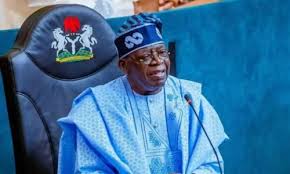

Musa Takes Oath, Vows United Front against Insecurity
ShareBy David Torough, Abuja President Bola Tinubu yesterday swore in former Chief of Defense Staff, General Christopher Musa (rtd), as...


OPay Secures Double Honors at Tech Innovation Awards
ShareIn a major recognition of its innovation and security leadership, OPay, Nigeria’s premier financial technology company, has been named Fintech...