
Oil & Gas
NNPC to Develop Comprehensive Divestment Policy for IOCs

The Nigerian National Petroleum Corporation (NNPC) says it will soon develop a Comprehensive Divestment Policy for International Oil Companies ( IOCs) operating in the country to protect strategic national interest.
Mr Mele Kyari, the Group Managing Director, NNPC disclosed this in Lagos on Monday at the 2021 Society of Petroleum Engineers (SPE) Nigeria Annual International Conference and Exhibition (NAICE).
The conference has as its theme: “The Future of Energy – A Trilogy of Determinants: Climate Change, Public Health, and the Global Oil Market.
”Kyari said the divestment policy would ensure that only investors with technical, financial and operational capabilities take position of the IOCs assets thereby adding value to the industry.
“We have seen a whole wave of divestments by major IOCs operating in our country.
“NNPC as their major partner cannot stop partners from divesting their interests. We can’t do this because we all have the right to migrate our portfolios depending on the circumstances.
“The divestments create challenges for us in ensuring that we get right and competent investors to take position and add value to the industry.
“We have engaged all our partners to ensure that while they have the right of divestments, that there should be no situation where this will become a waterloo of our industry.
“Therefore, NNPC will ensure Nigeria’s strategic national interest is safeguarded by developing a comprehensive Divestment Policy that will provide clear guidelines and criteria for divestment of partner’s interest.”
Kyari said going forward, that the NNPC would make clear distinctions between Divestment of Shares and Operatorship Agreements under various Joint Operating Agreements.
According to Kyari, it will also leverage its rights of pre-emption as well as evaluating the operational competency and track records of new partners.
He said attention would be paid to abandonment and relinquishment costs, severance of operator staff as well as third party contract liabilities.
He said that the divestment was being driven by global energy transition which was making the IOCs diversify their portfolios to low-carbon investments.
Kyari however, said that energy consumption would increase beyond what renewable energy sources can meet by 2050 especially with the anticipated economic growth and rising population of Asia and Africa.
“Building on this convergence, Nigeria as a key player in global energy security is addressing its challenges mainly, Fiscal, Security and Cost Competitiveness to stimulate investments in the oil and gas industry.
“This include the recent passage of the Petroleum Industry Bill, the National Gas Expansion Programme and development of gas infrastructure such as the Ajaokuta- Kaduna-Kano (AKK) and the Obiafu-Obrikon-Oben (OB3) pipelines.’’
Kyari reiterated Nigeria’s commitment to energy transition in the near future, adding that its huge gas resources would serve as a vehicle for the country’s transition to cleaner sources of energy.
Earlier, Mr Olatunji Akinwunmi, the Chairman, SPE, Nigeria Council, said it was in the interest of the country’s oil and gas industry to be in phase with the rest of the world regarding energy transition.
“Reduction of carbon emissions could be achieved by more efficient operations, focusing on transition to gas exploration and development to replace coal in electricity generation.
“In addition, novel technologies as well as digital transformation initiatives should help in the direction of reducing both emissions and cost, which would render our products more accessible, more competitive, and more acceptable.’’ (NAN)


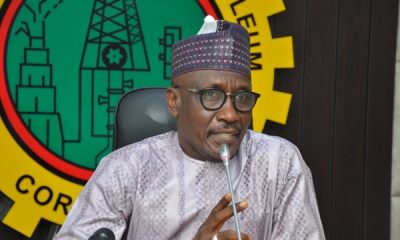



The Managing Director of Chevron Nigeria Limited, Jim Swartz, has highlighted key areas that would sustain Nigeria’s energy transition growth pathway.
Swartz, is of the opinion that strong collaboration and partnership are key to sustain the country’s energy needs.
Speaking at the just-concluded 49th Nigerian Annual International Conference and Exhibition (NAICE) in Lagos, Swartz, said no one player can deliver the scale of projects required to achieve the goals set by the country alone.
He declared that Collaboration is essential because no single company, institution, or stakeholder can address the opportunities and challenges of the intersector alone.
And technology will remain a key driver of safer operations, stronger performance, and the future that we will deliver. For Nigeria, the opportunity is significant.The conference with the theme “Thriving in the Evolving Global Energy Landscape: Collaborative Growth and Resilience,” focused on how Nigeria can compete for capital and sustain production amid global volatility.
The managing director listed four pillars he believed are essential to define a resilient energy future.
These include continued investment, enabling long-term policies, competitive local capacity development, and strong partnerships.
He continued, “Building a resilient energy future requires continued investment, enabling policies that are resilient for the long-term, local capacity development that’s competitive and durable as well, and strong partnerships across governments, regulators, industry, and the technical community,”.
He said Chevron has invested in Nigeria for more than six decades, noting the company’s role in building the foundation of the industry and in developing technical capacity.
The firm therefore called for stronger collaboration across government, regulators and industry operators as the foundation for building a resilient oil and gas sector that can deliver growth, jobs and energy security for Nigeria.
By David Torough, Abuja
The Nigerian National Petroleum Company Limited (NNPC) said it saved $3.4bn through contract restructuring and optimisation over the past year, while increasing its contribution to government revenue to N19.
5tn and boosting crude oil and gas production.Group Chief Executive Officer, Bayo Ojulari, disclosed the figures on Tuesday while presenting the company’s one-year performance scorecard at the opening of the 25th NOG Energy Week in Abuja.
According to Ojulari, the contract optimisation programme reduced operating costs by $3.
4bn without disrupting operations, strengthening commercial efficiency and improving the competitiveness of Nigeria’s oil and gas industry.The scorecard showed that crude oil production rose by six per cent year-on-year to 569.7 million barrels, while gas production increased by 8.1 per cent to 2,576 billion standard cubic feet. NNPC’s contribution to government revenue also climbed by 21.8 per cent to N19.5tn.
Ojulari said Nigeria’s crude oil production has reached about 1.71 million barrels per day, the highest level in five years, while NNPC Exploration and Production Limited achieved a record output of 365,000 barrels per day.
He said the company aims to increase crude oil production to two million barrels per day by 2027 and three million barrels per day by 2030. Gas production is projected to rise from 7.62 billion cubic feet per day this year to 10 billion cubic feet per day in 2027 and 12 billion cubic feet per day by 2030.
The NNPC boss also reported significant improvements in export infrastructure, noting that crude export terminals recorded an average 98 per cent recovery factor between April 2025 and May 2026. He added that major evacuation pipelines, including the Trans Niger, Trans Escravos, Trans Ramos, Trans Forcados and Oando-Brass lines, are operating at 100 per cent availability.
Ojulari further disclosed that NNPC maintained 100 per cent compliance with its Joint Venture cash-call obligations throughout 2025 and into June 2026, although some partners remained in default, increasing the company’s funding responsibilities.
On the commercial front, he said NNPC signed gas sale and purchase agreements covering 1.29 billion standard cubic feet per day for long-term LNG feed gas and 750 million standard cubic feet per day for domestic industrial gas supply to DFL FZE and Dangote Refinery. The agreements are expected to attract more than $20bn in investments, with seven additional transactions under negotiation.
He also highlighted governance reforms, including the resumption of monthly remittances to the Federation Account in July 2025, the restoration of monthly business performance reporting and the company’s first earnings call in November 2025.
Ojulari urged governments, investors, regulators and operators across Africa to strengthen collaboration, arguing that strategic partnerships would be critical to unlocking the continent’s energy potential and attracting greater investment.
The Organization of the Petroleum Exporting Countries (OPEC), has revised downward its 2026 global oil demand growth estimates, citing expected slower consumption growth in advanced economies, where collective demand will rise by only 100,000 barrels per day.
The cartel said it now expects global oil demand growth to reach 1.
2 million barrels per day in 2026, down from its previous forecast of 1. 4 million barrels per day, explaining that the revision would bring total global oil consumption to 106.3 million barrels per day.In Europe, oil demand will decline by 30,000 barrels per day as weaker economic activity weighs on consumption, OPEC, said in its monthly oil market report.
The OPEC also expects some Asian economies, particularly Japan, to record slower demand growth. The organization forecast Japanese oil consumption to fall by 80,000 barrels per day.
However, strong demand from major emerging economies partly offset these weaker signals.
The OPEC said China would add 250,000 barrels per day to global demand, supported by its petrochemical industry. The organization also forecast India to increase demand by 200,000 barrels per day, driven by infrastructure spending and growth in vehicle ownership. Overall, OPEC expects emerging economies and developing countries to contribute an additional 1.1 million barrels per day to global oil consumption in 2026.
The OPEC’s revision aligns with a broader reassessment of global oil demand expectations.
In its May 2026 report, the International Energy Agency projected a much sharper downturn. The agency forecast a contraction of 420,000 barrels per day in global oil demand for the full year rather than a slowdown in growth.
The gap between the two institutions now exceeds 1 million barrels per day, highlighting the uncertainty surrounding the market outlook.
Both reports identified the near-closure of the Strait of Hormuz as a major factor behind market instability. According to the U.S. Energy Information Administration, six Gulf countries collectively reduced production by 10.5 million barrels per day in April, marking what the agency described as an unprecedented contraction outside pandemic periods.
As supply shortages intensified, oil producers outside the Middle East moved to increase production to offset part of the missing volumes. Several African producers, including Nigeria, Libya and Angola, benefited from rising demand for Atlantic Basin crude among Asian and European buyers that lost access to Gulf oil supplies, according to the IEA.
However, not all African producers can fully capitalize on the opportunity. Nigeria, Africa’s largest oil producer and an OPEC member, nonetheless showed encouraging momentum. According to provisional data published on May 15 by the Nigerian Upstream Petroleum Regulatory Commission, the country increased oil production from 1.546 million barrels per day in March to 1.663 million barrels per day in April 2026.



UNICEF Training: Communication experts charge media practitioners to champion child-rights protection
ShareFrom Attah Ede and Sylvia udegbunam, Port Harcourt Seasoned communication experts and veteran broadcasters, on Thursday, enjoined media practitioners both...


UNICEF Trains Journalists on Ethical Reporting
ShareFrom Attah Ede and Sylvia Udegbunam, Port Harcourt The United Nations Children’s Fund (UNICEF), on Wednesday, opened a two- day...


Grammy-winning Singer, Angelique Kidjo Immortalised on Hollywood Walk of Fame
ShareFive-time Grammy winner, Angelique Kidjo, has become the first African musician to be honoured with a star on the Hollywood...


Singers Wande Coal, Davido Clash over Unreleased Collaboration, ‘Come My Way’
ShareNigerian singers Wande Coal and Davido have clashed on social media over an unreleased collaboration,“Come My Way”. The disagreement was...


Tonto Dikeh to Renovate Churches in Birthday Tribute to Pastor Jerry Eze
ShareActress and humanitarian Tonto Dikeh has announced a church support initiative through The New Wine Prophetic Tabernacle to mark the...


BBNaija S11: Kamsy Reveals Plans after Reality Show Exit
ShareEvicted Big Brother Naija Season 11 housemate, Kamsy Uzoma, has revealed her plans for life after leaving the reality show,...


Bobrisky Slams Nigerians for Dragging Kaycee Luxury over NDLEA Arrest
ShareCrossdresser, Bobrisky, has blasted Nigerians dragging luxury shopper, Kaycee Luxury, online following his arrest by the National Drug Law Enforcement...


2Baba Teases New Album ‘Oldest Young Man’
ShareMusic icon Innocent Idibia, popularly known as 2Baba, has announced plans to release a new album titled ‘Oldest Young Man’....
2027 Elections: IGP Cautions Youths against Political Violence, Misinformation
ShareThe Inspector-General of Police, Olatunji Disu, has cautioned Nigerian youths against being used for political violence, misinformation and digital intimidation...
Council Chairmen Urge Yoruba Heritage Preservation
ShareSome council chairmen in Lagos have urged residents to preserve Yoruba cultural heritage while celebrating the 2026 Isẹ̀ṣe Day. They...