
Oil & Gas
NNPC Weekly: FUT Minna honours Kyari, others, as coy. leads Africa’s energy transition

The Nigeria National Petroleum Company (NNPC) Limited had a busy week following the award of honourary doctorate degree on its Group Managing Director (GMD) and Chief Executive Officer (CEO), Malam Mele Kyari.
The award was bestowed on the awardee by Federal University of Technology (FUT), Minna.
Other prominent Nigerians who received the award with Kyari for their selfless service and contributions to national development include Gen.
Abdulsalami Abubakar, a former head of state, Prof. Akinwumi Adesina, President of the Africa Development Bank (AfDB) and former Minister of Agriculture, Abdul Samad Rabiu, President of Bua Group was also honoured.The awards were the climax of the University’s 38th founder’s Day and 30th convocation ceremonies which took place at the university’s main campus, Minna, Niger.
The Vice Chancellor of the University, Prof. Abdullahi Bala said that the awardees deserved the awards.
In his acceptance speech, Kyari pledged to continue to be an advocate and ambassador of the University in every ramification possible while calling on youths and graduands to embrace technology.
The NNPC GMD who was accompanied to the event by some members of the company’s top management team also took time out to commission the Twin Lecture Theatre of the School of Physical Sciences of the institution.
The occasion was graced by some top dignitaries including Niger Governor, Alhaji Abubakar Sani Bello, the Sultan of Sokoto, His Eminence, Sa’ad Abubakar III, the Etspu Nupe and Chairman of Niger State Council of Traditional Rulers, HRH Yahaya Abubakar, and the Emir of Minna, HRH (Dr) Farouq Bahago.
Also in attendance were the Chancellor of the institution, His Imperial Majesty, Oba Aladetoyinbo Ogunlade Aladelusi-Odundun II, Deji and Paramount Ruler of Akure Kingdom and the Pro-Chancellor and Chairman of Council of the institution, Prof. Olu Obafemi among others.
Meanwhile, the NNPC Limited has positioned itself to lead Africa in energy transition following the increasing conversation around the transformation of global energy sector from fossil-based to zero-carbon by the second half of this century.
Explaining the Company’s strategy for a smooth and realistic energy transition, NNPC CEO, Kyari said the NNPC had set the necessary machineries in motion to lead Africa in transition to low-carbon energy and renewables.
Kyari spoke at the 30th Convocation Lecture of FUT, Minna, while delivering a lecture titled “Energy Transition & Energy Accessibility – The New Paradigm”.
He noted that as transition to cheaper energy gains momentum, especially across the developed countries, oil companies must continuously improve operational efficiency and reduce their costs to remain on the playground.
This, he said would guarantee affordable and reliable energy for rapid industrialisation and improve the economic well-being of the people.
He also said that the NNPC Ltd. had started deepening natural gas utilisation under the National Gas Expansion Programme (NGEP) and was currently extending natural gas infrastructure backbone from Ajaokuta in Kogi to Kano through Abuja and Kaduna, under the AKK Gas Pipeline Project.
The mega AKK pipeline would be fed by both Escravos-Lagos Pipeline System (ELPS) and Obiafu-Obrikom-Oben (OB3) gas pipelines through Oben node in Edo and deliver 2bscf of natural gas to power plants and industrial off-takers along Abuja, Kaduna and Kano.
“As a National Oil Company and a global player, NNPC Ltd is ready to shift to renewable energy; efforts are ongoing to take a firm position in this transition process by institutionalising the necessary enablers for desired success.
“It is against this background that the company advised against putting Africa in the same energy transition speed as the industrialised nations.
“Any attempt to do this, can result in unanticipated collateral damage that can spark energy crisis and deny developing countries access to available and cheaper energy for growth,” Kyari said.
Kyari further explained that in furtherance of its efforts at taking the lead in Africa’s energy transition, the NNPC Ltd had established a Renewable Energy Division and had completely transformed its erstwhile Research &Development (R&D) Division to NNPC Research, Technology and Innovation Division.
“The company is also currently transiting into Energy Company of Global Excellence and therefore welcomes beneficial relationship with the academia and industry experts who demonstrate capacity for productive research and innovation in the energy sector.
“Considering the financial stretch required to transit at the same pace with the rest of the world, what Africa needs is energy transition that addresses energy poverty across the continent and supports the use of comparative and cheaper available energy resources in Africa.
“Attaining this vision will however, require substantial finance which may have to come from diverse sources globally
“Africa is especially endowed with abundant sunshine that can support massive development of renewable energy enough to put the continent on the map of energy sufficient regions of the world,” he added.

In the meantime, the NNPC Ltd. commenced the process of selecting competent Operations and Maintenance (O & M) firms to manage the Port-Harcourt, Warri and Kaduna Refineries upon completion of the ongoing rehabilitation work.
This became realistic with the public opening of bids from the five firms that applied for the contract.
Mustapha Yakubu, Group Executive Director (GED), Refineries and Petrochemicals, NNPC, said at the virtual bid opening that the exercise was part of ongoing efforts by the NNPC Limited to achieve the objective of boosting in-country refining capacity to guarantee energy sufficiency for the country.
Yakubu who was represented by the Managing Director, Warri Refining and Petrochemicals Company (WRPC), Babatunde Bakare, expressed confidence that the ongoing investments in the refineries would benefit all Nigerians.

Also at the event, the Group Executive Director, Corporate Services, Mrs Aisha Katagum, urged the bidding firms to have faith in the foolproof evaluation process, stressing that all stages of the selection would be carried out transparently.
The Group General Manager, Supply Management, Mrs Sohpia Mbakwe, said the tenders were “double envelop submission” that contained both technical and commercial bids from the participating companies.
She emphasised that each firm’s entry would be evaluated based on the strength of its ability to address the technical and commercial peculiarities of the preferred refinery.
It would be recalled that upon the public advertisement of the exercise on Oct. 8, 2021, a total of 52 companies sent in entries out of which, eight were prequalified and five firms successfully submitted according to specifications.
The five firms that bidded for the O &m service contract are Dovewell/Aramis, Daewoo, Petrofac, Technimont, and Pivot/EPROM.
Visit us on www.nannews.ng for more details. (NAN)





International oil companies operating in Nigeria add other African countries are making significant progress in providing economic growth support to host communities which is now reducing restiveness in oil bearing regions.
According to Africa Energy Week, global energy companies’ now expanding local engagement reporting frameworks, depends on whether local engagement principles translate into local economic participation, infrastructure development and technology transfer.
Chevron, one of the continent’s longest-standing operators, that balance is particularly visible across its operations in Nigeria, Angola and the wider region.
Chevron’s sustainability reporting highlights community investment, environmental protection and workforce development.
In Nigeria, Chevron has made local supply chains a central pillar of its local engagement commitments. Over the past decade, Chevron has spent an estimated $1 billion annually on Nigerian suppliers and service providers, directing more than $10 billion to domestic contractors and businesses. The spending supports Nigeria’s local content framework while helping build indigenous capacity across engineering, logistics and oilfield services.
Across Africa, however, local engagement reporting by IOCs is often criticized for emphasizing corporate social responsibility projects rather than deeper economic integration. While community investment and environmental initiatives remain important, African policymakers increasingly prioritize local participation in project development, procurement and energy infrastructure.
Chevron’s project portfolio illustrates both the opportunities and the challenges of bridging this gap.
In Angola – where the company has operated for nearly 70 years through its subsidiary Cabinda Gulf Oil Company more than 90 per cent of the workforce is Angolan, reflecting long-term efforts to localize employment and technical expertise. Over the years, Chevron and its partners have invested more than $250 million in social and community development programs across the country, supporting healthcare, education and economic initiatives.
In Angola, the Sanha Lean Gas Connection Project linking offshore gas fields in Blocks 0 and 14 to the Angola LNG facility demonstrates how major energy infrastructure can contribute to domestic value creation. The project allows associated gas to be monetized rather than flared while strengthening Angola’s gas value chain and supporting long-term energy security.
Beyond Angola, Chevron continues to expand its footprint across the continent. The company maintains active exploration programs in Nigeria, holds stakes in producing assets in Equatorial Guinea and is evaluating offshore opportunities in markets such as Namibia and Algeria. As African countries look to expand oil and gas development while building stronger domestic industries, pressure is growing on international operators to ensure local engagement commitments translate into tangible economic impact.
This growing focus on implementation is one reason industry platforms are playing a larger role in shaping the conversation.
“Africa doesn’t need more sustainability reports sitting on shelves,” says NJ Ayuk, Executive Chairman of the African Energy Chamber. “What we need are partnerships that build industries, train African workers and keep more of the value from our resources on the continent. African Energy Week provides a platform for stakeholders not only to promote projects, but to ensure sustainability commitments translate into measurable outcomes.” Adding that Chevron is leading the way through its actions on the continent.
“We need partnerships that build industries, and that is exactly what Chevron is doing.”
As local engagement expectations continue to evolve, international operators like Chevron face increasing scrutiny over whether sustainability commitments translate into real economic participation. In Africa’s energy sector, the most meaningful local engagement metric may ultimately be local content and the extent to which global companies help build lasting industries alongside their projects.
“Chevron’s training and development initiatives across Africa have significantly empowered local communities. Many individuals trained by Chevron have gone on to assume roles in public service, bringing enhanced capabilities and best practices to their work,” Ayuk states.
Furthermore, a substantial number of alumni have entered the private sector, successfully leading world-class companies, a testament to the valuable skills acquired during their time with Chevron.
“By fostering entrepreneurship, Chevron is inspiring many Africans to establish and manage their own businesses,” he concludes.
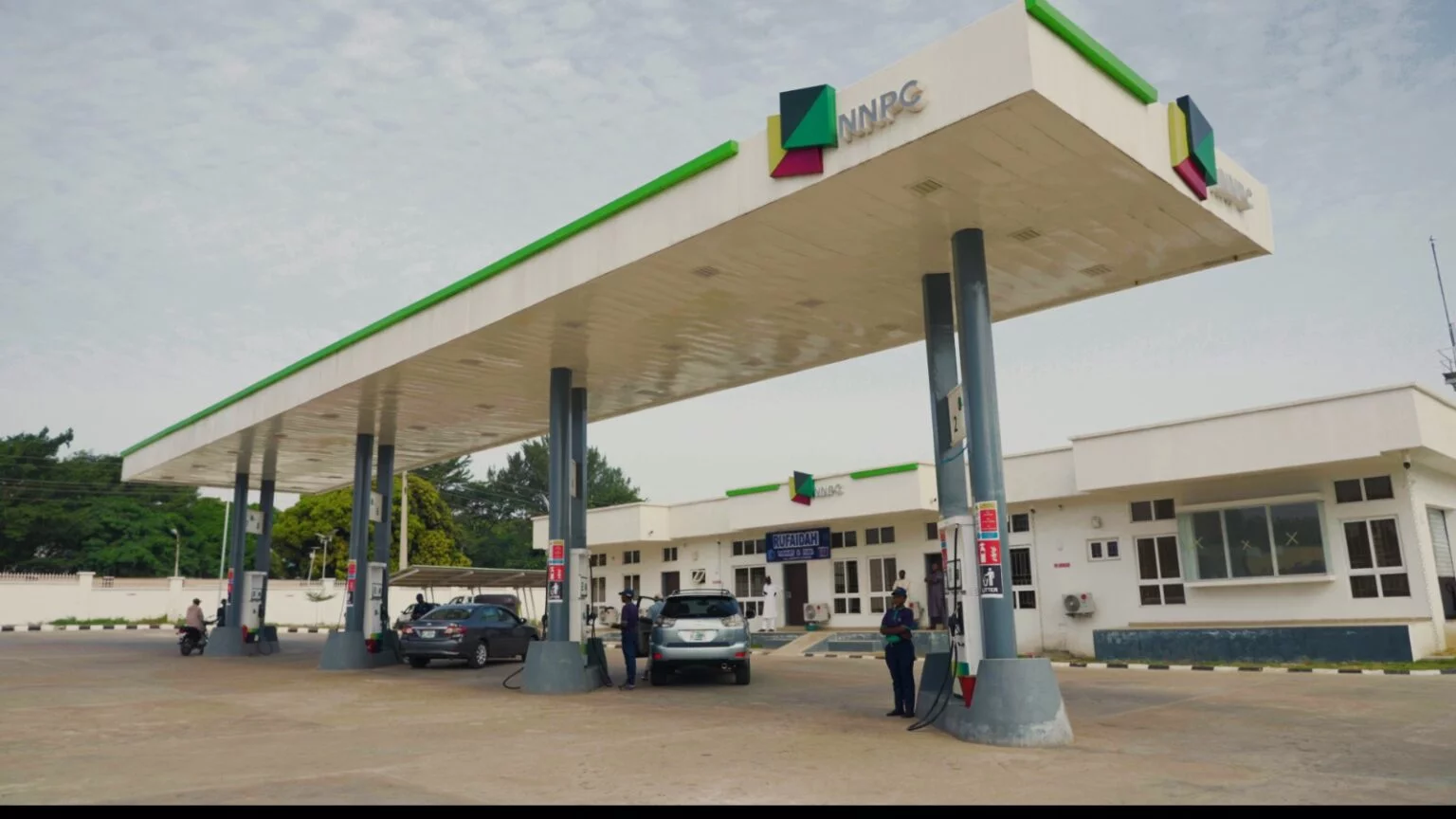
The Nigerian National Petroleum Company Limited has reduced the pump price of petrol at its retail outlets to N1,130 per litre in Lagos and N1,165 per litre in Abuja.
The new pricing reflects a N100 reduction from the previous N1,230 per litre in Lagos and a N95 decrease from N1,260 per litre in Abuja.
Checks showed that the revised price was being dispensed at several NNPC retail stations in Lagos, including outlets along Isheri Oshun Road, Apple Junction and Ago Palace Way.
Similarly, some stations operated by the national oil company in the Federal Capital Territory were selling petrol at N1,165 per litre, including outlets in Jabi, Lifecamp, Wuse Zone 5 and Wuse Zone 4.
The price adjustment follows a recent reduction in the ex-gantry price of petrol by the Dangote Refinery, which lowered its rate to N1,075 per litre amid easing global oil prices.
According to OilPrice.com, Brent crude prices recorded a sharp reversal on Tuesday, falling by nearly 27 per cent from the previous day’s high of $119 per barrel to about $87 per barrel.
Similarly, diesel is now priced at N1,430 per litre at the gantry, representing a N190 reduction from the earlier price of N1,620 per litre.
The Dangote Refinery on Tuesday reduced its petrol gantry price by N100, from N1,175 to N1,075 per litre.
The move followed a slump in global oil prices, with Brent crude dropping to $89 per barrel from over $100 on Monday.
Officials of the refinery confirmed the development to our correspondent, adding that diesel prices have also been reduced.
They stated that petrol supplied via coastal distribution channels will now sell for N1,050 per litre, reflecting a slight differential for marine logistics.
Similarly, diesel is now N1,430 per litre at the gantry, representing a N190 reduction from the earlier price of N1,620 per litre.
According to oilprice.com, Brent crude prices witnessed a dramatic reversal on Tuesday, plunging nearly 27 per cent from the previous day’s high of $119 per barrel to as low as $87 per barrel.
The Dangote Refinery reportedly blamed global crude volatility for the repeated price hikes, citing tensions arising from the US-Iran conflict.



Julius Berger Delivers Landmark CSR Activities in Rivers State
ShareBy Mike Odiakose, Abuja Julius Berger Nigeria PLC, the nation’s premier engineering construction powerhouse, is not only building bridges and...


Adebayo: Age Not the Issue, Nigeria Needs Leaders Who Truly Love the Country — Archbishop Kanu
ShareBy Mike Odiakose, Abuja Former Prelate Emeritus of the Methodist Church of Nigeria, Archbishop Uche Kanu, has said that Nigeria’s...


Cleric, Followers Observe Eid despite Sultan’s Directive
ShareA Sokoto-based Islamic scholar, Sheikh Musa Lukuwa, yesterday led his followers in observing Eid al-Fitr prayers in defiance of a directive issued...

CAF Executive Member Calls for Rejection of Abject Afcon Decision
ShareThe decision to strip Senegal of the 2025 Africa Cup of Nations title is “abject” and “we have to denounce...

Oil Crosses $110 a Barrel after Gas Field Strike
ShareOil prices rose above $110 (£82.78) a barrel after Iranian media reported an airstrike hitting a facility on the world’s largest natural gas field. The...


Army Conducts Shooting Exercise, Kaduna Residents Told Not to Panic
ShareThe Headquarters, 1 Division Nigerian Army, says it will conduct its First Bi-Annual Range Classification Exercise for 2026 from March 23 to 27, at the Nigerian Air...


How God Changed My Story after 16 Years in Music, Says Spyro
ShareAfrobeats singer Spyro has revealed that 16 years of perseverance and struggle in the music industry finally paid off three...


Asake Reaffirms Loyalty to Olamide, Downplays Split Rumours
ShareAfrobeats star Asake has reiterated his unwavering loyalty to his former label boss and mentor, Olamide, amid speculation of a...
Chef Drives Push to Rebrand Nigerian Cuisine Globally
ShareNigerian chef Gbolabo Adebakin, known as Chef Gibbs, has urged deliberate global rebranding of Nigerian cuisine to challenge misconceptions and...


ShareNigeria’s Balance of Payment Falls 38% to $4.23bn in 2025 Nigeria’s external sector faced significant headwinds in 2025, as the...