
NEWS
NNPCL Signs Fresh Contract for Completion of PH, Warri Refineries

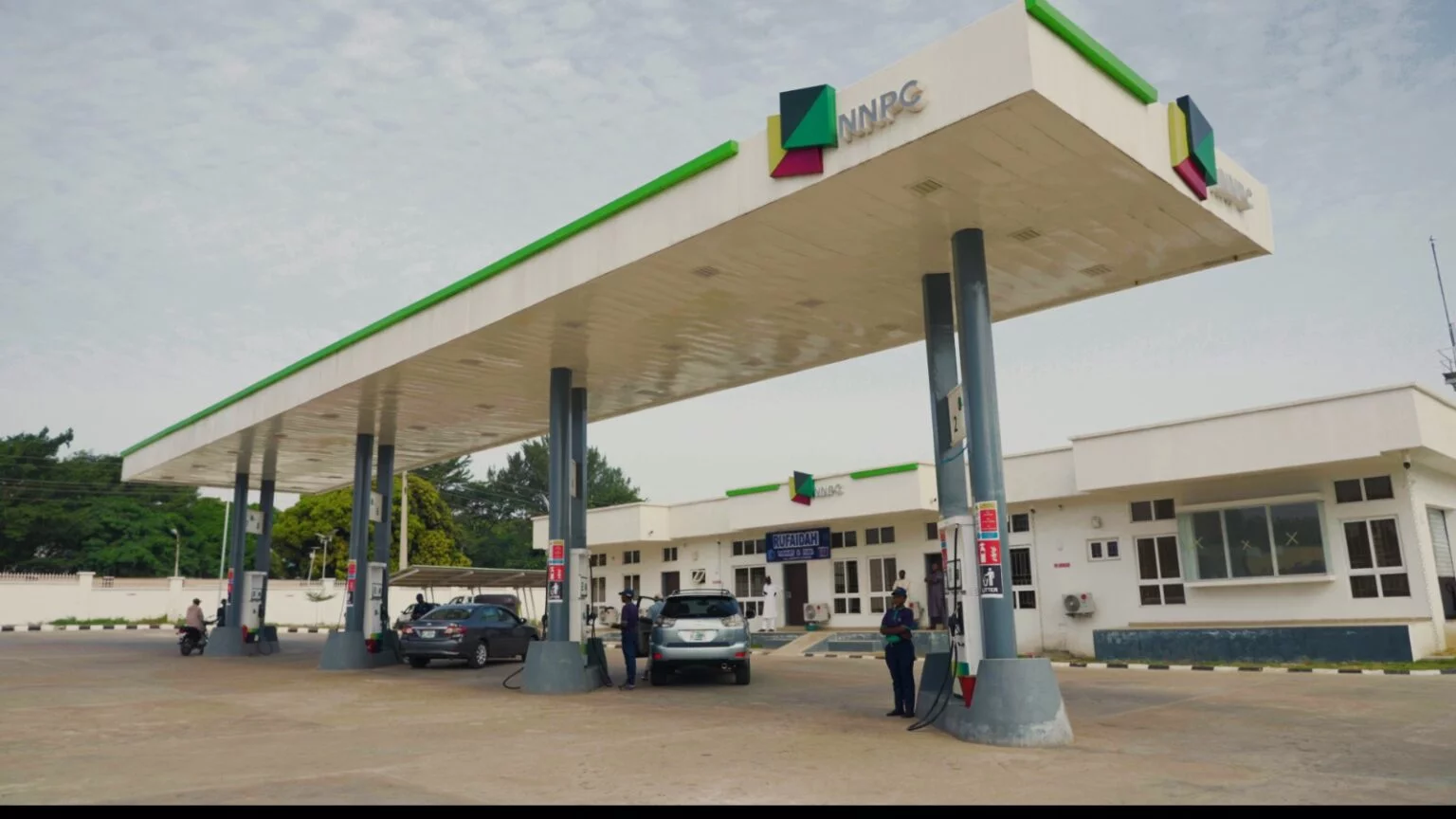
The Nigerian National Petroleum Company Limited (NNPCL) has signed a Memorandum of Understanding (MoU) with two Chinese companies, Sanjiang Chemical Company Limited and Xingcheng (Fuzhou) Industrial Park Operation and Management Co. Ltd, for potential Technical Equity Partnership (TEP) in support of the completion and operation of the Port Harcourt and Warri Refineries.
A statement by NNPCL’s Chief Corporate Communications Officer, Andy Odeh, said the MoU was signed by the Group CEO, NNPC Ltd, Bashir Bayo Ojulari; Chairman, Sanjiang Chemical Company, Guan Jianzhong and Chairman of Xinganchen (Fuzhou) Industrial Park Operation and Management Co.
Ltd, Bill Bi, in Jiaxing City, China, on Thursday, April 30, 2026.Recall that the federal government had spent $2.39bn under the Buhari administration to repair the two refineries.
The Port Harcourt Refinery was said to have been completed, with production starting in November, 2024 but it was shut down after six months.
Previously in March 2021, FEC had approved $1.5 billion for the rehabilitation of Port Harcourt refinery.
FEC had also approved $1.48bn for the rehabilitation of Warri and Kaduna refineries in August 2021.
The then Minister of state for petroleum resources, Timpere Sylva, had announced that the rehabilitation of Warri and Kaduna refineries would be awarded to Messers Saipem SPA and Saipem Contracting Limited at the combined total sum of $1.484 billion and would be rehabilitated in three phases of 21, 23 and 33 months.
Sylva had said $897,678,800 would be spent to repair Warri refinery while Kaduna refinery would gulp $586,902,256, noting that the completion of the rehabilitation exercise would be in three phases spread over 77 months.
But Odeh in the statement released on Monday quoted the Group Chief Executive Officer of NNPC Ltd, Engr. Bashir Bayo Ojulari, said that the MoU execution served as a significant milestone, following more than six months of concerted engagement between the technical and management teams of NNPC and the two Chinese partners, Sanjiang and Xinganchen.
He did not say how much Nigeria would pay for the new rehabilitation.
“All parties recognise mutually beneficial opportunities for the development and long-term sustainable profitability of NNPC’s refining assets in Nigeria, and the collective weight required for success,” Ojulari noted.
The GCEO further stated that the MoU is an important step in the journey towards identifying potential technical equity partner(s) to restart and expand NNPC’s refineries, and to explore opportunities in co-located petrochemicals and gas-based industries.
From Agbo Emmanuel, Kaduna
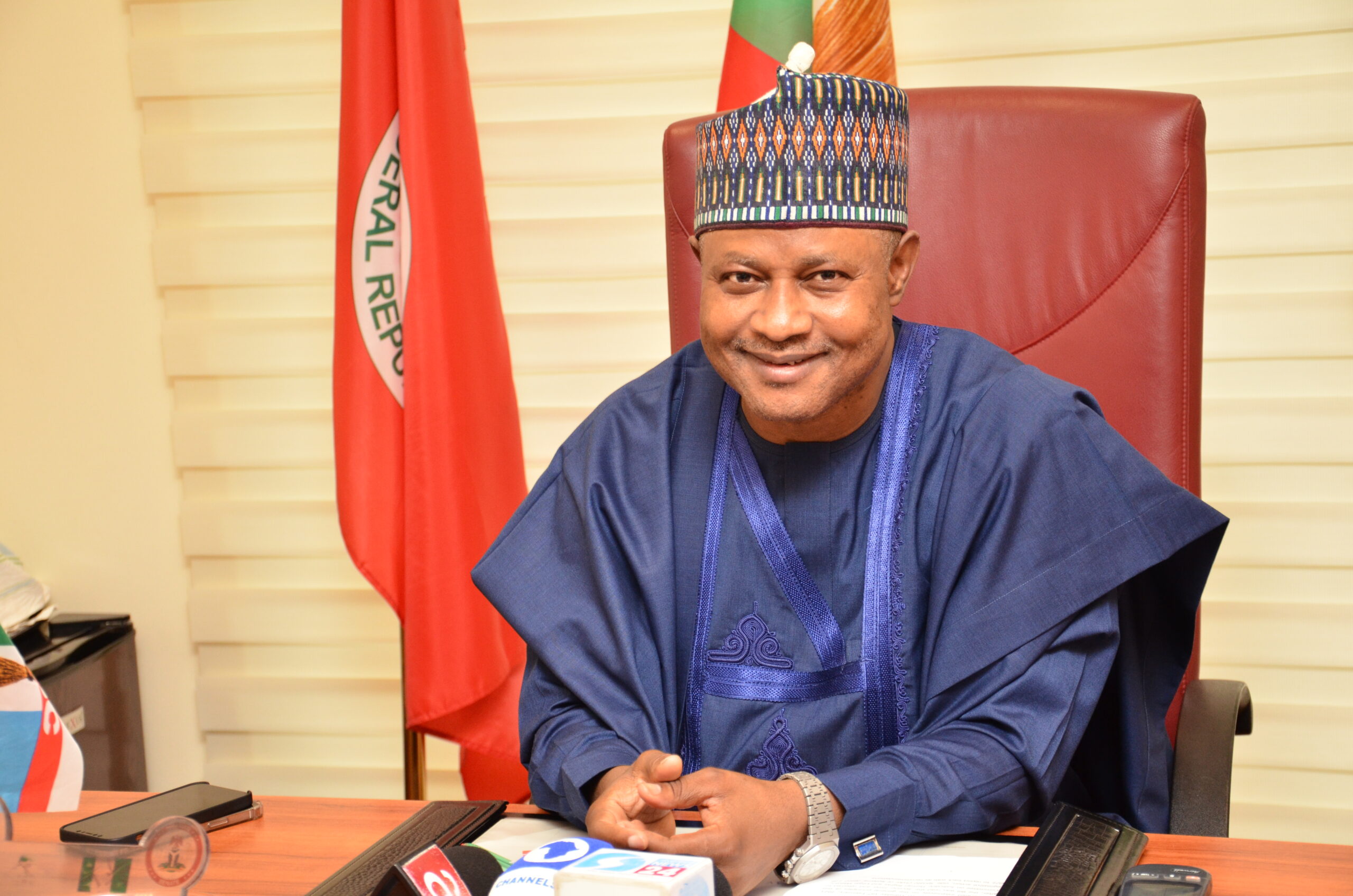
Governor Uba Sani has inaugurated the Kaduna State Disarmament, Demobilisation and Reintegration(DDR), Peace and Security Committee, vowing to provide the political will for it to succeed.
The framework of the committee, which is the first to be inaugurated in the country, was facilitated by the Office of the National Security Adviser and the National Counter Terrorism Centre.
Speaking at the ceremony, the Governor recalled that ‘’not too long ago, Kaduna State stood at a precarious crossroads.
Criminal elements; bandits, kidnappers, and other violent groups, had entrenched themselves across vast swathes of our territory.’’‘’Our highways became theatres of fear, our rural communities lived under constant threat, and economic activity was severely constrained.
‘’The Kaduna–Abuja corridor and the Birnin Gwari axis that were once vital artery of movement and commerce, became emblematic of insecurity,’’ the Governor said.
Governor Uba Sani pointed out that from the very outset, his administration had ‘’resolved that the challenge of insecurity would not be approached with resignation, but with clarity, courage, and innovation.’’
According to him, ‘’we understood that the complexity of the problem required more than a single lens. It demanded a balanced synthesis of kinetic and non-kinetic strategies; a comprehensive approach that addresses both the manifestations and the root causes of conflict.’’
‘’This conviction gave rise to what is now widely referred to as the Kaduna Peace Model,’’ the Governor pointed out.
He disclosed that the model recognised that insecurity is often a symptom of deeper structural deficits, like poverty, exclusion, lack of education, and limited economic opportunity.
‘’In confronting these realities, we have combined robust security operations with deliberate investments in human development, dialogue, and community engagement.
‘’Through enhanced collaboration with the Office of the National Security Adviser and the leadership of our Armed Forces, we strengthened operational capacity on the ground.
‘’Today, travellers once again move with confidence along previously perilous corridors, and economic activity has not only been restored but peaked,’’ he added.
According to the Governor, his administration also recognised that force alone cannot secure lasting peace.
‘’It is in this context that we embraced dialogue; not as a concession, but as a strategic instrument of stability.
‘’Through sustained engagement with community leaders, traditional institutions, and even those willing to renounce violence, we began to rebuild trust where it had long been broken,’’ he maintained.
In her opening remarks, the Director, Preventing and Countering Violent Extremism at the National Counter Terrorism Centre, Ambassador Abimbola Wonosikou, noted that the inauguration is a milestone toward sustainable peace, security, and development in Kaduna State and indeed Nigeria.
She noted that the National Counter Terrorism Centre had convened regional consultations in the six geo-political zones, in collaboration with United Kingdom Strengthening Peace and Resilience in Nigeria (UK-SPRiNG) programme.
‘’These consultations identified shared priorities, regional differences, and lessons that should guide an integrated national DDR framework that is aligned with State-level needs, human rights-based, locally grounded, and nationally coherent.
‘’Part of the resolutions reached during these regional consultations is the need to set up the Institutional Framework and Coordination Mechanisms for DDR, Peace and Security in Nigeria.
‘’In line with this, every state is required to set up State-level DDR, Peace and Security Committees to serve as Delivery and Implementation Units.
‘’Therefore, the establishment of this Committee is not merely a bureaucratic exercise; it is a bold and practical step toward addressing the root causes of insecurity,’’ she disclosed.
Ambassador Wonosikou argued that ‘’by removing arms from circulation, dismantling violent structures, and reintegrating affected individuals back into society, we are laying the foundation for reconciliation, healing, and long-term stability.’’
The Technical Adviser, National DDR Framework Development and Harmonisation Process, Dr. Paul Nyulaku, emphasized the need for dialogue in resolving problems.
He noted that Governor Uba Sani’s reconciliatory effort ‘’is nationally applauded and the results are obvious, particularly with the peace initiatives across ethnic and religious divides.’’
While noting that Kaduna State is the first subnational to establish its DDR, Peace and Security Committee, he congratulated the Governor for his efforts.
‘’The recommendation for establishing the committee was a resolution reached at the North West DDR Regional Consultation. It also provided insight for the development of the National DDR Framework which is awaiting approval,’’ he added.
Dr Nyulaku disclosed that the framework has 17 pillars, notably Political Dialogue and Negotiation, adding that ‘’it lays out how these processes can be implemented.’’
According to him, his team has also developed Standard Operating Procedures (SOPs), tools and templates that the Committee will make use of, adding that ‘’we will continue to provide the needed technical assistance needed for the committee to succeed.’’
By Johnson Eyiangho, Abuja
The Peoples Democratic Party (PDP) has unveiled a N100 million price tag for its 2027 presidential nomination form, even as a new interim leadership emerged from a faction-backed National Executive Committee (NEC) meeting in Abuja, signaling a decisive turn in the party’s internal crisis.
The newly inaugurated Interim National Working Committee (NWC), chaired by Kabiru Tanimu Turaki, announced the fees alongside a detailed timetable for the 2027 general elections.
Governorship forms were pegged at N40 million, Senate at N10 million, House of Representatives at N7 million, and State Assembly at N2 million.According to a statement by National Publicity Secretary Ini Ememobong, female aspirants will only pay for expression of interest forms, while youths and persons living with disabilities will receive a 50 per cent discount on nomination fees.
Sales of forms run from May 5 to May 13, 2026, with party primaries scheduled for later in May.The development comes as a faction of the party, backed by Oyo State Governor Seyi Makinde, formally inaugurated a 13-member interim NWC during what it described as the 103rd NEC meeting. The committee also has Taofeek Arapaja as Secretary.
The faction’s move follows a recent judgment by the Supreme Court of Nigeria, which invalidated previous party conventions and effectively dissolved the former NWC. This prompted the PDP Board of Trustees (BoT), led by Adolphus Wabara, to assume temporary control and facilitate the formation of a new leadership structure.
Wabara said the intervention was necessary to prevent a leadership vacuum and reposition the party ahead of the 2027 elections, urging unity and sacrifice among members. He also called on the Independent National Electoral Commission (INEC) to recognize and update its records to reflect the new leadership.
Governor Makinde, a key figure behind the faction, dismissed the rival NWC as illegitimate and described the current struggle as essential to preserving democratic plurality. He expressed confidence in the party’s ability to overcome its internal challenges.
In his acceptance speech, Turaki pledged that the interim committee would rebuild the party, ensure participation in all elections, and secure victory in 2027. He emphasized unity, internal democracy, and resilience as critical to the PDP’s revival.
INEC has scheduled the presidential and National Assembly elections for January 16, 2027, with governorship and state assembly elections slated for February 6, 2027.
By Raphael Atuu, Abuja
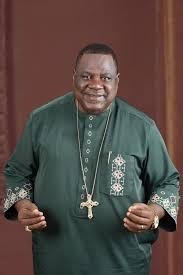
The founder of Dominion Chapel International Churches, Archbishop JohnPrasie Daniel, on Sunday urged the Federal Government to urgently address rising insecurity and the economic hardship triggered by high fuel prices, warning that Nigerians must be alive to participate in the 2027 general elections.
Speaking with journalists in Abuja at the end of a two-day event marking his 66th birthday, the cleric said worsening killings and the cost-of-living crisis had put citizens under severe pressure.
“I want to plead with this government that please, there is pressure in the land. There is suffering in the land. Cushion the effect of this oil crisis,” he said.
Daniel linked the current fuel price surge partly to global oil market disruptions, including tensions in the Middle East, but insisted that the government must take deliberate steps to mitigate the impact on citizens.
“Even though they cannot be blamed completely because this oil crisis came as a result of the Iran war, why can’t they think of how to soften the prices of oil? Because if oil prices go up, everything is affected—food is affected, transportation is affected, and the suffering continues,” he added.
Nigeria has in recent months faced persistent increases in petrol prices following subsidy removal and fluctuations in global crude oil prices. The development has triggered a spike in transportation and food costs, worsening inflationary pressures and eroding household incomes.
The cleric criticised political elites for being disconnected from the realities faced by ordinary Nigerians.
“Politicians don’t know about that, they just go to the stations and then government pay. But the common man out there on the street is not finding things easy,” he said.
On security, Daniel expressed concern over the rising spate of killings, kidnappings, banditry and terrorism across parts of the country, warning that the situation could undermine the electoral process if not urgently addressed.
“Politics is on, election is coming, 2027, and the killings are increasing. Must they kill us all before the election will hold?” he queried.
He stressed that safeguarding lives and property remains the core responsibility of government.
“The primary purpose of government is the protection of lives and property. So let them do the needful. Elections will come and go, but we must live in order for us to do election,” he said.
Calling for decisive action, the cleric added, “Government should stop whatever they need to do to stop this banditry, to stop this terrorism, to stop this armed robbery, this kidnapping that has become like a business in our nation.”
He also urged political actors to avoid inciting violence ahead of the polls, noting that instability would ultimately be counterproductive to all stakeholders.
“If you raise this agitation and people are killed, who will you rule over…? So let peace reign. Let Nigerians go to bed with their eyes closed,” he said.
Also speaking, the Chairman of the Pentecostal Fellowship of Nigeria (PFN), FCT chapter, Apostle Israel Abam, called on citizens to take responsibility for the country’s future by making informed choices ahead of the elections.
“Elections are at the corner. The politicians are out in the game. What are we doing as a people? Are we going to wait for the bag of rice… or are we going to do right by our own experiences?” he asked.
Abam urged Nigerians to reject inducement and vote based on competence and integrity.
“We cannot wait for change to come from outside. We must take the bull by the horn and say no to what we don’t accept and say yes to what is good for us as a people,” he said.
He emphasised that while hope is important, it must be matched with action. “Hope is good, but hope not deployed will produce nothing… Let’s rise up and do what is right and turn the hands of the clock back for our nation.



NNPCL Signs Fresh Contract for Completion of PH, Warri Refineries
ShareThe Nigerian National Petroleum Company Limited (NNPCL) has signed a Memorandum of Understanding (MoU) with two Chinese companies, Sanjiang Chemical...
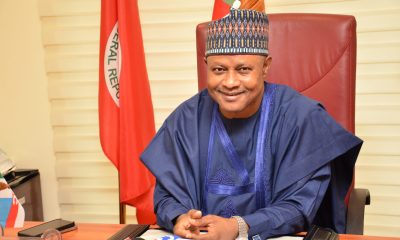

Kaduna Inaugurates Disarmament, Demobilisation, C’ttee to Enhance Security
ShareFrom Agbo Emmanuel, Kaduna Governor Uba Sani has inaugurated the Kaduna State Disarmament, Demobilisation and Reintegration(DDR), Peace and Security Committee,...

PDP: Turaki – led NWC Takes Charge, Sales Presidential Form for N100m
ShareBy Johnson Eyiangho, Abuja The Peoples Democratic Party (PDP) has unveiled a N100 million price tag for its 2027 presidential...
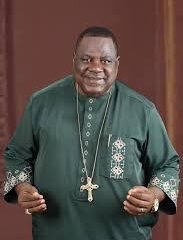

Stop killings, Ease Suffering before 2027 Elections, Cleric Urges FG
ShareBy Raphael Atuu, AbujaThe founder of Dominion Chapel International Churches, Archbishop JohnPrasie Daniel, on Sunday urged the Federal Government to...
Workers’ Day: Labour Leaders Urge Tinubu to Strengthen Partnership with Unions
ShareBy Raphael Atuu, Abuja Labour leaders and stakeholders across Nigeria have called on President Bola Ahmed Tinubu to deepen collaboration...


DAILY ASSET Publisher’s Son Weds in Grand Celebration of Love
ShareBy David Torough, Abuja Joy, elegance and heartfelt celebration filled the air as Mark Akwaya, son of DAILY ASSET Newspaper...

2027: Gimbiya Eyes Kaduna Guber Seat, Tout Shehu ABG’s ICT, Education, Water Projects
ShareBy Julius Tambaya, Abuja As the race for the 2027 Kaduna State governorship heats up, a prominent female supporter has...

Auto360 Nigeria Graduates New Generation of Skilled Mechanics, Sends Trainees to Industry Internships
ShareBy David Torough, Abuja Auto360 Nigeria Limited has celebrated the graduation of its latest cohort of automobile trainees, marking the...

Aminatu Dahiru Chiroma: Driving Innovation in Aviation and Empowering Communities Across Nigeria
ShareBy Raphael Atuu In an era where visionary leadership is shaping the future of Africa’s economic landscape, Aminatu Dahiru Chiroma...

Gideon Dooyum Inyom, Declares for Buruku Federal Constituency Seat
ShareThe political theatre of Benue State has taken a decisive turn with the declaration of Inyom Dooyum Gideon to contest...