
Education
No Plan to Reopen Schools Now – FG

By Mathew Dadiya, Abuja
The Federal Government has said it has no plans yet to reopen the schools explaining that the lockdown was meant to flatten the curve of the novel Coronavirus.
The schools across the country have been shut for almost four weeks.
The Minister of state, Education, Chukwuemeka Nwajiuba, said this on Tuesday, at the Presidential Taskforce of COVID-19 press briefing in Abuja.
Nwajiuba said the government would also be looking at what they could do for schools to reopen.
“As you will recall that we had asked that schools vacate in the middle part of March, no it will be a congregated effort in all the states because the lockdown in various parts will definitely affect how students will go to school or not.
“So it goes without saying that nobody can reopen schools for now except we coordinate all of our efforts.
“We are also appealing to parents to help us, the point where we are now, we are asking that students can learn online. We have made a lot of provisions for that and the directorate of ICT has opened a portal and in conjunction with UBEC as the coordinating agency, in alliance with all the SUBEBS in all the states to buy into a programming module.
“Right now, what has happened is that about 14 or 15 states have commenced learning via different channels that are available in their state, mostly radio and local TV. What they are running is an approved Nigerian Educational Research and Development Council (NERDC) curriculum, everything that we said we will learn all that our teachers need to do. That is ongoing at the moment. Not all the states have stated the programme but Lagos, Anambra, about 14 of them and the run different programming times.
“We have also in collaboration with ministry of information through NTA and FRCN to escalate what they normally have as their educational content, we are still working on that. That is an ongoing programme.
“We believe those in primary and secondary schools are already doing some sort of work with that. We are also available to them to key into things that we have, all our platforms are available to them. Our biggest challenge is to reach children who do not have devices on the fringes of our communities. And because they do not have that, that is why we are pressing on with Radio Corporation and NTA.
“We already have programmes running along those lines with adult education, we just want to distill all of that and make it available to all. As you are aware, is a concurrent matter in our constitution and therefore, we can’t unilaterally impose some level of education on states, they must be some form of buy-in. We are meeting with SUBEBs regularly so that they can do what is suitable to them.
“On tertiary education, some private universities already have online education in which they learn. We are also making resources available, we are assisting them.
“We really must thank all participants because everybody has offered us support from content providers to online networking agents, platform providers, MTN, Glo, 9Mobile, Airtel, everyone is giving what they have. We are willing to absorb all of that and make it available to everybody with any kind of limitations that you are facing from your end. It is our work to address that, we are here to serve,”he explained.







The West African Examinations Council has released the official timetable for the 2026 West African Senior School Certificate Examination for school candidates.
According to the final international timetable published on WAEC’s official X handle on Monday, the examination will commence on Tuesday, April 21, 2026, and end on Friday, June 19, 2026.
The council said the examination will begin with Foods and Nutrition 3 (Practical) Planning Session and Home Management 3 (Practical) Planning Session.
WASSCE serves as a critical qualification that secondary school students must pass to gain admission into university and other tertiary institutions.
The exam covers core subjects such as English Language and Mathematics, as well as a wide range of elective papers in sciences, arts, humanities, and vocational/technical areas.
It takes place across WAEC’s member countries, including Nigeria, Ghana, Liberia, Sierra Leone, and The Gambia.
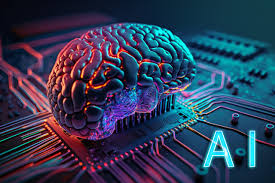
An Information and Communication Technology (ICT) expert, Abiona Solomon, has cautioned students against over-reliance on Artificial Intelligence (AI), urging them to embrace practice and independent thinking in their academic work.
Solomon, the Chief Executive Officer of Solo InfoTech, gave the advice on Saturday in Ilorin during an interview.
He said that many students depend heavily on AI tools to handle their research and class assignments, a trend he noted was discouraging critical thinking.
According to him, the growing use of AI has made some students reluctant to engage their intellect, thereby promoting laziness.
“Many students now look for shortcuts to complete their tasks and no longer challenge themselves intellectually because of the availability of AI.
“This trend cuts across all levels of education, as students increasingly rely on AI instead of making efforts to think independently.
“Students should be encouraged to be self-reliant and always attempt solving problems on their own before turning to AI.
“Over-dependence on AI can weaken their ability to think critically,” he said.
Solomon, however, acknowledged that AI remains a valuable tool for learning, noting that it is vast and makes research easier.
He added that AI has simplified academic work and exposed students to global developments.
The expert, therefore, advised students to use AI responsibly and not abuse its benefits.
Education
Expert Urges Stronger Teacher-student Bonding to Curb Cultism, Bullying in Secondary Schools

An Education Evaluation expert at the University of Ibadan, Prof. Adams Onuka, has called for stronger teacher-student and parent-child relationships to curb cultism and bullying in secondary schools.
Onuka made the call in an interview recently in Ibadan, while reacting to the growing concerns over cult-related activities and bullying in schools.
He said that unfriendly attitudes by some teachers and weak parental bonding often pushed students toward cult groups and other harmful associations.
According to him, students who are not emotionally supported by teachers and parents can become vulnerable to manipulation by cult groups.
“Teaching can only be effective when there is a healthy relationship between teachers and students.
“If teachers relate well with students, the students will trust them, open up to them and such teachers can prevent them from joining cult groups,” he said.
However, the don said that when teachers bully, insult or intimidate students, they unknowingly create the kind of emotional gap that cult groups exploit.
He explained that some students joined cult groups in search of protection, especially when being bullied by peers or mistreated by adults in school.
Onuka said investigation had shown that the behaviour of some lecturers and workers contributed to students’ attraction to cult groups.
He said that the same pattern could be found in secondary schools.
Onuka stressed the need for school administrators, teachers and parents to deliberately build trust with students by being approachable, empathetic and genuinely interested in their welfare.
According to him, teachers should see students as important stakeholders in the education process and not as subordinates to be controlled through fear.
“We are not more important than the students; we are just first among equals.
“When teachers change their attitude and become approachable, students will be able to open up about their fears and challenges before they are lured into dangerous groups,” he said.
The education evaluation expert urged schools to create safe environments where cases of bullying could be reported early and addressed promptly before they escalated into violence or legal disputes.
The don also advised teachers to adopt flexible teaching methods, saying that students had different learning needs and should not be treated with a one-size-fits-all approach.
According to him, poor classroom engagement and insensitive teaching methods can alienate students and push them toward negative peer influences.
He further stressed that teachers must lead by example, noting that character formation was a critical part of education.
“Teaching is not only about building knowledge and skills; it is also about building character.
“Character is not taught only by words; it is displayed, and students learn by observing their teachers,” he said.
Onuka also said that children were more likely to confide in parents who were friendly, accessible and trustworthy.
He called for deliberate efforts by all stakeholders to create school cultures built on empathy, trust, discipline and mutual respect.



Nigerian Military Reports Major Gains in Nationwide Anti-Terror Operations
ShareBy David Torough, Abuja The Armed Forces of Nigeria has announced significant operational successes in its ongoing counter-terrorism and anti-crime...


Group trains 50 girls on Menstrual hygiene, skill acquisition etc
ShareBy Laide Akinboade, Abuja An expert in education, has urged adolescents girls in Abuja, to ensure they acquire vocational Skills...


SDP Leader, Adebayo Urges Nigeria to Reconnect With Independence-era Ideals at Stakeholders’ Summit
ShareBy Mike Odiakose, Abuja The national leadership and former presidential candidate of the Social Democratic Party (SDP), Prince Adewole Adebayo,...


Ododo Flags Off 728 Government-owned Renovated Public Schools in Kogi
ShareFrom Joseph Amedu, Lokoja Kogi state Governor, Usman Ododo has launched the renovation of 728 Government-owned Public Schools under the Adolescent Girls Initiative for Learning...


Super Eagles Set for Poland, Portugal Friendlies Ahead of World Cup
ShareThe Super Eagles will face Poland and Portugal in international friendlies in June as part of preparations for upcoming global competitions, the Nigeria Football...


Iran Threatens U.S, Israel with Harsher Attacks
ShareIran has warned the United States (U.S.) and Israel that it would launch further and more severe attacks, escalating tensions amid ongoing hostilities. A spokesman for...


EFCC Seeks Final Forfeiture of 57 Properties Linked to Malami
ShareThe Economic and Financial Crimes Commission, on Thursday, urged the Federal High Court in Abuja to order the permanent forfeiture...


Easter: NSCDC Deploys 57,000 Personnel Nationwide
ShareThe Nigeria Security and Civil Defence Corps (NSCDC) has deployed 57,000 operatives nationwide to ensure security of lives and property...


NSIA Grows Net Asset Value to $3.40bn in 2025
ShareBy Tony Obiechina, Abuja Nigeria Sovereign Investment Authority(NSIA) has announced its 2025 Group Financial Performance posting a net Asset value...


ADC, APC Clash over INEC Role as Leadership Crisis Deepens
ShareBy David Torough, Abuja A fresh political storm erupted on Thursday as the African Democratic Congress (ADC) and the All...