
DEFENCE
Non-kinetic Approach Key to Solving Conflict in N/East- NDC Provost

The Provost of National Defence College (NDC), Prof. Adam Ahmed, says non-kinetic approach is key to winning war against insurgence and conflicts in the north east and other parts of the country.
Ahmed said this on Monday in Abuja at the opening of the workshop on Defence and Security Management organized by the NDC through the Centre for Strategic Research and Studies.
He noted that the use of kinetic approach had not been able to achieve much result as non-kinetic did since its introduction by the Federal Government.
He said that the programme was specifically designed to train the middle level and senior level of the members of the Armed Forces of Nigeria, the securities and the strategic allied MDAs.
“The current one that is in session is the seventh version, so it means it’s been going on for the past seven years.
“And it’s a course that we are very proud of. Why? Because it introduces people to those ingredients that are very, very essential and important when it comes to defence.
“When it comes to security, when it comes to managing the people in conflict and peace area. The course is likely non-kinetic. It is about management.
“It is giving you alternative to war, war, war, to looking at issues, to looking at security matters as entirely kinetic, is military.”
He lauded the Federal Government and other partners in MNJTL for introducing the element of non-kinetism which he said had been working.
He said that the course would be able to sharpen people who would be involved in managing the cinflict in the crisis ridden areas.
“You understand, away from everything that had to be brimstone, military, and so on and so forth. But you can see that the bulk of thousands and thousands of people that have surrendered are not true kinetic.
“ It’s non-kinetic, you know, and fortunately for us, the little that we have been able to use, the methodology, non-kinetic methodology, and the concept and precept variable that we have used has germinated, it has product yielded, where you see a lot of people coming in.
“ So this course, linking it to what is happening in the Northeast, it means people that are involved in this course will be able to manage the crisis from non-kinetic perspective, which is very, very, very key.
“Not only in the Northeast, all over the country. Not only all over the country, across West Africa. Because the crisis and conflict is what you see all over the world,” he said.
Prof. Istifanus Zabadi, one of the resource persons at the workshop, said that the course was to bring together both military and non-military approaches to addressing conflict situations in the country
Zabadi, therefore, stressed the need for the various aspects of national security agencies to work together in ensuring the safety and security of the country.
“There is the need to work together to give us a safe and secured environment within the country and safety from outside as well.”
He urged the participants to discharge their duty with respect to humanity.
“Those are issues that they must appreciate. So in carrying out their jobs, you know. For instance, one of our values is to deal with gender equality.
“And it’s there in the books now. So, when we know that, we will not treat women anyhow, we will not treat disabled people anyhow, we will not neglect children, and that sort of thing.
“Now, that you have been equipped to know that the next person sitting to you who is not wearing uniform at all or wearing your own kind of uniform, the job they do fits into your own and gives us as Nigeria safety and security,” he said.
The Course Coordinator, Dr Adam Abdullahi, said main purpose of the course was to train the participants on how to better perform their role and prepare them for strategic leadership engagements.
Abdullahi said that programme was also to focus on discussing about “how do we resettle liberated communities in the northeast without them being victim of mines and IEDs and all that. (NAN)
By David Torough, Abuja
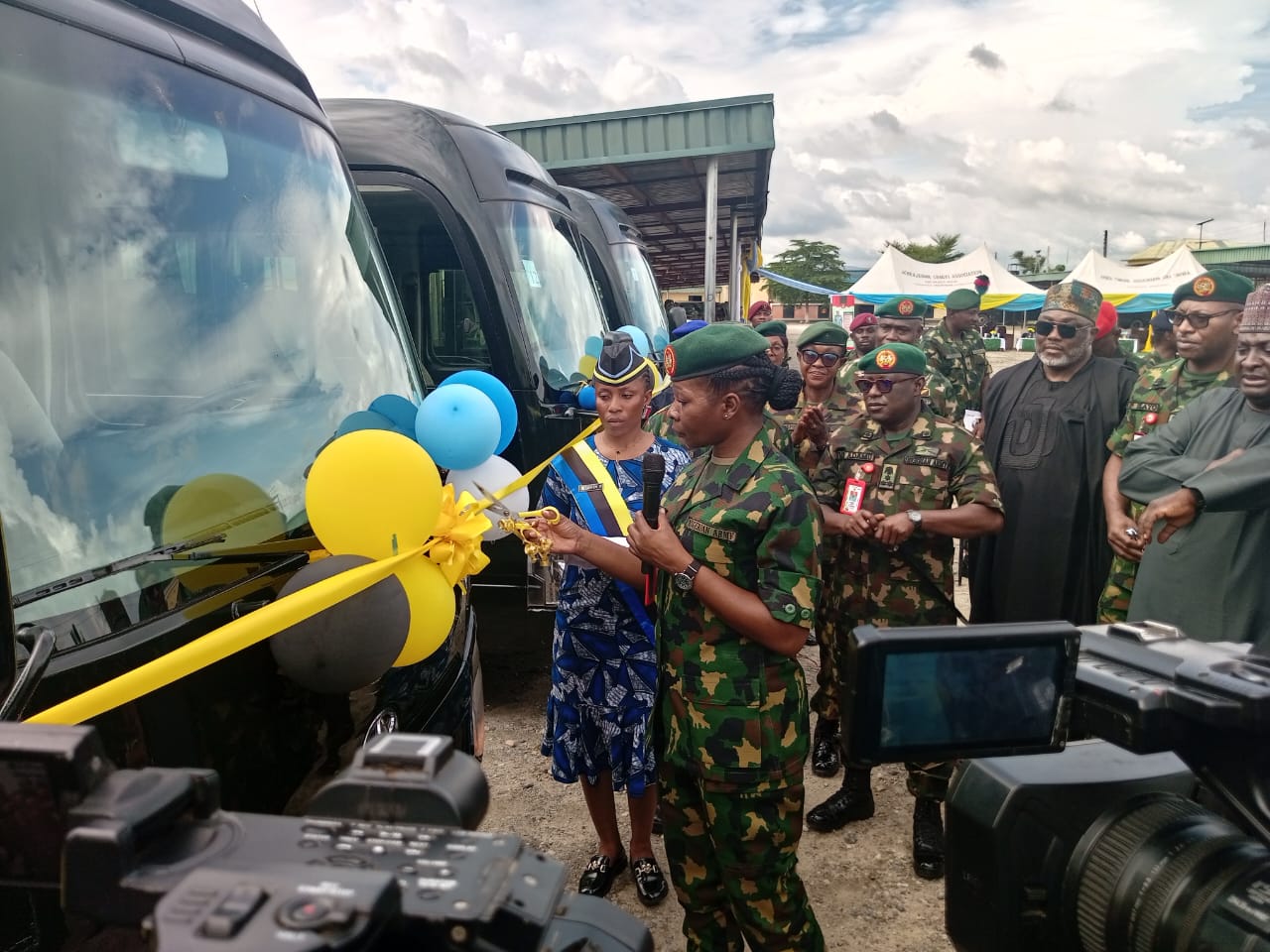
The Chief of Army Staff (COAS), Lt.-Gen. Waidi Shaibu, has reiterated the Nigerian Army’s commitment to strengthening operational readiness, mobility and personnel welfare as the Army Women Command (NAWC), Giri, Abuja, operationalised four refurbished coaster buses and inaugurated its renovated Soldiers’ Club, known as the Nightingale Club.
Shaibu stated this on Monday at a ceremony held at the command, where he was represented by the Acting Director, Army Public Relations, Col.
Appolonia Anele.The COAS described the refurbishment of the vehicles as a demonstration of the Nigerian Army’s commitment to enhancing operational readiness and the effectiveness of its troops.
He said serviceable and reliable vehicles remained critical to military operations, particularly for the timely movement of personnel, equipment and logistics.
According to him, the availability of operational vehicles would significantly enhance the command’s capacity to respond promptly and effectively whenever required.
“Mobility remains a critical component of military effectiveness, particularly in the timely movement of personnel, equipment and logistics,” he said.
Shaibu urged personnel entrusted with the vehicles to regard them as valuable government assets and ensure their proper maintenance, responsible handling and strict adherence to laid-down regulations.
He directed commanders at all levels to ensure that maintenance schedules were observed and that the vehicles were used strictly for authorised military purposes.
The COAS also highlighted the importance of personnel welfare, stressing that a military organisation could not be sustained by equipment alone, but also required the morale, welfare and cohesion of its personnel.
He said the renovated Nightingale Club would provide personnel and their families with a conducive environment for relaxation, recreation, social interaction and the strengthening of esprit de corps.
Shaibu urged personnel to maintain high standards of military conduct while using the facility and ensure that it remained a worthy representation of the professionalism and traditions of the Nigerian Army.
He commended the officers, soldiers, civilian staff, contractors and other stakeholders who contributed to the projects, noting that their efforts demonstrated what could be achieved through effective leadership, prudent resource management and collective commitment.
The COAS urged the command to sustain a culture of maintenance, accountability, discipline and responsible management of resources.
Earlier, the Commander, NAWC, Brig.-Gen. Mohammed Adamu, said the projects were undertaken in line with the COAS’s Command Philosophy of ensuring operational readiness and putting soldiers’ welfare at the centre of command responsibilities.
Adamu recalled that the command had previously held a similar ceremony on June 25, 2026, during which 12 vehicles, comprising two coaster buses and 10 operational vehicles, were re-operationalised. A tree-planting exercise was also conducted as part of efforts to address environmental challenges affecting the command.
He explained that one of the command’s major responsibilities was to remain operationally ready to support the Nigerian Army whenever called upon.
Adamu cited the deployment of a company from the command to Plateau State on April 14, 2026, following security challenges in the state, as an example of the importance of operational mobility.
According to him, the Chief of Army Staff directed the deployment and the command was able to mobilise the troops promptly because it had the necessary operational mobility and other enablers in place.
He said the experience reinforced the need for all vehicles belonging to the command to remain serviceable and ready for deployment at short notice.
It was against this background, he said, that four coaster buses that had previously been in deplorable condition were refurbished and operationalised to improve the command’s capacity to transport personnel and respond to operational assignments.
The commander also explained that the rehabilitation of the Soldiers’ Club was undertaken as part of the Army’s Soldiers First concept.
He said the facility had previously been in a poor state, with inadequate lighting and deplorable sanitary conditions, making it unsuitable for soldiers to relax or receive guests.
According to him, the complete overhaul of the facility has now provided soldiers with a more conducive environment for relaxation, social interaction and the reception of guests.
Adamu stressed that the welfare of soldiers must remain a priority at every level of command.
He said the emphasis was no longer simply on officers, but on ensuring that soldiers were adequately cared for because their welfare and motivation were essential to effective military performance.
“The narrative is changing now. It is not about the officers; it is about the soldiers first,” he said.
He urged commanders to pay attention to the basic welfare needs of personnel, including where they sleep, eat, drink and live, stressing that motivated soldiers were better positioned to perform their assigned responsibilities effectively.
The commander assured the personnel that the welfare of soldiers remained a priority under the leadership of the Chief of Army Staff and urged commanders at all levels to uphold the Soldiers First principle.
Highlights of the ceremony was the formal commissioning of the refurbished vehicles and the renovated Nightingale Club for use by the command, with the COAS calling on personnel to ensure that the facilities were properly maintained and utilised in accordance with extant regulations.
By David Torough, Abuja
Troops of Sector 2, Operation FANSAN YAMMA, have recorded a series of operational successes in Zamfara State, including the rescue of three civilians, recovery of suspected rustled livestock and retrieval of a stolen vehicle.
The troops responded to a distress call over an attack by armed bandits on travellers along the Dampo–Rumba Road in Bakura Local Government Area.
According to the operation’s statement, the troops engaged the attackers, forcing them to retreat into the surrounding bush and abandon three injured civilians.
The victims were given first aid by the troops and evacuated for medical treatment. Security patrols have continued along the road to maintain safe passage for commuters.
In a separate operation around the Magami axis, troops acting on intelligence intercepted five trucks suspected of transporting rustled livestock to Gusau.
A search of the trucks led to the recovery of 117 cows, two donkeys, one goat and five cow skins. The recovered livestock and items were handed over to the Chairman of the Zamfara State Committee on the Recovery of Rustled Animals in Gusau for identification and return to their rightful owners.
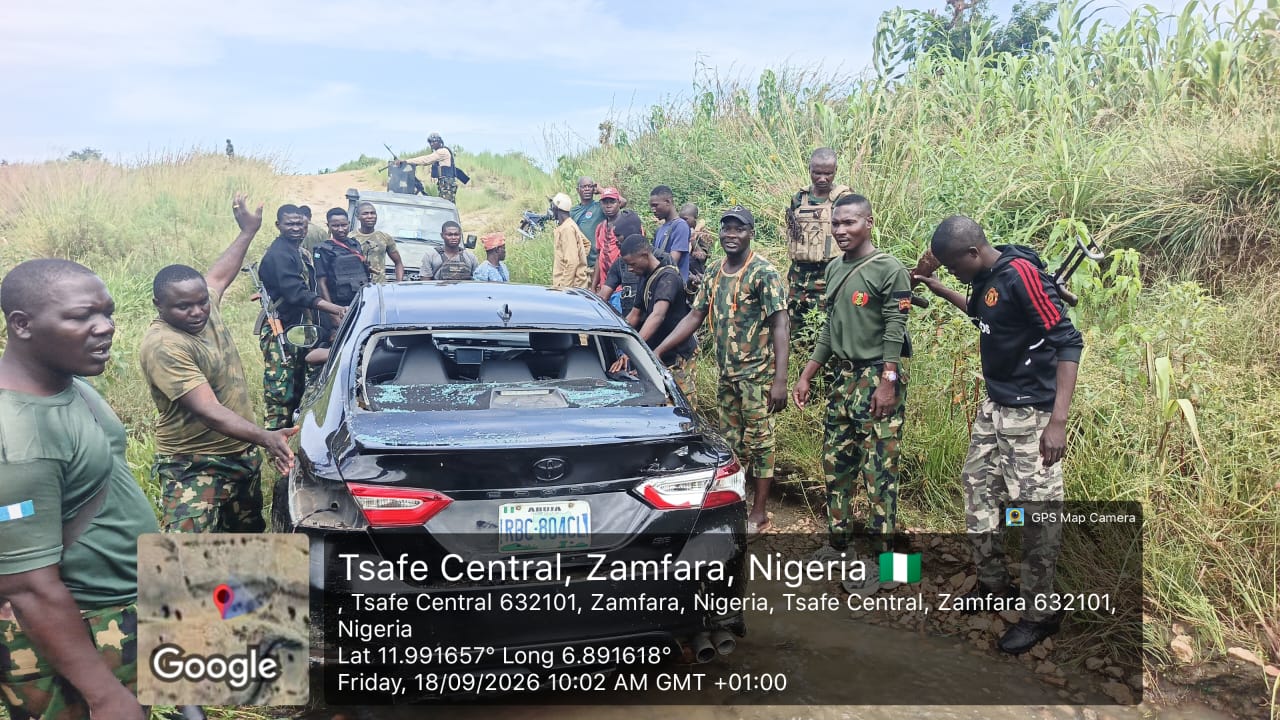
Meanwhile, troops in the Tsafe Local Government Area recovered a stolen Toyota Camry with registration number RBC 804CL following intelligence shared among joint tracking teams.
The driver reportedly ignored a stop signal and fled towards a nearby community.
Troops pursued the vehicle, prompting the suspects to abandon it and escape on foot.
The recovered vehicle has been secured for further administrative and legal processes, according to the statement.
The Kano State Police Command has arrested 10 suspected members of an inter-state motor vehicle theft syndicate and recovered 12 stolen vehicles linked to the group.
The Commissioner of Police, Ibrahim Bakori, made this known while newsmen in Kano, on Wednesday.
Bakori said the arrests and recoveries were made by operatives of the Special Intervention Squad (SIS) following credible intelligence and coordinated operations across Kano and its neighbouring states.
He said five suspects were initially detained in Adamawa on Sept. 7, during which a white Mercedes Benz GLK 350 was recovered.
According to him, discreet investigation and intelligence-led follow-up resulted in the recovery of 10 additional stolen vehicles in different locations across Kano and neighbouring states.
He added that five other suspects were arrested on Sept. 12 at about 8:30 p.m. at Kwankwasiya City Quarters, Tarauni, Kano, while in possession of a stolen white Toyota Hilux.
The CP said the suspects confessed to stealing vehicles in Kano, Katsina, Bauchi, Gombe and other neighbouring states.
He said the suspects also disclosed that their modus operandi involved stealing vehicles, concealing them in different locations and moving them across state borders for sale.
Bakori said investigation was ongoing to apprehend other fleeing members of the syndicate and recover other stolen vehicles.
He said 11 of the 12 recovered vehicles were unregistered, making it difficult for the police to trace some of their owners.
The CP urged vehicle owners to ensure proper registration of their vehicles, warning that the command would not tolerate the use of unregistered vehicles or vehicles with covered or concealed number plates.
He said the operation was conducted in line with the Inspector-General of Police, I-G Olatunji Disu’s, ”Handshake Patrol” initiative aimed at dismantling inter-state criminal networks through intelligence sharing and inter-command collaboration.
Bakori urged owners of the recovered vehicles to contact the Investigating Police Officer on 07063407910, the Police Public Relations Officer’s office or the Officer-in-Charge of SIS at Court Road, Tarauni Area Command, with valid proof of ownership.
He appealed to members of the public to report suspicious movements of vehicles or persons to the nearest police station or through the command’s emergency numbers.
The CP said the suspects would be charged to court after the conclusion of investigation. (NAN)



Customs Recruitment: Nearly 3,000 Candidates Screened Without Casualty
ShareBy Tambaya Julius, Abuja The Nigeria Customs Service (NCS) has concluded the final phase of its 2025 recruitment exercise, with...


NUPRC, Indonesia Open Talks on Oil Investments as Pertamina Eyes 2026 Licensing Round
ShareThe Nigerian Upstream Petroleum Regulatory Commission (NUPRC) has opened discussions with Indonesia on petroleum investments, with Indonesian national oil company...


RMAFC Inaugurates Planning Committee for China Oil & Gas Investment Forum
ShareBy Tony Obiechina, Abuja The Revenue Mobilisation Allocation and Fiscal Commission (RMAFC) has inaugurated a Planning Committee to coordinate preparations...
Advancing Food Security through ONSA AgriShield Initiative
ShareBy Chido Onumah The Federal Government is strengthening the connection between national security and food security through the AgriShield Initiative,...


2027: NNPP Warns Public against Dealing with Impostors
ShareThe New Nigeria Peoples Party (NNPP) has warned the public against dealing with impostors parading themselves as candidates and leaders...


2027: INEC Harps on Proper Documentation, Archiving of Operational, Electoral Documents
ShareThe Independent National Electoral Commission (INEC) has stressed the need for proper archiving, cataloguing and documentation of operational and electoral...


Nigeria’s Airline Capacity Hits 1.19m Seats — FAAN
ShareBy David Torough, Abuja Nigeria’s scheduled airline capacity rose to 1.19 million seats in September 2026, representing a 37.4 per...


Tinubu to LGs: Make Local Government Autonomy Work
ShareBy David Torough, Abuja President Bola Tinubu has charged local government councils across Nigeria to turn financial autonomy into tangible...


CBN Faces Reps’ Probe, Slashes Interest Rate to 23 Per Cent
ShareBy Tony Obiechina, Abuja The Central Bank of Nigeria (CBN) came under fresh legislative scrutiny on Tuesday as the House...


CALSAN Names National Moot Championship After Franc Fagah Utoo
ShareBy David Torough, Abuja The Catholic Law Students’ Association of Nigeria (CALSAN) is set to honour distinguished Nigerian legal practitioner,...