
NEWS
Northen Traditional Rulers Vow to Help Governors Tackle Insecurity

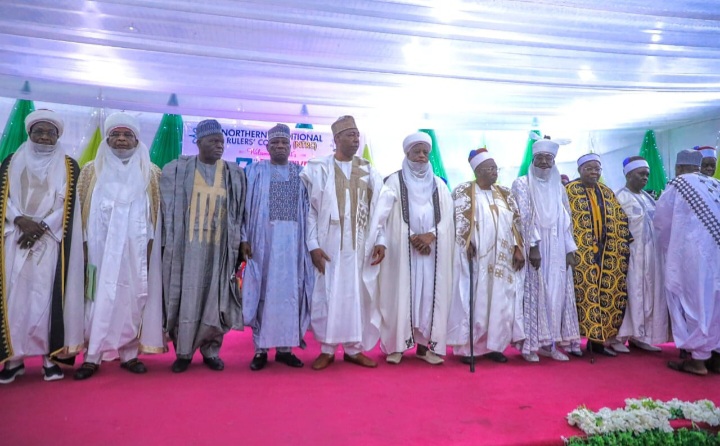
The Northern Traditional Rulers Council on Tuesday expressed determination to help their governors with new options in tackling the lingering insecurity in the region.Alhaji Sa’adu Abubakar, the Sultan of Sokoto and the Chairman of the council made this known in his opening remarks at the 7th Executive Committee Meeting of the council in Maiduguri.
The theme of the meeeting was “Enhanced Security As A Panacea For Stability and Development of the North. ”“We will be speaking with one voice to say enough is enough of this senseless killings of innocent people, across the north, across the country.We have never and will never support it. We never feel happy about it, we are also sad whenever we hear such things. And we have received so many statements of condemnation.“How many more times do we need to condemn it before our political leaders use our security agencies to bring to an end or at least to bring to barest minimum the killings in our country,” he asked?The sultan said that traditional rulers would not get tired of calling the leaders to do what they believed must be done to upload the burden of responsibility given to leaders by the Almighty God.“Every governor will account for what he did in his tenure and Sultan will not be there to defend him before God,” Abubakar said.He, however, said it was not good enough for the people to be trading blame over the insecurity challenges and and other related problems in the region.“I think it is high time we stop making comments that insinuate that certain people are the cause of our problem, no.“We are the cause of all our problems. If we want to resolve the problem in the north as leaders we can do so.“How? We will sit together and take the issues up and solve them one by one from the governors, the traditional leaders to religious leaders, to the common man on the street what he should do to help the security agencies, the governors and political leadership and all to bring to the barest minimum these killings.“I believe we can do so, we have to look at other options. If we try one, two, three and we have not succeeded then let us try four, five, six, seven and then definitely we will succeed.“What I mean is that bring in traditional institutions from day one and share with them what you want to achieve, then you will see how successful you will be in your governance for any state or local government.“I believe we know the importance of some of this things. And I believe we have what it takes to bring to barest minimum insecurity in our country.” Abubakar insisted.The sultan said that the insecurity problem was not limited to Nigeria but a global problem which could only be addressed through dialogue and diplomacy and by using arms.“The number of people being killed daily in advance countries are more than the number of people killed put together in Nigeria monthly or in two months.“For example what happened in Plateau yesterday (April 14) and also within the week, over 100 people were killed in Plateau.“Many people just appeared from somewhere and then killed people and went away and they were never arrested.“Before then people where killed in Sokoto on Sallah day; People where killed in Kebbi; people were killed in so many other places.“The number of people killed in the last one month is so high and not only in Plateau, and not only in Borno and not only in Sokoto but in so many other places.“We are more concerned with the situation in our country than every politician because before the 1914 Amalgamation, bringing the North and the South to formed Nigeria our fore fathers where running the affairs of the present day Nigeria.“Everybody knows the Kanam-Borno empire; of course the Sokoto Caliphate; of course the Oyo empire; of course the Benin Kingdom all of them exist before Nigeria and that is why we as traditional leaders we feel bad, we feel saddened when we see our people being killed by other people whom we don’t know” he said.“I think is important for us to work harder and talk to ourselves and in the closed session we will do that and we must come out with what we believe will give advice to our political leaders,’” Abubakar said.He prayed to God to guide the political leadership to the right path toward restoration of the pass glory of the oldern days of the peaceful northern states and promised to work with them to ensure peace and tranquility in the entire northern states.Vice-President Kashim Shettima while declaring the meeting open, expressed the Federal Government’s determination to work with the sub-national government and the traditional institutions to address security challenges in the country.Shettima, who was represented by Gov. Babagana Zulum of Borno also commended the efforts of the security agencies in tackling the security challenges as it were and urged them to redouble their efforts.Earlier, in his remarks the co-host, Zulum highlighted security and peacebuilding, agriculture and youth empowerment as the critical pillars of sustainable development in the region.“Our youth population is large, energetic and eager to contribute, but many are without opportunities.“This vacuum is dangerous. We must invest heavily in skills acquisition, vocational education, digital innovation, and entrepreneurship.“Empowered youths are not only less vulnerable to crime or radicalisation, they become active agents of development,” he said. (NAN)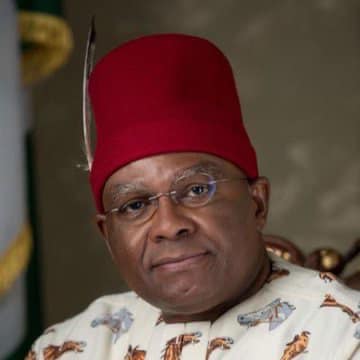
By Paul Mumeh
Senator Chimaroke Nnamani, former Governor of Enugu State, stands tall as one of the most intriguing, visionary, and intellectually gifted political figures of Nigeria’s Fourth Republic. Physician, philosopher, statesman, motivational speaker, and political strategist, the man fondly called “Ebeano” remains a phenomenon whose impact on politics, governance, and public discourse continues to resonate far beyond Enugu State.
Born on May 30, 1960 in Port Harcourt, Rivers state with an uncommon blend of intellect and courage, Senator Nnamani first distinguished himself in medicine as a specialist doctor before venturing into politics.
Yet even in politics, he never abandoned the analytical depth and precision of a medical professional. His approach to governance reflected diagnosis, treatment, and long-term planning — qualities that made him one of the frontline members of Nigeria’s celebrated 1999 class of governors.As Governor of Enugu State from 1999 to 2007, he redefined governance and political organisation in the state. At a time when democracy was still fragile and experimental in Nigeria, Chimaroke Nnamani emerged as one of the loudest advocates of people-oriented governance. He coined and popularised the now-famous phrase, “Dividends of Democracy,” a concept that has since become a permanent part of Nigeria’s political vocabulary. What many now repeat casually was, for him, a philosophical conviction — that democracy must translate into visible benefits for ordinary citizens.
Beyond governance, Nnamani transformed the political landscape of Enugu State through the establishment of the Ebeano political family — a structure that evolved from a movement into a political dynasty. Since 1999, regardless of changing political parties and shifting alliances, the Ebeano philosophy has consistently produced political office holders; councillors, local government chairmen, state and national assembly legislators, ministers, and governors — while nurturing influential leaders across the state. That enduring relevance remains a testament to the strategic depth and organisational genius of its founder.
As Senator representing Enugu East in two different eras — from 2007 to 2011 and again from 2019 to 2023 — Nnamani remained a powerful voice of reason, intellect, and candour. Highly cerebral and unapologetically frank, he earned respect as a politician who never shied away from difficult truths. He called a spade a spade, regardless of whose interests were affected. In an environment where political correctness often overshadows honesty, Chimaroke Nnamani chose courage over convenience.
His Ebeano Lecture Series further revealed the depth of his intellect and foresight. Through those lectures, he dissected local and global issues with philosophical clarity and uncommon eloquence. Time and again, many dismissed or misunderstood his positions, only for subsequent events to vindicate his predictions and perspectives. Like a thinker ahead of his era, he often saw tomorrow before others fully recognised today.
Perhaps nowhere was this more evident than during the political turbulence of 2023. Against prevailing sentiments within the Peoples Democratic Party, Senator Nnamani openly supported Bola Ahmed Tinubu of the All Progressives Congress. To many of his political associates and constituents, the move appeared controversial, even unacceptable. They rose against him politically, interpreting his action as betrayal or political aberration. Yet, in his characteristic manner, Nnamani insisted on what he believed was the pathway forward.
Ironically, not long after the 2023 elections, many within the same political establishment and among the voices that opposed him began embracing the Tinubu administration with enthusiasm. Those who once condemned his position gradually became apostles of the same political direction he had earlier championed, with several eventually aligning with the APC. Once again, Chimaroke Nnamani’s foresight appeared vindicated.
Yet politics, especially in Nigeria, can be frustrating to the well-intentioned. Despite the sacrifices and political risks he took, Senator Nnamani found himself isolated and unrewarded. Even the political structure he supported did not reciprocate his loyalty in the manner many expected. Left in the political cold, he chose dignity over bitterness and returned to his first calling — medicine — resuming professional practice in the United States, where he is reputed for his work in foetal medicine, the specialised care of unborn babies.
There is profound symbolism in that journey. After years of helping to birth political ideas, institutions, and leaders, the doctor returned to the science of preserving life itself. It reflects the essence of the man: resilient, purposeful, and deeply committed to service regardless of circumstance.
At 66, Senator Chimaroke Nnamani’s story is not merely one of political victories and setbacks. It is the story of conviction. It is the story of a man who often walked ahead of the crowd — misunderstood in the moment but vindicated by history. It is the story of a statesman whose ideas outlived controversies and whose political philosophy continues to shape generations.
As he celebrates this milestone, this should not be a moment of discouragement over the fickleness of politics or the contradictions of human nature. Rather, it is a moment of reflection, renewal, and reaffirmation of purpose. Nigeria still needs voices of courage, intellect, and foresight. The nation still needs statesmen willing to chart difficult but necessary paths toward unity, justice, and development.
For Senator Chimaroke Nnamani, aka Ebeano, the journey at 66 is not an ending but the continuation of a legacy built on vision, resilience, and uncommon courage.
Happy 66th Birthday to a physician of bodies, a diagnostician of society, and a philosopher of politics. May the years ahead bring renewed strength, greater fulfilment, and the satisfaction of knowing that history often remembers pioneers more kindly than contemporaries do.
NEWS
Governor Fintiri Marks Sevenrh Anniversary, Attributes Achievements to God, Financial Discipline
From Yagana Ali, Yola
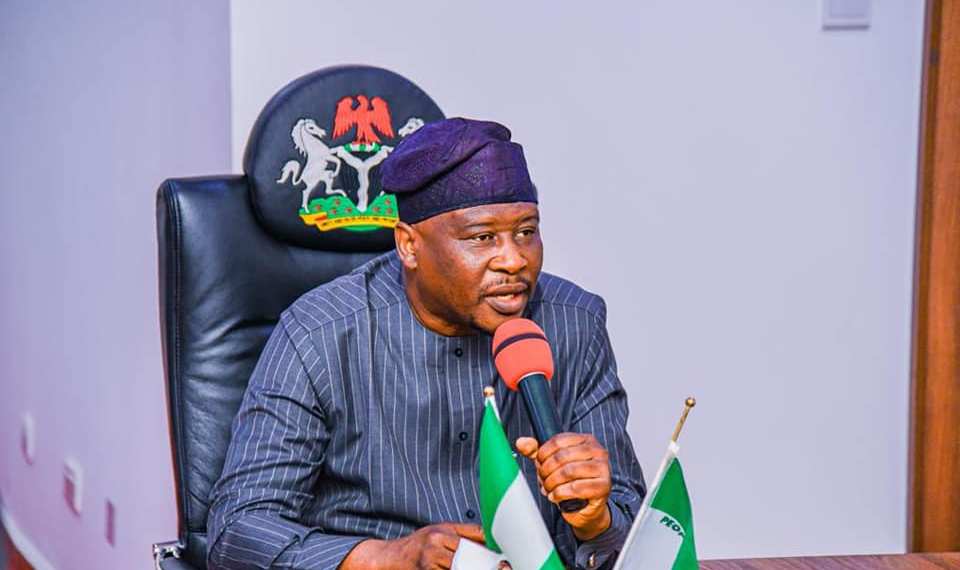
Adamawa State Governor, Rt. Hon. Ahmadu Umaru Fintiri, has credited the remarkable achievements of his administration in the last seven years to divine grace, financial discipline, and careful planning, describing the transformation across the state as divinely inspired and people-driven.
Marking seven years of the “Fresh Air” administration, Governor Fintiri said that despite the complexity of managing a large and diverse population, Adamawa has witnessed huge prosperity and visible progress across all sectors.
“Notwithstanding the complexity of managing the massive population of the State, it is evident that Adamawa has been hugely prosperous,” the Governor said. “I just want to say a big thank you to everyone that has been a co-traveler in this journey over the last seven years. It has not been easy, but to the glory of God, it is evident that there is huge prosperity in Adamawa.”
He noted that beyond policy and political will, prudent management of resources has been central to the administration’s success.
“In all these, the complexity of managing people means there has to be something else driving it. In all situations, we give glory to God. In all situations, we are grateful that He has given us the opportunity to become a source of joy to the people of Adamawa. Our success is also anchored on financial discipline and careful planning. “No one is left behind and nothing is left untouched.” he stated.
Governor Fintiri commended the resilience, patience, and unwavering support of the people of Adamawa, saying their partnership has been critical to the progress recorded since 2019.
“The last seven years have been very eventful and very fruitful. You can see remarkable progress going on across the length and breadth of Adamawa. This would not have been possible without the support and resilience of our people. You stood with us through the challenges, believed in the vision, and partnered with government to deliver results,” he said.
The Governor assured citizens that the administration remains committed to consolidating on the gains made and expanding service delivery in the year ahead.
“So, for me, the last seven years have been very eventful and very fruitful. We can only do better and render more services to the people in the next one year. Our commitment remains: “No one is left behind and nothing is left untouched,” Governor Fintiri added.

From Attah Ede, Makurdi
The Correspondents’ Chapel of the Nigeria Union of Journalists (NUJ), Benue State Council, has passed a vote of confidence on the Chief Press Secretary to the Governor, Sir Tersoo Kulas over his satisfactory performance in office.
However, the Chapel passed Vote of No Confidence on the
State Chairman, Comrade Bemdoo Ugber, over what it described as unruly behaviour and repeated public embarrassment of the union members.
The chapel equally accused the state Chairman of financial mismanagement, abuse of office, and constantly dragging the union into public disgrace.
This was contained in a communique issued by the chapel at the end of its emergency congress held on Wednesday in Makurdi.
The members accused Ugber, of diverting union funds, commercialised the council bus, and turned the union into a platform for personal battles, alleging that over ₦5 million realised from NUJ-owned schools and the Rector of Federal Polytechnic, Wannune, had not been properly accounted for.
The Chapel further claimed that out of the ₦10 million support fund, a bus, and palm trees donated to the union by Benue State Governor, Rev. Fr. Dr. Hyacinth Alia, the Chairman allegedly diverted ₦3.5 million without clear explanation.
The communiqué which was signed by the drafting committee consist of Kajo Martin, Tor- Acka Vande and John Shaiaodo, condemned what it described as the “commercialisation” of the NUJ bus, alleging that journalists were forced to pay as much as ₦50,000 before being allowed access to the vehicle.
The communique read: “The Correspondents’ Chapel of the Nigeria Union of Journalists (NUJ), Benue State Council, at its Emergency Congress held on Wednesday, May 27, 2026, at the Correspondents’ Chapel Office, Makurdi, deliberated extensively on issues affecting the union and the conduct of the State Council leadership.
“Members condemned the conversion of the NUJ bus to commercial use by the Chairman, where journalists were reportedly required to pay Fifty Thousand Naira (₦50,000) or more before accessing the vehicle for use.
“The Chapel further accused the NUJ Chairman of factionalising the union by allegedly patronising non-members at the expense of genuine members and engaging in public altercations over financial matters, thereby bringing the image of the union into disrepute.
“The Chairman has factionalised the union by empowering non-members while sidelining genuine journalists, and publicly embarrassed the NUJ through repeated disputes over money”.
“The recent incident during the APC presidential primaries at the party secretariat where the Chairman engaged some journalists physically and held them hostage behind closed doors for hours over financial disagreements is one of the instances.
“We acknowledged efforts of the State government towards the well being of of Journalism and therefore, passed a vote of confidence in Governor Alia, his Chief Press Secretary, Sir Tersoo Kula, and the governor’s media handlers for their cordial relations with journalists and efforts to sanitise journalism practice in the state”.
The Chapel however distanced itself from the recent communiqué issued by the NUJ State Council, insisting that the outcome of that congress was manipulated by “non-professionals and hired individuals.”
It therefore directed members and all Correspondents’ Chapel representatives serving in the State Working Committee, State Executive Council, and other committees to immediately withdraw from all activities of the NUJ Benue State Council pending resolution of the issues raised
Meanwhile, the Government House Press Crew in Benue State has also dissociated itself from the vote of no confidence recently passed on the Chief Press Secretary to Governor Hyacinth Alia, Sir Tersoo Kula, by the Nigeria Union of Journalists (NUJ), Benue State Council.
In a communiqué issued and signed by the Chairman of the Government House Press Crew, Pius Iroja Angbo, the group described the move by the NUJ leadership under Comrade Bemdoo Ugber as a campaign of blackmail and intimidation targeted at the Chief Press Secretary.
The press crew accused the NUJ Chairman of allegedly using the union platform to settle personal scores and undermine the administration of Governor Hyacinth Alia ahead of the state’s political season.
According to the statement, Sir Tersoo Kula has conducted himself professionally since assuming office in May 2023, maintaining cordial relationships with journalists while promoting the activities and policies of the Alia administration.
The group further alleged that attempts to ridicule the CPS and damage his reputation would fail, insisting that the move only exposed what it described as a deliberate agenda by some individuals within the media to work against the current administration and its appointees.
The communiqué noted that rather than engaging in internal conflicts, the media should focus on development journalism by highlighting government reforms, infrastructure projects, and policies aimed at improving the lives of the people of Benue State.
The Government House Press Crew also commended Governor Alia for restoring peace within the NUJ and supporting a peaceful atmosphere that led to the emergence of the current union leadership.
Consequently, the group unanimously passed a vote of confidence on Governor Hyacinth Alia for what it described as people-oriented leadership, and also reaffirmed its support for Sir Tersoo Kula, praising his efforts in strengthening media relations and promoting responsible journalism in the state.
[9:35 AM, 5/29/2026] Boss Daily Asset: Governor Fintiri Marks Sevenrh Anniversary, Attributes Achievements to God, Financial Discipline
From Yagana Ali, Yola
Adamawa State Governor, Rt. Hon. Ahmadu Umaru Fintiri, has credited the remarkable achievements of his administration in the last seven years to divine grace, financial discipline, and careful planning, describing the transformation across the state as divinely inspired and people-driven.
Marking seven years of the “Fresh Air” administration, Governor Fintiri said that despite the complexity of managing a large and diverse population, Adamawa has witnessed huge prosperity and visible progress across all sectors.
“Notwithstanding the complexity of managing the massive population of the State, it is evident that Adamawa has been hugely prosperous,” the Governor said. “I just want to say a big thank you to everyone that has been a co-traveler in this journey over the last seven years. It has not been easy, but to the glory of God, it is evident that there is huge prosperity in Adamawa.”
He noted that beyond policy and political will, prudent management of resources has been central to the administration’s success.
“In all these, the complexity of managing people means there has to be something else driving it. In all situations, we give glory to God. In all situations, we are grateful that He has given us the opportunity to become a source of joy to the people of Adamawa. Our success is also anchored on financial discipline and careful planning. “No one is left behind and nothing is left untouched.” he stated.
Governor Fintiri commended the resilience, patience, and unwavering support of the people of Adamawa, saying their partnership has been critical to the progress recorded since 2019.
“The last seven years have been very eventful and very fruitful. You can see remarkable progress going on across the length and breadth of Adamawa. This would not have been possible without the support and resilience of our people. You stood with us through the challenges, believed in the vision, and partnered with government to deliver results,” he said.
The Governor assured citizens that the administration remains committed to consolidating on the gains made and expanding service delivery in the year ahead.
“So, for me, the last seven years have been very eventful and very fruitful. We can only do better and render more services to the people in the next one year. Our commitment remains: “No one is left behind and nothing is left untouched,” Governor Fintiri added.



Chimaroke Nnamani: Progenitor of Ebeano, Misunderstood Leader, Vindicated at 66.
ShareBy Paul Mumeh Senator Chimaroke Nnamani, former Governor of Enugu State, stands tall as one of the most intriguing, visionary,...

Governor Fintiri Marks Sevenrh Anniversary, Attributes Achievements to God, Financial Discipline
ShareFrom Yagana Ali, Yola Adamawa State Governor, Rt. Hon. Ahmadu Umaru Fintiri, has credited the remarkable achievements of his administration...
Benue Correspondents Chapel Counters NUJ, Passes Confidence Vote on Alia’s CPS
ShareFrom Attah Ede, Makurdi The Correspondents’ Chapel of the Nigeria Union of Journalists (NUJ), Benue State Council, has passed a...

Three Years of Purposeful, Intentional and Transformative Leadership of Governor Hyacinth Alia
ShareBy Solomon Iorpev When Rev. Fr. Dr. Hyacinth Iormem Alia took the oath of office on May 29, 2023, as...

Eid-el-Kabir: Customs CG Urges Nigerians to Embrace Sacrifice, Unity, Patriotism
ShareBy Tambaya Julius, Abuja As Muslims worldwide celebrate Eid-el-Kabir, the Comptroller-General of Customs, Adewale Adeniyi, has called on Nigerians to...


Police Detain Six Suspected Armed Robbers, Recover Arms in Nasarawa
ShareThe Police Command in Nasarawa State said it has detained six suspected armed robbers and cultists and recovered dangerous weapons from the suspects. Police Public Relations Officer (PPRO) in the state, Ramhan Nansel,...


Chelsea Place £120m Price Tag on Star Midfielder
ShareEnzo Fernandez wants to leave Chelsea after they failed to qualify for Europe, but the club will ask for £120m for the...


Highway Crash Kills 13 in Central China
ShareAt least 13 people were killed after a minibus crashed into a truck on a highway in central China, traffic police said on Thursday. The...
Ebonyi NUJ Lauds Umahi, Nwifuru for Massive Support to Journalists
ShareNigeria Union of Journalists (NUJ), Ebonyi Chapter, has praised Minister of Works, Sen. David Umahi and Gov. Francis Nwifuru for consistently supporting journalists and strengthening collaboration between government institutions and...


Five Die in Lagos-Abeokuta Expressway Crash
ShareThe Federal Road Safety Corps (FRSC) Ogun Command, said that five persons died in a lone accident at Oyama Egbado, along Lagos-Abeokuta Expressway on Thursday. It said that 10...