
EDITORIAL
NPA as Den of Corruption

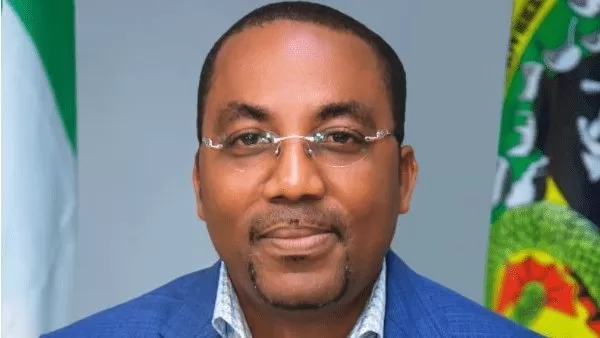
The Nigeria Ports Authority, (NPA)is one of the agencies of the Federal Government notorious for corruption. A body like NPA that should serve as a cash cow for the government of the Federation has unfortunately been turned into an organ for looting and stealing in high places.
Exactly a year ago, its former Group Managing Director, Hadiza Bala Usman was suspended from office, with an Administrative panel set up to investigate a number of allegations against her, mainly on illegal diversion of funds close to N 200 billion.
While Nigerians continue to wait in despair for the official outcome of the probe, another disturbing report of high level of corruption against the management of NPA came to limelight recently.Chairman, House of Representatives Committee on Public Accounts, Hon. Wole Oke has demanded explanation from the management of NPA, over non-remittance of millions of dollars by terminal operators and the agency into the Federation account.
This followed the launch of a large scale investigation by the House committee into the matter. The probe came on the heels of 12 audit queries from the office of the Auditor General for the Federation on the financial statement of the NPA for the 2019 financial year. Of the number, NPA has only responded to one on the indebtedness of terminal operators to the government.
The House of Representatives has therefore began probe of the unremitted multi-million dollars by terminal operator, to the commonwealth.
The amount involved is about $852.094 million and N1.897 billion.
NPA however said the sum of N269.410 million of the N1.8 billion has been recovered while the balance of N1.6 billion “invoices processed on the encumbered areas remain unpaid”.
NPA said in its lame defence that bills raised on encumbered areas which remained unpaid is $19,169,459. This is a serious development , that should not be allowed to be swept under carpet as appears to be the case with the former GMD of the NPA.
Hadiza Bala Usman who did not conduct her self with the integrity while at the agency. President Muhammadu Buhari approved her suspension, as a result of grave allegations against her.
She had to be probed as a result at the instance of the supervising transport ministry, headed by Rotimi Amaechi.
Curiously before her sack, Usman was reappointed to continue heading the NPA in Janaury 2021 by President Buhari several months before the end of her first tenure.
But the public is disturbed that there have been attempts to exonerate her of these allegations. The former managing director of the NPA, has reportedly been cleared of allegations of failing to remit N165 billion operating surplus to the coffers of the federal government.
However, the 11-member committee set up by the ministry of transportation to probe the alleged fraud decided to shift its attention to allegations of insubordination to Rotimi Amaechi, the minister.
She was instead accused of ignoring ministerial directives and communicating directly with President Muhammadu Buhari.
Usman was originally suspended in May 2021 by the minister over an allegedly missing N165 billion but the committee did “not find any evidence” in its account reconciliation. We are calling on the Administrative Panel to make its report public for the scrutiny of Nigerians. We are equally calling on the House of Representatives to probe the Audit Report indicting the NPA of unremitted colossal amounts in local currency and in foreign ones. It is no doubt a case of a case of high level of corruption too many in NPA.
Corruption, sadly, continue to thrive in government agencies because of the present government’s lackadaisical attitude towards this monster. Matters must not and ca should not continue so for the advancement and well-being of the nation.

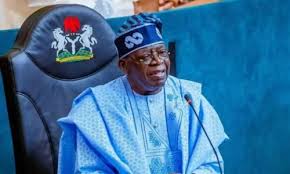
More than two years after terminating the services of all ambassadors, appointed by the previous administration; precisely on September 2, 2023, President Bola Tinubu left Nigerian embassies fallow. It was only a few days ago that he forwarded his list of ambassadorial nominees to the Senate.
The list contains several well-known political figures – some controversial characters.
The list includes; former Chairman of the Independent National Electoral Commission (INEC), Mahmood Yakubu; former Minister of Aviation, Femi Fani-Kayode; former Abia State Governor, Okezie Ikpeazu; and former presidential aide, Reno Omokri. Given the quality and pedigree of some of the ambassadorial nominees, Nigerians have reacted with mixed feelings. Some have pointed out that after the long delay to nominate the ambassadors, the list did not contain personalities worthy of occupying prestigious positions as Nigeria’s representatives in other countries.Nigerians are still wondering why the President did not name ambassadors all this while. Diplomatic posts remained empty or were being filled by acting officials. Consequently, the emergence of the list has even elicited more questions than answers.
One of the questions on the lips of keen watchers is: why the sudden release of the nominees after strong words from United States President, Donald Trump, criticising the growing insecurity in Nigeria? Trump had threatened to send troops to Nigeria to eliminate the terrorists killing Nigerian Christians, if the government did not take action to stop them.
Although the Presidency has not confirmed any link, many Nigerians believe the list was hurriedly compiled in response to the international reactions triggered by Trump’s remarks.
Another question is: how can a country run for over two years without ambassadors when it is facing multi-dimensional challenges? What critical national issues occupied the presidency for so long that he could not appoint ambassadors who should represent Nigeria in different countries of the world? And when he visits a country, who follows up with the bilateral agreements reached?
Tongues are also wagging against the inclusion of the likes of Reno Omokri and Femi Fani-Kayode because of their flippant and skewed stance on some critical national issues that touch on national unity, ethnicity and insecurity. Nominating such people to represent a country that needs unity and peace sends a wrong signal to their host countries.
Again, the inclusion of the former INEC chairman in the list is controversial because of the role he played during the last general elections. He is been accused of mismanaging billions of naira budgeted for instant electronic transmission of previous elections which he blamed on technical “glitches”.
It is neither here nor there why such people should be rewarded with ambassadorial positions in a country where suitably qualified individuals abound.
Diplomats are expected to bridge differences, build trust, and represent the best version of their country. They are often the first impression foreign governments and investors encounter. At a time when Nigeria needs goodwill, stability, and a clear demonstration of unity, it is obvious the president missed an important opportunity to make things happen positively.
The thinking in some quarters is that Tinubu is rewarding political allegiance rather than competence or emotional intelligence. And the fear is that diplomatic missions could turn into extensions of political battlegrounds rather than centres of national service. Diplomacy requires calm judgement, respectful engagement and the ability to build relationships even with critics. The inclusion of individuals known for acidic or divisive language is not in the best interest of Nigeria.
With the emergence of 68 ambassadorial nominees, the president has undoubtedly acknowledged the essence of diplomacy, even though the nomination of certain individuals do not sit well with a good number of Nigerians due to their alleged soiled pedigree and character.
Furthermore, keen watchers see the list of the nominees as a platform for patronage that seems to reward cronies, party and family members and political jobbers because it does not reflect the quality and potentials of Nigerians as a whole.
The final list of 65 nominees raises the total number of ambassadorial candidates before the Senate to 68. Three of them Kayode Are, Aminu Dalhatu, and Ayodele Oke, have already been screened by the Senate Committee on Foreign Affairs.
DAILY ASSET is of opinion that at a critical period like this when Nigeria is at a crossroads with dampened image and low morale, ambassadorial appointments should serve as an opportunity to portray the country in good light. However, its not too late to make amends to the ambassadorial postings, since the president has demonstrated that he listens to the concerns of the Nigerian public.
Pointedly, while calling on the Senate to thoroughly screen all the ambassadorial nominees, we make bold to stress once again that the country is facing deep socioeconomic challenges, insecurity, youth restiveness and increasing ethnic suspicion. Leadership at such a time requires actions that show concern for unity, fairness and competence that should give the citizenry a sense of belonging. The ambassadorial list falls short addressing this pressing need because ambassadors as image-makers of the nation have a vital role to play in this regard.

One of Nigeria’s greatest developmental setbacks is the prolonged abandonment of capital projects scattered across the length and breadth of the country. The abandoned projects in rot are valued at a whopping twenty trillion naira, which has for decades remained a huge embarrassment to the country.
It has defied all solutions and exacerbated the country’s chequered infrastructure development trajectory. Contrary to the lofty promises accompanying most of the abandoned projects, the remains are monuments of shame and wasted resources. This is no doubt an obvious testament to Nigeria’s perennial underdevelopment. The reasons for this monumental setback include, poor project planning, poor budgetary allocation, inefficient legal system, corruption and weak regulatory institutions.A committee set up by former President Goodluck Jonathan in 2011 had revealed that about 63 per cent of the projects initiated after Nigeria’s independence had been abandoned. The committee’s disclosure that the federal government, as at that time, had abandoned 11,866 projects was damning. Today, the ugly trend has moved from bad to worse, thus prompting members of the House of Representatives to constitute an ad hoc committee to look into the matter.The lawmakers’ decision followed the adoption of a motion of urgent national importance sponsored by the Minority Leader, Kingsley Chinda, during plenary session penultimate week. Chinda had explained that the investigation aims to curb further wastage of public resources and facilitate the recovery of valuable national assets. The lawmaker drew the attention of the House to the 11,866 abandoned federal projects nationwide, which he said represents approximately 63 percent of all projects initiated since independence; thus agreeing with the 2011 committee report of the Goodluck Jonathan administration.Among the major abandoned property highlighted by the lawmaker are the Federal Secretariat Complex in Ikoyi, Lagos; the Nigerian International Hotel, Suleja, Niger State; Millennium Tower, Abuja; the Federal Inland Revenue Service (FIRS) Building in Abia state; the National Library Headquarters, Abuja; the Nigerian Newsprint Manufacturing Company, Kaduna; the Kaduna Textile Building; and the Nigerian Aluminium Smelting Company, Delta state; among others.It is noteworthy that federal and state governments have played ignoble roles in turning Nigeria into a graveyard of incomplete roads, bridges, housing projects, white elephant projects, airports, most of which could have contributed immensely to the growth of the nation’s economy. Despite gulping $8 billion, the Ajaokuta Steel Company Limited has been abandoned by successive governments since 1978, thereby truncating the country’s industrialisation. Given this gap, the country spends about $4 billion on steel imports annually.Furthermore, investigations revealed that the Niger Delta Development Commission (NDDC) has terminated or abandoned about 1,587 projects valued at N612.4 billion, a development contrary to the essence of the commission.Again, the 3,050MW Mambilla Power Project, conceived in 1972, is yet to materialise. Many dams that should have bolstered power generation remained either abandoned or underutilised. The Ikere Gorge Dam, with a 565-million-cubic-metre water reservoir, in the Iseyin LGA of Oyo State, has been abandoned. Its turbines, imported during the late Shehu Shagari administration, are rusting away. It is the same story at the 9 MW hydropower station at the Oyan Dam in Ogun State. The three Oyan Dam turbines inaugurated in 1983 have never generated electricity. Meanwhile, according to a July 2020 report from the World Bank, 47 per cent (about 97 million) of Nigerians are entirely cut off from the national power grid.Traveling by road in the country today has become hellish due to a plethora of abandoned road projects. The Lagos-Ibadan Expressway reconstruction has not been completed after 20 years, and the Ibadan-Ife, Ife-Ilesa, Benin-Auchi-Okene-Abuja, and Port-Harcourt-Aba-Owerri- Enugu roads are death traps due to their terrible state of dilapidation. Ditto East-West Road which has suffered consistent neglect. In the South-west successive administrations left behind many abandoned roads and flyovers, making lives unbearable for many Ogun border communities.In May 2023, a Federal High Court ordered the federal government to account for the $460 million spent on the failed Abuja CCTV project. And considering the alarming rate of robberies and the growing spate of kidnappings and banditry in Abuja; the failed Abuja CCTV project could have prevented criminals from carrying out their nefarious activities. But it was abandoned because individuals and officials with itchy fingers connived and diverted the funds earmarked for the project.Again, the abandoned Rivers monorail and the Tinapa free trade zone in Cross River cost Nigeria multi billion naira in losses. The 2019 Global Competitive Index Report ranked Nigeria 130th out of 141 economies surveyed for quality infrastructure facilities. The World Bank reports a massive infrastructure deficit with total infrastructure stock amounting to 30 per cent of GDP. This falls short of the international benchmark of 70 per cent it set.From whichever angle one looks at it, there is a compelling need for the federal government to bring an end to the unending culture of abandoned projects. The government should initiate an intentional review of abandoned projects by tracing them and carrying out comprehensive reassessments to resuscitate viable ones. The contractors behind the abandoned projects should be investigated and prosecuted if found wanting. Money paid for contracts that were not done should be recovered. Infrastructure projects/ contracts should not be politicised to reduce politically induced abandonment. The current situation where the recurrent component of the budget is bigger than the capital votes is unacceptable. The federal government must reduce the cost of governance to free up more funding for capital projects. Civil servants and government officials involved in inflating contracts should henceforth be investigated and brought to book. It is high time for the federal government to revive abandoned projects through Public Private Partnerships (PPP) and other creative infrastructure contract models.However, some government projects face abandonment due to unforeseen environmental and social challenges. Issues such as land disputes, resistance from local communities and ecological concerns can delay or completely halt project implementation. In some cases, inadequate consultation with affected communities leads to conflicts that prevent project completion. Additionally, natural disasters, extreme weather conditions, and changing environmental policies may render some projects impractical to continue.The abandonment of government projects has far-reaching consequences that negatively impact economic development, social welfare and public trust in governance. These consequences manifest in various ways, affecting both the government and the local communities that depend on these projects. When government projects are abandoned, significant amounts of public funds are wasted. Money spent on planning, procurement, and partial implementation yields no tangible benefits, leading to financial losses that could have been allocated to other developmental initiatives.Abandoned projects discourage investor confidence, particularly in the infrastructure sector, where private sector participation is crucial for economic growth.Frequent project abandonment also erodes public trust in government institutions. Communities that repeatedly witness the initiation and subsequent discontinuation of essential projects develop skepticism about the government’s ability to deliver on its promises. This loss of confidence can result in political instability, reduce civic engagement and create youth restiveness.DAILY ASSET strongly believes that bureaucratic inefficiencies and weak regulatory mechanisms contribute in no small measure to project abandonment. This, coupled with inadequate coordination among government agencies are some of the contributing factors to project abandonment in the country. Political factors which give room to the abandonment of government projects should be discouraged. New administrations should not discontinue projects initiated by previous ones due to political differences and personal interests or changes in policy direction.This anomaly is particularly common when governance becomes highly politicized where successive governments fail to uphold continuity of infrastructure policies, programmes and projects as politicians often prioritize projects based on political considerations rather than actual community needs. This leads to the initiation of projects that lack long-term sustainability. By and large, authorities concerned must avoid delays in the release of funds to contractors. The lack of transparency and accountability within public institutions further exacerbates the problem, as project managers and contractors may exploit loopholes for personal gain, leading to project delays or total failure. The time to turn a new leaf is now! It is extremely troubling that Nigeria’s health sector is deep in the doldrums. Accessing public or private healthcare facilities is at the risk of patients due to poor service delivery; lack of infrastructure, skyrocketing prices of drugs and lack of qualified caregivers.
Nigerians in the poverty bracket are worse hit because they cannot afford the high cost of medication. Ironically, the wealthy and mighty, especially those in power rather than confront the ugly spectacle to fix the dilapidated state of medical facilities for the better, fly abroad to seek medication, beginning with Nigeria’s Presidents – past and present. Consequently, the over 133 million Nigerians wallowing in multi-dimensional poverty can neither access nor afford quality healthcare. Thus they have no choice other than to contend with self-medication and other crude ways and unorthodox methods of providing medication for themselves in the midst of a compromised and neglected sector.The grim pictures of hospitals and clinics, where patients continue to experience untold hardship are legion. They range from non-availability of essential and affordable drugs or even fake drugs, lack of steady electricity supply or mounting electricity bills on hospitals and clinics – already burdened by chronic underfunding – and shortage of qualified personnel. All of these are but a sad tip of the crises in the nation’s health sector. The attendant result is high mortality rate of lives and fast declining life expectancy rate of average Nigerians.This is totally unacceptable because Nigeria, as Africa’s most populous nation with massive human and natural resources cannot continue to neglect and abandon the healthcare sector without keeping to the long held axiom of ‘Health is Wealth.’Is it not shameful of the government for failing to fashion out a clear-cut and pragmatic health policy for the provision of quality healthcare for all and sundry? This has led to the brain drain syndrome. Similarly, there is a highly disjointed health insurance system mandated to ease access to affordable and efficient medical care for all citizens.Worse still, Nigeria from which angle one looks at it, is barely operating its troubled three-tier healthcare system. First, is the unhealthy state of primary health care, which encompasses community-based health centers that offer basic medical services, vaccinations, and maternal care. Second, is the secondary healthcare, comprising state or general hospitals charged to handle more complex cases and minor surgeries is almost comatose and in dire need of qualified personnel, infrastructure and adequate funding.Similarly, the state of the teaching hospitals and specialized centers that should provide advanced treatments such as surgeries and specialized care under the auspices of tertiary healthcare are also alarmingly performing below expectation due to poor infrastructure, inadequate funding and lack of qualified personnel, other setbacks in the sector, notwithstanding. This bleak picture of the state of a critical sector gasping for breath, should serve as a clarion call on the Federal Government to wake up from its slumber and inject a new lease of life into the sick sector which urgently needs deliberate and total surgical operation.Again, access to quality healthcare is glaringly uneven because there exists a gulf between the urban areas and hinterland as the former has better facilities than the latter. As crises overwhelm this critical sector, Nigerians battle daily to afford basic healthcare services across the country, while wealthy Nigerians travel abroad for medical attention in the face of dilapidated facilities of their country. In other words the powers-that-be are actually not oblivious of the ailing state of the sector. Unfortunately the ugly situation is exacerbated by the unending exodus of doctors, nurses, experts, and specialized professionals from the country in search of greener pastures abroad, a situation which has dealt a fatal blow to what remains of an already vulnerable sector.Despite these challenges, the sector no doubt presents tremendous opportunities for innovation, investment and reform with the right policies that prioritize funding and technology. Nigeria allocated N2.48 trillion to the health sector for the 2025 budget representing 5.18% of its national budget to healthcare, far below the 15% target recommended by the African Union’s (AU) Abuja Declaration. Many public hospitals depend on out-of-pocket payments, making healthcare inaccessible for low-income citizens.Regrettably, the National Health Insurance Scheme (NHIS) for instance, covers only about 10% of Nigerians – meagre – leaving millions uninsured. This is due to the fact that there is low investment in medical research, innovation and pharmaceuticals, thereby affecting the quality of healthcare delivery. Without adequate funding, the health sector cannot improve service delivery, train professionals and provide infrastructure.Besides, Nigeria has a serious shortage of doctors, nurses, and specialists, largely due to brain drain, where trained professionals migrate abroad for better salaries and working conditions. Over 50% of Nigerian doctors work in countries like the UK, USA, and Canada. Poor salaries, lack of job satisfaction, and unsafe working environments force thousands of healthcare workers in Nigeria to migrate annually. In some states, the patient-to-doctor ratio is as high as 5,000 patients to a doctor (far below the WHO recommendation of 1 doctor to 600 patients. This mass exodus of health personnel denies millions of Nigerians adequate medical care, leading to high mortality rates and disease burden.Nigeria faces a dual disease burden of communicable and non-communicable diseases, including hypertension, diabetes, stroke and cancer. In addition, there is rising lifestyle-related diseases. This is not talk of the ravaging high maternal and infant mortality rates due to poor antenatal and emergency care. As if all these challenges are not enough, many Nigerians die from preventable or treatable illnesses due to late diagnosis, poor healthcare access, and lack of awareness.Nigeria, is a signatory to the 2001, Abuja Declaration, an agreement made by heads of states and governments under the African Union (AU) that encourages countries to dedicate at least 15 per cent of their annual budgets to the health sector. But Nigeria has never met the 15 percent bench mark of the declaration since she became a significant party to it.DAILY ASSET is in total support of the compelling need to declare a state of emergency in the health sector. With the right policies and reforms, clear timelines to tackle the crises, a strategy would have been derived to tackle the decay frontally. This will give rise to a progressive and productive system that should benefit all citizens. No serious nation neglects its healthcare.Above all, the time has come for all critical stakeholders in the sector to collaborate with the government at all levels to initiate a deliberate campaign for the revival of the ailing sector, because Nigeria as a country needs modern medical equipment and advanced technology, and the establishment of more hospitals and facilities.It is time to institutionalise mandatory health insurance policy for all Nigerians to enable them access quality medicare.
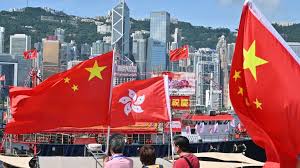

Hong Kong votes in Election as City Mourns Deadly Fire
ShareHongkongers are voting in an election seen as a test of public sentiment following a deadly fire that angered some...


PDP Crisis: Wike Camp Moves to Conduct Fresh Congresses, Convention
ShareBy Laide Akinboade, Abuja The factional Board of Trustees (BoT) of the Nyesom Wike tendency in the Peoples Democratic Party...

Is Community Parenting Still Relevant?
ShareBy Dorcas Jonah In the Nigerian culture, extended families and communities play a crucial role in care-giving, instilling values, and...

Tinubu’s Ambassadors Should Undergo Rigorous Senatorial Scrutiny
ShareMore than two years after terminating the services of all ambassadors, appointed by the previous administration; precisely on September 2,...


Former Liverpool Co-owner Hicks Dies at 79
ShareFormer Liverpool co-owner Tom Hicks has died at the age of 79. The American, who owned the club alongside George...


NGX Says Reforms Set to Strengthen Nigeria’s Investment Climate
ShareChairman, Nigerian Exchange Group (NGX), Dr Umaru Kwairanga, said ongoing regulatory reforms are positioning țhe nation’s capital market to attract...


Adebayo, Obi Have Capacity, Knowledge Determination to Lead Nigeria – Pastor Ituah Ighodalo
SharePastor Ituah Ighodalo is a prominent man of God who supritends Trinity House, a non denominational Christian fellowship centre. He...


SDP Leader, Adebayo Celebrates Tanko Yakasai at 100
ShareBy Mike Odiakose, Abuja The National leader and former presidential candidate of the Social Democratic Party (SDP), Prince Adewole Adebayo,...

PDP BoT Vows to Restore Confidence, Holds
ShareBy Laide Akinboade, Abuja The Peoples Democratic Party (PDP) Board of Trustees (BoT), Wike’s fraction on Sunday, vowed to restore...

LP Reps Accuse Tinubu, APC of Choosing 2027 over Citizens’ Security, Welfare
ShareBy Ubong Ukpong, Abuja The Labour Party Caucus in the House of Representatives has accused President Bola Tinubu and his...