
NEWS
NYSC DG Charges Corpers to Develop Interest in Agriculture

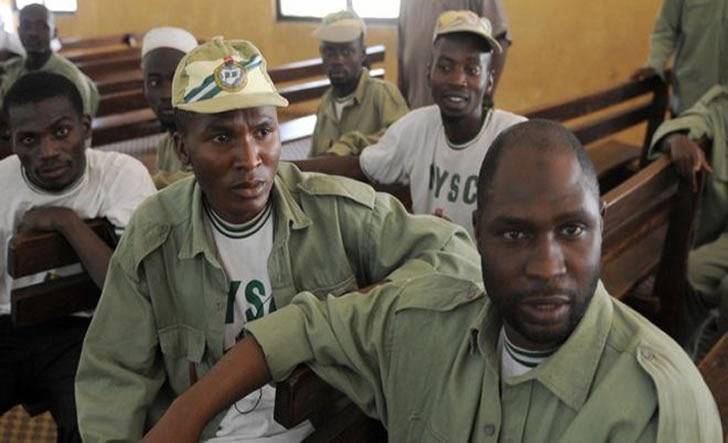
Brig.-Gen. Shuaibu Ibrahim, Director-General, National Youth Service Corps (NYSC), has charged youth corps members to develop interest in agriculture to enable them be self-reliant.
He stated this at the inauguration of the 2021 Farming season by NYSC Youth Corps members on a 16-hectare farm land secured by the NYSC in Doma local government area of Nasarawa on Saturday.
Ibrahim said since 2012, NYSC had introduced a number of programmes, including Skills Acquisition and Entrepreneurship Development (SAED) Programme, aimed at teaching corp members skills they would need to be self-employed given the scarcity of white collar jobs.
He said one of the trainings offered by SAED is agriculture, a sector capable of lifting many from poverty and employing many young Nigerians.
”With demonstrations on this farmland, we want to encourage corps members to show more interest in agriculture and earn their livelihood through it,” he said.
Ibrahim thanked the Andoma of Doma, Alhaji Aliyu Onawo, for offering the land to NYSC for agriculture demonstration to corps members, among other uses.
He said that the acquisition of the land and the practical use of it would go a long way to convince corps members to see agriculture as a viable alternative.
“We urge other royal fathers and state governments to emulate the good gesture of the Andoma to avail lands to our corps members so that they can showcase their talents and get experience in farming,” he said.
Also speaking, Dr Emmanuel Akabe, Nasarawa state Deputy Governor, lauded the commitment of the NYSC in pushing the agriculture agenda of the Federal Government to youth corps members with a view to encouraging them to be self-reliant.
Akabe, represented by Prof. Allalana Otaki, the Commissioner of Agriculture and Water Resources, pledged Nasarawa state government’s support for the NYSC agriculture initiative.
In a remark, Mr Stephen Dewan, Coordinator of the NYSC in the state, expressed excitement over farming season development.
He promised to ensure that corps members in the state are thoroughly trained and exposed to the numerous opportunities available in the agriculture sector.
In a speech, Mr Johnbenedict Tyoakosu, a youth corper and President, NYSC Nasarawa state Agro Allied Community Development Service (CDS) Group, said the group would commence the farming season with planting of melon seeds.
He said melon seeds mature in three months and two weeks, adding that they would also plant beniseed.
“This farm will be used for demonstration purposes for corps members interested in farming to learn the best agronomic practices of the crops that will be cultivated here.
”It will enable us to train the beneficiaries not just theoretically but practically,” he said.
Tyoakosu noted that the agricultural activities on the Demonstration Farm would contribute to the food security of Nasarawa State and Nigeria as a whole.
“Practical work on Agro based SAED can also be done to equip the corp members with the skills which will make them self-employed and subsequently employers of labour,” he said. (NAN)




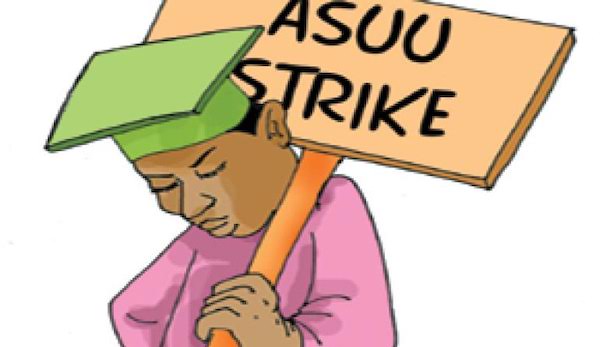
The Academic Staff Union of Universities (ASUU), Zamfara State University branch, has commenced an indefinite strike over the failure of the Zamfara State Government to meet its demands.
The demands include the implementation of the Federal Government-ASUU salary agreement and payment of outstanding entitlements.
The union announced the industrial action after its congress held on Tuesday at the university’s temporary campus in Talata Mafara.
The Acting Chairman of the branch, Anas Abubakar Dogo, who spoke after the meeting, accused the state government of failing to address issues affecting lecturers despite several appeals and engagements through established channels.
He said the decision followed the expiration of an ultimatum and a subsequent warning strike earlier declared by the union without any positive response from the government.
According to him, the union could no longer guarantee the provision of academic services under the prevailing conditions.
Dogo stated that the demands of the lecturers include the implementation of the December 2025 FG-ASUU salary agreement, payment of promotion arrears and other outstanding financial obligations owed by the state government.
He said the branch had held several meetings with the university’s governing council, management and other relevant stakeholders before arriving at the decision.
The ASUU leader added that attempts to secure meetings with the Commissioner for Education, the Head of Service and the Secretary to the State Government did not yield the desired results.
”We have exhausted all available channels of engagement and dialogue, but unfortunately there has been no meaningful response to our demands,” he said.
The union appealed to students, parents and other stakeholders to intervene in the matter in the interest of education in Zamfara State and the North-West region.
ASUU said it had been left with no option but to withdraw its services until the issues were addressed.
The branch had earlier embarked on a one-week warning strike on November 11 following the expiration of an initial two-week ultimatum.
According to the union, additional time granted after intervention by the chairperson of the university’s governing council also elapsed without any breakthrough, leading to the declaration of the indefinite strike.
The strike is expected to disrupt academic activities at the state-owned institution pending the resolution of the dispute between the lecturers and the government.
By Tony Obiechina, Abuja
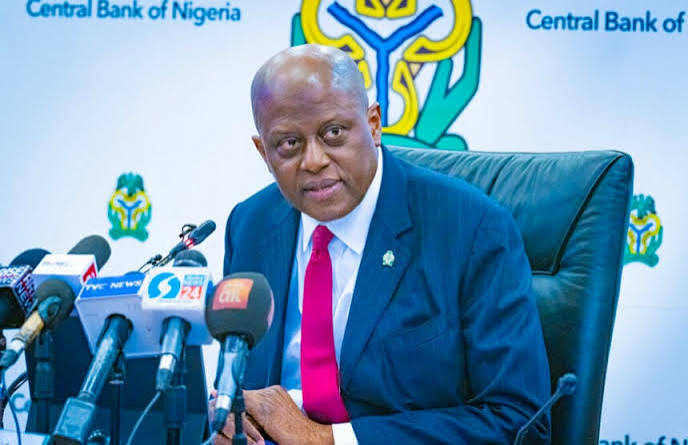
The Central Bank of Nigeria (CBN) and the Nigerian National Petroleum Company Limited (NNPCL) have signed a landmark Memorandum of Understanding (MoU) to provide enduring macroeconomic stability and sustainable prosperity for Nigerians.
Speaking at the signing of the MoU between the two institutions at the Bank’s Headquarters in Abuja on Wednesday, November 18, 2026, the Governor of the CBN, Olayemi Cardoso, said that formalising the Bank’s partnership with the NNPCL will strengthen macroeconomic management, improve foreign exchange flows and support Nigeria’s long-term economic stability.
Mr Cardoso described the agreement as a significant milestone in their long-standing relationship. He said the MoU would provide a more structured framework for collaboration, given both institutions’ critical roles in supporting fiscal revenues, external reserves, foreign exchange inflows and Nigeria’s broader economic performance.
He stressed that efficient management and settlement of oil and gas proceeds, predictable foreign exchange inflows and closer institutional coordination were particularly important for maintaining monetary stability during periods of global and domestic volatility. He further explained that the MoU would deepen cooperation on the monetisation of oil and gas assets, energy financing and liquidity support, and leverage the CBN’s convening role to attract global financial institutions and develop financing structures to unlock Nigeria’s vast natural gas resources.
He identified additional areas for collaboration, including payment automation, integration of the CBN and NNPCL treasury systems, regulatory alignment, compliance and risk management, cybersecurity and operational resilience, and knowledge sharing and capacity development. According to him, regular engagement through joint steering and working committees would enable both institutions to coordinate their activities more effectively, monitor implementation, and pursue shared objectives, while positioning Nigeria’s energy assets for greater global competitiveness.
Mr Cardoso emphasised that the MoU did not create a new relationship but formalised years of cooperation, noting that both institutions had already been engaging regularly on issues of mutual economic importance. He commended the Group Chief Executive Officer of NNPCL and his team for the progress made in addressing the challenges inherited by the company, recalling his earlier engagements with NNPCL leadership and expressing optimism about the team’s discipline and commitment.
Cardoso said the decision to formalise the partnership had evolved naturally from sustained collaboration, rather than being a ceremonial exercise. He stressed that stronger cooperation among key economic institutions would reinforce economic stability, strengthen investor confidence and provide a firmer foundation for sustainable growth. He reaffirmed the CBN’s commitment to sound monetary policy, macroeconomic stability, financial system resilience and the long-term prosperity of Nigerians.
In his address, the Group Chief Executive Officer of NNPC Limited, Mr Bayo Ojulari, described the MoU as a strategic framework to align Nigeria’s energy and financial sectors to support economic growth and stability. He acknowledged the CBN Governor’s guidance during the early, challenging period of his tenure, which he said helped him navigate the transition and stabilise NNPCL.
He said the critical role of oil and gas in Nigeria’s foreign exchange earnings underscored the close link between the energy sector and the financial system. He added that NNPCL’s transition into a commercially driven company under the Petroleum Industry Act had increased the need for a structured and transparent relationship with the CBN.
According to him, the MoU would strengthen export proceeds and foreign exchange flows, align NNPCL’s operations with national monetary and energy objectives, and deepen energy financing and hydrocarbon monetisation, including enabling the company to leverage its balance sheet to raise capital. He added that joint governance structures and measurable performance indicators would ensure effective implementation and contribute to financial stability and broader economic benefits for Nigerians.
Earlier in her welcome address, the Deputy Governor, Operations, at the Central Bank of Nigeria (CBN), Ms. Emem Usoro, said the signing of the MoU was a significant step towards deepening the long-standing partnership between the two institutions, establishing a structured framework for cooperation in international trade and foreign exchange flows, energy financing and hydrocarbon monetisation, and regulatory alignment and risk management.
Noting that Nigeria’s gross external reserves had risen above $55 billion in recent times, supported by higher oil production and sustained diaspora remittances, she expressed confidence that the partnership would strengthen export earnings and foreign exchange flows, bolster the country’s reserves and resilience to external shocks, and ultimately deliver tangible economic benefits for Nigeria.
Also speaking at the event, the Group Chief Finance Officer of NNPC Limited, Mr Adedapo Segun, described the collaboration as a defining step towards replacing ad hoc engagements between NNPC Limited and the CBN with a structured, transparent and accountable partnership. He said the partnership would focus on strengthening external reserves and investor confidence, supporting naira stability and de-dollarisation through closer alignment with CBN policy, and deepening payment systems, technology adoption and digital innovation.
He added that closer cooperation would support efforts to increase crude oil production from about 1.8 million to 3 million barrels per day and to unlock Nigeria’s gas resources, while agreed working groups, timelines and accountability mechanisms would ensure effective implementation and contribute to long-term economic stability.
The highlight of the event was the official signing of the MoU by the CBN Governor and the Group Chief Executive Officer of NNPC Limited. The signing was witnessed and administered by the CBN Director, Corporate Secretariat, and the Secretary to the Board, Mrs. Rashida Monguno, and by the General Counsel and Company Secretary of NNPC Limited, Mrs. Adesua Dozie.
By Tambaya Julius, Abuja
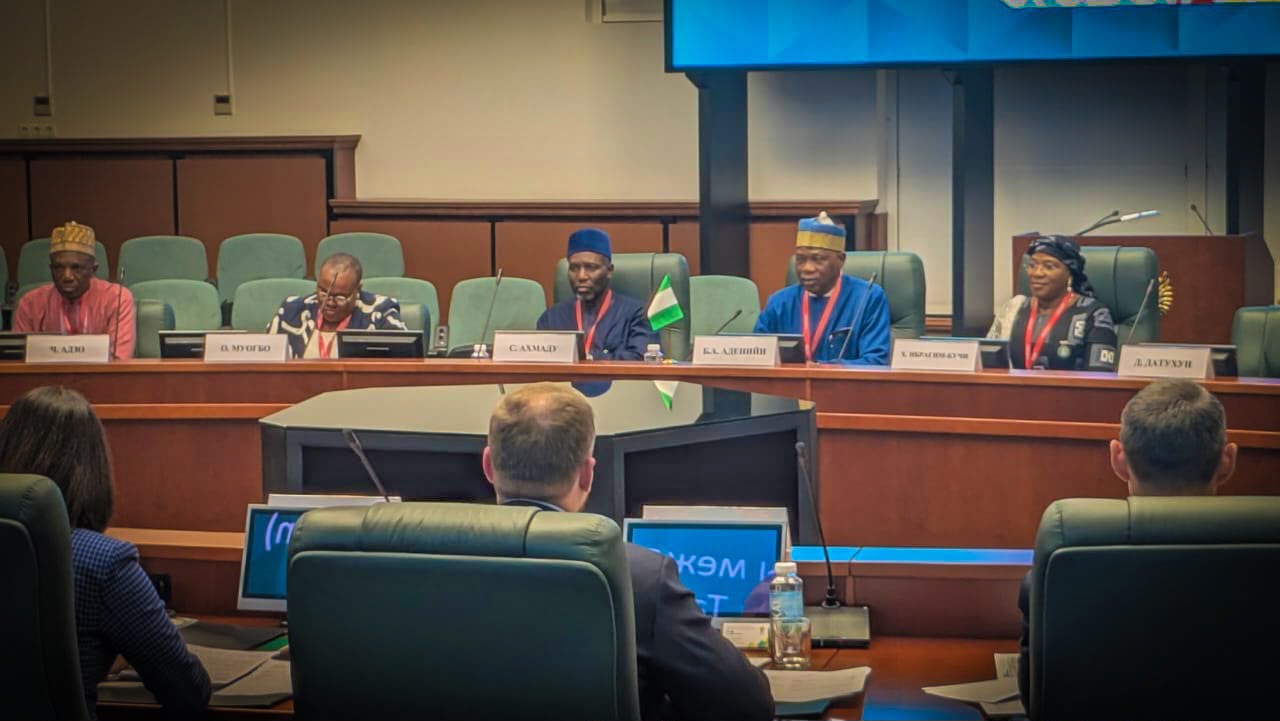
The Nigeria Customs Service (NCS) and the Federal Customs Service of the Russian Federation have signed a cooperation agreement to strengthen bilateral trade, improve customs enforcement and tighten border security between the two countries.
The Agreement on Cooperation and Mutual Assistance in Customs Matters (CMAA) was signed in Moscow on October 28, 2026, during a bilateral meeting between the Comptroller-General of Customs, Adewale Adeniyi, and his Russian counterpart, Valery Pikalyov.
The agreement provides a framework for collaboration in customs intelligence, information sharing, trade facilitation, financial integrity and capacity development.
Adeniyi said the pact would strengthen efforts to protect economic interests, secure supply chains and improve the management of international trade.
He explained that its signing followed months of technical consultations, legal reviews and engagements between the two administrations, demonstrating their shared commitment to modernising customs operations and tackling emerging challenges in global trade.
The Customs boss said the NCS had continued to implement far-reaching reforms through the Nigeria Customs Service Act 2023 and the adoption of digital technologies to improve its operations.
He noted that customs declarations, payments and the submission of supporting documents were increasingly handled electronically, making processes more efficient and facilitating legitimate trade.
Adeniyi maintained that revenue generation and trade facilitation were not conflicting responsibilities, stressing that both could be achieved together in line with the World Customs Organisation’s SAFE Framework of Standards.
On the implementation of the agreement, he identified cooperation between the two countries’ Authorised Economic Operator (AEO) programmes as a major area of focus.
He said the exchange of technical knowledge and operational experiences would help both administrations understand their respective programmes and work towards mutual recognition.
According to him, the arrangement would strengthen confidence in compliant businesses and create opportunities for smoother cargo movement between Nigeria and Russia.
Adeniyi also highlighted similarities in the reform experiences of both customs administrations, noting that the NCS had undergone significant transformation from its colonial beginnings into a modern institution.
He recalled that the Service operated under an outdated legal framework for several years before the enactment of the Nigeria Customs Service Act 2023, which provided a stronger foundation for institutional reforms, technological advancement and private-sector partnerships.
The meeting further explored opportunities for exchanging customs statistics and trade data to support research, comparative analysis and evidence-based decision-making.
Adeniyi disclosed that Nigeria was participating in the World Customs Organisation’s data initiative, noting that the NCS was the only customs administration to have submitted its trade data to the project.
He said reliable data and effective information sharing would help both countries understand bilateral trade patterns, identify discrepancies and improve customs administration.
In his response, Pikalyov explained that the Russian Federal Customs Service had the legal authority to collect, process and provide customs statistics derived from customs declarations.
He said Russia already had arrangements for exchanging customs statistics with foreign customs administrations, enabling participating countries to monitor trade flows, identify discrepancies and assess developments in bilateral commerce.
Pikalyov expressed Russia’s readiness to explore a dedicated arrangement with the NCS for statistical data exchange, subject to the relevant legal framework and procedures.
The Russian delegation also noted that Nigeria had become one of the first sub-Saharan African countries, alongside Ethiopia and Namibia, to conclude a customs cooperation agreement with the Russian Federal Customs Service.
The engagement was held within the framework of the Third Russia-Africa Summit, providing an opportunity to strengthen customs collaboration as part of the broader economic and diplomatic relationship between both countries.
The agreement outlines four key areas of cooperation: simplifying customs procedures to facilitate legitimate trade; exchanging information to prevent, detect and investigate customs offences; tackling illicit financial flows, grey-market importations and tax evasion; and strengthening border security against counterfeit goods, narcotic drugs, psychotropic substances and other prohibited or hazardous materials.
It also provides a legal basis for direct cooperation between the two administrations on customs-related matters, including operational assistance, personnel training and the exchange of professional expertise.


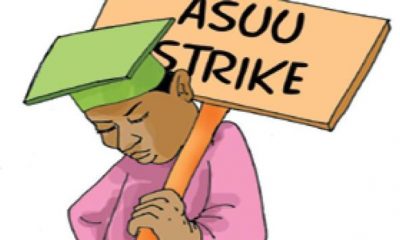

ASUU Declares Indefinite Strike at Zamfara State University
ShareThe Academic Staff Union of Universities (ASUU), Zamfara State University branch, has commenced an indefinite strike over the failure of...
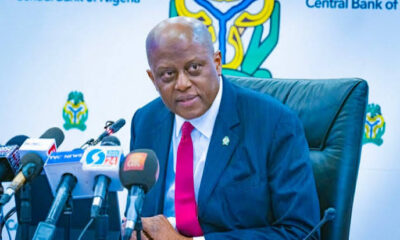

CBN, NNPCL Sign MOU to Strengthen Macroeconomic Stability, Energy Financing
ShareBy Tony Obiechina, Abuja The Central Bank of Nigeria (CBN) and the Nigerian National Petroleum Company Limited (NNPCL) have signed...
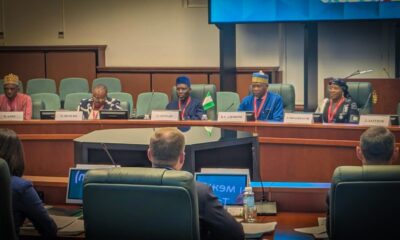

Nigeria, Russia Sign Customs Agreement to Strengthen Trade, Border Security
ShareBy Tambaya Julius, Abuja The Nigeria Customs Service (NCS) and the Federal Customs Service of the Russian Federation have signed...


Troops Arrest Suspected Ammunition Supplier, Recover 300 Rounds Hidden in Sack of Beans
ShareBy David Torough, Abuja Troops of the Nigerian Army have arrested a suspected ammunition supplier and recovered 300 rounds of...
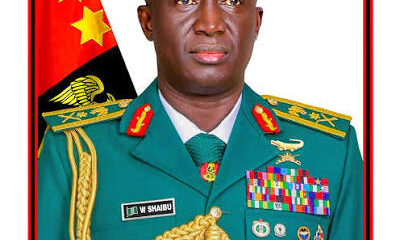

COAS Commissions 20 Transit Flats, Modern Officers’ Mess in Bauchi
ShareBy David Torough, Abuja The Chief of Army Staff (COAS), Lieutenant General Waidi Shaibu, has commissioned 20 transit flats and...


Kaduna Refutes ADC’s Claim of Campaign Venue Denial
ShareFrom Agbo Emmanuel, Kaduna The Kaduna State Government has dismissed allegations that it stopped the African Democratic Congress (ADC) from...
2027: Tinubu’s Victory Already Secured in Kogi – Duro Meseko
ShareFrom Joseph Amedu, Lokoja The Deputy National Publicity Secretary of the All Progressives Congress (APC), Duro Meseko, has assured President...
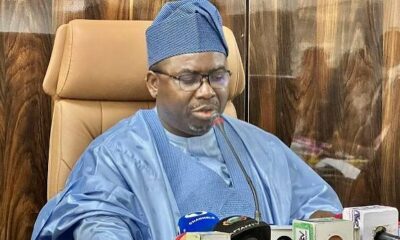

INEC Warns Parties, Observers against Announcing Unofficial Results Ahead Of 2027 Polls
ShareBy Orjime Moses, Abuja The Independent National Electoral Commission (INEC) has warned political parties, election observers and other stakeholders against...


FG, States, LGCs Share N2.441trn Oct Revenue
ShareBy Tony Obiechina, Abuja A total sum of N2.441 trillion, being October 2026 Federation Account Revenue, has been shared to...
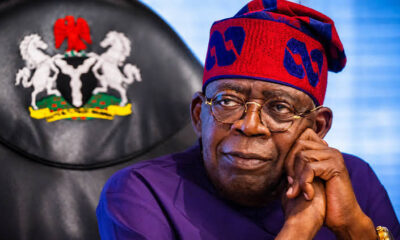

Tinubu Receives State Police Bill, Begins Final Review before Assent
ShareBy David Torough, Abuja President Bola Tinubu has received the Constitution Alteration Bill, 2026, seeking to establish state police across...