
BUSINESS
OADC Unveils Internet Connection Platform


Open Access Data Centers (OADC), one of Africa’s fastest-growing carrier-neutral data center operators, has launched a new interconnection platform in Nigeria and the Democratic Republic of Congo, part of an effort to dismantle the barriers that have kept Africa’s internet ecosystem expensive, patchy and slow.
The service, called Open Access Fabric (OAfabric), is now live in OADC’s Lagos and Kinshasa facilities.
It is designed to give businesses a way to sidestep some of the continent’s deepest connectivity challenges: unreliable international routes, high internet transit costs, gaps in local data infrastructure, and regulatory complications around data sovereignty.“If you struggle to deliver consistent user experiences due to unreliable or expensive international routes, OAfabric will enable direct, low-latency on-ramp peering with global and local cloud and content providers, helping to reduce transit costs and improve performance,” the Chief Executive Officer of OADC told journalists at the launch in Lagos.
According to OADC, the OAfabric platform offers an open-access and collaborative digital ecosystem that allows enterprises, networks, cloud providers, and content platforms to interconnect quickly. Unlike traditional models that rely on building more physical infrastructure, the solution aims to simplify and accelerate digital exchange, reducing delays, fragmentation, and complexity.
For years, companies in Africa have paid some of the highest internet costs in the world, often depending on international networks to reach cloud and content providers. That dependence has meant higher latency and inconsistent performance for users. By creating direct, low-latency pathways to global and local cloud platforms, OAfabric aims to cut those costs and deliver faster, more reliable connections.
Coker said the platform was designed to solve specific challenges faced by African businesses. “We designed OAfabric around the real challenges African businesses face. It is about solving problems, reducing the cost to compute, improving performance, unlocking access to cloud and content, and creating an environment where companies can scale with confidence while accelerating time to market,” he said in a statement on Friday.
Beyond connectivity, OAfabric also seeks to stimulate the development of local digital ecosystems. By creating open, carrier-neutral interconnection points, the platform allows enterprises to scale services and expand into new markets faster and more efficiently.
“OAfabric is not just infrastructure; it represents a shift in what is possible for Africa’s digital economy,” Coker added. “By removing barriers and enabling seamless, high-performance peering between key ecosystems, including local and global Internet Exchange Points, content providers, cloud platforms, and enterprises, it provides the frictionless interconnection needed to access digital services more efficiently.”
The company said future plans include expanding OAfabric into more African markets to extend its reach and strengthen access to international content and cloud ecosystems.
OAfabric forms part of OADC’s broader strategy to accelerate Africa’s digital future by providing interconnection hubs for connectivity, cloud, content, and collaboration. The company stated that the platform underpins a pan-African digital ecosystem, enabling networks, service providers, and enterprises to interconnect seamlessly, thereby boosting the continent’s digital economy.
 | ReplyReply allForwardAdd reaction |

The Federal Government has called for a stronger agricultural value chains, increased agro-industrialisation and improved market access to boost food security in Nigeria.
The Permanent Secretary, Federal Ministry of Agriculture and Food Security, Dr.
Marcus Ogunbiyi, made the call on Monday in Enugu during the Technical Session of the National Council on Agriculture and Food Security.The theme of the event is “Enhancing Agricultural Value Chains, Agro-Industrialization and Market Access for Economic Growth.”
Ogunbiyi, who doubled as the Chairman of the Technical Session, said that the country must move beyond subsistence farming and embrace a commercially driven agricultural system capable of supporting industries, improving farmers’ incomes and expanding export opportunities.
“Our task goes beyond increasing the volume of food produced.
“We must build an agricultural economy that creates wealth, supports industries, generates decent employment, expands exports, improves rural livelihoods and contributes meaningfully to national economic growth,” he said.
The Permanent Secretary identified inadequate storage and processing facilities, limited access to finance, poor logistics and weak links between farmers and processors as major challenges affecting the competitiveness of agricultural products.
He called for increased investment in agro-processing facilities, rural roads, irrigation, electricity, cold-chain infrastructure and modern technologies to reduce post-harvest losses and promote local value addition.
“Agro-industrialisation is central to the transformation we seek to achieve. It provides the bridge between agriculture and industry.
“It also enables agricultural production to serve as a reliable source of raw materials for manufacturing and other productive sectors of the economy.
“The value of this Council will ultimately be determined by the quality of its resolutions and the extent to which those resolutions are implemented,” Ogunbiyi stated.
He also urged state governments to identify priority commodities, establish clear production and processing targets, attract private-sector investment and strengthen partnerships with research institutions and development partners.
In his remarks, the Enugu State Commissioner for Agriculture and Agro-industrialisation, Patrick Uburu, said that the state government was committed to agro-industrialisation to boost farmers’ income, create jobs and generate wealth.
Uburu, who described the technical sessions as a platform for translating policies into practical solutions, urged delegates to prioritise farmers and agribusiness operators in their deliberations.
He emphasised the need for stronger collaboration among state governments, federal agencies and development partners to address food security challenges, noting that recommendations from the meeting should be measurable and implementable.
The commissioner called for practical policies and investments that would improve farmers’ productivity and expand market access for agricultural produce.
Technical Lead Policy Advisory, GIZ ECOWAS & Nigeria, Dr Abiodun Ihebuzor, advocated for stronger partnerships and increased investment in agricultural value chains to reduce post-harvest losses and improve food security in Nigeria.
Ihebuzor noted that previous engagements at the 46th Council in Calabar and the 47th Council in Kaduna had provided opportunities to advance agricultural development.
He expressed optimism that the current meeting would strengthen collaboration among government institutions, development partners and private-sector operators.
According to him, healthy soils, efficient markets and improved storage systems were essential to sustainable food security.
On her part, Geraldine Onu, Deputy Director, Administration and Supply, Enugu State Ministry of Agriculture and Agro-Industrialisation, disclosed that the State Government had intensified efforts to transform agriculture from subsistence farming to commercial and mechanical farming as part of its economic development agenda.
She noted that investments in irrigation, storage, processing and agricultural infrastructure were aimed at increasing production, attracting private investment, reducing post-harvest losses and improving farmers’ livelihoods.
“In Enugu State, under the visionary leadership of Gov. Peter Mbah, agriculture occupies a strategic position in the state’s economic transformation agenda.
“The initiatives include the 300,000-hectare agricultural land bank, the development of Smart Farm Estates across the 17 Local Government Areas, the 260 Farm Estate Programme and the establishment of a tractor assembly plant,” Onu added.(NAN)

A graduate of the University of Maiduguri, Shianya Ebwaseh, said the Nigerian Education Loan Fund (NELFUND) helped improve her Grade Point Average (GPA) to 3.50 through financial support that enabled her to concentrate on her studies.
Ebwaseh, who graduated from the Department of Zoology, Faculty of Life Sciences, said this in an interview on Monday in Maiduguri.
She said financial difficulties had previously affected her academic performance, as she struggled to meet her daily needs while pursuing her degree.
The graduate said she resorted to selling fried chips and groundnuts on campus to support herself, sometimes missing lectures because of the time and energy required to run the business.
According to her, the introduction of NELFUND’s student loan scheme relieved her financial burden through tuition support and a monthly N20,000 upkeep allowance.
“Before NELFUND, I struggled with my GPA because of financial challenges. I sometimes missed lectures after spending hours frying and packaging chips for sale.
“But when NELFUND came, I stopped the business and concentrated on my studies. My GPA improved to 3.50, which is Second Class Upper,” she said.
Ebwaseh said the financial support also enabled her to attend lectures regularly, purchase learning materials and prepare adequately for tests and examinations without constant worries about money.
She added that her examination scores improved significantly after she began receiving the support, attributing the change to increased concentration and financial stability.
The graduate, who said she accessed the scheme in her third year, described the application process as simple and encouraged other eligible students to apply.
She also said the programme had helped financially disadvantaged students remain in school, particularly those whose parents could not afford tuition fees and upkeep.
Ebwaseh appealed to the Federal Government to sustain the initiative, emphasising that withdrawing the support could expose many students to financial difficulties and possible dropout.
She said the scheme had given beneficiaries an opportunity to pursue their academic ambitions with fewer financial distractions.(NAN)
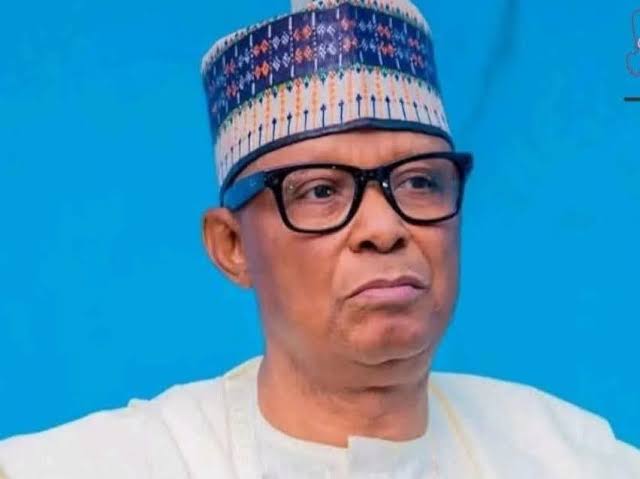
The Minister of Housing and Urban Development, Dr Muttaqha Darma, has called for synergy among government agencies in the housing sector to improve coordination and accelerate housing delivery.
Darma made the call in Abuja on Monday at the stakeholders’ conference on the proposed National Real Estate Regulatory Authority (NRERA).
The conference, themed “One vision, One Ecosystem, One National Housing and Real Estate Plan”, was organised by the Office of the Speaker, House of Representatives, and the House Committee on Housing and Habitat.
The minister said the lack of coordination among government agencies had affected the effective delivery of houses to Nigerians, noting that institutions in the sector operated independently.
“The players within the industry, all of us, operate in silos.
“Federal Housing Authority (FHA) does not even know what the Federal Mortgage Bank of Nigeria (FMBN) is doing. FMBN does not know what the Ministry of Finance Incorporated (MOFI) is doing,” he said.
According to him, the various institutions must work together towards a common goal rather than operate independently.
“Our target is to build houses for Nigerians. We are wasting our time because if we fail, it is us who fail, not the President,” he said.
The minister expressed support for the establishment of NRERA, saying the proposed authority would address the regulatory gaps in the real estate sector.
He said the ministry had reviewed the proposed legislation and recognised its potential to improve the sector.
Darma also disclosed that abandoned housing projects funded by the Federal Mortgage Bank of Nigeria (FMBN) across the country were worth about N38 billion.
He said a survey conducted by the ministry revealed abandoned FMBN-funded housing developments in every state of the federation, including the Federal Capital Territory.
“We realised about N38 billion of contributors’ money, your own money, all the Nigerian workers’ money. N38 billion is wasted,” he said.
He said that the poor management of workers’ contributions could discourage Nigerians from contributing to the National Housing Fund.
The minister urged the committee handling the proposed legislation to ensure that state governments were included in the regulatory framework.
He also called for safeguards to protect homebuyers, tenants, developers and mortgage lenders, including mandatory escrow accounts for buyers and standardised tenancy agreements.
The Managing Director and Chief Executive Officer of the Ministry of Finance Incorporated (MOFI), Dr Armstrong Takang, said effective regulation was necessary to restore investor confidence in Nigeria’s real estate sector.
Takang said the sector contributed 12.71 per cent to Nigeria’s Gross Domestic Product (GDP) as of June 2026, but remained largely unregulated.
He said the absence of a national licensing system had allowed unqualified individuals to operate as estate agents and developers without adequate accountability.
“Anyone can sell land, anyone can collect off-plan payments, run into tens of billions and get away with it. There are very few countries in the world where these are allowed,” he said.
He called for mandatory licensing of real estate operators and the protection of buyers’ funds through designated project accounts.
“An operator must be licensed with the authorities. No one should be operating in the real estate sector without a licence, no matter which part of the value chain they are involved in,” he said.
He added that buyers’ funds should be kept in protected project accounts and released to developers based on evidence of progress on construction.
Takang said effective regulation would attract domestic and foreign investment, protect citizens and support the Federal Government’s one-trillion-dollar economy target.
He urged the National Assembly to ensure the passage of the proposed legislation, describing it as critical to bringing order and transparency to the real estate sector.




Troops Neutralise over 60 Terrorists, Rescue70 Kidnap Victims in One Week
Share By David Torough, Abuja The Armed Forces of Nigeria (AFN) have neutralised more than 60 terrorists and rescued at...


Accident Victims’ Remembrance Day: FRSC Records 7,156 Crashes, 3,445 Deaths
ShareThe Federal Road Safety Corps (FRSC) has recorded 7,156 road traffic crashes, resulting in 3,445 deaths and 22,292 injuries across...


Mutfwang Inaugurates State-owned Security Outfit, Operation Rainbow
ShareFrom Jude Dangwam, Jos Plateau State Governor, Caleb Manasseh Mutfwang, has inaugurated 353 operatives of the state-owned security outfit, Operation...


Otu Woos Investors, Promises Incentives, Support for Businesses in C’River
ShareCross River State Governor, Bassey Otu has called on private-sector investors to invest in the state, with assurances of incentives,...
2027: Tompolo Deploys 50 Vehicles in Enugu, C’River for Tinubu’s Re-election
ShareGrand Patron of the PBAT Door-to-Door Movement, High Chief Oweizidei Government Ekpemupolo, has donated 50 vehicles for President Bola Tinubu’s...


2027 Election: Wike Rallies Supports for Tinubu, Aduda
ShareBy Laide Akinboade, Abuja The Minister of the Federal Capital Territory (FCT), Nyesom Wike, on Monday, rallies supports for President...


NDIC Insists on Timely, Transparent Valuation of Failed Banks’ Assets
ShareBy Tony Obiechina, Abuja The Nigeria Deposit Insurance Corporation (NDIC) has raised concerns over the failure of some borrowers of...


Xenophobia: Nigeria’s Patience Running Out, Fani-Kayode Warns South Africa
ShareBy David Torough, Abuja Nigeria’s High Commissioner to South Africa, Femi Fani-Kayode, has warned that Nigeria’s patience is wearing thin...


2027 Polls: INEC Purges 1.6m Invalid Names from Voter Register
ShareBy David Torough, Abuja The Independent National Electoral Commission (INEC) has removed 1,608,660 confirmed invalid registrations from Nigeria’s voter register...


2027: Tompolo Deploys 50 Vehicles in Enugu, Cross River for Tinubu’s Re-election
ShareGrand Patron of the PBAT Door-to-Door Movement, High Chief Oweizidei Government Ekpemupolo, has donated 50 vehicles for President Bola Tinubu’s...