
Education
Obasanjo: 14m Children Out of School in Nigeria


Former President Olusegun Obasanjo, on Saturday declared that in Nigeria today, over 14 million children were not in school, and thereby deprived of education.
Obasanjo made this known in Lagos at the virtual 2020 Fellowship Graduation Ceremony of the second cohort of “Teach for Nigeria Fellows”.
“Teach For Nigeria”, an NGO, graduated 161 fellows who have impacted approximately 9,660 students in 80 schools across Lagos, Ogun, and Kaduna States.
“Teach For Nigeria” focuses on developing a movement of leaders across Nigeria who are committed to putting an end to educational inequity.
Obasanjo said: “They are deprived of opportunities that will allow them to develop their abilities and become useful to themselves and their communities.
“It is evident that at this point, to transform our education system in a sustainable way, Nigerian youths must take up leadership positions.”
According to him, our youths must champion different innovative solutions at every level of the society and across different sectors.“It is inspiring to see the work that ‘Teach For Nigeria’ is doing to equip promising future leaders with the skills and experience to drive the change that we need,” the former president said.He added that the leaders had dedicated their time, energy and resources to inspire love for learning, improved educational outcomes, and enhanced life opportunities for children in the classrooms.
“As a result of your commitment, your pupils have succeeded at various academic and non-academic competitions.“I recently learnt about pupils of ‘Teach For Nigeria Fellows’ who came second in the National Lafarge Competition and other scholarship opportunities.
“They also initiated actions by working with stakeholders such as parents, community members, heads of schools and other teachers,” Obasanjo said.
He, however, advised the fellows to continue to leverage their acquired skills and experiences to advocate for educational excellence in the country.The former president urged them to be ambassadors for change, driving the movement for freedom and justice in Nigeria.
“I strongly advise that you remain resilient in your fight for educational equity, not relenting on the strides of deploying solutions to tackle the myriads of problems confronting our education system.
“Please do not let anybody tell you that you are leaders of tomorrow, you are leaders today,” Obasanjo said.
He noted that the outbreak of the raging Coronavirus pandemic had put the world at its knees as the whole world strives to develop a vaccine and successful treatments to fight the disease.
“So far, the damage in Africa has been moderate; but if we relax, the African continent can become the worst affected from the economic fallout of the crisis,” Obasanjo said.
He said that our education system was already in crisis before the pandemic hit us.
“The outbreak has exacerbated the ever-widening gulf between the learning opportunities of our most privileged children and our less privileged children.
“To close the dangerous gap as a nation, we require prompt action from well-meaning Nigerians imbued with courage, patriotism, commitment, foresight and love,” Obasanjo said.
Also, Folawe Omikunle, the Chief Executive Officer, Teach For Nigeria, said that graduating fellows had spent the past two years improving the academic outcomes of their pupils.Omikunle said that they ignited the love for learning in these pupils, instilling self-belief, successfully galvanising parental and community support to aid pupils learning process.
“The graduating 161 fellows are joining our maiden set of 44 Alumni members, thereby bringing the number of our Alumni network to 205 members
.“Teach For Nigeria is a life-long commitment in the fight against educational inequity.
“We are positive that our Alumni will continue to work toward ensuring that one day we have a Nigeria where every child can attain an excellent education,” she said.(NAN)







From Ene Asuquo, Calabar
As a result of the unresolved renegotiation between Academic Staff Union of Universities and the Federal Government of Nigeria, the Union has sent a message of
Imminent danger to industrial harmony in Nigerian University system.
In a press statement in Calabar, ASUU has warned that they would embark on an indefinite strict action in a few days to come because of federal government’s insincerity in keeping to terms after the 14-day warning strike and another four weeks of grace was given which will expire on the 21st of November 2025.
According to them, “We have gathered not merely as members of ASUU, but as citizens whose patience has been stretched far beyond its elastic limits.
Occasioned by broken promises, shattered dreams, and deepening crises in the education sector, we hereby express deep concern over government’s inconsistency and dilatory approach to agreements, engagements and negotiations”.They stated that the renegotiation of the 2009 FGN/ASUU Agreement was not a gift. It was an obligation to Nigerian University Lecturers. Government owes Lecturers their due wages and her citizens and the dignity of decent and functional education.
They maintained that the fight is for the survival of Nigeria’s intellectual soul, while outlining the issues in contention to include: renegotiation of workers’ Conditions of Service since 2009 in tandem with changing times and inflationary trends over the years, funding for revitalization of infrastructures, University autonomy, academic freedom, undue proliferation of Universities without assured sustainable funding.
The Union stressed further that Government grandstanding, insensitivity and silence are deliberate to destroy academic system and ASUU is ready to shut down totally and completely in a few days.
Recall that ASUU gave the FGN 14-day ultimatum to conclude the renegotiation which according to them was enough to made government do the needful and they watched to no avail. ASUU then graduated to 2 weeks Warning Strike, which was suspended after NEC of 22nd October, 2025 due to the intervention of well-meaning Nigerians, the Nigeria Labour Congress, parents and students to create enabling opportunity for a meaningful dialogue.
“Let the Federal Government return to the path of truth, fairness and good conscience. Let the government hear us clearly: they cannot destroy public education, starve lecturers with a slavish salary, deduct and withhold part of legitimate Lecturers salaries by way of 3rd party deductions, deny students a conducive environment for effective learning and expect peace”.
“ASUU has been consistent: we are not asking for personal enrichment. We are demanding that the government fulfills its obligations to the Nigerian people by funding education properly, otherwise, we shall resume the STRIKE itself; not the father or mother of all strikes”.
“This will be a total, comprehensive and indefinite strike action. We are ready to shut down for as long as the government wants it to last because he who has been pushed down fears no fall Education is the foundation of personal and national development,” the stated.
“The problem is not paucity of funds as the government posits but lack of political will to invest in the development of Nigeria. The figures and empirical data from Federation Account Allocation Committee (FAAC) has revealed that in 2022, States received N3.02 trillion while in 2024, the figures rose to N5.81 trillion with an increase of over 62%. Similarly, federal allocations rose from N3.42 trillion in 2022 to N4.65 trillion with an increase of over 70%. This is clear evidence that the government has the capacity to pay Lecturers”. They maintained.
The Federal Government has begun training no fewer than 100,000 youths in 1,500 Technical and Vocational Education and Training (TVET) centers across the country.
The Minister of State for Education, Prof. Suwaiba Sa’id, made the announcement on Monday in Kano.
This was during an inspection visit to Bayero University, Kano (BUK), where Sa’id assessed ongoing vocational training initiatives supported by the ministry.
“The administration is committed to expanding opportunities for our youths to acquire industry-relevant skills that will make them self-reliant and employable,” she said.
The minister said that the programme covered a wide range of trades including carpentry, welding, plumbing, ICT, automobile repair, tailoring, among other skills in high demand.
She said that the initiative was designed to ensure that beneficiaries of the programme became self-reliant, job creators and active contributors to the nation’s economic growth.
According to her, the provision of starter packs will complement the government’s drive to reducing unemployment and addressing the persistent skills gap in the country.
“The administration of President Bola Tinubu is committed to strengthening technical and vocational education because it remains a critical pathway to empowering young Nigerians.
“Providing starter packs will enable our youths to put their training into practical use immediately,” she said.
Sa’id commended BUK for its commitment toward implementing the programme.
She said that the ministry would continue to partner institutions that promoted innovation, productivity and entrepreneurship.
Also speaking, the Vice-Chancellor, BUK, Prof. Haruna Musa, said the programme was timely as the country continued to grapple with low employability, reduced productivity and slow economic growth.
Those, he said, were due to inadequate skills among its youth population.
Musa was represented by the Deputy Vice-Chancellor (Academic), Prof. Ahmad Tsauni.
He said the programme was designed to equip young Nigerians with practical and entrepreneurial skills that would enhance job creation, innovation and national development.
Musa encouraged participants to take full advantage of the opportunity by learning diligently and transforming themselves into agents of positive change in their communities.
“BUK will continue to invest in research, innovation and strategic partnerships to expand opportunities for youth employment and industrial growth,” he said
The vice-chancellor commended the Federal Ministry of Education and other partners for their support in ensuring the successful take-off of the programme.
A beneficiary, Muhammad Ali lauded the government for, what he described as, the timely gesture.
He expressed appreciation, describing the initiative as a crucial step toward youth empowerment and national development.
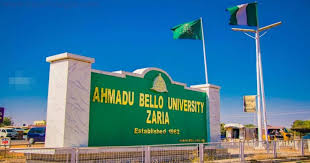
Mainstream Energy Solutions, a privately-owned power-generating company, has offered to support infrastructure renewal at the Ahmadu Bello University (ABU), Zaria.
This was disclosed in a statement issued on Saturday in Zaria by the Director, Public Affairs Directorate of the university, Malam Auwalu Umar.
He said the company also announced plans to partner with the institution on its 45th convocation scheduled for January 2026.
According to him, the form has also pledged to assist in the upgrade of the university’s internal roads, most of which were constructed in the 1960s and have never been rehabilitated.
“The institution’s nearly 30 kilometres of internal roads across its two campuses are currently in a state of near collapse.
“The company also indicated readiness to support the rehabilitation of toilets and improvement of water supply on the campuses.
“As part of preparations for the convocation, the company will give the 1,000-seater Abdullahi Mahadi Conference Centre a facelift ahead of the convocation lecture,” Umar said.
He quoted the Vice-Chancellor, Prof. Adamu Ahmed, as expressing deep appreciation for what he described as a long-standing and growing partnership since 2017.
He recalled paying a courtesy visit to the company in Abuja earlier in the week to thank it for its sustained support.
He stated that mainstream energy’s interventions had consistently come at crucial moments, especially when the university’s energy cost escalated to an unsustainable N370 million in May 2025.
Ahmed said the university was particularly excited about the company’s plan to replicate a Kainji Dam-model power plant at ABU’s Faculty of Engineering; a project expected to revolutionise practical training and research.
He also described as “a powerful demonstration of belief in the future of Nigerian youths” the firm’s decision last week to convey 20 ABU students via chartered flight to the Kainji facility for a hands-on excursion.
“Mainstream Energy Solutions has truly set a benchmark for industry-academia collaboration in Nigeria, aligned with national development goals,” Ahmed said.



OPay Triumphs at Nigeria Technology Awards 2025
ShareIn a remarkable recognition of its commitment to innovation, trust, and customer service, OPay, Nigeria’s leading financial technology company, has...


NYSC Doctor Donates 155 Menstrual Cups to Policewomen in Jos
ShareFrom Jude Dangwam, Jos A National Youth Service Corps (NYSC) member Dr. Hope Adeyi serving at Police College Cottage Hospital...
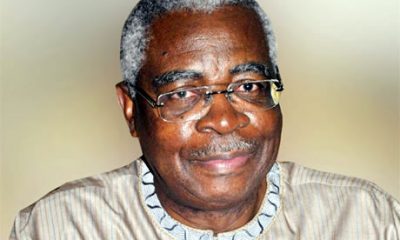

Mutfwang Congratulates Gen. Danjuma on 88th Birthday, Lauds His Philanthropy
ShareFrom Jude Dangwam, Jos Plateau State Governor, Caleb Mutfwang, has extended his warm congratulations to Lt. Gen. Theophilus Yakubu Danjuma...


Enugu Police Arrest 25-Year-old Man over Alleged Kidnapping, Armed Robbery
ShareFrom Sylvia Udegbunam, Enugu Operatives of the Enugu State Police Command attached to the New Haven Division and the Distress...


Enugu Restricts Tricycles, Yellow Buses from Major Highways as BRT Rollout Begins Soon
ShareFrom Sylvia Udegbunam Enugu The Enugu State Government has announced plans to restrict the operation of tricycles (Keke), yellow buses,...

Motorcade Crash Kills Final-year Student after Signing-out Celebration in Edo
ShareA final-year student of Ambrose Alli University (AAU), Ekpoma, Edo, has died in a motorcade accident while celebrating the completion...


Osun 2026: INEC, KDI Strengthen Collaboration Ahead of Election
ShareThe Independent National Electoral Commission (INEC) Resident Electoral Commissioner for Osun State, Dr Mutiu Agboke, has reiterated the commitment of...


Sylva Protests as EFCC Seals Abuja Home
ShareA former Minister of State for Petroleum Resources, Timipre Sylva, has kicked over the sealing of his Abuja home by...


Stop Interfering in Affairs of Rivers State, Epelle Tells Wike
ShareThe founder of TAF Africa, Jake Epelle, has called on the Minister of the Federal Capital Territory (FCT), Nyesom Wike,...


Senate Summons Aviation Minister, NCAA, FAAN, Airline Owners over Soaring Airfares
ShareThe Senate has summoned the Minister of Aviation, Nigeria Civil Aviation Authority (NCAA), Federal Airports Authority of Nigeria (FAAN) and...