
OPINION
Obaseki’s Failure and Urgent Need for Good Governance in Edo State

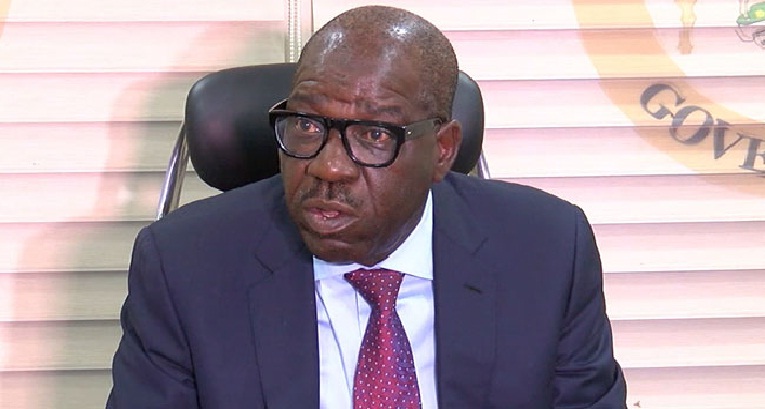
By Augustine Osayande
As the September 21 gubernatorial election approaches, I feel compelled to address the urgent issue of governance in Edo State. My concerns have been intensified by recent news: “Benin Group Issues Ultimatum to Obaseki, Demands Apology to Oba of Benin” and “200 Members of Governor Obaseki’s Family Defect to APC, Endorse Okpebholo for Governor.
” These reports highlight the growing discontent with Governor Godwin Obaseki’s administration.While poor governance is not unique to Edo State, Governor Godwin Obaseki’s administration has been particularly disappointing.
His tenure has been characterized by unfulfilled promises and significant lapses in leadership, positioning him as a notable example of ineffective governance. Compared to his peers, his administration’s failures are especially stark, making him one of the most prominent figures among underperforming governors.It is not surprising that the most recent damning verdict showing the woeful performance of Governor Godwin Obaseki for the past eight years is coming from his immediate family. According to the news report, the Agho Obaseki’s family in Edo State announced their decision to abandon the Peoples Democratic Party (PDP) and throw their support behind the All-Progressives Congress (APC) candidate, Senator Monday Okpebholo, for the upcoming gubernatorial election.
Osaro Obaseki, a prominent figure within the Obaseki clan, revealed the reasons behind their dramatic decampment. “We have stood by our brother, Governor Godwin Obaseki, since 2016. However, his administration has failed to deliver on the promises made to the people of Edo, and we can no longer support him, especially when he intends to bring and foist his replica on us,” Osaro stated, expressing the family’s disillusionment with the current state of affairs in the state.
The Obaseki family, which numbers over 200 members, voiced their dissatisfaction with the perceived neglect of crucial infrastructure and the lack of respect shown to traditional institutions, including the Oba of Benin. “We believe that Senator Monday Okpebholo has the vision and commitment to turn things around for the better. His track record and dedication to the people of Edo have convinced us that he is the right leader to guide our state forward,” Osaro Obaseki added.
Again, just before his family verdict, concerned People of Benin Nation (CPBN) issued a seven-day ultimatum to Obaseki, demanding a public apology to the Oba of Benin, Omo N’Oba N’Edo Uku Akpolokpolo, Oba Ewuare II, for what the group described as “sacrilegious disrespect” to the Benin throne.
In a press statement issued on Tuesday by Prof. Amen Uhunmwangho, and co-signed by prominent figures, including Dr. Jacob Abusomwan, Barr. Osarenkhoe, Leftist Agho Omobude, Mr. Iyamu Osaro Culture, Comrade Eseosa Omoregbee, Chief Omuemu Etinosa, Chief Friday Omoragbon, and Rev. Osamuyimen Isibor, the group demanded that the apology be published in at least three national newspapers.
The CPBN, representing a wide, cross-section of Edo State residents, also outlined several other demands, including an immediate halt to the construction of a museum intended for repatriated Benin artefacts, which they asserted was being undertaken without the Oba’s consent.
They also called for the withdrawal of lawsuits allegedly filed by certain Enigie against the Oba, the reallocation of lands whose Certificates of Occupancy were revoked by the governor, and the return of communal land they claimed were illegally acquired by the state government.
The group is advocating the payment of salaries and allowances to 14 Edo State House of Assembly members who have been prevented from taking their seats for the past four years, in what they described as unconstitutional actions by the state government. The CPBN’s demands reflect a growing discontent with the governor’s actions, which the group believed had undermined the Benin Kingdom and its people.
In evaluating the numerous controversies surrounding Governor Godwin Obaseki, it is essential to start with his actions that contradict the very principles that facilitated his rise to the governorship of Edo State. Democracy, widely regarded as the most effective form of governance, derives its legitimacy from the people, with the legislature serving as its essential safeguard. The constitutionally enshrined principles of checks and balances require the three branches of government to function independently and harmoniously for the benefit of the populace.
Governor Obaseki, in a troubling display of disregard for democratic norms, obstructed the inauguration of 14 duly elected members of the Edo State House of Assembly in 2019. This act, which remains a documented breach of democratic process, significantly harmed the people of Benin, as 10 of the excluded members represented the Edo South Senatorial District, including the elected representative of the governor’s own Oredo East Constituency, Hon. Chris Okaeben. Consequently, the Benins were reduced to a minority in the House, with only four members. This undemocratic exclusion deprived millions of Edo citizens of representation for four years, during which governance in the state was marked by an unchecked and unbalanced consolidation of power by the governor.
This pattern of governance has continued, with two members of the Edo State House of Assembly—Hon. Emankhu Addeh and Hon. Ojeme Donald Okogbe—recently suspended from the House without due process, further depriving their constituencies of effective representation. Such acts of oppression, exclusion, and intimidation have marred Edo’s recent history.
Furthermore, Governor Obaseki has repeatedly undermined the progress of prominent Benin citizens by allegedly sponsoring protests against their appointments to significant positions, such as the nomination of His Excellency, Rt. Hon. Pius Odubu, and Chief Victor Ekhator for leadership roles within the Niger Delta Development Commission (NDDC) in 2019. This, along with other actions, reflects a pattern of hindering opportunities that could have brought substantial development to Edo State.
The abandonment and destruction of critical state infrastructure, such as the Benin storm water project and the Ekehuan road project, further highlight the administration’s failure to prioritize the welfare of Edo citizens. Governor Obaseki has also been accused of demolishing long-standing public institutions like the specialist hospital on Sapele Road and the Institute of Continuing Education, replacing them with private ventures.
In the lead-up to the 2020 gubernatorial election, the governor’s alleged indifference to assassination attempts on political opponents and his persistent conflicts with the Benin traditional institution, particularly his attempts to interfere with the repatriation of Benin artefacts, have further estranged him from the people he is supposed to serve.
The governor’s actions have also included the demolition of property in Oke-Oroma Community, despite a subsisting court order, and the allocation of vast forest reserves to private entities, often at the expense of local communities and without transparent benefits to the state.
Governor Obaseki’s administration has been marked by what many perceive as a series of high-handed actions against individuals and communities, including the revocation of land titles and the demolition of property belonging to prominent citizens, often on grounds seen as politically motivated.
In conclusion, the people of Edo State are urged to critically assess the character of those who seek to lead them, especially as the next gubernatorial election approaches. It is vital to resist choices that could lead to further hardship and regression for the state. The resilience of the Edo people and their commitment to democratic principles should guide their decisions in this crucial period.
Augustine Osayande, PhD contributed this piece from Abuja via austinelande@yahoo.com

By Catherine Agbo
In the unfolding drama of Nigerian political discourse, few things excite the commentary circuit quite like a prominent figure stepping decisively into the political arena.
The recent media frenzy surrounding the activities of the High Chief Government Ekpemupolo-led PBAT Door-to-Door Movement is a classic study in selective outrage.
Ekpemupolo, popularly known as Tompolo, is the Grand Patron of the movement.
From editorial columns in national dailies to online commentary, critics have been relentless in dishing out opinions about the group’s activities targeted at mobilising support for President Bola Tinubu’s re-election campaign.
Yet, beneath the righteous indignation lies a fundamental misinterpretation of constitutional rights and democratic principles.
The narratives being spun across several opinion pieces, such as those asking why Tompolo should be actively involved in partisan politics or phoney groups labelling his endorsement as “deceptive,” are all built on shaky foundation.
Critics point to his role as a major security stakeholder in the Niger Delta and argue that a person of his background should remain politically passive or detached from party politics. Others question the deployment of operational vehicles and logistics to coordinators of the movement across states for the campaign, framing legitimate political mobilisation as an overreach.
However, this wave of criticism ignores a fundamental truth, that Nigeria is a constitutional democracy governed by the rule of law.
Section 39 and 40 of the 1999 Constitution of the Federal Republic of Nigeria (as amended) guarantee every citizen the right to freedom of expression and the right to peaceful assembly and association.
These rights are not reserved exclusively for career politicians, armchair intellectuals, or media commentators, they belong to every Nigerian citizen in equal measure.
Critics who have raised the alarm over campaign spending have also conveniently ignored the provisions of Nigeria’s statutory electoral framework.
The way I see it, High Chief Ekpemupolo has not gone against the Electoral Act 2026 in any way.
The Electoral Act 2026 sets clear financial caps on direct spending by individual candidates and limits on direct monetary donations to political parties or candidates’ accounts.
It also limits the amount a donor can make to a candidate or political party to N500 million.
The Electoral Act 2026 does not, however, specify, mandate, or place any financial spending ceiling for independent third-party support groups, non-governmental movements, or citizen-led mobilisation platforms.
Because the law contains no statutory cap on what an independent group can spend to mobilise voters, logistically equip its coordinators, or advocate for a candidate, Tompolo’s support group operates entirely within the legal limits of the Nigerian electoral law.
To invent non-existent legal infractions simply to tar a political support group is a disingenuous exercise in bad faith.
Tompolo has not been indicted by any court of competent jurisdiction, nor has he violated any law of the land by supporting a presidential candidate of his choice.
He has not been found wanting in any legal measure whatsoever for exercising his democratic suffrage and organising a political support group.
To, therefore, suggest that he should sit on the sidelines while other private citizens and influencers exercise their constitutionally guaranteed right to endorse and fund candidates is to demand a double standard that borders on hypocrisy.
Political association in a democratic society is rooted in choice, conviction, and interest.
If Tompolo believes that the current administration’s policies, particularly in stabilised oil production, maritime security, infrastructure, increased allocation to states, security, especially the State Police bill which 25 state Houses of Assembly have already approved, among others, align with the long-term prosperity of his constituency and the nation, he is within his full constitutional rights to persuade others to share that vision.
Mobilising grassroots support at the ward, household, and polling-unit levels through peaceful door-to-door engagement is the very essence of citizen participation in governance. It is political organising at its most fundamental level.
Those rushing to judge him prematurely are mistaking political enthusiasm for wrongdoing.
A citizen’s choice to donate campaign vehicles, set up organisational structures, and hold political rallies across different geopolitical zones is standard practice in presidential politics globally. In democratic climates, such actions are celebrated as evidence of civic investment and grassroots empowerment. Why should a different standard be constructed when the participant happens to be an influential opinion leader like Tompolo?
The online backlash and critical editorials reveal a deeper prejudice.
Nigeria’s democracy matures when citizens participate freely without fear of unwarranted public trial by the media.
The PBAT Door-to-Door Movement is operating entirely within the boundaries of civil political engagement and statutory electoral law. Rather than attacking the messenger, critics would do well to focus their energy on robust policy debates, engaging the electorate on ideas rather than seeking to curtail the lawful rights of individuals.
Tompolo has broken no law, breached no electoral act provision, and violated no constitutional mandate. He is simply exercising his fundamental right as a free citizen of Nigeria to associate, express his preference, and campaign for the candidate he trusts to lead the country. The misplaced outrage and hasty judgments filling opinion pages ought to be laid to rest.
In a free nation, the right to choose belongs to everyone and Tompolo is no exception.
Agbo, a strategic and development communication expert writes from Abuja.

By Uddin Ifeanyi
Much of the palaver over the recent meeting of the Central Bank of Nigeria’s policy committee was exercised by how well the apex bank is doing its job. Against its primary goal of maintaining price stability, the CBN’s Monetary Policy Committee’s decision to recalibrate its monetary policy rate (MPR) in order to align it with the market invited the most attention.
First, there is the question of what the MPR anchors.
In reality, nothing. Ideally, however, the CBN’s policy rate should transmit price signals through the financial system, influencing saving, borrowing, liquidity, inflation expectations, and in the end, the naira’s exchange rate. It should, in other words, signal the central bank’s intentions. Yet, we have had years in which the MPR stoically remained unchanged even as inflation ran riot, and the naira’s exchange rate came under severe downward pressure.The CBN has regularly papered over this crack with an often-bewildering arsenal of tools — including some eccentric flimflams that it has deployed in recent times. But this only raises further questions as to how useful even these are. Take the cash reserve requirement.
At 45 percent for deposit money banks, it means that nearly half of banks’ qualifying deposits are warehoused with the central bank at any given time. While these sums may not, therefore, be available to build bubbles in the foreign exchange and equity markets, they are not likewise available for lending. Even if we argue that long-term lending ought properly to be funded by equity, banks and not shareholders should bear the burden of financing businesses’ working capital needs. Then, there is the small matter of how the CBN’s cash reserve requirement might be just as orphaned as its policy rate.
Banks raising naira deposits end up paying the CRR tax. In an economy that has witnessed considerable dollarisation — “the process where a country uses a foreign currency (most often the greenback) alongside or completely in place of its own domestic currency” over the years, does it matter that deposits into domiciliary accounts are not CRR compliant? And how?
Might the “dollarisation” phenomenon hold the key to the CBN’s toolkit’s redundancies? Countries formally adopt the dollar in place of their domestic currencies when locals lose faith in the latter. This process restores the stability that struggling economies often find unable to achieve with their currencies and drives investment inflows.
Nigeria’s dollarisation is only partial and barely adjacent. Yet, while the country may not have lost the gains — seigniorage — from printing its own currency that is one consequence of dollarisation, the CBN looks to have partially lost control of the monetary policy space, with the sums that Nigerians increasingly park in their dollar accounts.
There are, thankfully, many ways to regain this control without having to nationalise dollar deposits. Neither the CBN nor the government can talk their way out of this, though. You cannot tell Nigerians to keep their savings in naira while offering them a savings rate below inflation. The smart choice in this circumstance is for domestic economic actors to move their savings into dollars, property, equities, commodities, inventory, or other assets.
Giving Nigerians a reason to save in naira should thus be the central goal of a policy reset. How to do this? We have got to keep inflation low. At 30% year-on-year a while back, the CPI numbers were an outrage. At a little over 15 percent today, it is still doing great injury to the naira. N100 today has roughly the purchasing power of only ₦50 after five years. The solution here goes beyond the CBN setting a credible, explicit medium-term inflation target.
It also transcends the CBN laying out incentive structures that make deviations from this target costly both politically and institutionally. More than this, the national commitment to the CBN not financing fiscal deficits must be religious and total. While this means that monetary policy is no longer subordinate to the federal government’s financing requirements, it must aim at positive real interest rates for savers.
Still a spectre haunts monetary policy in Nigeria. It is unfortunately not in the CBN’s gift to exorcise the nightmare that the federal government’s financing requirements have become.
How do we persuade our public sector boffins that a government that persistently spends more than it can sustainably pay for creates pressure for any of higher taxation, additional borrowing, monetary accommodation, inflation, or the naira’s depreciation? If the naira is only as strong as Nigeria’s balance sheet, then the task of getting both the fiscal and monetary authorities to operate under a common nominal inflation anchor must begin with reducing recurrent expenditure, broadening the tax base instead of increasing the tax rate, returning off-budget borrowing back to the budget, publishing complete fiscal accounts, improving the quality of public investment, establishing a credible medium-term strategy, and ceasing to use the CBN as a piggy bank.
Hopefully, this should help the economy produce more tradable goods and services. Because the naira represents a claim on the economy by anyone holding it, we cannot permanently defend the currency’s exchange rate through interest rates and reserves, if the economy continually uses up more foreign exchange than it earns. In other words, then, the economy must work for the naira to work.
Uddin Ifeanyi, a journalist manqué and retired civil servant, can be reached @IfeanyiUddin.
By Prince Charles Dickson Ph.D
There is an old story about a lawyer who sold his well to a teacher, then returned demanding payment for the water inside it. The teacher smiled. If the water still belonged to the lawyer, he replied, perhaps the lawyer should remove it or pay rent for storing it in somebody else’s well.
Suddenly, the lawyer remembered he had only been joking.It is funny until we recognise ourselves as lawyers.
We tell people with disabilities that public spaces belong to everyone. Then we demand an additional price for entering them.
We give them citizenship, but charge for the ramp. We promise education, but make the classroom unreachable. We proclaim equal opportunity, then construct the doorway too narrow for their wheelchair.That contradiction came home to me when Grace shared her story with me, she titled Public Place Accessible Report for Inclusion. It contained no sentimental appeal. It simply insisted that public places should allow everyone to enter, move, communicate, receive services and participate independently, safely and with dignity.
I listened to it in her voice once as a report. Then, I read it again as an indictment.
Behind every line was somebody’s ordinary day made unnecessarily difficult. A mother arrives at a hospital, already frightened for her child, discovering that the entrance has steps but no ramp. A young man preparing carefully for an interview, only to find his opportunity waiting upstairs without a lift. An older woman confronting a pavement that has forgotten her legs cannot move as quickly as they once did.
These are imagined scenes, but the barriers Grace identified are painfully real. Poorly enforced building standards. Toilets that exclude. Transport that humiliates. Signs people cannot read. Public information people cannot hear. Facilities built without consulting those who will need to use them.
Grace’s intervention mattered because she did not reduce accessibility to a construction problem. Her story and experience understood something profound: every inaccessible entrance is also a message. Sometimes it says, “We did not think of you.” Sometimes, more cruelly, it says, “We thought of you, but you were not worth the expense.”
What does that message do to a child’s heart?
Imagine a girl with cerebral palsy watching other children rush into a school assembly while she waits outside for someone to carry her over the steps. Imagine her learning, year after year, that she must be grateful for help rather than entitled to access. Imagine how quietly a society can teach someone to apologise for existing.
On 3 October 2026, at GlowingStar Empowerment Initiative and Development’s World Cerebral Palsy Day commemoration in Bukuru, I delivered a keynote titled Beyond Therapy: Seeing the Whole Person, Not Just the Condition. Its central argument was simple: a person has cerebral palsy; cerebral palsy does not have the person.
A diagnosis is information, not identity. Therapy is necessary, valuable and sometimes life changing. But therapy is supposed to be a bridge into life, not the whole landscape of living. Beyond treatment are friendships, classrooms, jobs, ambitions, relationships, leadership, laughter, choices and dreams that deserve room to breathe.
We can celebrate a child’s progress in therapy while failing that same child at the school gate. We can praise a parent’s devotion while exhausting that parent with inaccessible transport, expensive care and the endless labour of explaining why their child deserves a chance. We can call ourselves compassionate while our architecture remains indifferent. At the commemoration, parents spoke of stigma, costly therapy and limited support. Their courage was unmistakable, but courage should not be the currency families must spend to secure ordinary human rights.
That was why I argued that admission is not inclusion. Allowing a child through the gate means little if the classroom, teaching methods, toilet, playground or attitudes inside still tell that child to remain on the margins.
And communication must never be confused with intelligence. When someone speaks differently or needs more time, our responsibility is neither impatience nor pity. Ask. Then wait. Listen without finishing their sentences. A human voice does not lose its authority because it travels by an unfamiliar route.
I returned to Grace’s story and noticed how practical her demands were: sensible ramps and handrails, usable toilets, safe pathways, accessible transport, clear signage, Braille, captions, audio information and regular audits. It called for architects, officials and contractors to understand universal design, and for people with disabilities themselves to help plan and evaluate the spaces they use.
Nothing about us without us. That principle is not a decorative language for conferences. It is what stops a well-meaning official from installing a ramp that is too steep, or declaring a school inclusive without asking the students to navigate its corridors.
Nigeria has legal commitments against disability discrimination. Yet a law that cannot travel from the statute book to a bus stop, hospital, workplace or classroom remains a promise stranded on paper. Rights should not require influential relatives, public sympathy or a viral photograph before anyone honours them.
Sometimes, as I said in that keynote, society needs therapy. Our buildings need rehabilitation. Our policies need rehabilitation. Our assumptions, professional habits and careless language need rehabilitation. We must stop asking only how a person can adapt to a hostile environment and begin asking why we made that environment hostile.
I keep thinking about Grace, my newfound friend. As she shared recommendations, their moral weight was larger than the suggestions itself. She reminded me that inclusion often begins when someone refuses to look away from what everyone else has learned to step over. It begins with the uncomfortable decision to measure progress not by the elegance of our speeches, but by who can actually enter the room.
The lawyer in the story wanted to sell the well while keeping its water hostage. Too often, our society offers people with disabilities belonging without access, opportunity without accommodation, dignity without choice. Then it calls every concession generosity.
But the water was never ours to withhold.
Every child deserves more than survival. Every caregiver deserves more than exhaustion. Every adult with a disability deserves the freedom to work, love, contribute and belong without performing gratitude for rights already theirs. The purpose of inclusion is not to make people feel fortunate to be tolerated. It is to build a country where nobody must beg to be considered human.
So, Grace, thank you for disturbing our comfort with something as unromantic, and as revolutionary, as sharing your story with me. May we answer it with budgets, redesigned spaces, enforced standards and genuine listening. May the next child approaching a public doorway find no argument waiting there, only an opening.



UN, EU Seek Trust, Technology to Strengthen Africa’s Counter-Terrorism Fight
ShareUN Deputy Secretary-General Amina Mohammed, has called for stronger intelligence sharing, public trust and responsible use of emerging technologies to...


University of Agriculture, Orerokpe Bill, Passes Third Reading in Senate
ShareThe University of Agriculture, Orerokpe Bill, sponsored by Senator Ede Dafinone, representing Delta Central Senatorial District, has passed through its...


Ishowo Urges Kwara to Convert KWASUED to Medical Varsity
ShareA Kwara based Public Affairs Analyst, Comrade Ishowo Olanrewaju, weekend called on the Kwara State government to urgently convert the...

NESG Chairman Urges Shift from Economic Reforms
ShareChairman, Nigerian Economic Summit Group (NESG), Olaniyi Yusuf has urged the Federal Government to translate economic reforms into tangible results,...


Yakubu Receives Fellowship Of Nigerian Institute Of Town Planners
ShareBy Raphael Atuu, Abuja TPL Chief Amb Hon. Stephen Shekwonce Yakubu, the District Head (Hakimi of Garki Shekwope), had his...


Much Ado About the PBAT Door-to-Door Movement
ShareBy Catherine Agbo In the unfolding drama of Nigerian political discourse, few things excite the commentary circuit quite like a...


WAHO, ECOWAS Countries Move to Tackle Health Worker Shortages, Brain Drain
ShareBy David Torough, Abuja The West African Health Organization (WAHO) has called for stronger regional collaboration and practical policy interventions...

Afreximbank’s Net Income Rises 24 Per Cent to $813.5 Million in Nine Months
ShareThe African Export-Import Bank (Afreximbank) and its subsidiaries have reported a 24 per cent increase in net income for the...

Wike-Led FCTA Committed to Quality Healthcare, Stronger Medical Institutions – Mahmoud
ShareBy Laide Akinboade, Abuja The Minister of State, Federal Capital Territory (FCT), Dr. Mariya Mahmoud, has reaffirmed the commitment of...

Enugu Police Arrest 28 Year Old Suspect for Robbing POS Operator
ShareFrom Sylvia Udegbunam, Enugu The Enugu State Police Command has arrested a 28-year-old male suspect, Michael Ayisa, for allegedly robbing...