
NEWS
Oborevwori Mobilises Support for Tinubu, APC 2027 Victory


From Francis Sadhere, Delta
Delta State Governor, Rt. Hon. Sheriff Oborevwori, has called for massive support for President Bola Ahmed Tinubu’s re-election bid in 2027, expressing confidence that the All Progressives Congress (APC) would secure victory across the country.
Oborevwori made the call on Tuesday during the APC campaign train’s visits to Ogbe-Ijoh in Warri South-West and Otor-Udu in Udu Local Government Area of Delta State, where he urged party members to intensify grassroots mobilisation in support of Tinubu and other APC candidates.
The governor said the growing political unity among party leaders, stakeholders and supporters in Delta State was a positive development for the APC’s 2027 electoral ambitions.
He maintained that the party’s target of winning all elective positions would require sustained mobilisation, cooperation among stakeholders and effective engagement with voters at the grassroots.
At Ogbe-Ijoh, Oborevwori highlighted the significance of the growing understanding between the Ijaw and Itsekiri ethnic nationalities, expressing hope that their solidarity would reflect in electoral support for Tinubu and other APC candidates.
He also drew attention to infrastructure projects executed by his administration in Warri South-West, noting that despite the difficult terrain, his government had continued to implement development projects in the area.
At Otor-Udu, the governor reiterated the need for political unity, saying the people must work together to advance the party’s electoral objectives.
“Today, I am not surprised by what I am seeing because I know the people of Udu. We are witnessing an unprecedented level of unity among our people. The leaders, youths and stakeholders have come together,” he said.
He urged party supporters to take the APC’s campaign message to every ward, community and household, stressing that the party’s proposed 5/5 victory depended on effective grassroots mobilisation.
“We are working towards an APC 5/5 victory, and that can only happen when we remain united, mobilise effectively and take our message to every ward, community and household,” he added.
Oborevwori also assured Udu residents that his administration would sustain its development interventions, pointing to completed and ongoing road and infrastructure projects across the local government.
Earlier, Director-General of the Delta APC Campaign Council, Senator James Manager, called on Warri South-West residents to demonstrate their support for Tinubu and Oborevwori through massive votes in the 2027 elections.
Manager said both leaders deserved another four-year mandate to consolidate their respective administrations’ achievements.
The Delta South and Delta Central APC chairmen, Prince Emmanuel Amgbaduba and Chief Paulinus Akpeki, respectively, also called for support for the party, expressing confidence in its prospects across the two senatorial districts.
At the Udu rally, Deputy Director-General of the State Campaign Council, Chiedu Ebie, urged party members to remain united and committed to the campaign.
The rally also witnessed the return of former member representing Udu Constituency in the Delta State House of Assembly, Hon. Collins Egbetamah, to the APC, alongside Frank Muwhen Magamu.
Egbetamah described his return as a personal decision, insisting that it was neither induced nor forced. He pledged to work with other party leaders towards the party’s success.
The governor was accompanied by his wife, Deaconess Tobore Oborevwori; Deputy Governor, Sir Monday Onyeme, and his wife, Lady Catherine, among other party leaders and stakeholders.
The APC State Chairman, Chief Solomon Arenyeka, presented party flags to the party’s candidates in Warri South-West and Udu, as the campaign train continued its mobilisation activities across Delta State.
By Pius Mordi
Democracy thrives on competition, tolerance, freedom of expression and the willingness of those in power to accommodate dissenting voices. It is built on the understanding that political power is not a personal inheritance, nor is government authority a licence to intimidate, suppress or eliminate opposing views.
Unfortunately, the growing tendency among some state governors to deploy the instruments of state power against opposition parties raises serious concerns about the health of our democracy.
What should ordinarily be a contest of ideas, policies and leadership alternatives is increasingly being reduced to a struggle for political survival, with those in government seemingly determined to make opposition politics difficult, expensive and, in some instances, dangerous.The conduct of some governors suggests an alarming misunderstanding of their constitutional responsibilities. Rather than seeing themselves as custodians of the democratic space for all citizens, regardless of political affiliation, they appear to regard the state as an extension of their political parties.
This attitude is dangerous because the state belongs to everyone, not merely those who occupy government offices. A governor is elected to serve the entire population, including critics, political opponents and members of rival political parties.
One particularly disturbing manifestation of this overreach is the imposition of outrageous fees on opposition parties seeking to advertise their candidates and political messages on billboards. While governments and relevant regulatory authorities have legitimate responsibilities to regulate outdoor advertising, ensure public safety and collect reasonable statutory charges, such regulations must not become instruments of political persecution.
When billboard fees are deliberately inflated to discourage opposition parties from communicating with voters, the exercise ceases to be ordinary regulation and becomes an abuse of public authority.
It is difficult to justify a situation where political parties with limited financial resources are confronted with prohibitive advertising charges simply because they are not aligned with the ruling party. Such practices create an uneven playing field and undermine the principle that every political party should have a fair opportunity to present its programmes and candidates to the electorate. Political advertising should be regulated by transparent, consistent and reasonable standards, not manipulated to favour those in power.
Equally troubling is the reported denial of public venues to opposition parties for political rallies, meetings and campaign activities. Public facilities are established and maintained with taxpayers’ money.
They should not become the exclusive property of the ruling party or be treated as political assets reserved for those who control the government. Where an opposition party satisfies the applicable requirements for using a public facility, there should be no justification for denying it access on account of its political identity.
The right to peaceful assembly and association is constitutionally protected. Governors and their administrations must understand that allowing opposition parties to hold rallies is not an act of generosity or political favour.
It is an obligation that flows from the democratic and constitutional order. Denying opposition parties access to public spaces while making such facilities readily available to the ruling party exposes the hypocrisy of preaching democracy while practising political exclusion.
Even more alarming are reports of physical attacks on opposition politicians, supporters and party members during political activities. This is perhaps the most dangerous dimension of the growing intolerance within our political environment.
No disagreement over political ideology, party affiliation or electoral ambition should ever justify violence. Political opponents are not enemies of the state, and they must never be treated as such.
The use of thugs, intimidation and physical violence to disrupt opposition activities represents a direct assault on democracy. It creates an atmosphere of fear in which citizens may become reluctant to participate in political activities or openly express support for candidates of their choice.
More disturbing is the danger of political violence escalating into wider communal tensions, especially when perpetrators enjoy protection, encouragement or tacit approval from powerful political actors.
Governors must be reminded that they bear a special responsibility for maintaining law and order within their states. They cannot claim to be champions of peace while political opponents are attacked and their activities disrupted.
Security agencies must remain professional, impartial and committed to protecting all citizens, irrespective of their political affiliations. Any governor who uses the influence of office to encourage, tolerate or shield political violence undermines the very institution he or she is constitutionally entrusted to protect.
The cumulative effect of these actions is the gradual shrinking of democratic space. When opposition parties are financially suffocated through outrageous fees, denied access to public venues, prevented from advertising their candidates and exposed to physical attacks, the result is an electoral environment in which the ruling party enjoys an unfair and potentially overwhelming advantage. Elections under such circumstances risk becoming exercises in political dominance rather than genuine contests of popular choice.
It is important to stress that democracy is not measured merely by the frequency with which elections are conducted. It is measured by the fairness of the process, the freedom available to competing political parties and the extent to which citizens can make informed choices without intimidation or coercion.
An election in which the opposition is systematically weakened before voters even get to the polling stations cannot fully reflect the democratic aspirations of the people.
The responsibility for addressing this troubling situation does not rest with opposition parties alone. The Independent National Electoral Commission (INEC), the judiciary, the police, civil society organisations, the media and other democratic institutions must demonstrate greater vigilance.
Regulatory agencies must ensure that billboard charges are reasonable, transparent and uniformly applied. Public facilities must be made accessible to all political parties under equal conditions. Allegations of political intimidation and violence must be investigated promptly, and perpetrators must face the full consequences of the law.
Governors who are genuinely confident in their leadership should have nothing to fear from opposition parties. Their achievements, policies and vision for development should speak for them. They should welcome scrutiny, encourage robust political debate and allow voters to compare competing alternatives. Democracy is not weakened by a strong opposition; it is strengthened by one.
Ultimately, the greatest test of democratic leadership is not how effectively those in power silence their critics, but how generously they protect the rights of those who disagree with them. Political offices are temporary, but the institutions and democratic values we build must endure.
Governors must therefore resist the temptation to turn public office into an instrument of political domination. They must understand that their mandate does not confer ownership of the state or the right to determine which political parties deserve to exist and operate freely. The opposition has a legitimate place in our democracy, just as the ruling party does.
The time has come to draw a clear line against political intolerance, administrative high-handedness and the abuse of state power. Nigeria cannot build a credible democracy on the foundation of intimidation, exclusion and fear. A democracy that protects only the ruling party is no democracy at all.
The political space must remain open, competitive and accessible to all, because the ultimate owners of democracy are not governors or political parties, but the people.
From Attah Ede, Makurdi
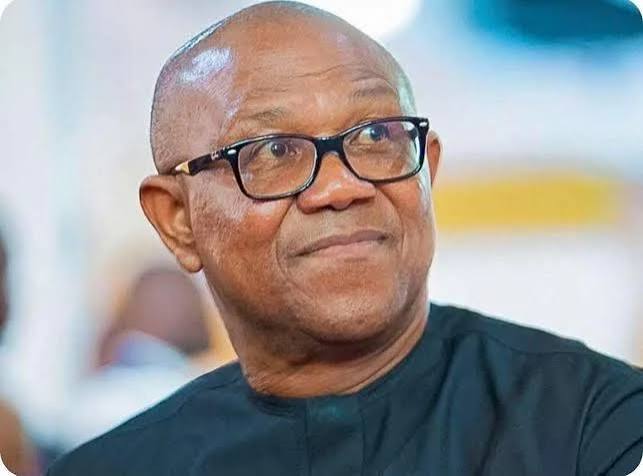
The presidential candidate of the Nigeria Democratic Congress (NDC), Peter Obi, has vowed to unite Nigeria, end insecurity and create massive employment if elected in 2027.
Obi, who made the vow on Wednesday during a town hall meeting with Benue citizens and NDC supporters in Makurdi, the State capital, further promised to lift Nigeria from a consumption to production nation.
The erstwhile Anambra State Governor who used the occasion to unveil his agenda for Nigeria, said his administration would maximally focus on national unity, security, economic productivity and accountable leadership.
He maintained that Nigeria had become increasingly divided along ethnic and religious lines, insisting that restoring national cohesion would be central to addressing the country’s political, economic and security challenges.
“Our number one commitment is to unite Nigeria because today we have no unity. We are divided along tribal and religious lines. That should not be. We are Nigerians.
“Insecurity is another major challenge demanding urgent intervention. Therefore, we ensure that Nigerians could live and conduct their businesses without fear of attacks, kidnapping and other violent crimes.
“I will secure Nigeria. It is our duty to ensure that Nigerians live in safety, in a country where people are no longer killed daily, where school children are no longer Kidnapped. We will ensure that all Nigerians go to bed to sleep with two eyes closed. We will care for everyone.
“I assure you that no mother will continue to cry over the loss of her children. No woman should experience the pain of losing her husband, and no father should suffer the agony of losing his wife.”
“We will create a society where everyone will go about with lawful businesses, where school children will no longer be kidnapped. We will secure Benue, build a better society for all Nigerians.
“We will show more commitment to the youths, reduce unemployment, invest in public health and education and prosecute Kidnappers and terrorists. Youths unemployment is unacceptable. We will create good jobs and create a better society for Nigerians.
“To secure Nigeria would not be difficult. We will fight corruption, revive primary health care and remove Nigeria from consumption to production”, Obi stated.
By Laide Akinboade, Abuja
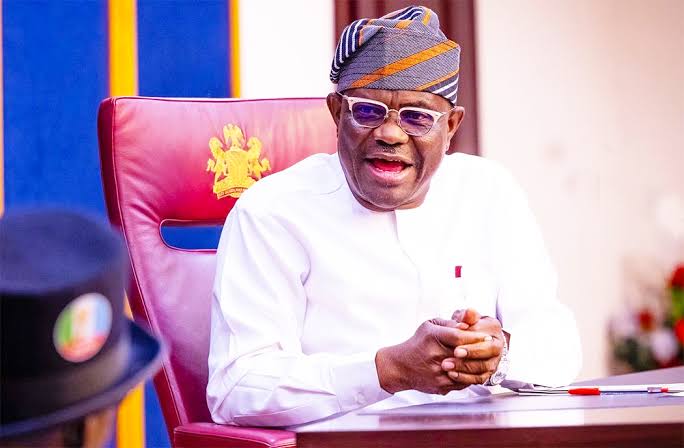
The Minister of the Federal Capital Territory (FCT), Nyesom Wike, has announced plans to transform the newly completed Apo-Karshi Road into a tourist attraction, 16 years after the project was initially awarded in 2010.
Wike made the disclosure on Wednesday during an inspection of the road in Abuja.
He said the FCT Administration was making arrangements to develop appropriate facilities that would enhance the road’s appeal as a tourist destination.The minister attributed the successful completion of the long-abandoned project to the intervention of President Bola Tinubu, who ordered the termination of the initial contract after the indigenous contractor failed to deliver despite receiving full payment.
According to Wike, the President subsequently directed that the contract be re-awarded to a more competent company, given the strategic importance of the road to residents and the development of the FCT.
“This road was awarded in 2010 to an indigenous contractor. We did all we could to persuade the contractor to ensure that the job was fully implemented, even though we had fully paid. But the contractor was not forthcoming,” he said.
Wike explained that following the failure of the initial contractor, the matter was brought to Tinubu’s attention, prompting the President to direct the termination and re-award of the contract.
He said the administration remained focused on delivering the project despite criticisms that greeted the award of the new contract, insisting that the comfort and well-being of residents remained its priority.
“When this contract was awarded, some people were asking how we could award it at that amount. But we were not deterred. All we were concerned about was the happiness and comfort of the people,” he said.
Expressing satisfaction with the quality of work, Wike described the Apo-Karshi Road as one of the most publicised projects undertaken by the Federal Capital Development Authority (FCDA), noting that the difficult terrain made its completion a remarkable engineering achievement.
He observed that reactions on social media indicated that many Nigerians were impressed by the scale and technical complexity of the project, particularly its successful delivery despite the challenging conditions.
The minister described the road as evidence of the Tinubu administration’s commitment to infrastructure development and urged Nigerians to assess the government’s performance based on its overall achievements rather than isolated issues.
“Look at what is going on in Abuja today, the level of infrastructure and how it has turned out to be a tourist centre. I am happy that people are happy and that Nigerians have seen the infrastructure development being carried out by the Tinubu administration,” he said.
Wike also commended journalists for their role in bringing the project to public attention, noting that media reports had helped Nigerians appreciate the scale of work involved in its completion.
On the proposed commissioning, the minister said the FCT Administration was working around the President’s schedule, as several other completed projects were being prepared for inauguration.
He disclosed that the administration had inspected projects at the International Conference Centre, Southern Parkway and Karu District. He added that between 10 and 12 projects being executed by Arab Contractors were also being considered for commissioning.
Wike expressed optimism that President Tinubu would inaugurate the Apo-Karshi Road before the end of November, saying the administration would make efforts to ensure the project was included in the President’s schedule.
Addressing plans to provide public facilities along the road to support its proposed transformation into a tourist destination, the minister said the administration would work with relevant departments to develop the necessary amenities.
He, however, clarified that the FCDA’s primary responsibility was road construction, while the department responsible for tourism would determine the facilities required for the proposed tourist centre.
Wike said he had rejected a proposal submitted by the FCDA coordinator, stressing the need for the appropriate department to take responsibility for planning the tourism facilities.
“But be sure that I will make it happen as a tourist centre,” he assured.




Oborevwori Mobilises Support for Tinubu, APC 2027 Victory
ShareFrom Francis Sadhere, Delta Delta State Governor, Rt. Hon. Sheriff Oborevwori, has called for massive support for President Bola Ahmed...
Growing Threat to Opposition Politics and Democracy
ShareBy Pius Mordi Democracy thrives on competition, tolerance, freedom of expression and the willingness of those in power to accommodate...

NCDMB, NLNG Commit $9m to Endowment of Professorial Research Chairs in Six Varsities
ShareFrom Mike Tayese, Yenagoa The Nigerian Content Development and Monitoring Board (NCDMB) and the Nigeria LNG Limited (NLNG) have launched...

2027: Obi Visits Benue, Vow to Unite Nigeria if Elected
ShareFrom Attah Ede, Makurdi The presidential candidate of the Nigeria Democratic Congress (NDC), Peter Obi, has vowed to unite Nigeria,...

Wike Targets Tourist Destination Status for Apo-Karshi Road
ShareBy Laide Akinboade, Abuja The Minister of the Federal Capital Territory (FCT), Nyesom Wike, has announced plans to transform the...

Alt Bank Appoints Gul Khan as Managing Director
ShareThe Alternative Bank Ltd (Alt Bank) has appointed Gul Khan as its new Managing Director, following approval by the Central...


2027: APC Restricts Campaign Spokespersons to Yari, Alake, Idris
ShareBy David Torough, Abuja The All Progressives Congress (APC) Presidential Campaign Council has overhauled its Directorate of Media and Strategic...


Tinubu Rewards Flamingos with N100m Bonds after World Cup Triumph
ShareBy David Torough, Abuja President Bola Tinubu has rewarded Nigeria’s victorious U-17 women’s national football team, the Flamingos, with Federal...

FG Hosts World Public Relations Forum as Delegates from over 126 Countries Set to Attend
ShareBy David Torough, Abuja The Federal Government has declared its readiness to host the 2026 World Public Relations Forum (WPRF),...


CIPPON Urges FG to Protect Nigerian Printing Industry
ShareBy David Torough, Abuja The Chartered Institute of Professional Printers of Nigeria (CIPPON) has renewed its call on the Federal...