
POLITICS
Off-cycle Guber Polls: INEC’s New Dilemma in Election Management


By Jude Opara
The much talked about off-cycle governorship elections in Bayelsa, Imo and Kogi states have come and gone with the Independent National Electoral Commission (INEC) declaring the winners in the polls.
In Bayelsa state, it was a two horse race between the incumbent, Governor Douye Diri of the Peoples Democratic Party (PDP) who emerged winner over his closest rival, Chief Timipre Sylva of the All Progressives Congress (APC).
Diri polled 175,196 votes to defeat Timipre Sylva who scored 110,108 votes.In Imo state, before the election, it was expected to be a fierce battle among the three top contenders; the incumbent Governor Hope Uzodinma of the APC, Sen.
Athan Achonu of the Labour Party (LP) and Sen. Samuel Anyanwu of the PDP.However, the result in Imo was more of an anti-climax for the PDP and the LP as Governor Uzodinma emerged victorious with a whopping 540,308 votes ahead of his distant rivals, Sen. Samuel Anyanwu of the PDP who polled 71,503 and Sen. Athan Achonu of the LP with 61,081 votes respectively. In fact, the winning was so resounding that Uzodinma defeated his rivals in all the 27 Local Government Areas (LGAs) of the state.
Also in Kogi state, there were three leading candidates, Usman Ododo of the APC, Muritala Ajaka of the Social Democratic party (SDP) as well as Sen. Dino Melaye of the PDP. While Ododo enjoyed the support of the outgoing Governor Yahaya Bello, Dino and Ajaka relied on the strength and acceptability of their supporters. Ododo has been declared as the winner with 446, 237; Murtala Ajaka of the SDP placed second with 259, 052 while Dino Melaye of the PDP scored 26,362 to come third.
Typical of the average Nigerian politician, in all the three states, those who lost have all cried blue murder; alleging high levels of irregularities and that the elections were conducted without recourse to the Electoral Guidelines. Like in Imo, Ajaka and Melaye who lost have rejected the result and called for the outright cancellation of the exercise.
In Bayelsa, despite having only eight Local Government Areas (LGAs) it took two days before the final result could be collated and announced. The result had to be completed on Monday following some re-run which was carried out by INEC in some wards in the Southern Ijaw area. Getting results from the parts of Southern Ijaw and Brass LGAs were indeed very difficult due to the difficult terrain of the place as well as fear of insecurity. Indeed, an INEC staff member was abducted while waiting to board a boat to Sagbama before she was kidnapped with all the materials with her.
Also in Bayelsa where the PDP won, the APC has rejected the result claiming widespread irregularities as well as over 80,000 votes deducted from the party. Chief Denis Ochocho who also served as the agent of the party at the State Collation Centre said taking the results from Brass and Sagbama LGAs to Yanegoa was aimed at ensuring results were doctored in favour of the PDP.
Indeed, due to the desperation of politicians, there were reported cases of violence in some places across the three states. The unfortunate thing is that in most cases these acts of violence happened in the full gear of security operatives.
In Imo, there were several allegations of electoral manipulation. Many analysts, especially those who were on ground, had said they were surprised how Hope Uzodinma managed to poll such a high number of votes, including from places where hitherto the people had deserted their homes due to the prevalent insecurity in parts of the states.
For instance, the Director General of the PDP Governorship Campaign Council in a press briefing on Monday alleged that in places like Orsu LGA, where there was very low turnout of voters, the APC recorded high results. He said in Omuma, the home town of Uzodinma in the Orlu LGA, where there were less than five accredited voters in some wards, the APC recorded over 400 votes.
In Kogi, the SDP candidate, Dino Melaye of the PDP as well as the Action Alliance (AA) candidate, Olayinka Braimoh has threatened court action following what he described as a sham of an election in the state. Apart from being arrested and prevented from voting on Election Day, Braimoh said the result announced by INEC was largely written even before the commencement of voting.
The Situation Room of the various Civil Society Organizations (CSOs) has come out in the preliminary reports to carpet some INEC officials as well as the security operatives for their complicit in the massive electoral fraud witnessed on Saturday.
In fact, what we have seen in this election really negates what INEC promised after the controversial 2023 general elections where the commission could not upload the results of the presidential election due to what it described as ‘glitches’.
The INEC Chairman, Prof. Mahmood Yakubu did not mince words when before the election he vowed that his organization will ensure that election results were uploaded real time as they are released right from the wards. This actually ought to have taken some pressure off the electoral umpire and also restored some level of confidence that going forward, votes may begin to count in the country.
There is no gainsaying that INEC actually made adequate preparations to ensure that the off-cycle elections were conducted in a free, fair and credible atmosphere. To kick start the exercise, on October 14, INEC organized the mock accreditation exercise in the three affected states. That was part of the arrangements to fine-tune its equipment especially the Bimodal Voter Accreditation System (BVAS) and to ensure that the ad-hoc staff were adequately abreast with the functioning of the device.
Similarly, INEC also organized its quarterly stakeholders’ meetings with the Resident Electoral Commissioners (RECs), the Political Parties, the Inter-agency Consultative Committee on Election Security (ICCES), the Civil Society Organizations (CSOs) as well as the Media. At all these meetings, INEC reiterated its resolve to conduct an election that would be largely judged to be free, fair and credible.
Also, INEC and the National Peace Committee organized the ritual of signing the Peace Accords by the main political actors, but unfortunately, in most cases either some of the expected candidates will shun the exercise or only send their surrogates. In fact, there was the case in Bayelsa state where some politicians openly quarreled right at the venue of the Peace Accord.
It must be reiterated that the politicians are responsible for almost all the electoral heists we have witnessed in the country. The average Nigerian politician has become very desperate for power and it also means that power is not really sought for service but as a means of presiding over the economic and political affairs of the country.
There have been several instances where politicians have even gone to the extent of borrowing money from banks with huge interests just to contest an election. There is no way such a person who has now turned politics like a business will not want to play outside the rules because he wants to win in order to be able to repay his loans.
The use of thugs to win elections unfortunately seems to have come to stay in the country. For instance, on Election Day in Ikenegbu Ward 1 in Owerri, Imo state, it was reported that thugs numbering about 20 stormed the polling centre at about 8 am and warned any voter who was not going to vote for the APC to stay clear of the area.
Certainly, in a situation like that there is little or nothing INEC could do because the Commission does not have the power to enforce any law. It also calls to question the sincerity of the security operatives who will always read the riot acts before every election, yet the thugs will continue to have their way. The question is how do the thugs manage to pass the various security roadblocks to be able to go from one polling centre to another?
The truth remains that the day the security agencies decide to be neutral in the electoral affairs of politicians, some of these ugly stories will disappear. It does not make sense to come out before an election to threaten fire and brimstone but yet the real criminals usually find a way to manipulate them. It means that somebody somewhere gives them the instruction to turn a blind eye to the miscreants.
Unfortunately, before every election security operatives will be seen giving all manners of assurances and confidence to the fact that they want to be neutral, but the reverse has been the case as the issue of thuggery and open manipulation of the process in their presence abound.
However, there are some areas INEC must pay great attention to in order to continue to gain on the successes of the reformations so far introduced. We saw in Imo and Kogi states where some pre-filled result sheets were already in circulation even before the commencement of voting.
INEC must begin to wield the big stick; because if the Commission had cancelled the election in any state where even if it was only one result sheet was pre-filled, it would have sent the right signal to the politicians that it is no longer business as usual. While this may pass as a first occurrence, INEC must ensure that the culprits were apprehended to answer to their actions.
Unless INEC begins to bark and also bite, politicians will continue to mess them up and the people will continue to see them as willing accomplices in the embarrassing electoral fraud that has become the order of the day.
By Mike Odiakose Abuja
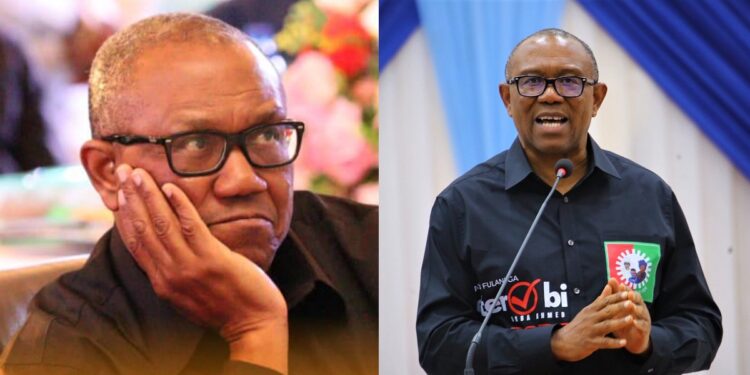
Presidential Candidate of the Labour Party, Peter Obi and a socio-political organisation, The Collective Movement (TCM), have strongly condemned the recent revelation that President Bola Tinubu has started distributing vehicles to state coordinators of a political structure otherwise known as Renewed Hope Ambassadors, apparently as part of an early push for the 2027 elections.
In a post on his verified X handle on Thursday, Obi said at a time when Nigerians are struggling with hunger, unemployment and insecurity, the decision of the government to allocate limited public resources for distribution of luxury vehicles like Hilux trucks and Hummer buses as part of the 2027 campaign mobilisation is not only insensitive but also represents a serious moral failure.
The former Anambra State governor said while ordinary Nigerians are grappling with poverty and hopelessness, those in leadership positions continue to flaunt their wealth by driving brand-new luxury vehicles, treating the suffering of the people as mere background for political theatrics.
According to him, leadership should focus on providing food for the hungry, ensuring access to healthcare for the sick, restoring hope for millions of unemployed youth, and securing the communities.
He stressed that it should not be about parading luxury vehicles or campaigning for votes.
“It is disheartening that, at a time when children are dropping out of school because their families cannot afford tuition fees, when mothers are dying during childbirth due to a lack of basic medical supplies, and when insecurity is tearing families apart, the response from those in power is to purchase and distribute luxury vehicles rather than urgently addressing the needs of the people.
“This is not governance. It reflects a profound insensitivity and an abuse of public trust disguised as a political strategy. It betrays the essence of public service, which should always be about serving the people rather than staging political publicity.
“At times like this, we must recognise that Nigeria cannot continue on a path of wastefulness, insensitivity, and misplaced priorities.
“Our citizens deserve leadership grounded in empathy, prudence, and accountability. Regardless of how bleak the situation may appear today, I firmly believe that a New Nigeria is not only necessary,” Obi wrote.
In his own reaction, TCM’s founder, High Chief Franklin Ekechukwu, in a press release on Thursday, described the move as nothing short of a scandalous betrayal of public trust.
The vehicles range from brand-new Toyota Hilux trucks, Hummer buses, and Land Cruiser jeeps.
Each of the 36 states and the Federal Capital Territory reportedly received these luxury vehicles; coordinators were simultaneously instructed to raise one billion naira each for campaign logistics. This raises urgent questions: From which coffers is this extravagance being funded? And at what cost to millions of suffering Nigerians?
He noted that the timing of this lavish distribution is not only tone-deaf but deeply disturbing. While terrorists roam freely, kidnappings escalate, communities are displaced, and Nigerians live in daily fear, the administration appears more focused on assembling campaign convoys than implementing urgent security reforms.
According to him, it is morally repugnant to prioritise political power over the lives and safety of citizens. The decision reeks of contempt for ordinary Nigerians, those whose children are abducted, whose homes are attacked, whose futures remain uncertain.
Ekechukwu added, “In 2025, what Nigeria desperately needs is a government that prioritises human lives. We need well-funded security architecture, community policing, strengthened intelligence systems, and reforms that protect lives and restore public confidence.
By David Torough, Abuja
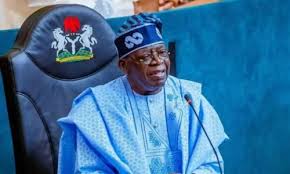
President Bola Tinubu yesterday swore in former Chief of Defense Staff, General Christopher Musa (rtd), as Nigeria’s new Minister of Defence, just as he transmitted an additional list of ambassadorial nominees to the Senate for screening.
Musa took the oath of office at the State House in Abuja.
His appointment follows the resignation of Mohammed Badaru Abubakar on health grounds, prompting the President to forward Musa’s nomination to the Senate earlier in the week.During his screening on Wednesday, the former CDS assured lawmakers that Nigeria has the capacity to defeat insurgency, banditry, and kidnapping—provided there is unified national cooperation and adequate deployment of troops and technology.
He stressed that state governors and high-level political leaders must work more closely with the Armed Forces to close operational gaps.“We can win this war, but we have to work together,” he told senators, adding that he would review all existing security strategies and investigate alleged lapses, including reports of troop withdrawal from a Kebbi school shortly before terrorists abducted 24 schoolgirls two weeks ago.
Meanwhile, Tinubu has submitted more names to the list of ambassadorial nominees, expanding the pool of non-career diplomats awaiting confirmation. Among the new nominees are former Naval Chief Ibok-Ete Ekwe Ibas; former Senator Ita Enang; former Imo First Lady Chioma Ohakim; and former Minister of Interior and ex–Army Chief Abdulrahman Dambazau.
Their names were read on the floor by Senate President Godswill Akpabio during Thursday’s plenary and subsequently referred to the Senate Committee on Foreign Affairs for screening within one week. This follows an earlier batch of nominees including Reno Omokri, Femi Fani-Kayode and immediate past INEC chairman, Mahmood Yakubu.
Tinubu urged the Senate to expedite the confirmation process to ensure that Nigeria’s diplomatic missions are promptly staffed and fully functional.
 | ReplyReply allForwardAdd reaction |
By Ubong Ukpong, Abuja
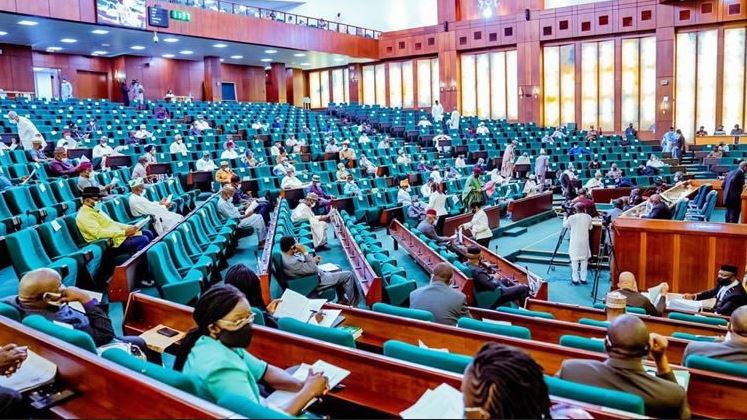
The House of Representatives on Wednesday, accused the electricity Distribution Companies (DisCos) in the country, of crippling the nation’s electricity supply system.
The House Ad hoc Committee investigating Nigeria’s power sector reforms and expenditure from 2007 to 2024, said that the DisCos wallowed in years of poor investment, inadequate expansion, and failure to meet obligations outlined in their original business plans.
Speaking during an investigative hearing, Chairman of the committee, Arch. Ibrahim Almustapha Aliyu, said most distribution companies had misled the government at the point of acquisition, presenting impressive business plans but failing to deploy the required resources to upgrade substations, transformers, and distribution networks more than a decade after privatization.
He expressed shock that despite claims by the Transmission Company of Nigeria (TCN) that it can wheel up to 8,000 megawatts, the DisCos continue to take only about 4,000 megawatts due to limited infrastructure, a problem he said is self-inflicted.
According to him, the power distribution firms have “refused to invest, refused to expand, and refused franchising options,” thereby creating the conditions for energy theft, meter bypassing, and consumer apathy across the country.
“You have caused this problem because you could not expand from what you inherited,” he said. “For 13 to 14 years now, if you had made the necessary investments, substations, up-to-date transformers, proper network expansion, there would be no issue. You would uptake more energy, the cost would be lower, and Nigerians would be happy.”
He noted that many consumers resort to illegal connections because they are billed monthly for electricity that is either not supplied or grossly inadequate.
“How do you expect someone whose monthly bill equals his salary to keep paying? People will look for alternatives. And your refusal to invest has contributed to this unholy attitude of bypassing and stealing energy,” he said.
The committee chairman reminded the DisCos that Nigerians enjoyed better supply under the defunct NEPA/NITEL-era systems in some areas, and expected significant improvements after private investors took over the assets.
He further challenged the DisCos to reconcile their earlier claims of competence and financial capacity with their current inability to meet tariff obligations, network expansion expectations, and service delivery benchmarks.
Chief Regulatory and Compliance Officer of Kaduna Electric, Dr. Mahmood Abubakar said about 60 percent of electricity supplied nationwide is subsidised, a situation the company said has continued to weaken investor confidence and limit the ability of distribution companies (DisCos) to make the necessary capital investments.
He said during the hearing that only about 40 percent of electricity, largely consumed by Band A customers, is cost-reflective, while the rest depends heavily on government subsidies that are often delayed or unpaid.
According to him, the current subsidy structure distorts billing, revenue collection, and the ability of DisCos to expand infrastructure more than a decade after privatisation.
“If we go strictly by the multi-year tariff order, about 60 percent of the energy consumed in Nigeria is subsidised by the government. Only Band A pays the reflective tariff. Even then, we have Band A feeders recording up to 80 percent energy losses due to theft and bypasses, making full recovery impossible,” he said.
Abubakar explained that because DisCos cannot recover their full revenue requirement, they cannot secure investments or loans needed to upgrade their networks.
He added that the delay in the payment of subsidies affects the entire value chain, particularly affecting generation companies’ ability to pay for gas, thereby affecting power production.
“The subsidy is not forthcoming as and when due. It comes whenever the government decides to pay. That is the reality, and it affects everyone. We cannot pay our market invoices fully, the Gencos cannot fulfil firm contracts with gas suppliers, and the whole chain is weakened,” he said.
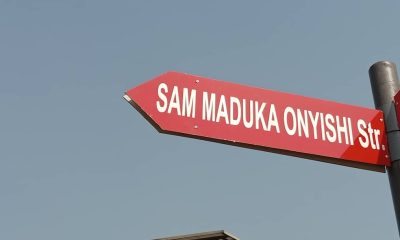

Street Named After Business Mogul, Sam Maduka Onyishi Unveiled in Asokoro
ShareBy David Torough, Abuja Authorities in the Federal Capital Territory on Saturday honoured renowned entrepreneur and philanthropist, Chief Dr. Sam...
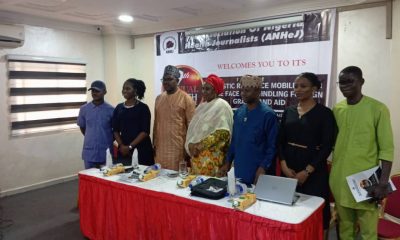

Experts Task Government on Increase in Domestic Funding
ShareBy Laide Akinboade, Abuja Experts in the health sector, at the weekend agreed that even though foreign grants and aid...
BBNaija’s Queen Mercy Confirms crash of Her One-year Marriage
ShareBig Brother Naija reality show star, Queen Mercy Atang, has finally confirmed the crash of her one-year marriage. The single...
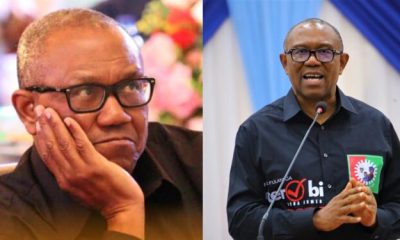

Obi, TCM Condemn Tinubu’s Distribution of Vehicles to Renewed Hope Ambassadors
ShareBy Mike Odiakose Abuja Presidential Candidate of the Labour Party, Peter Obi and a socio-political organisation, The Collective Movement (TCM),...

Bayelsa Urges NDDC to Complete Abandoned Akenfa Bridge Project
ShareFrom Mike Tayese, Yenagoa The Bayelsa State Government has called on the Niger Delta Development Commission (NDDC) to resume and...


Road Accident Claims Six Lives in Kogi
ShareFrom Joseph Amedu, Lokoja The Kogi State Government has expressed sadness over a tragic accident involving a bus conveying some...

Adebayo at 53 Young Enough to Lead Nigeria – Ighodalo
ShareBy Mike Odiakose, Abuja Pastor in charge of Trinity House, a non-denominational, Christian fellowship centre and founder, African Leadership Group...

Four Dies as Bandits Launches Attack in Kogi Community
ShareFrom Joseph Amedu, Lokoja Four persons were reportedly dead on Wednesday when suspected bandits launched an attack on Irunda Ile...

Musa Takes Oath, Vows United Front against Insecurity
ShareBy David Torough, Abuja President Bola Tinubu yesterday swore in former Chief of Defense Staff, General Christopher Musa (rtd), as...


OPay Secures Double Honors at Tech Innovation Awards
ShareIn a major recognition of its innovation and security leadership, OPay, Nigeria’s premier financial technology company, has been named Fintech...