
NEWS
Ogun Governor’s Wife Calls for Collaborative Efforts to Support Sickle Cell Patients

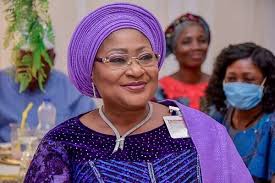
Mrs Bamidele Abiodun, wife of the governor of Ogun, on Wednesday said the collaborative efforts of healthcare providers, governments and international organisations remain essential in supporting sickle cell patients.
Mrs Abiodun, who stated this during the commemoration of 2024 World Sickle Cell Day in Abeokuta, said this also applied to the delivery of equitable healthcare to them.
The event had the theme “Hope Through Progress: Advancing Sickle Cell Care Globally”.
The governor’s wife noted that the theme of the event was apt, as it emphasised the importance and effectiveness of speaking with one voice to advance sickle cell care.
She added that it was a call to unite the sickle cell community, to raise awareness, reduce stigma and encourage those affected by the disorder.
“Sickle cell disease affects millions worldwide, transcending race and ethnicity, with a significant proportion of affected individuals in Africa.
“According to the World Health Organisation (WHO), Nigeria accounts for about 33 per cent of the 300,000 children diagnosed every year with the disease.
“We can expect that a good number of such children will be born in Ogun, as our own Ministry of Health has said that 25 per cent of the country’s total population are carriers of genes that give rise to the genetic disorder.
“The recent approval of gene therapies in America marks a significant milestone in sickle cell disease treatment, offering hope for a cure.
“However, for us in Africa, we must work even harder to improve accessibility and affordability of these treatments for all patients,” Mrs Abiodun said.
According to her, the disease does not only negatively impact the patient, but also the entire family.
The governor’s wife explained that parents often bore the emotional and financial toll of caring for a sick child and watching a loved one in severe pain and other complications.
She pointed out that the Day serves as a reminder of the daily challenges faced by sickle cell patients.
”I therefore call for urgent action in the area of education, sensitisation and enlightenment to checkmate the genetic disorder in the state and the world at large,” Mrs Abiodun said..
In her remarks, the Founder, Aglow Sickle Cell Club, Dr Funke Oyeneye, commended the Gov. Dapo Abiodun-led administration for improving access to quality healthcare in the state.
She disclosed that Ogun was the first state in the federation to have health insurance scheme for sickle cell patients and pregnant women.
“I urge individuals and corporate bodies to continue to amplify the voices of patients and families affected by the disease.
”I also appeal for support from patient advocacy groups in creating awareness and reducing stigma,” Oyeneye said.
The event was organised by Mrs Abiodun’s pet project, the Ajose Foundation, and the Aglow Sickle Cell Club to sensitise people to the menace of sickle cell.
It had in attendance children and adults living with the sickle cell anaemia across the state, with side attractions such as sickle cell diary, drama, poem, talent-hunt and quiz competition.(NAN)
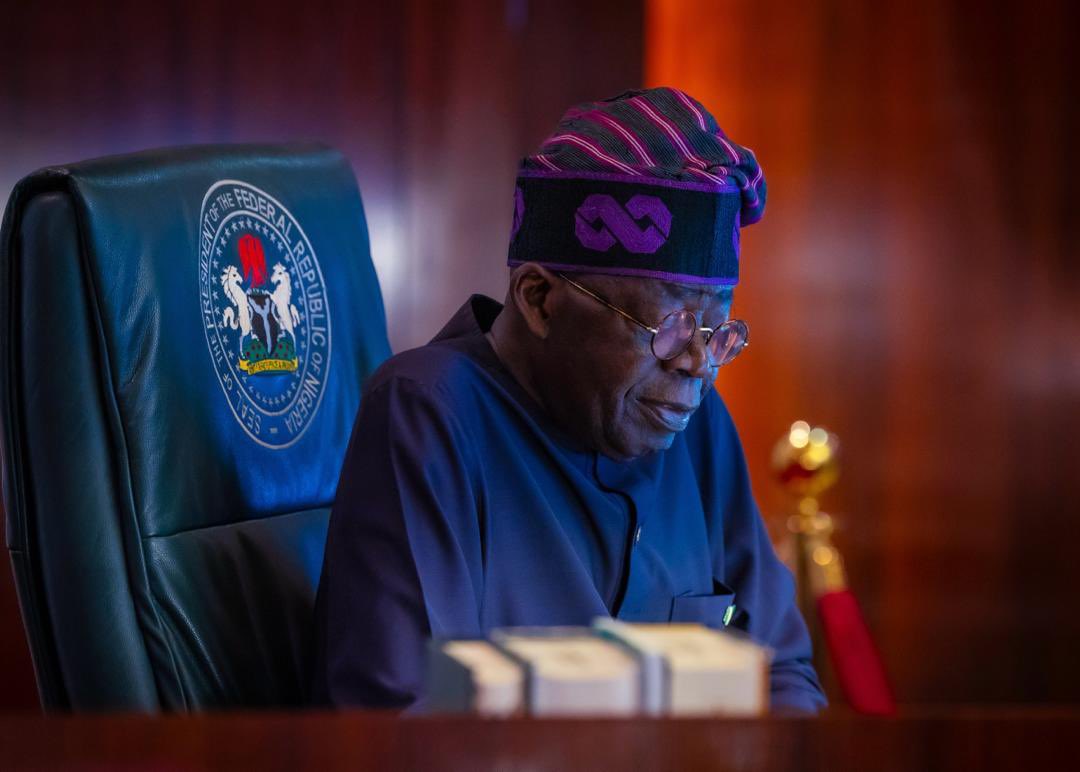
Chairman of the Northern Christian Association, NCA, Rev. Joseph Hayab, has said President Bola Tinubu and Vice President Kashim Shettima were not elected by Muslims alone in the 2023 general elections.
Hayab made the remark while reacting to comments by Islamic cleric, Sheikh Sani Yahaya Jingir, who had defended Tinubu’s Muslim-Muslim ticket ahead of the 2027 elections and argued that Muslims should not apologise for supporting candidates of their faith because of their population and popularity.
In a viral video, Jingir described Christians as “infidels” and urged Muslims to unite and use their numerical strength to pursue their political interests.
Hayab said the comments were unacceptable, arguing that the 2023 presidential election showed that the Tinubu-Shettima ticket received support from Christian-majority states and communities.
“Will you tell me that the current Muslim Muslim ticket that you claim to have put was only elected by Muslims? No, sir. I can count states that are mostly Christian. The man won in those states,” he said.
He said the Muslim-Muslim ticket had raised concerns among Christians, noting that they had advised that there should be a balance for fairness.
“We only wanted understanding and togetherness, as enshrined in our Constitution,” Hayab said.
Hayab also criticised Jingir’s description of Christians as “infidels”, saying such language was unacceptable when addressing fellow Nigerians because of their faith.
“If you respect me, you do not come out publicly and make such a derogatory statement against me, against my faith, just for politics. “It is no longer politics. It is the reality that has been going on on the ground,” he said.
The NCA chairman said Jingir’s comments had also brought into the open what Christians in the North had experienced for years but were often dismissed whenever concerns were raised about persecution, marginalisation and religious dominance.
He said it was worrisome that the Islamic cleric made the statement in the presence of political leaders who did not immediately reject or rebuke him but were instead seen cheering him.
‘Nigeria’s pretence over allegations of persecution and discrimination against Christians had finally come to an end.”
According to him, “There is always a day when you will no longer pretend. We have been living in pretence in Nigeria, lying to ourselves that we are together, lying to each other that there is unity and lying to each other that we are co-citizens.
“But for us as Christians in the North, we know these preachers have always been there for all these decades. So, I think Sheikh Jingir just found an opportunity to open up what has been happening in secret,” Hayab said.
“The man did not just say it in his room. The man said it in the presence of three governors, and they were all smiling.
“An action that would have been frowned upon, an action that would have been rebuked, an action that would have been rejected instantly,” he said.
“Some months ago, we had controversy in this Nigerian debate around whether Christian genocide is happening and whether Christians have been persecuted. Many people said, ‘No, that is not true.’
“Today, Nigerians do not need to ask another question unless you want to pretend. The pretence has ended. We can see it clearly. We can hear it clearly,” he said.
He challenged the governors at the gathering, the Federal Government and politicians being promoted by the cleric to publicly state their positions on the matter.
“We are waiting to see the reaction of those governors. Whatever stopped them from reacting that day is another different thing. We are going to see what they are going to say.
“Then, we will see the reaction of the Federal Government. We will see the reaction of those candidates whom the man is campaigning for, whether they like such,” he said.
Hayab maintained that the controversy was not simply about Muslims supporting Muslim candidates but about the language used to address fellow Nigerians because of their faith.
He argued that Nigeria had previously witnessed political tickets involving candidates of the same faith without generating the current level of tension, adding that the problem was not necessarily the religious identity of candidates but inflammatory rhetoric and attempts to demean other citizens.
Hayab, however, said Christians would not abandon dialogue and engagement with Muslims and other religious groups despite the controversy.
“We will not stop the dialogue. We will talk with honest people and clerics. We will talk with people who understand things rightly.
“But we should also call out people like Jingir and others. And when we call them out, government can now act responsibly and know that these people are creating bigger problems for us than uniting Nigeria.
“Nigeria needs unity. Nigeria needs togetherness,” he said.
The NCA chairman also renewed his call for religion to be included in Nigeria’s national census, saying accurate demographic data could help address competing claims of religious numerical strength and dominance.
Hayab also rejected suggestions that Christians had failed to engage government and other stakeholders on issues affecting their communities.
According to him, Christian leaders regularly meet political party leaders, government officials and security agencies to raise concerns, although they sometimes choose quiet engagement in the interest of peace.
The cleric also warned against a growing pattern of divisive statements, citing another video in which a speaker declared that Christians would be removed from government and other sectors if he became governor of Katsina State.
Hayab said the emergence of such comments within a short period should concern Nigerians and called on authorities to take decisive steps against rhetoric capable of worsening religious tensions.
He also faulted efforts to restrict religious preaching, arguing that the Constitution guarantees Nigerians the freedom to practise and propagate their faith.
“Nigerians are suffering from hunger. There is insecurity in Nigeria. Our people are not reminding themselves to do what is right to secure Nigeria and to contribute to nation building.
“Instead, they are busy coming up with divisive rhetoric, insulting fellow citizens and smiling while someone insults other citizens. “It is a shame,” Hayab concluded.
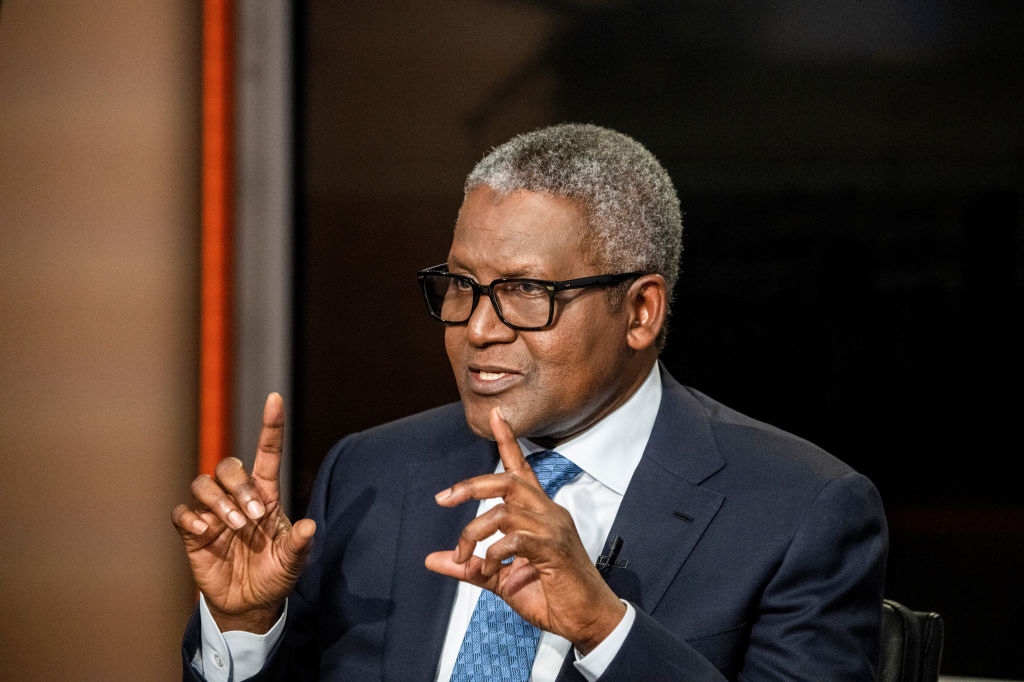
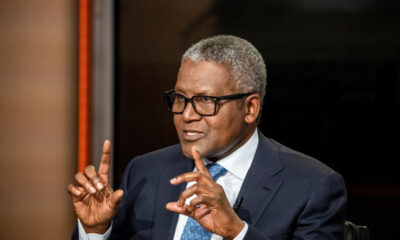
Aliko Dangote, has expressed confidence in his company meeting estimated revenue growth in the next four years.
He said detailed internal modelling had reinforced management’s confidence that the Group’s target of generating US$100 billion in annual revenue by 2030 was achievable.
Dangote said this when Senior executives from leading global investment banking and financial services firm Goldman Sachs toured the company’s integrated petroleum refinery, petrochemicals and fertiliser complex in Lagos.
The delegation, led by Co-Chief Executive Officer of Goldman Sachs International and Global Co-Head of Investment Banking, Anthony Gutman, visited the Dangote Petroleum Refinery & Petrochemicals, Dangote Fertiliser Limited and supporting infrastructure during a recent visit to Nigeria.
He noted that the projections were based on conservative assumptions and had strengthened the company’s conviction that it could pursue an even more ambitious long term growth strategy.
He added that the level of employee participation in the recent private placement of the Dangote Petroleum Refinery reflected strong internal belief in the company’s growth strategy and prospects.
Dangote said the refinery and associated industrial facilities demonstrate the transformative potential of long-term investment in Africa, adding that the Group’s growth ambitions extend well beyond its current strategic plan.
“No matter how we try to explain what we have built, you cannot fully appreciate it until you see it. But this is only the beginning. We need to look beyond 2030. The next phase of our journey will include new investments and acquisitions as we continue to scale the business,” he said.
Speaking after an extensive tour of the 700,000 barrels per day refinery, the Goldman Sachs executives remarked, “It is extraordinary what Dangote and the whole organisation have achieved. The ambition, the scale of the project, the quality of the project and the culture of the people is very impressive.”
The Goldman Sachs team included Adib N. Zouein, Co-Head of EMEA Emerging Markets Regional Sales and Head of the Middle East and North Africa region for Global Banking & Markets Public; Ryad Yousuf, Global Head of FICC Sales Strats and Structuring; and Jimi Adesanya, Head of Sub-Saharan Africa Sales (excluding South Africa). They were received by President and Chief Executive of Dangote Industries Limited, Aliko Dangote; Group Vice President, Oil & Gas, Devakumar Edwin; Managing Director and Chief Executive Officer of Dangote Petroleum Refinery & Petrochemicals, David Bird; Group Executive Director, Oil & Gas, Fatima Aliko Dangote; Chief of Staff to the President/CE, Ibrahim Dikko; Group Chief Branding and Communication Officer, Anthony Chiejina; Group Chief Economist, Dr. Hassan Mahmud; and Group Chief Strategy Officer, Aliyu Suleiman; Head of Administration, Dangote Petroleum Refinery & Petrochemicals, Musa Bala, among others.
By Tom Chiahemen
In Chinua Achebe’s Things Fall Apart, the wrestling arena was more than a place where strong men tested their physical prowess. It was a theatre of honour, discipline and communal values.
There were rules. There were spectators. There was a referee. Above all, there was an understanding that no wrestler, however formidable, was greater than the traditions that governed the contest.That timeless lesson suddenly came alive for me after reading two Facebook posts on Monday.
Written independently by respected journalist Udo Silas and former Minister of Youth and Sports Development, Comrade Solomon Dalung, the two interventions are stylistically different yet remarkably complementary.
One is steeped in literature and symbolism; the other rests on constitutional accountability and democratic transparency. Yet both illuminate the same emerging reality.The political contest for Nigeria’s 2027 presidency has begun.
Not in campaign grounds.
Not in party primaries.
But in the battle to define the narrative.
Udo Silas, in his beautifully crafted essay titled “As Life Presidency Arrives Our Shores (2): Okonkwo and Amalinze – Understanding Tinubu’s Imagery of the Wrestler,” draws inspiration from President Bola Ahmed Tinubu’s declaration that he would “wrestle” his political opponents to the finish.
To many, it may have sounded like ordinary political bravado.
To Udo, however, it was far more profound.
Borrowing richly from Achebe’s literary masterpiece, he recreates the famous wrestling duel between Okonkwo and Amalinze the Cat before reminding readers of the tragic turning point in Okonkwo’s life—the killing of Ikemefuna despite repeated warnings from the elders.
It is here that literature transcends fiction and becomes political philosophy.
The warning from Achebe’s Umuofia is timeless.
Strength is admirable.
Determination is commendable.
Victory is desirable.
But power that refuses restraint eventually consumes itself.
When leaders begin to believe that every contest must end only in their favour, democracy itself begins to suffocate.
Udo captures this anxiety with remarkable elegance.
“The drums are beating again,” he writes.
“Not the gentle drums of harvest, but the iron-throated drums of contest.”
It is difficult to read those words without sensing that they describe not merely political competition but an atmosphere already thick with apprehension.
Perhaps the most powerful line in his essay is the reminder that “wrestling is not war.”
That simple statement carries profound implications for democratic governance.
In every genuine democracy, elections are contests—not conquests.
Opponents are rivals—not enemies.
Institutions are expected to serve as impartial referees—not extensions of partisan interests.
The arena belongs to the people, not to any one contestant.
Almost seamlessly, Solomon Dalung’s intervention provides the constitutional counterpart to Udo’s literary allegory.
His concern is not wrestling metaphors or political imagery.
It is documentation.
Reacting to President Tinubu’s published particulars reportedly released by the Independent National Electoral Commission (INEC), Dalung observes that the sections relating to the President’s primary and secondary school qualifications were reportedly left blank while only the university qualification was listed.
Dalung is careful.
He makes no accusation.
He pronounces no verdict.
Instead, he asks what should ordinarily be regarded as a legitimate democratic question.
Why?
His argument is disarmingly simple.
If public records, affidavits and educational declarations have consistently been used to scrutinise political opponents, then fairness demands that the same standard be applied to the incumbent President.
No exceptions.
No sacred cows.
No selective accountability.
Whether one agrees with Dalung’s premise is almost secondary.
The larger issue he raises is one upon which every constitutional democracy depends: public office attracts public scrutiny.
Questions are not acts of rebellion.
They are instruments of accountability.
Transparency is not a favour bestowed upon citizens.
It is an obligation owed to them.
Silence, especially where clarity is possible, rarely settles public debate. More often, it deepens suspicion.
Read independently, Udo Silas and Solomon Dalung appear to be discussing different issues.
Read together, they become two chapters of the same political conversation.
One interrogates the psychology of power.
The other interrogates the responsibility that accompanies power.
One asks whether the contest itself will remain fair.
The other asks whether those seeking authority are willing to subject themselves to the same standards they demand of others.
Together, they point to what may become the defining question of the 2027 presidential election—not simply who wins, but how victory is achieved.
This is why the accompanying political cartoon beneath Udo’s post is particularly instructive.
Inside the wrestling ring stands President Tinubu, facing two leading opposition figures—Atiku Abubakar of the African Democratic Congress (ADC) and Peter Obi of the Nigerian Democratic Congress (NDC). Around them sit ordinary Nigerians, security personnel included, watching intently.
Yet the cartoon’s true subject is not the wrestlers.
It is the arena.
The spectators are not merely observing who throws the first punch.
They are watching whether the referee remains impartial.
Whether the rules are respected.
Whether the contest remains credible.
That, ultimately, is where democracies either flourish or fail.
History offers sobering lessons.
Nations rarely lose democracy in one dramatic moment.
More often, democratic erosion begins quietly—through weakened institutions, diminished transparency, selective application of rules and growing public distrust.
By the time the damage becomes obvious, rebuilding confidence has become infinitely more difficult.
This is why thoughtful interventions such as those of Udo Silas and Solomon Dalung deserve engagement rather than dismissal.
One speaks through the enduring wisdom of literature.
The other through the language of constitutional responsibility.
Neither should be reduced to partisan talking points.
Both are reminders that democracy survives not because leaders are strong, but because institutions are stronger.
The drums announcing Nigeria’s 2027 presidential contest have already begun to beat.
Whether they herald another credible democratic transition or a bruising struggle over the country’s political soul will depend on far more than campaign slogans, political alliances or electoral arithmetic.
It will depend on whether every actor—government, opposition, electoral umpire, security agencies, the judiciary, the media and the electorate—accepts one fundamental truth that Achebe understood so well.
No wrestler is greater than the arena.
And no democracy survives when the arena itself becomes the prize.



Tinubu, Shettima not Elected by Muslims Alone, Northern Christian Chair Slams Cleric
ShareChairman of the Northern Christian Association, NCA, Rev. Joseph Hayab, has said President Bola Tinubu and Vice President Kashim Shettima...

Dangote Confident on Group’s Projected $100bn Revenue Target By 2030
ShareAliko Dangote, has expressed confidence in his company meeting estimated revenue growth in the next four years. He said detailed...


Chevron Says Competitive Local Capacity Devt to Define Nigeria’s Energy Future
ShareThe Managing Director of Chevron Nigeria Limited, Jim Swartz, has highlighted key areas that would sustain Nigeria’s energy transition growth...
Reading the Early Signals of Nigeria’s 2027 Presidential Contest
ShareBy Tom Chiahemen In Chinua Achebe’s Things Fall Apart, the wrestling arena was more than a place where strong men...
Dressing, Addressing, and Redressing Nigeria’s Lawyers and Judges
ShareBy Chidi Anselm Odinkalu On 20 June 2011, Willy Mutunga assumed office as the first Chief Justice of Kenya under...

Kyari Charges BOA to Explore Blended Finance, Guarantees to Boost Agric Lending
ShareBy Raphael Atuu, Abuja The Minister of Agriculture and Food Security, Sen. Abubakar Kyari, said the Federal Government is repositioning...

Akume Hails Tinubu’s Infrastructure, Education, Security Achievements
ShareBy David Torough, Abuja The Secretary to the Government of the Federation (SGF), Senator George Akume, has commended President Bola...

Enugu Civil Service Commission Gets New Chairman
ShareFrom Sylvia Udegbunam, Enugu Enugu State Governor Peter Mbah has appointed the former Permanent Secretary, State Ministry of Information, Chris...
FACAN Petitions EFCC over Alleged N150m Fraud, Impersonation in Benue
ShareFrom Attah Ede, Makurdi The Federation of Agricultural Commodity Association (FACAN), Benue State chapter, has petitioned the Economic and Financial...

FG Inaugurates Advertising Offences Tribunal to Strengthen Industry Regulation
ShareBy David Torough, Abuja The Federal Government has inaugurated the newly constituted Advertising Offences Tribunal as part of efforts to...