
Business News
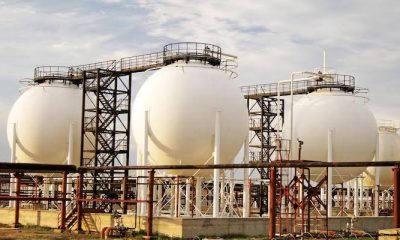
Oil, Gas Firms Owe Nigeria N2.659trn – NEITI


By Joseph Chibueze, Abuja
The Nigeria Extractive Industries Transparency Initiative (NEITI) has said that 77 oil and gas companies operating in Nigeria were currently owing the country $6.48 billion, an equivalent of N2.659 trillion.
Executive Secretary of NEITI, Dr Orji Ogbonnaya Orji, who disclosed this while briefing newsmen on the 2019 oil and gas industry audit report and Solid Mineral Industry audit report in Abuja, said the transparency agency will start reporting oil and gas companies that have defaulted in remittance of various profit taxes to the federation account to anti-corruption agencies.
He noted the debts, which were identified in the Report, arose from failure of the companies to remit petroleum profit tax, company income tax, education tax, value added tax, withholding tax, royalty and concession on rentals to the Federation Account.
He explained that a total of $143.99 million is owed as petroleum profit taxes; $1.089 billion as company income taxes and $201.69 million as education tax.
Others, he added included $18.46 million and 972,000 pounds as Value Added Tax; $23.91 million and 997,000 pounds as Withholding Tax; $4.357 billion as royalty oil and 292.44 million dollars as royalty gas.
Also, $270.187 million and $41.86 million were unremitted gas flare penalties and concession rentals respectively.
The Executive Secretary noted that the disclosure was important and timely in view of government’s current search for revenues to address citizens’ demand for steady power, access to good roads, quality education, fight insurgency and creation of job opportunities for the country’s teeming youths.
He added that NEITI was determined to help the federal government recover the money from the 77 companies, and advised the affected companies to ensure they remit the various outstanding sums against them before the conclusion of the 2020 NEITI audit cycle to the relevant government agencies responsible for collection and remittances of such revenue.
Orji also warned that NEITI would no longer watch while these debts continue to remain in its reports unaddressed, stating that it would provide all necessary information and data to sister agencies saddled with the responsibilities of recovering the debts into government coffers.
He said that the agency would also share the information and data with partner anti-corruption agencies with whom it had signed memoranda of understanding (MoU).
“A comparative analysis of what this huge sum of N2.65 trillion can contribute to economic development shows that it could have covered the entire capital budget of the federal government in 2020 or even used to service the federal government’s debt of $2.68 billion in 2020.
“In 2021, if the money is recovered the N2.659 trillion could fund about 46 per cent of Nigeria’s 2021 budget deficit of N5.6 trillion and is even higher than the entire projected oil revenue for 2021.
“This is why NEITI is set to work with the government to provide relevant information and data to support efforts at recovering this money.
“The disclosure of this information is in line with NEITI’s mandate to conduct audits, disseminate the findings to the public to enable the citizens, especially the media and civil society to use the information and data to hold government, companies and even society to account.
“It is important that the process of recovering this humongous sum be set on course to support government in this period of dwindling revenues,” he said.
On NEITI’s achievements, he said that within the short period of re-constitution and inauguration of the NEITI Board.
It achieved commencement of process of reviewing of NEITI Act to strengthen its powers and functions; timely publication and presentation of the reports.
Also, secured permanent office accommodation for the agency after 17 years of squatting on rent; sustained and diversified partnerships with key stakeholders and partners.






By Tony Obiechina, Abuja
The African Export-Import Bank (Afreximbank) has announced the successful completion of a first-of-its-kind India-focussed club deal for US$282.00 million.
Initiated for the exclusive participation of Indian lenders, and arranged by Bank of Africa UK PLC, the primary syndicated club deal saw participation from Indian lenders through their overseas branches and subsidiaries in the Dubai International Financial Centre in the United Arab Emirates, Singapore and Mauritius.
The facility, which was backed by six participating banks and financial institutions, including five that joined as first-time lenders to Afreximbank, helping the Bank achieve its objective of diversifying its funding sources, carries a three-year tenor.
At a commemorative event held in Dubai, U.A.E., to mark the conclusion of the deal, Haytham ElMaayergi, Executive Vice President at Afreximbank, said that the conclusion of the initiative represented a major milestone for the Bank as it sought to fulfil the key objectives of its funding programme.
Highlighting the importance of investing in, and for, Africa, Mr. ElMaayergi said: “this facility will help Afreximbank to continue to play a major role in the development of intra-African trade and trade between Africa and the rest of the world, particularly with India.
It is a testament to the rapid growth in Africa’s economic relationship with India and is evidence of Afreximbank’s growing ability to harness resources into Africa and to fund trade finance related investments that would have a positive impact on trade between Africa and India.”
Chandi Mwenebungu, Director and Group Treasurer of Afreximbank, reviewing the Bank’s vision for Africa, said that its funding objectives included achieving the diversification of its liability book by geography, investor type and tenor.
Also addressing guests at the event were Said Adren, CEO of Bank of Africa UK PLC, who thanked the lenders for their participation, and Zineb Tamtaoui, General Manager of Bank of Africa, Dubai Branch, who expressed appreciation for the opportunity to put together “a landmark deal that would be a stepping stone to many India-focused club deals going forward.”
By Tony Obiechina, Abuja
Geregu Power Plc has generated N50.4bn on electricity sales and capacity charges to Nigerians in the first quarter of 2024.
The power company which is the first listed power company of the Nigerian Exchange Ltd disclosed the performance in its Q1, 2024 financial statement.
The company grew its Q1 revenue by 225 per cent from N14.
2bn in 2023 to N50. 4bn in 2023.A breakdown reveals that Geregu Power sold energy worth N31bn and received N19bn as revenue from capacity charge.
Recall that the power company posted an annual revenue of N82.9bn in the full year of 2023 but it has covered half of the amount in Q1.
The revenue was above the company’s forecast for Q1 2024 when it projected its revenue to rise to N31.24bn.
Geregu Power recorded a profit before tax of N21.9bn up from the N5.3bn recorded in Q1 of last year, reflecting 307.8 per cent growth.
During the period underreview, the company saw its profit after tax rose by 307.3 per cent to N14.46bn from N3.54bn recorded in Q1 of last year. In the full year 2023, the company made N16.1bn net profit.
The net profit was above the company projection of N5.5bn.
Geregu Power took an income tax charge of N7.43bn, up from the N1.8bn in Q1 2023. The tax charges were higher than the N2.7bn projected for Q1 2024.
The company also spent N21.5bn on the cost of sales involving gas supply and transportation, up from the N6.6bn spent on gas supply and transportation in Q1 2023.
By Ademola Oyetunji
In a surprising turn of events on Wednesday, the Central Bank of Nigeria (CBN) dissolved the boards of three prominent commercial banks – Keystone, Polaris, and Union Bank. This move, although unanticipated, transpired despite the Central Bank’s recent endorsement of these banks’ financial soundness.
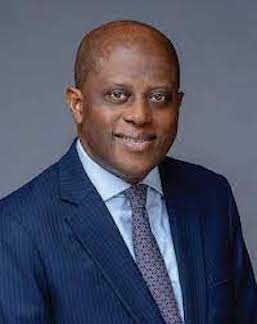
Governor Olayemi Cardoso, at his inaugural address during the Chartered Institute of Bankers of Nigeria (CIBN) annual dinner last year, had lauded Nigeria’s financial sector’s resilience in 2023.
Stress tests conducted on the banking industry indicated its strength under various economic scenarios. However, Cardoso highlighted the need for banks to reassess their responsible banking framework, a sentiment echoed by President Tinubu.President Tinubu’s evident discontent with the Godwin Emefiele-led CBN triggered a comprehensive review of the financial system. A special investigator, Jim Obazee, was appointed to conduct a forensic investigation into Emefiele’s tenure, with damning revelations emerging. Recent developments suggest the initiation of a full-blown financial system reform.
The CBN’s dissolution announcement and the subsequent appointment of new executives for the affected banks, including Yetunde Oni, Mannir U. Ringim, Hassan Imam, Chioma A. Mang, Lawal M. Omokayode, and Chris Onyeka Ofikulu, might mark the beginning of implementing the investigation’s recommendations – a significant cleanup of the financial sector.
Allegations surfaced during the investigation, suggesting non-cooperation from some bank executives and Emefiele’s questionable acquisitions through proxies and cronies. Cardoso may have secured presidential approval for the CBN’s decisive action.
The CBN cited various infractions by the banks, including regulatory non-compliance, corporate governance failures, and activities threatening financial stability. Despite the challenges, the CBN assured the public of depositors’ fund safety and its commitment to upholding a safe, sound, and robust financial system.
The Special Investigator’s report revealed documents pointing to Emefiele’s involvement in Titan Trust Bank and Union Banks’ acquisitions with ill-gotten wealth. The CBN’s swift replacement of the ousted chief executives received widespread commendation, especially from high-net-worth stakeholders aiming to avert a crisis of confidence within the affected banks.
Adewale Aderounmu, an industrialist, applauded the CBN for implementing effective policies under Olayemi Cardoso’s leadership, despite detractors’ actions against the Naira. Ayomide Deepak, an Abuja-based stockbroker, welcomed the action but emphasized the need for caution in handling revelations from the investigation to prevent further economic challenges.
As the CBN wields its regulatory hammer on these banks, the hope is that other bank executives and investors will learn valuable lessons for the sake of the economy. The CBN’s action is perceived as a strategic move aimed at revitalizing the economy and financial system, not a mere vendetta.
*Ademola Oyetunji writes from Ibadan.
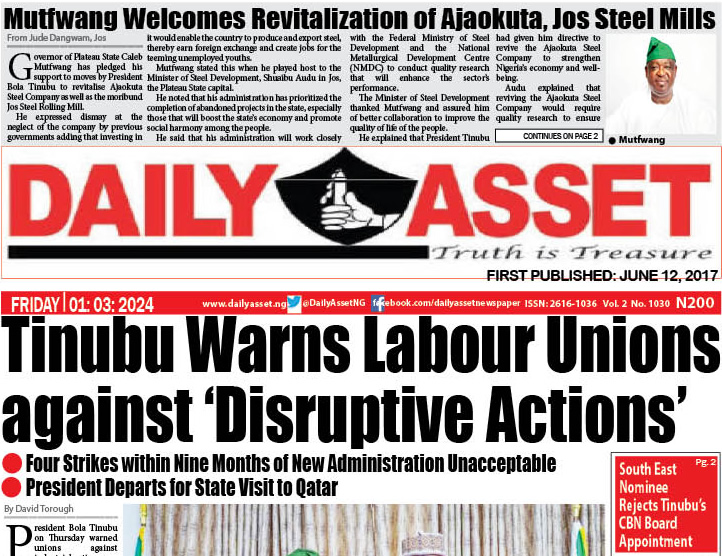


Niger Vows to Ensure Food Security, Partners YTO on Agricultural Machinery Manufacturer
ShareFrom Dan Amasingha, MinnaWorried by the recent high cost of Agricultural produce and its attendant effect on cost of Living,...
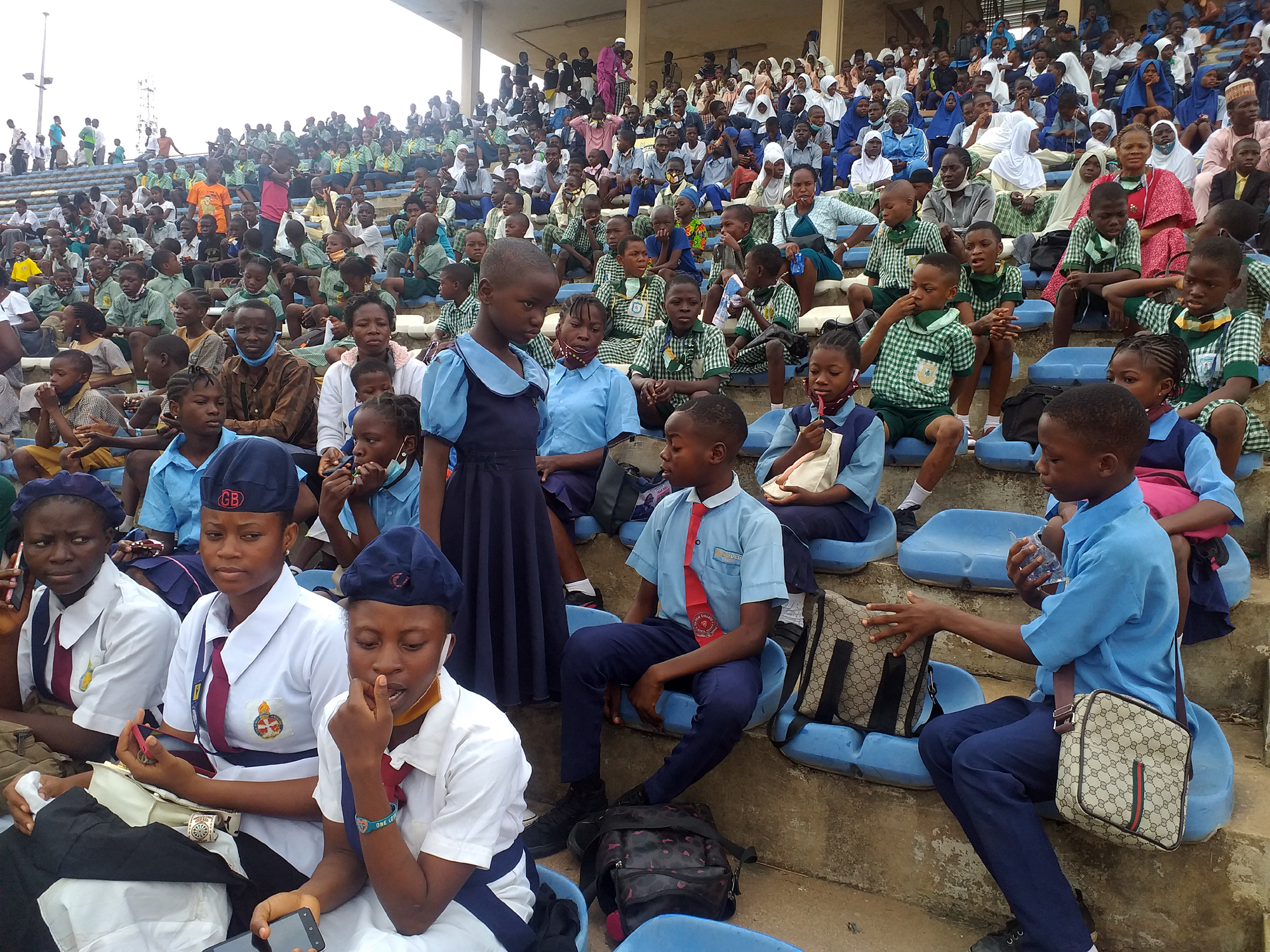
Afolabi Foundation Plans 2000 Scholarships, Donates Furniture to Abia School
ShareBy Anthony NwachukwuNo fewer than 2,000 indigent students across the country will benefit from the 2024 scholarship of the Ajoke...
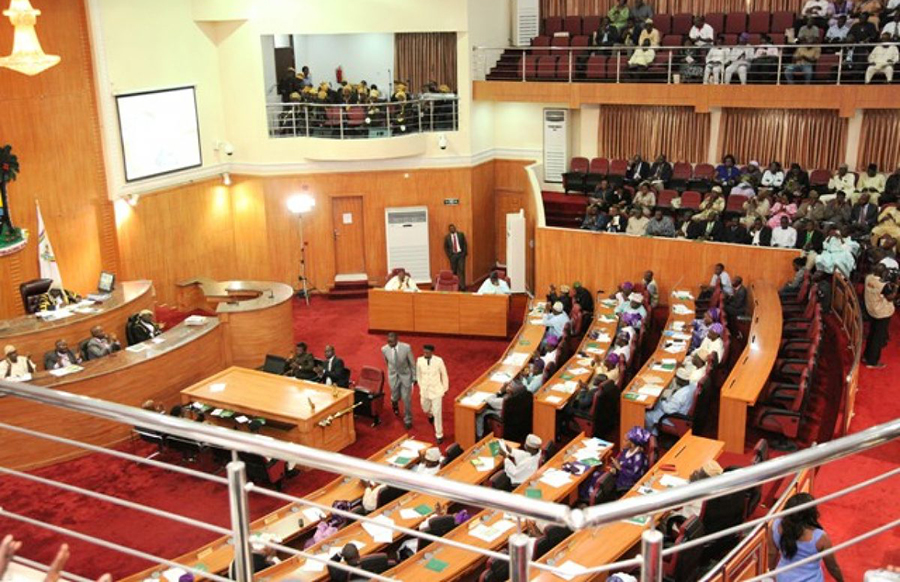
Kogi Assembly Confirms New Commissioner Nominee
ShareFrom Joseph Amedu, LokojaKogi State House of Assembly has screened and confirmed a new Commissioner Nominee, Hon. Acharu Okpanachi whose...

Sununu Champions IT Integration for National Development
ShareBy Tony Obiechina, AbujaMinister of State for Education, Dr Yusuf Tanko Sununu has stressed the importance of information technology in...

Miyetti Allah Alleges Killing Herders, Farmers By Unknown Gunmen In Benue
ShareFrom Attah Ede, MakurdiThe Leadership of the Miyetti Allah Cattle Breeders Association of Nigeria ( MACBAN), Benue State chapter, on...
Bayelsa NUJ, DG New Media Harp on Peace, Unity to SWAN Members
ShareFrom Mike Tayese, YenagoaThe Bayelsa State Council of the Nigeria Union of Journalists (NUJ) has called on members of Sports...


Plateau Tertiary Institution to Embark on Indefinite Strike Action, Gives 7-Days Ultimatum
ShareFrom Jude Dangwam, JosThe Joint Union of Plateau State Owned Tertiary Institutions has issued a seven (7) days ultimatum for...


Benue Govt to Reactivate Abandoned Designated Bus-Stops in Makurdi
ShareFrom Attah Ede, MakurdiThe Benue State Commissioner for Transport and Energy, Barrister Omale Omale , said the State government will...


FG Urges Planting of Trees to Mitigate Climate Change
ShareBy David Torough, Abuja The federal government has urged Nigerians to take planting of trees seriously so as to help...


2024 HAJJ: FCT MPWB Begins Orientation for Intending Pilgrims
Share By Laide Akinboade, AbujaThe Federal Capital Territory (FCT) Muslim Pilgrims Welfare Board, Abuja FCT MPW, said it has concluded arrangements...