
NEWS
Oluyede Officially Assumes Command as 24th COAS


The Nigerian Army on Monday, performed a symbolic lowering and hoisting of command flag at Army Headquarters as Lt.-Gen. Olufemi Oluyede, assumed command as the 24th Chief of Army Staff .Oluyede was appointed by President Bola Tinubu on Oct. 30 in acting capacity following the death of his predecessor, Lt.
-Gen. Taoreed Lagbaja.The Chief of Defence Staff (CDS), Gen. Christopher Musa, had on Nov. 1, handed him the insignia of office in an unusual fashion in line with the Armed Forces Act.The symbolic lowering and hoisting of the command flag which signifies the beginning of his tenure, came after the Senate and House of Representatives confirmed his appointment.Until his appointment, Oluyede served as the 56th Commander of the elite Infantry Corps of the Nigerian Army, based in Jaji, Kaduna.The 56-year-old Oluyede and Lagbaja were course mates and members of the 39th Regular Course of the Nigeria Defence Academy (NDA).He was commissioned a second lieutenant in 1992, effective from 1987 and rose to the rank of Major General in September 2020. (NAN)
The Nigerian Meteorological Agency (NiMet) has predicted dust haze and thunderstorms across the country from Monday to Wednesday.
NiMet’s weather outlook, released on Sunday in Abuja, forecast slight dust haze over most northern areas, with moderate haze over parts of Kano, Jigawa, Bauchi and Kaduna states.
The agency also predicted isolated thunderstorms accompanied by light rains over parts of Taraba on Monday afternoon or evening.
For the North-Central region, NiMet forecast sunny skies with patches of clouds on Monday morning.
It anticipated isolated thunderstorms accompanied by light rains over parts of Kogi, Kwara, the Federal Capital Territory and Benue later in the afternoon or evening.
In the southern region, the agency predicted cloudy skies, with possible light rains over parts of Delta and Bayelsa states on Monday morning.
It also forecast thunderstorms accompanied by moderate rains over parts of Ondo, Ogun, Osun and Ekiti states, as well as the South-East and South-South, later in the day.
For Tuesday, NiMet predicted sunny and hazy conditions across the northern region throughout the day.
The agency forecast sunny skies with patches of clouds over the North-Central region in the morning.
It, however, anticipated isolated thunderstorms accompanied by light rains over parts of Kogi, Kwara and Benue states later in the afternoon or evening.
Across the southern region, NiMet predicted cloudy skies in the morning, followed by thunderstorms accompanied by moderate rains over most areas later in the day.
For Wednesday, the agency forecast slight dust haze over most northern areas throughout the day.
It also predicted sunny skies with patches of clouds across the North-Central region.
In the southern region, NiMet envisaged cloudy skies in the morning, followed by thunderstorms accompanied by light rains over parts of Imo, Abia and Anambra states.
It further forecast light rains over parts of the South-West and South-South later in the day.
The agency urged the public to take precautions against suspended dust particles, particularly people with asthma and other respiratory conditions.
It cautioned that strong winds could precede thunderstorms and advised residents to secure loose objects to prevent them from being blown away.
NiMet also advised residents to avoid tall trees to minimise the risk of injuries from falling branches and broken trees.
It urged the public to disconnect electrical appliances from power sockets during thunderstorms.
“Airline operators are advised to obtain airport-specific weather reports (flight documentation) from NiMet for effective planning of their operations,” it said.
The agency advised residents to stay informed through regular weather updates on its website. (NAN)
By Orjime Moses, Abuja
The Independent National Electoral Commission (INEC) has dismissed claims that presiding officers can be remotely logged out of the Bimodal Voter Accreditation System (BVAS) before the conclusion of voting, describing the allegation as false and misleading.
The commission also faulted claims that election results uploaded offline could be lost, explaining that such results remain securely stored on the devices pending successful transmission to its Result Viewing Portal (IReV).
INEC gave the clarification in a statement posted on its official Facebook page on Monday, following the circulation of a video on social media alleging that election officials could be logged out of BVAS before the end of voting.
The video, which circulated online last week, also warned presiding officers against uploading polling unit results offline, claiming that such results could be lost.
However, INEC explained that each polling unit is assigned unique login credentials, which are issued to the presiding officer on the eve of an election to access BVAS for voter accreditation and subsequent uploading of polling unit results.
It said only the poll official operating the device has the authority to log in or log out of the system, adding that there is no provision for any external individual or authority to remotely log out the device.
On the offline upload process, the commission said it upgraded the IReV application following experiences during the 2023 general election, when some poll officials were held hostage at their polling units because of poor or non-existent network connectivity.
According to INEC, the upgrade introduced an offline upload capability that allows presiding officers in areas with poor or no network coverage to upload polling unit result sheets in the presence of stakeholders.
It explained that the uploaded result sheets remain securely stored on the BVAS devices until they reconnect to the internet.
The commission added that as presiding officers proceed from their polling units to ward collation centres, the result sheets are automatically transmitted to the IReV portal once the devices regain internet connectivity, without requiring further manual intervention.
INEC assured Nigerians that its BVAS and IReV systems operate in accordance with established procedures designed to safeguard the integrity, transparency and credibility of the electoral process.
It urged members of the public to disregard the video, avoid creating or sharing unverified information and rely on its official communication channels for accurate information.
The commission reiterated its commitment to transparency, accountability and the conduct of free, fair and credible elections.
Nigeria and South Africa do not need another quarrel. They have had too many already — xenophobic attacks, trade disputes, football rivalries turned into diplomatic spats, and social media wars that achieve nothing but bad blood. That is why the latest row over the presentation of letters of credence by Nigeria’s new High Commissioner to South Africa, Mr.
Femi Fani-Kayode is both needless and avoidable.By all accounts, Ambassador Fani-Kayode’s presentation speech to President Cyril Ramaphosa at the Presidential Guest House in Pretoria was exemplary. He spoke of history, friendship, and shared destiny. He reminded his hosts that Nigeria stood by South Africa in its darkest days of apartheid, giving blood and treasure.
He spoke of resetting the relationship, building bridges, and ensuring that Africa’s two biggest economies work together for the continent.“Without South Africa and Nigeria working together, closely together, the destiny of our great continent may well be affected,” he said.
That was statesmanship. That was the tone Nigeria wanted. It was the right message at the right time.
The controversy began when the South African Presidency’s livestream of the ceremony appeared to skip the Nigerian delegation. Fourteen other ambassadors were introduced and heard. Nigeria’s turn was not aired. The livestream only returned after Fani-Kayode had finished speaking.
On its surface, that was embarrassing. For a country as proud as Nigeria, to be the only one left out looked like a deliberate slight. In diplomacy, perception often matters as much as intention.
But the Ambassador’s response made the optics worse. Instead of lodging a formal protest through the established diplomatic channels, a Note Verbale to the Department of International Relations and Cooperation (DIRCO), a quiet word with the Chief of Protocol, or a direct call to the Presidency, Fani-Kayode went straight to social media.
He accused the South Africa presidency of a deliberate conspiracy. He accused unnamed elements of not wanting to hear Nigeria’s voice or see Nigeria’s face. He claimed President Ramaphosa had personally intervened on his behalf. He promised he would not tolerate disrespect to Nigeria.
The South African Presidency fired back publicly on X, through its spokesman Vincent Magwenya, accusing the Ambassador of misrepresenting the facts, of refusing to speak to the South African Broadcasting Corporation (SABC) official who could have cleared the matter, and of behaving in a manner “grossly inappropriate” for a diplomat.
The Nigerian High Commission also responded, calling Mr. Magwenya a “liar” and a “disgrace.”
In one afternoon, what should have been a technical broadcast glitch — or at worst, a protocol lapse to be quietly resolved degenerated into a public shouting match between two governments.
That is the real damage. The world was no longer talking about Fani-Kayode’s excellent speech on bridge-building. It was talking about a diplomatic brawl on social media because of the wrong methodology to express his misgivings.
Fani-Kayode is not a career diplomat. He is a politician, a former minister, and one of Nigeria’s most prolific social media commentators. For years, his political weapon has been the public post — blunt, combative, and instant. That style wins followers on Facebook. It does not win friends in diplomacy.
Diplomacy thrives on discretion. A good ambassador complains in private and praises in public. He allows his host country a face-saving way to correct a mistake. He does not embarrass his host on his first day in office.
By taking to social media, Fani-Kayode denied South Africa that opportunity. He forced the presidency to defend itself publicly. He put President Ramaphosa, who had just received him warmly, in an impossible position. And he has put his own government in Abuja in a difficult spot — forced to either back a public accusation against a friendly government or quietly disown its own envoy.
The fact that South Africa later released the full video of his speech proves the point. A quiet protest would have achieved the same result without the noise. A public protest achieved the video, but at the cost of trust.
Therefore, it is imperative for both sides to learn from this avoidable embarrassment to check a reoccurrence.
Fani-Kayode must now make a clear transition from politician to diplomat. The Foreign Ministry in Abuja should thoroughly school him. He must know that all grievances, however justified, must go through DIRCO and the Protocol Office first. Social media is not a diplomatic channel. His considerable communication skills should be used to promote Nigeria-South Africa trade, culture, and investment, not to fight public battles.
For South Africa, Pretoria must also be more sensitive. Nigeria is not just any country. When a technical fault affects only the Nigerian delegation at an event involving 15 ambassadors, South Africa should anticipate how it will be perceived. A prompt apology and immediate release of the full footage would have killed the story before it grew. The Presidency’s spokesman should also have avoided trading insults with a newly accredited ambassador on X.
For Both Foreign Ministries, Abuja and Pretoria need a standing protocol for such incidents — a hotline between the High Commission and DIRCO, and an agreement that neither side will litigate protocol issues on social media. The Bi-National Commission between the two countries, which President Tinubu and President Ramaphosa have worked hard to revive, should not be undermined by a livestream dispute.
Nigeria and South Africa are too important to Africa to be distracted by needless rows. They are the continent’s two largest economies. Their cooperation is essential for the African Continental Free Trade Area (ACFTA), for peace in Sudan and the DRC, and for Africa’s voice in the G20 and BRICS.
Fani-Kayode began his tour with a speech about building bridges. He should not burn the first bridge he was set to build.
Let this be the last time a diplomatic issue between Abuja and Pretoria and, indeed, any other country is settled on Facebook and X.




NiMet Predicts Dust Haze, Thunderstorms Nationwide
ShareThe Nigerian Meteorological Agency (NiMet) has predicted dust haze and thunderstorms across the country from Monday to Wednesday. NiMet’s weather...

INEC Debunks Claims of Remote BVAS Log-Out, Lost Election Results
ShareBy Orjime Moses, Abuja The Independent National Electoral Commission (INEC) has dismissed claims that presiding officers can be remotely logged...
Needless Diplomatic Brawl
ShareNigeria and South Africa do not need another quarrel. They have had too many already — xenophobic attacks, trade disputes,...

Governor Hyacinth Alia and the Case for Continuity: Consolidating the Gains of Development, Institutional Renewal and Workers’ Welfare in Benue State
ShareBy Elijah Terdoo Ikpanor The question of continuity in governance is ultimately a question of performance, direction, accountability and the...

Tinubu Orders Release of 78 Suspects over Abuja Convoy Attack
ShareBy Laide Akinboade, Abuja The Federal Capital Territory (FCT) Police Command has commenced the release of 78 suspects arrested in...
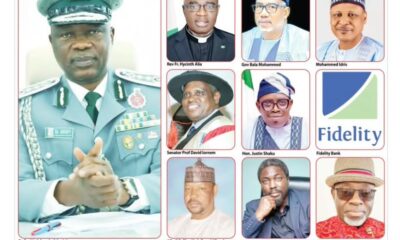

Daily Asset at 10: Adeniyi, Alia, Bala Mohammed Top Awards List
ShareBy David Torough, Abuja DAILY ASSET Newspaper has unveiled an impressive list of distinguished Nigerians and institutions selected for its...


Kohol tasks NUBESS Leaders on Service, Accountability, Legacy
ShareBy David Torough, Abuja The founder of Menroi Rural Priority Organisation, Professor Kohol Iornem has challenged leaders of the National...
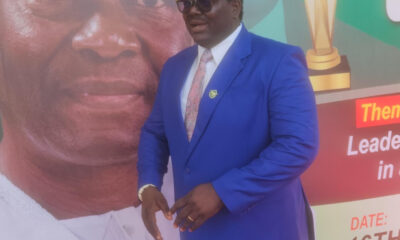

Stakeholders Celebrate Zikism at 7th Nnamdi Azikiwe Annual Award Lecture in Abuja.
ShareBy Raphael Atuu, Abuja As Barrister Henry Okeke Says The gathering provided another opportunity for Nigerians to reflect on the...
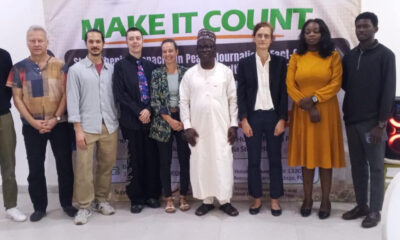

2027 Elections: CHRICED Trains 36 Journalists To Combat Fake News, Promote Peaceful Polls
ShareBy Orjime Moses Abuja As Nigeria prepares for the 2027 general elections, the Resource Centre for Human Rights and Civic...

Livestock Ministry Defends Abuja Headquarters Acquisition, Insists Due Process Was Followed
ShareBy Raphael Atuu, Abuja The Federal Ministry of Livestock Development has defended the acquisition of its headquarters building located along...