
NEWS
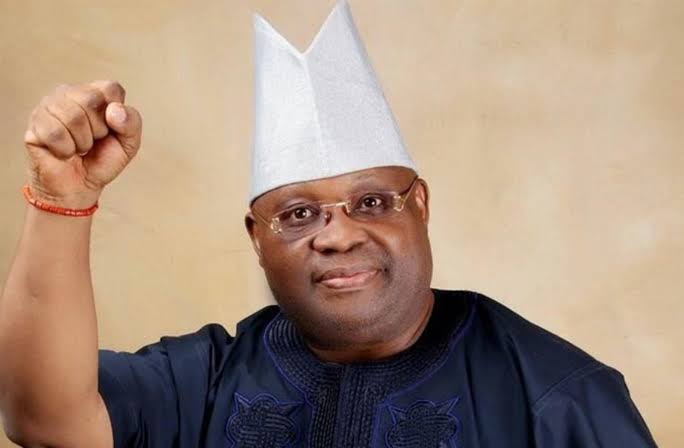
Osun Traditional Rulers Endorse Adeleke for Second Term

By Ubong Ukpong, Abuja
Over one hundred traditional rulers from the four local government Councils of Ede North, Ede South, Egbedore and Ejigbo federal constituency of Osun State have endorsed the state Governor, Ademola Adeleke for a second term in office.
The endorsement was made at an end-of-year summit convened by Representative Bamidele Salam, member representing Ede north, Ede South, Egbedore and Ejigbo Federal constituency in the National Assembly.
The summit, which took place yesterday 2024, saw the Obas formally endorse Governor Adeleke and commend Rep.
Salam for his exemplary leadership and dedication to the development of the constituency.During the summit, Rep. Salam briefed the Obas on the numerous developmental programmes implemented by Governor Adeleke over the last two years.
He explained key achievements in areas such as road infrastructure, education, health, agriculture, and human development, all of which have positively impacted the lives of the people in the state.
According to Salam, these efforts reflect the Governor’s commitment to sustainable growth and his focus on uplifting the state.
Rep Salam said Governor Ademola Adeleke will embark on more landmark projects in the 2025 fiscal year which will enhance the socio-economic development of the four local governments in the constituency.
He promised that other special intervention projects in rural electrification, construction of school buildings, roads rehabilitation and various empowerment programmes will be facilitated through the 2025 Federal budget.
The lawmaker also asked for continuous prayers and counsel from the royal fathers in the years ahead.
At the conclusion of the summit, the communique was read by the Alawo of Awo, Oba Abdulrasak Taiwo Adegboye, who praised Governor Adeleke for his inclusive approach to governance.
He commended the Governor’s respect for traditional institutions and his efforts to involve traditional leaders in decision-making processes, thus strengthening the bond between the people and the government.
The Obas also extended their commendations to Rep. Salam, recognising his instrumental role in facilitating numerous developmental projects across towns and villages within the four local governments.
They lauded his open-door approach and his Godliness, qualities that have made him a reliable and accessible representative for the people.
Speakers at the summit included the Olukotun of Ikotun, Ologobi of Ogobi, Alara of Ara, Olowu of Owu Ile, and Olokinni of Okinni, who all voiced their strong support for Governor Adeleke’s second-term bid.
They noted that the Governor’s policies have had a positive impact on their communities and are essential for the continued growth of the state.
In addition, the State Deputy Chairman of the People’s Democratic Party (PDP), Alhaji YK Idowu, and the leader of the party in Ede Federal Constituency, Elder Sunday Atidade, also addressed the gathering.
Both leaders reiterated commitment to fulfilling the promises made by the party to the people, assuring the Obas and citizens that the PDP would continue to deliver on its developmental agenda.
The summit concluded with a renewed sense of optimism and solidarity, with all speakers voicing their unwavering support for Governor Adeleke’s re-election and Rep. Salam’s continued leadership.
The Traditional rulers describe the summit as unprecedented and unanimously proclaimed Rep. Salam as the best Representative so far since the return of democratic rule in 1999.
The summit was attended by members of the Osun State House of Assembly from Ejigbo, Hon Jimmy Asagade, Ede South Barrister Taofeeq Olayiwola and Egbedore, Hon Rotimi Ogunrinnade as well as other top public office holders from the Federal constituency.
By David Torough
After decades of frustration in accessing telephone services, Nigerians were relieved when in 2001, the then President Olusegun Obasanjo took a decision that would later transform the nation’s telephone landscape and connectivity ecosystem.
In January that year, the regulator, the Nigerian Communications Commission auctioned GSM licences.
It was a good business for Nigeria’s economy as the Federal Government racked in excess of $1.2 billon having sold the licences to MTN, Glo, Econet (Airtel) and Etisalat 9mobile) at $208 million each.
By May that year, Econet had made history as the company to make the first GSM call Nigeria with MTN following later in August before the indigenous Globacom (glo) and the rest joined.
At a public event in Lagos Obasanjo juxtaposes the pre-GSM torture Nigerians went through and what is obtainable today: “People had to queue at telephone kiosks to make calls. It was a far cry from the seamless communication we enjoy today but then came the mobile telephone revolution.
“Needless to say that mobile communication has become a powerful tool for liberating Nigerians from the shackles of the once powerful, but now extinct, national telecoms monopoly, popularly known as the Nigerian Telecommunication (NITEL); it has significantly contributed positively in boosting economic activities in all sectors in Nigeria,” said Prof. Abiodun Musa Aibinu, a mechatronic engineer at Federal University of Technology, Minna.
According to data released by Global System for Mobile Communications Association (GSMA) there are approximately 192.2 million active telephony subscriptions as of mid-2026, with national teledensity reaching around 86.6% of the population.
The GSMA intelligence further estimates total cellular mobile connections at about 183 million (roughly 74.9% of the population), with broadband subscriptions standing at at 123.1 million, translating to a broadband penetration rate of the population.
However, in spite of its success story, challenges remain as acknowledged by Aibinu.
“There is increasing poor quality of service experienced by subscribers which manifests in the forms of: call failure, call drops, and low received signal strength. These problems have continuously been raising a great deal of worries and uncertainty among the populace and the network providers,” said the scholar.
However, one silent but major challenge faced by telephone subscribers in Nigeria both in the past and now remains the high cost of international calls.
Available data shows that on a standard Pay as You Go (PAYG) tariff, the rates range for international calls from N30 to N1,500 per minute depending on the destination of the call.
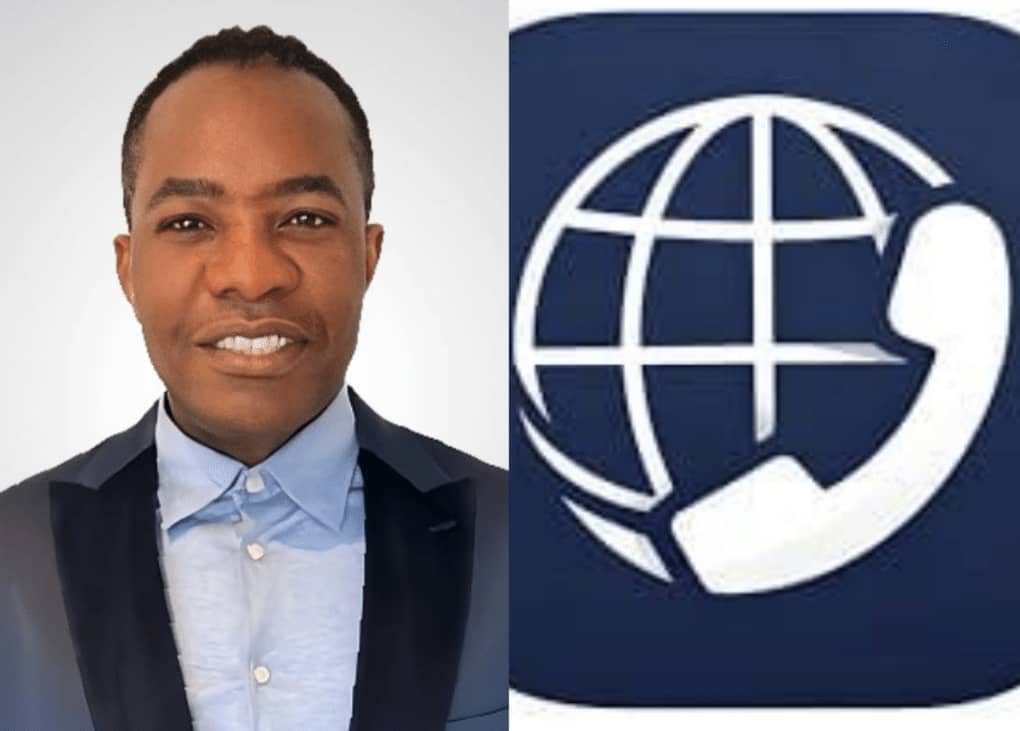
Mr Austine Ugbebor, Chief Executive Officer of ESDIAC, an indigenous new entrant into the Voice over Internet Protocol (VoIP) calls market says the platform was designed to address the challenges of expensive international calls and limited connectivity options, particularly for people travelling abroad, with promised international calls of as low as N13.000
He spoke at the unveiling and media engagement on Friday in Abuja, ESDIAC which, he said, integrates Voice over Internet Protocol (VoIP) calling, electronic SIM (eSIM), mobile airtime and data top-up services.
It is an all-in-one mobile platform designed to make international calls more affordable and improve connectivity for travellers, businesses and Nigerians both in the diaspora and at home.
ESDIAC was registered in 2011, with first product inaugurated in 2016, with the company spending the intervening years developing its operational structures and securing regulatory and compliance arrangements ahead of its market entry.
“ESDIAC is an all-in-one solution, offering international and local calls, eSIM services and data packages through a single platform.
“With our platform, subscribers can make calls to Canada, United Kingdom, US, Germany, Australia for as low as N13.
“ESDIAC’s VoIP technology enables subscribers to call people who do not have the ESDIAC application or an internet connection, and calls can be made directly to regular telephone numbers,” he said.
He said the service also allows users to retain their phone numbers when making calls, making it easier for recipients to identify callers.
The CEO added that the platform provided mobile airtime and data top-ups, while its eSIM service enabled travelers to access connectivity in supported destinations without necessarily purchasing a physical SIM card.
He further said that the company was committed to offering affordable services and improving the calling experience by addressing connectivity challenges associated with internet-based communication platforms.
On concerns about tariff stability and consumer protection, the CEO said the company had adopted a policy of respecting subscribers’ money by avoiding hidden connectivity charges.
“Subscribers will not be charged additional fees merely for initiating calls, and unused balances will remain available to customers.”
He said subscribers who believed they had been wrongly charged could contact the company’s customer service team for investigation.
“If you are right and there is an error, we promise to refund your money,” he said.
The CEO said ESDIAC operated under the regulatory requirements of the Nigerian Communications Commission (NCC) and the Federal Communications Commission (FCC) of the U.S.
He, however, noted that changes in telecommunications tariffs could sometimes result from regulatory directives, adding that operators were required to comply with applicable regulations.
As the highest policy level, addressing challenges faced by Nigerians on international calls is a priority and the Presidency has thrown its weight behind the ESDIAC project.
Mr Tope Fasua, Special Adviser to the President on Economic Matters, Office of the Vice-President, described the platform as a promising development for Nigeria’s telecommunications sector.
Fasua said his experience with an expensive eSIM purchased during an international trip, which failed to provide connectivity across all his destinations, underscored the need for more reliable and affordable services.
He expressed hope that ESDIAC would provide better value to travellers through its services.
One major area of concern for Nigerians is data protection. There is no area this is concern is more pronounced than in the telecom sector where Nigerians share their data with either deliberately or otherwise.
The company’s Legal Adviser, Mr Aja Nwaani, has allayed that fear saying the protection of subscribers’ personal information was central to ESDIAC’s operations.
“ESDIAC has put measures in place to ensure that subscribers’ information are not improperly accessed, disclosed or used, including when shared with third-party carriers and service providers,” he said.
He said the company was committed to complying with the Nigeria Data Protection Act and applicable regulations, warning against the unlawful sale or misuse of subscribers’ personal information.
Mr Muhammed Sani, the company’s Human Resources representative, said ESDIAC was established to address the high cost of international calls and connectivity challenges confronting Nigerians.
Sani said the platform was particularly useful to travellers and Nigerians seeking to maintain affordable communication with family members and business associates abroad.
He added that the company’s business solution was also designed to support organisations requiring reliable communication services.
The ESDIAC is another bold step by an indigenous entrepreneur. It aligns with President Bola Tinubu administration’s commitment encouraging private sector investment in the telecom industry and offering Nigerian’s wider telephone options.
“Sustained investment in telecommunications infrastructure is essential to expanding broadband access, improving network capacity, and supporting businesses, education, and economic opportunities across Nigeria,” the President said at a recent public event in Abuja.
Tinubu said the initiative aligns with his administration’s commitment to encouraging private-sector investing, improving digital infrastructure and ensuring Nigerians benefit from more reliable and accessible telecommunications services,” the statement quoted him as saying during the event.

From Attah Ede, Makurdi
The Aids Healthcare Foundation (AHF) Nigeria, has revealed that nearly 2 billion people menstruate, with 500 million experiencing period poverty globally.
The Foundation disclosed this during the unveiling of a magazine that focuses on the girl child’s menstrual education and hygiene in Abuja, Thursday.
The 26-page comic magazine, produced by the AHF, depicted the challenges that the girl child faces in Nigeria regarding menstrual education and the stigma attached to it in communities across the country.
The Foundation noted that one of the things needed to change the tide is the provision of easily relatable information that can attract attention of young women and girls.
It further stated that in many communities, taboos prevent open discussion about menstruation, limit access to accurate sexual and reproductive health information, and discourage people from seeking care.
Speaking during the event, Mr. Steve Aborisade, Senior Advocacy & Marketing Manager, AHF Nigeria, intimated that there is need to spread the awareness on menstrual education among the adolescence and young women in the country, especially with a view to removing the stigmatisation that has posed challenges to the campaigns over the years.
He insisted that addressing menstrual health must go hand in hand with efforts to normalize periods, which this book is set to achieve.
“This book takes readers through some salient issues in menstrual health management, particularly as it concerns access to accurate information and correcting the misinformation which is at the root of the stigma associated with menstruation in our society.
“The book provides the basic steps to keeping healthy and well during periods, while also making boys and men allies of menstrual health management.
“We reckon that the target audience for the comic magazine would find the message in it interesting and easily embrace it for their benefits and they too can help share the message accordingly,” Dr. Aborisade said.
The AHF Nigeria Country Programme Director, Dr. Echey Ijezie, who presided over the launch at the Abuja office, said efforts would be geared towards producing the magazine in many Nigerian languages in order to further broaden the core message to the targeted audience.
“It is imperative to ensure that our target audience are reached in no distant future. We would work with the Federal Ministry of Education and explore the outreaches to use them as education and awareness tools,” Dr. Ijezie said.
Mrs. Osaro Osa-Jarikre of the Child Development Department at the Federal Ministry of Women Affairs, who represented the Minister of Women Affairs, disclosed that the ministry would capture the AHF programmes in its elaborate policy to be launched soon, stressing that the ministry had found the foundation as a worthy partner in furthering the cause of the girl child in Nigeria.
“Our ministry has resolved to carry the AHF along in the various programmes we have designed for the girl child in Nigeria, and we are also ready to offer needed support to the foundation in its quest to upgrade the Nigerian young generation,” Mrs. Osa-Jarikre said.
Among those who attended the magazine launch include Dr. Charity Awunor, Nursing Manager, AHF; Dr. Ugochi Ajaero, State Clinical Coordinator, AHF; Binta Suleiman Jalo, Programme Officer, Kids & Teens Resource Centre, Abuja; Taiwo Ajani of the Lawyers Alert, Abuja; representatives of civil society organisations and members of the Girls Act.

Singer Peruzzi has narrated how a charm was planted in his jacket during his stay at Davido’s house.
Peruzzi was signed to Davido’s record label, DMW, in 2017.
Davido dissolved the label in April 2024.
However, discussing his experience during his stay at Davido’s house, Peruzzi narrated how a charm was planted in his jacket.
Speaking in a video interview online, he said, “I took a shower one evening, like at 6 pm. Just a shower and then went to go and meet them back downstairs because I was chilling there before I went upstairs in David house when I was still living there.
“And then I was done taking the shower. I go to my wardrobe to get my clothes, and then one of my jackets is just telling me, ‘Pull me, wear me, wear me, wear me.’ I don’t know how to explain it, but I was just having the urge to wear it.”So, I carry am (the jacket), and something just dropped inside, and when I looked, it was jaz, better juju inside my room. A jacket that just came from the laundry.”




Will new entrant, ESDIAC, ease Nigerians’ international call worries?
ShareBy David Torough After decades of frustration in accessing telephone services, Nigerians were relieved when in 2001, the then President...


AHF Launches Comic Book on Menstrual Health Education in Abuja
ShareFrom Attah Ede, Makurdi The Aids Healthcare Foundation (AHF) Nigeria, has revealed that nearly 2 billion people menstruate, with 500...


BBNaija’s Dorathy Begins Breast Reduction Journey
ShareFormer Big Brother Naija housemate, Dorathy Bachor, has taken the first step towards breast reduction surgery, three years after first...


They Planted Juju in my Jacket at Davido’s House – Peruzzi
ShareSinger Peruzzi has narrated how a charm was planted in his jacket during his stay at Davido’s house. Peruzzi was...


Withdraw all Charges within Two Weeks, Speed Darlington Appeals to Burna Boy, Apologises
ShareControversial Nigerian singer Speed Darlington has appealed to Grammy-winning artiste Burna Boy to withdraw all charges against him within two...
AFSNET Business Conference Kicks off in Calabar
ShareFrom Ene Asuquo, Calabar The 6th African sub – sovereign Governments Network Investment Conference has started in Calabar the cross...
NAFOWA Empowers 18 Widows, Donates Tricycles in Bayelsa
ShareFrom Mike Tayese, Yenagoa The Nigerian Air Force Officers’ Wives Association (NAFOWA), Mobility Command, Yenagoa, has empowered 18 widows of...


RMAFC Advocates Fair Share of 13 Per Cent Revenue Derivation Among Oil Producing States
ShareBy Tony Obiechina, Abuja The Revenue Mobilisation Allocation and Fiscal Commission (RMAFC) has advocated a fair distribution of the 13...


Customs CG Tasks Officers on Discipline, Integrity
ShareBy Tambaya Julius, Abuja The Comptroller-General of the Nigeria Customs Service (NCS), Bashir Adewale Adeniyi, has called on officers and...


2027: ADC Asks EFCC, INEC to Probe Alleged APC Cash Distribution
ShareBy Mvendaga Orjime, Abuja The African Democratic Congress (ADC) has called on the Economic and Financial Crimes Commission (EFCC) and...