
NEWS
Otu Louds as FG Unveils Strategic Roadmap for Bakassi Deep Seaport

From Ene Asuquo, Calabar
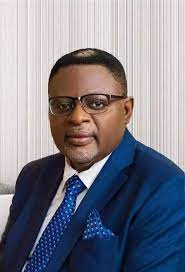
Cross River State Governor, Sen. Bassey Otu has expressed excitement following the Federal Government’s unveiling of a new strategic framework that prioritizes the completion of the Bakassi Deep Seaport.
The roadmap, encapsulated in the newly launched National Policy on Marine and Blue Economy, identifies Bakassi among nine key deep seaports marked for accelerated development across Nigeria.
At the official presentation of the policy in Lagos, Minister of Marine and Blue Economy, Gboyega Oyetola, described the initiative as a transformative step towards positioning Nigeria as the leading maritime hub in West and Central Africa.
“This policy signals a new dawn for the sector. Our objective is clear: to catalyze sustainable development by accelerating the completion of critical deep seaports that will drive economic transformation,” he remarked.Reacting to the announcement, Otu welcomed the development as timely and visionary, describing the Bakassi Deep Seaport as the crown jewel of his administration’s economic blueprint. “This project is not only central to the industrial future of Cross River, it is a national asset capable of unlocking regional prosperity and redefining Nigeria’s place in global maritime trade,” the governor affirmed. He lauded the federal government’s commitment and foresight in aligning national infrastructure goals with the needs of coastal states.
Otu lamented that at present, Nigeria’s shipping activities are shortchanged as only 21 per cent account for cargoes coming into the country, with 79 per cent going to countries such as Benin, Togo and Ghana.
He explained that the reason for this is because the existing ports in Nigeria lack depth and capacity, making it difficult to accommodate bigger vessels.
According to the governor, “the implication, therefore, is that cargoes meant for Nigeria ports are consequently smuggled into the country from the 79 per cent of cargoes that find their way into neighbouring countries. In effect, one hundred per cent of those cargoes were originally meant to be shipped directly into Nigeria. So, the conception of the Bakassi Deep seaport, and of course, when eventually completed, will address the obvious shipping nightmare Nigeria is currently experiencing.”
Widely regarded as a strategic gateway to the Gulf of Guinea and a crucial link for the North, South-East, and South-South corridors, the Bakassi Deep Seaport has long been touted as a game-changer. With this renewed federal commitment, stakeholders believe that the project now has the institutional backing and political momentum required for full realization.
The policy also outlines an ambitious 7 per cent annual growth target for the marine and blue economy sector, anchored on the exploitation of Nigeria’s over 850-kilometre coastline and expansive inland waterways. Other seaports listed for development include Badagry, Olokola, Ondo, Bonny, Burutu, Benin, Ibom, and Agge. These ports, once completed, are expected to decongest existing facilities, spur regional trade, and usher in a new era of maritime-driven economic growth.
By Prince Abiodun Oye-Adeniran
One of the biggest campaign promises of this administration was the removal of fuel subsidies, with assurances that the savings would translate into tangible benefits for citizens.
However, nearly three years later, Nigerians have yet to feel any meaningful impact.
Meanwhile, the government continues to accumulate substantial debt, raising concerns that these obligations may burden not only the present generation but also the next two.The removal of fuel subsidies in Nigeria was presented as a bold and necessary reform, one that would free up public funds, reduce distortions in the economy, and redirect resources toward critical sectors like healthcare, education, infrastructure, and social welfare.
Citizens were told that while the short-term pain might be significant, the long-term gains would be worth it. Months on, however, many Nigerians are still asking a simple and reasonable question: where are the dividends? A very legitimate question indeed.For the ordinary man, the immediate impact of subsidy removal has been unmistakable.
Transport fares have surged, food prices have climbed, and the general cost of living has risen sharply.
Small businesses are struggling with higher operating costs, and households are being forced to make difficult choices just to get by. In this context, the promise of reinvestment is not an abstract policy point. It calls for concern.
It is something people need to see and feel in their daily lives. Yet for many, those benefits remain invisible.
The President must understand the perspective of ordinary citizens, who entrusted him with the mandate in good faith.
This gap between policy and lived experience is at the heart of growing public frustration. Nigerians were not unaware that subsidy removal would be painful. What they expected, however, was a clear, transparent, and timely demonstration of how the savings would be used to improve their conditions. Instead, communication from the government has often been somewhat convoluted or inconsistent.
Announcements are made, but follow-through is difficult to track. Projects are promised, but timelines and measurable outcomes are rarely clear.
A central issue is trust. Years of perceived mismanagement and corruption have made citizens understandably skeptical about how public funds are handled.
When a major reform like subsidy removal is implemented without visible, accountable results, it deepens that skepticism.
People begin to question whether the savings are truly being redirected as promised, or whether they are being absorbed into the same opaque systems that have failed to deliver in the past.
Transparency, therefore, is not optional, it is essential. There must be no bargain on this matter. Citizens deserve to know exactly how much has been saved from subsidy removal, where that money is being allocated, and what progress has been made on funded projects.
This information should not be buried in technical reports or occasional press briefings; it should be presented clearly, regularly, and in a way that ordinary Nigerians can understand and verify. Without this, the narrative of reform risks losing credibility.
While the administration appears to be solely concerned about re-election, it is important to note that this lack of transparency may have negatively influenced the way Nigerians assess the government.Equally important is the issue of timing.
Economic hardship is not something people can postpone. When fuel prices rise overnight, the effects ripple immediately through every sector. Relief measures, however, have often been slow to materialize or insufficient in scale.
Cash transfer programs, transport subsidies, and other support mechanisms need to be timely, transparent and effectively targeted. If they arrive late or fail to reach those most in need, they do little to ease the burden or restore confidence.
Currently, the average Nigerian spends between 60,000 and 100,000 naira on vehicle fuel, representing a significant increase from approximately 10,000 naira under the previous administration.
There is also a question of priorities. Citizens are more likely to accept short-term sacrifices if they can see clear investments in areas that directly affect their quality of life.
Improved public transportation, reliable electricity, better roads, accessible healthcare, and quality education are tangible outcomes that people can point to and say, “This is where the money is going.” When such improvements are not visible, it becomes harder to justify the hardship.
How long do citizens have to bite this hard bullet?None of this is to suggest that reform is unnecessary or that subsidy removal was inherently misguided.
Many economists have long argued that the subsidy system was inefficient, regressive, and unsustainable, an argument that predates the administration of General Obasanjo.
But a good policy is judged not only by its intentions, but also by its implementation and its impact on people’s lives.
A reform that is technically sound but poorly executed can still fail in the eyes of the public.
The Nigerian government now faces a critical challenge: to bridge the gap between promise and reality.
This requires more than statements of intent.
It demands concrete action, clear communication, and a genuine commitment to accountability.
It means setting measurable goals, publishing regular updates, and inviting independent scrutiny. It also means listening to citizens while acknowledging their concerns and adjusting policies where necessary.
Ultimately, the success of subsidy removal will not be measured in budgetary savings alone, but in whether those savings translate into real improvements for the people. Nigerians are not asking for miracles; they are asking for evidence that their sacrifices are leading somewhere meaningful and this is what the Tinubu administration should address.
Until that evidence becomes visible and undeniable, the question will persist and so will the frustration.
Prince Abiodun Oye-Adeniran is the MD, Rematch Limited,UK.
NEWS
Party deregistration: Stop misleading court, Nigerians, ZLP National chairman, tells AGF…….as party remains registered
By Laide Akinboade, Abuja
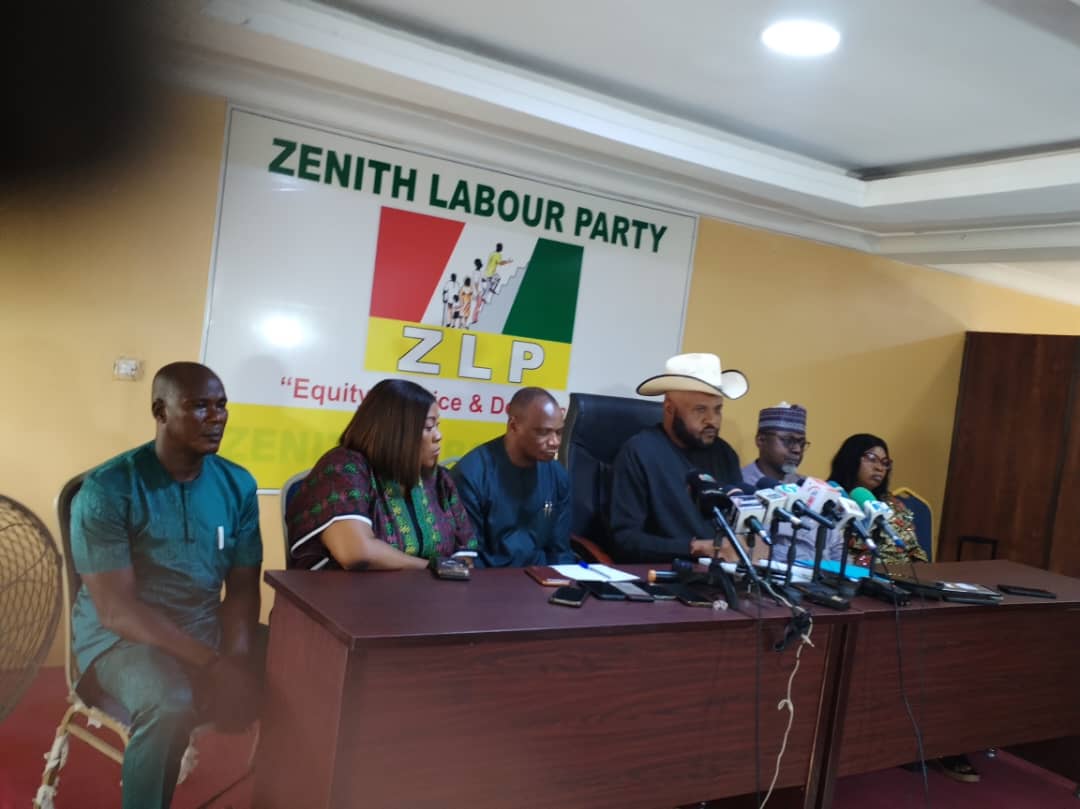
National Chairman of the Zenith Labour Party (ZLP), Dan Nwanyanwu, on Thursday, called for the resignation and removal of the Attorney General of the Federation (AGF) and Minister of Justice of Nigeria is Prince Lateef Olasunkanmi Fagbemi, over his call for deregistration of the party, for not winning any election.
Nwanyanwu along with of the party’s National Working Committe stated this, when he briefed journalists in the party Secretariat in Abuja.
The National Chairman said the AGF lied because the party won councillorship seats and local government positions.
He accused the AGF of misleading the court that because Zenith labour party didn’t win any election so they should be deregistered.
And he circulated this in the media thereby scaring prospective candidates from getting nomination forms from the party.
Nwuanyanwu insisted that the ZLP remains a legally recognised political party, insisting that it has fulfilled all constitutional requirements for continued registration by the Independent National Electoral Commission (INEC).
He explained that the suit challenging the party’s status was instituted by what he described as “an association of former legislators,” who allegedly argued that the ZLP failed to secure electoral victories and should therefore be deregistered.
According to him, the party initially refrained from commenting publicly on the matter because the case is still pending before the court. However, he said the decision to address the media became necessary after the office of the Attorney General allegedly filed and circulated court processes claiming that the party did not win any election.
Nwuanyanwu described the allegation as “false and misleading,” arguing that it was capable of discouraging intending aspirants from joining the party ahead of future elections.
He stated that under the provisions of the Nigerian Constitution, a political party only needs to win at least one councillorship seat to retain its legal status as a registered political party.
“To say that Zenith Labour Party did not win any election is not true. We won councillorship seats and local government positions, and we have already tendered certificates of return before the court,” he said.
The ZLP chairman further claimed that INEC, in its response before the court, contradicted the allegations against the party by confirming that the party won elective positions in previous elections.
He accused the office of the Attorney General of failing to conduct proper due diligence before making submissions in court and warned against what he described as attempts to intimidate or weaken opposition political parties through legal processes.
Nwuanyanwu urged Nigerians interested in contesting future elections to freely join the ZLP and obtain nomination forms, insisting that the party remains stable, peaceful and fully recognised under the law.
Speaking further on the broader political climate, the elder statesman dismissed claims questioning the status and eligibility of political parties ahead of forthcoming elections, insisting that the electoral process remains inconclusive until the substitution window closes and final ballot arrangements are confirmed.
“It is premature for anyone to make categorical claims about which parties will eventually appear on the ballot because the process is still ongoing,” he said.
He also criticised what he described as efforts by certain public officials to undermine opposition parties through legal and political manoeuvres, insisting that allegations suggesting that opposition parties failed to meet constitutional thresholds were unfounded.
Nwuanyanwu stressed that public institutions must operate strictly on the basis of facts, evidence and the rule of law rather than political considerations.
He further alleged that there were deliberate attempts to weaken alternative political platforms, including parties associated with opposition coalitions, warning that such actions could threaten democratic principles and political pluralism in the country.
The ZLP chairman concluded by expressing concern over what he termed misinformation and politically motivated narratives surrounding opposition parties and the ongoing electoral process.
……..urges Civil Servants to always do medical checkups
By Laide Akinboade, Abuja
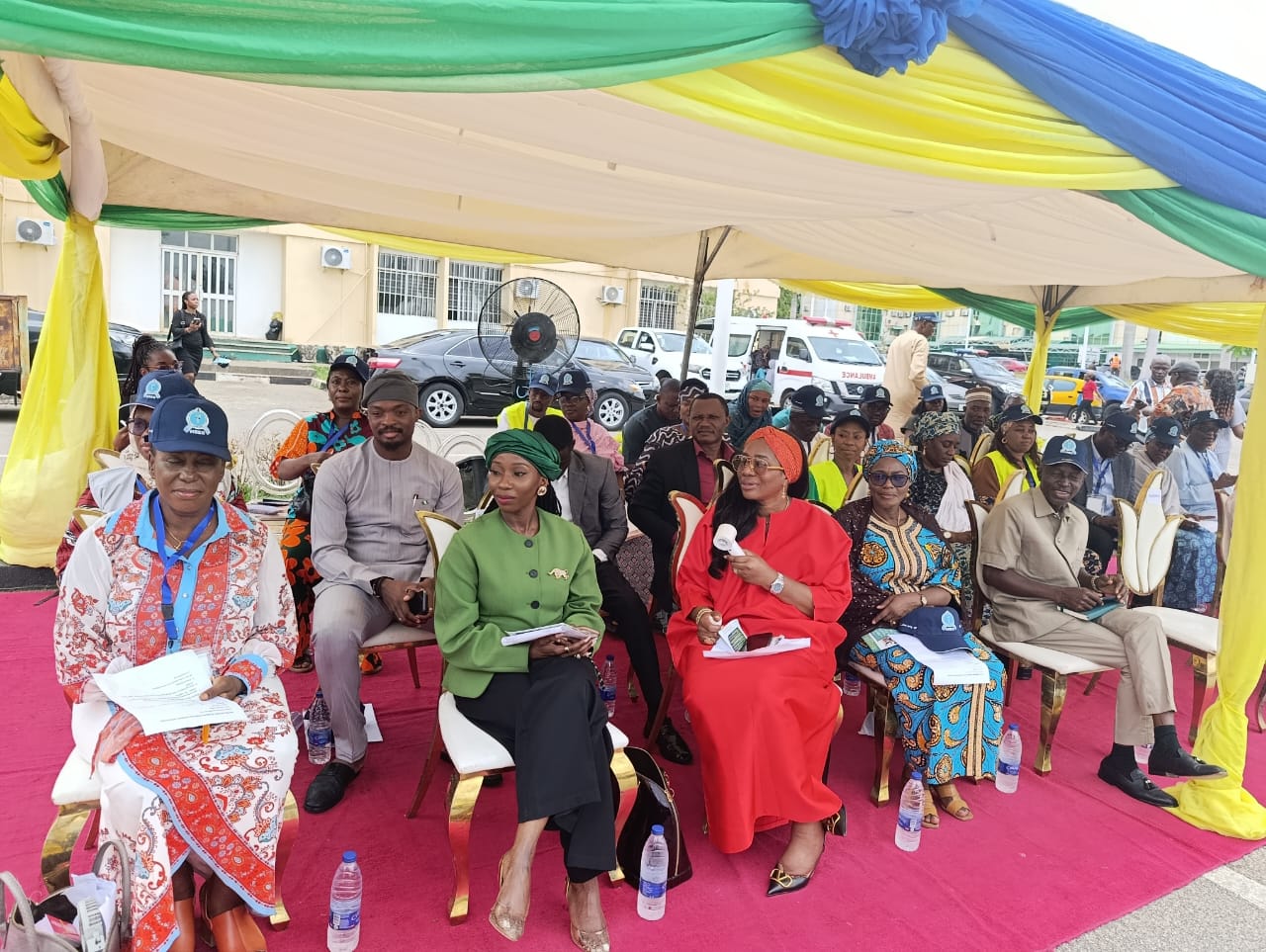
In order to create awareness and access to proper healthcare, the Federal Capital Territory Administration (FCTA) on Thursday flagged off its 2026 Workers’ Day medical outreach in Abuja.
The Acting Head of Service, Mrs.
Nancy Sabanti Nathan, warned civil servants against the dangers of untreated hypertension and diabetes.Nathan, who spoke at the event, described the initiative as a wake-up call for workers to prioritise regular medical checks and fully utilise the health insurance services available to them.
“Health is wealth.
We have heard about hypertension and diabetes.“These diseases, especially hypertension, are silent killers. Often, you hear statements like, ‘There was nothing wrong with him. He just went to work, came back, slept, and didn’t wake up.’ In most cases, it is hypertension or diabetes.”
She therefore urged civil servants diagnosed with such conditions to adhere strictly to prescribed medication and make use of the FCTA staff clinic and health insurance scheme.
According to her, the outreach was aimed at creating awareness about the health insurance programme and the newly revitalised staff clinic.
“The main essence of this programme is to create awareness about our health insurance scheme and the renewed staff clinic. Everything you have enjoyed here today will still be available at the staff clinic after this programme,” she said.
Nathan disclosed that many civil servants were unaware that deductions were already being made from their salaries for health insurance coverage.
“How many of you know that a portion of your salary is deducted every month for health insurance? As long as you are a civil servant, you are entitled to quality healthcare, including access to surgical services where necessary,” she stated.
She added that over 400 workers benefited from the outreach on the first day, with about 270 receiving eyeglasses, while several others were treated for hypertension and diabetes-related conditions.
“Yesterday, we had over 400 people here. Out of that number, 270 collected glasses. We also treated many cases of hypertension and diabetes,” she revealed.
The Acting Head of Service said the initiative was in line with the directive of the FCT Minister, Barr. Nyesom Wike, to ensure civil servants are treated with dignity under the Renewed Hope Agenda of President Bola Tinubu.
“This is a Renewed Hope administration, and we have a clear mandate from the Honourable Minister, Barrister Nyesom Wike, to ensure that civil servants are treated in a civil and dignified manner,” she added.
Nathan assured workers that the outreach would not be a one-off intervention, promising sustained collaboration with the Health Services and Environment Secretariat to ensure regular health programmes for workers.
Earlier, Mandate Secretary of the FCTA Health Services and Environment Secretariat, Dr. Adedolapo Fasawe, lamented the low level of awareness among workers regarding the health insurance scheme despite monthly deductions from their salaries.
“I am surprised to know that some of us don’t know that we are already enrolled in the health insurance scheme, and that gives us the right to go to our service providers to access the services that we have already paid for,” she said.
Fasawe said the outreach formed part of activities marking the 2026 Workers’ Day celebration and was designed to encourage workers to pay closer attention to their health after years of service.
“After working very, very hard, it is only important that you check your health. We celebrate the dignity of labour and the well-being of those who have served this great Federal Capital Territory,” she noted.
She commended the FCT Minister, Barr. Nyesom Wike, Minister of State, Dr. Mariya Mahmoud, and the management of the FCTA for supporting the initiative.
Fasawe also pledged continued collaboration with the Office of the Head of Service to sustain regular health sensitisation and screening programmes for workers across the FCT



From Promise to Pain: The Reality of Subsidy Removal in Nigeria
ShareBy Prince Abiodun Oye-Adeniran One of the biggest campaign promises of this administration was the removal of fuel subsidies, with...
Benue Killings: Agatu Youths Petition Military Authorities, Seek Immediate Withdrawal Of Troops.
ShareFrom Attah Ede Agatu youths under the auspices of Agatu Indigenous Youth Association (AIYA)l, have petitioned the Nigerian Military authorities,...
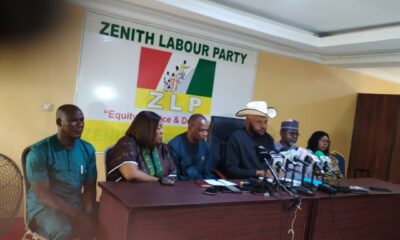

Party deregistration: Stop misleading court, Nigerians, ZLP National chairman, tells AGF…….as party remains registered
ShareBy Laide Akinboade, Abuja National Chairman of the Zenith Labour Party (ZLP), Dan Nwanyanwu, on Thursday, called for the resignation...
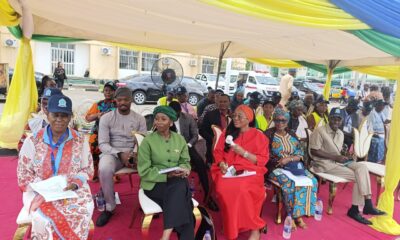

Worker’s day: FCTA Flags Off Medical Outreach
Share……..urges Civil Servants to always do medical checkups By Laide Akinboade, Abuja In order to create awareness and access to...


DP Crisis: Party Needs Total Overhaul not Presidential Ambition – Wike
ShareBy Laide Akinboade, Abuja The Federal Capital Territory (FCT)Minister, Nyesom Wike on Thursday said what People’s Democratic Party (PDP)needs now...

Otti Inaugurates Boards, Reiterates Commitment to Efficient Service Delivery
ShareAbia State Gov, Alex Otti has said that his administration remains fully committed to efficient service delivery and institutional reforms...


West Africa’s Malaria Menace: A Call to Action
ShareBy Abujah Racheal Malaria elimination in West Africa is no longer hindered by a lack of solutions, but by execution....


June 12, On It We Stand
ShareBy Reuben Abati It is ironic that it had to take a member of the military establishment now turned democrat...
Nine Remaining Kidnapped Victims of Kogi Orphanage Regain Freedom
ShareFrom Joseph Amedu, Lokoja The troops of the 12 Brigade of the Nigerian Army have successfully rescued the remaining nine inmates and workers...
Coach Decries Poor Infrastructure in Grassroots Volleyball
ShareA volleyball coach, Stephen Peter, has urged government and stakeholders to support grassroots volleyball development in the Federal Capital Territory (FCT). Peter, a retired...