
NEWS
Oyedele Unveils Capital Market Master Plan, Targets $1trn Market by 2036

By Tony Obiechina, Abuja
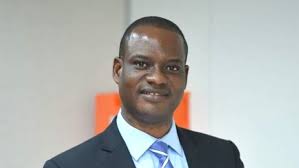
The Minister of Finance and Coordinating Minister of the Economy, Prof. Taiwo Oyedele, has unveiled the Nigeria Capital Market Master Plan 2.
0, targeting the expansion of the country’s capital market to at least $1 trillion by 2036.Oyedele announced this on Monday in Abuja while delivering a keynote address at the 2026 National Capital Market Conference, where he also formally launched the National Savings Scheme aimed at expanding financial inclusion and encouraging Nigerians to invest through regulated financial instruments.
The minister said the new master plan, covering 2026 to 2036, would strengthen the capital market’s role in financing businesses, infrastructure development, job creation and the country’s ambition to build a $1 trillion economy by 2030.
He explained that the plan was designed to mobilise domestic and international capital, expand investment opportunities, strengthen market institutions and ensure that ordinary Nigerians benefit from economic growth.
According to him, the government is targeting an increase in the capital market’s size from approximately $250 billion to between $700 billion and $750 billion by 2036, with an ambition to push it beyond $1 trillion.
Oyedele said the ultimate objective was to build a market capable of financing the economy’s long-term development needs while providing Nigerians with safe and accessible investment opportunities.
“The capital market must be part of our national economic policy. It is central to our ambition of building a $1 trillion economy by 2030,” he said.
The minister, who said he had just returned from the International Monetary Fund and World Bank Group Annual Meetings in Bangkok, Thailand, noted that mobilising private capital for job creation featured prominently in discussions involving more than 160 countries.
He said a major lesson from the international engagements was that capital moved towards markets where investors were treated fairly, policies were predictable and evidence-based decisions guided economic management.
Oyedele commended President Bola Tinubu for the economic reforms undertaken by the administration, saying the measures had contributed to the recovery of investor confidence and improved the performance of Nigeria’s capital market.
He cited the removal of the petrol subsidy, foreign exchange reforms, tax reforms and the recapitalisation of banks as measures that had helped reposition the economy and strengthen the investment environment.
According to him, the market’s equity capitalisation has risen from about N30 trillion in mid-2023 to more than N160 trillion, while pension assets have reached approximately N27.5 trillion.
He added that collective investment schemes had expanded from N1.4 trillion in 2021 to N7.7 trillion in December 2025 and N9.3 trillion by June 2026.
The minister also highlighted renewed interest from international investors, noting that the inclusion of Nigerian government bonds in a global bond index and the country’s return to an international equity benchmark represented important developments for the market.
He said the government would continue engaging international index providers, including MSCI, to improve Nigeria’s standing in global investment markets and create opportunities for increased capital inflows.
Shettima also called on market operators and regulators to sustain the momentum by protecting investors, expanding participation and ensuring that the market’s growth translated into tangible benefits for Nigerians.
He said the master plan should help businesses raise capital locally, support agricultural development, finance infrastructure and create opportunities for enterprises across the country.
The Vice-President formally declared the Nigeria Capital Market Master Plan 2.0 launched on behalf of President Tinubu.
He urged stakeholders to ensure that the plan moved beyond policy commitments to measurable outcomes, including more jobs, greater investment participation and improved access to financing for Nigerian businesses.
The conference brought together government officials, regulators, market operators, investors and development partners to discuss strategies for positioning Nigeria’s capital market as a major driver of economic growth, financial inclusion and sustainable development.
Oyedele, however, stressed that achieving these ambitions would require sustained reforms, improved market liquidity, efficient repatriation of foreign investments and stronger protection for investors.
The minister said the Capital Market Master Plan 2.0 was built around five major pillars: effective regulation, modern market infrastructure, diversified investment products, broader investor participation and stronger institutions.
Under the plan, the government intends to increase market capitalisation relative to the size of the economy, expand corporate bond issuance, deepen the pension investment market and encourage more Nigerians to participate in regulated investment schemes.
The government also plans to introduce a single investor identification number and promote investment through mobile networks and financial technology platforms to simplify access to the capital market.
Oyedele said the administration would encourage multinational companies and other eligible businesses to list on Nigerian exchanges through appropriate incentives rather than compulsory listing requirements.
He further called for the consideration of selected state-owned enterprises for listing, explaining that such a move could improve transparency, broaden public ownership and enable Nigerians to benefit from the performance of strategic national assets.
He identified the Nigerian National Petroleum Company Limited and other eligible government-linked enterprises as examples of assets whose ownership structures could be reviewed to deepen the capital market.
The minister said the plan would also promote cross-border investment and enable African businesses, including technology and artificial intelligence companies, to raise funds locally rather than relying excessively on foreign markets.
Oyedele formally launched the National Savings Scheme, describing it as an important instrument for expanding financial inclusion and helping Nigerians build wealth through regulated investments.
He said the scheme would provide accessible and affordable savings and investment opportunities for people seeking to finance education, home ownership, business ventures and retirement.
According to him, the initiative is particularly important for young Nigerians who may otherwise be exposed to unregulated cryptocurrency platforms, fraudulent investment schemes and pyramid schemes.
He observed that Nigeria had only about six million retail investors despite its large population, underscoring the need to make investment opportunities more accessible to ordinary citizens.
Earlier, the Director-General of the Securities and Exchange Commission (SEC), Dr. Emomotimi Agama, said Nigeria’s capital market had recorded significant growth but needed broader participation and more investment products to achieve its full potential.
Agama disclosed that the market’s capitalisation had crossed N100 trillion for the first time in January 2026 before reaching approximately N163 trillion in September.
He attributed the performance to economic reforms, improvements in market infrastructure and the implementation of policies aimed at strengthening investor confidence.
The SEC boss said the Investment and Securities Act 2025 had provided a stronger legal foundation for regulating the market, addressing systemic risks, overseeing digital assets and improving enforcement.
He, however, expressed concern that the market’s expansion in value had not been matched by sufficient growth in the number of participating Nigerians and businesses.
According to him, few Nigerians invest through collective investment schemes, while many businesses and infrastructure projects continue to depend on limited sources of financing.
Agama said the new master plan was developed through consultations with market operators, investors, issuers, regulators and government institutions.
He assured stakeholders that the commission would establish implementation mechanisms, assign responsibilities and regularly report progress towards the plan’s objectives.
The SEC director-general also described the National Savings Scheme as a means of helping young graduates, workers and other Nigerians save and invest for the future through professionally managed and regulated channels.
He thanked the United Kingdom government, the Foreign, Commonwealth and Development Office, and FSD Africa for their technical and financial support towards the development of the master plan and the savings initiative.Shettima: Capital market must finance national development
In a goodwill message delivered on behalf of Vice-President Kashim Shettima by the Deputy Chief of Staff to the President, Senator Ibrahim Hadejia, the Federal Government said the capital market must become a major source of financing for infrastructure, businesses and economic development.
Shettima said the expansion of the market reflected the impact of the administration’s economic reforms, including changes to the foreign exchange system, the removal of the petrol subsidy and tax reforms.
He maintained that the reforms were intended to establish a more predictable economic environment in which investors could commit long-term capital.
The Vice-President said the capital market should serve as a bridge between the savings of Nigerians and the country’s investment needs, particularly in view of the infrastructure financing gap facing the federal and state governments.
He urged state governments to work with the SEC and other relevant institutions to explore responsible financing options, including infrastructure bonds, supported by credible projects, transparency and sound fiscal management.
Shettima also called on market operators and regulators to sustain the momentum by protecting investors, expanding participation and ensuring that the market’s growth translated into tangible benefits for Nigerians.
He said the master plan should help businesses raise capital locally, support agricultural development, finance infrastructure and create opportunities for enterprises across the country.
The Vice-President formally declared the Nigeria Capital Market Master Plan 2.0 launched on behalf of President Tinubu.
He urged stakeholders to ensure that the plan moved beyond policy commitments to measurable outcomes, including more jobs, greater investment participation and improved access to financing for Nigerian businesses.
The conference brought together government officials, regulators, market operators, investors and development partners to discuss strategies for positioning Nigeria’s capital market as a major driver of economic growth, financial inclusion and sustainable development.
By Elijah Oguche, Abuja
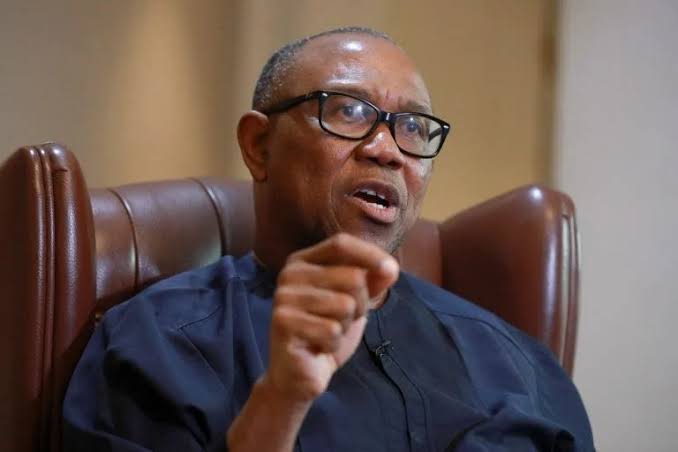
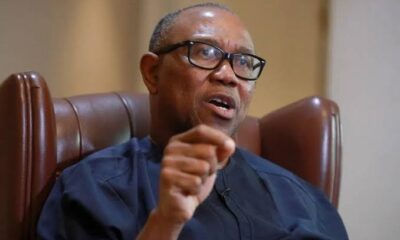
The presidential candidate of the Nigeria Democratic Congress (NDC), Peter Obi, has urged Nigerians living in the United Kingdom to stop giving money to relatives who seek financial assistance at home, saying the country needs better leadership to tackle its economic problems.
He also called on Nigerians in the diaspora to encourage their family members to vote for leaders who can improve the economy and deliver good governance.
Obi made the appeal during a town hall meeting with his supporters in Manchester, United Kingdom, on Sunday.
The former Anambra State governor blamed Nigeria’s economic hardship on poor leadership, arguing that while money sent home could help people meet their immediate needs, it would not address the root causes of poverty.
“You have people at home in Nigeria today who are begging you for money. Tell them no!” he said.
Obi also defended his record in office, particularly his handling of public funds during his tenure as governor of Anambra State.
He said he was not claiming to be perfect but maintained that his administration saved substantial public funds, adding that he had yet to see another governor save up to 10 per cent of what he claimed to have saved.
“I’m not saying I’m a saint, but I saved money. I’ve not seen one governor who has saved 10 per cent of what I saved. No governor has done it,” he said.
He urged Nigerians to begin by supporting leaders they consider less corrupt, describing it as a step towards changing the country’s political and economic fortunes.
“Let’s start with this one that is less corrupt. That’s how other countries change,” he said.
Obi further stressed that rebuilding Nigeria would require citizens to take responsibility for the country’s future rather than relying solely on individual financial support to family members.
He said his engagement with Nigerians abroad had reinforced the need for collective action to address the country’s challenges and promote better governance.
The NDC candidate also urged Nigerians to take the 2027 general election seriously, describing it as a crucial moment for the country.
He called on citizens to participate actively in the electoral process and make their votes count, stressing that leadership choices would play a major role in determining Nigeria’s future.
By Tambaya Julius, Abuja
The World Bank has urged the Federal and state governments to establish a sustainable social protection system, warning that Nigeria’s N658.9bn cash transfer programme needs wider coverage, adequate payments and regular disbursements to provide meaningful relief to vulnerable households.
As of September 2026, the Federal Government had disbursed N658.
9bn to 10.46 million poor and vulnerable households through direct cash transfers, using biometric and digital verification to identify beneficiaries and deliver payments.The bank, however, said the programme must move beyond emergency interventions to a reliable system backed by regular government funding.
The recommendation was contained in its latest Nigeria Development Update, titled ‘Beyond the Federal Purse: How Higher Revenues Shaped State Priorities’.
According to the report, the effectiveness of cash transfers depends on the number of households reached, the value of payments and how consistently beneficiaries receive them.
The bank called for dedicated budget allocations at both federal and state levels, with increased funding from domestic resources to ensure continuity and reduce dependence on temporary interventions.
It also stressed the need for stronger coordination between the two tiers of government to improve the delivery and monitoring of social assistance programmes.
The report said a predictable, adequately funded social protection system would help vulnerable Nigerians cope with economic pressures and improve household welfare.
From Francis Sadhere, Delta
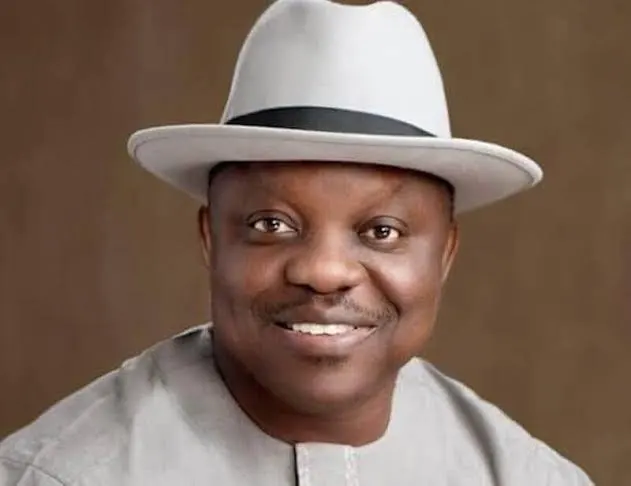
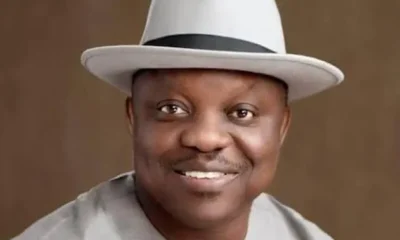
Former Governor of Delta State, Dr. Emmanuel Eweta Uduaghan, has died. He was 71.
Uduaghan, who governed the state from 2007 to 2015, reportedly passed away on the morning of Monday, October 19, 2026.
His death was announced in a statement signed by Toju Anire Uduaghan on behalf of the family, which described his passing as a devastating loss to the family, Delta State and Nigeria.
The family said the former governor was a beloved father, brother, uncle and patriarch, whose life and service touched many people across the state and the country.
“His passing has left us devastated. Words can hardly express the depth of our sorrow at the loss of a man who meant so much to our family and whose life and service touched countless others across Delta State and Nigeria,” the statement said.
Uduaghan held several key positions in the Delta State Government before becoming governor. He served as Commissioner for Health from 1999 to 2003 and Secretary to the State Government from 2003 to 2007.
He subsequently emerged as governor in 2007 and remained in office until 2015, during which the family said he demonstrated commitment to the human and infrastructural development of the state.
The family described his death as a profound loss, noting that he was a source of strength, a father figure and a respected elder whose memories and legacy would remain cherished.
“We are grateful to Almighty God for his life, his service, and the legacy he leaves behind,” the statement added.
The family prayed for the repose of his soul and divine comfort for relatives, friends, associates, former colleagues and others mourning his death.
“Your memory will forever remain in our hearts, and your legacy will endure in the lives of those you touched,” the family said in its farewell message.
Uduaghan’s death marks the loss of a former leader who occupied prominent positions in Delta State’s political and administrative history.
The family concluded its announcement with a prayer for his peaceful repose, saying, “May your gentle soul rest in perfect peace. Amen.”



Oyedele Unveils Capital Market Master Plan, Targets $1trn Market by 2036
ShareBy Tony Obiechina, Abuja The Minister of Finance and Coordinating Minister of the Economy, Prof. Taiwo Oyedele, has unveiled the...

OBI In London, URGES DIASPORA TO Stop FUNDING RELATIVES
ShareBy Elijah Oguche, Abuja The presidential candidate of the Nigeria Democratic Congress (NDC), Peter Obi, has urged Nigerians living in...

World Bank Tasks FG, States on Sustainable Cash Transfer Programme
ShareBy Tambaya Julius, Abuja The World Bank has urged the Federal and state governments to establish a sustainable social protection...

Former Delta Governor, Uduaghan Dies at 71
Share From Francis Sadhere, Delta Former Governor of Delta State, Dr. Emmanuel Eweta Uduaghan, has died. He was 71. Uduaghan,...


Attempted Suicide in Nigeria: Legislative Reform, Economic Hardship and the Right to Human Dignity
ShareBy Oluwaleye Adedoyin Grace Should a person who survives a suicide attempt be punished or helped? This question challenges Nigeria’s...

UBA Scores Legal Victory in N156bn Stallion Debt Case
ShareBy Tambaya Julius, Abuja United Bank for Africa (UBA) Plc has secured a favourable judgment in its N156 billion debt...

Nigeria Customs, Afreximbank Push Regional Border Modernisation
ShareBy Tambaya Julius, Abuja The Nigeria Customs Service (NCS) and the Customs administrations of Benin and Cameroon are working with...

NCDMB Heritage Energy Train 48 Nigerians in Subsea Engineering
ShareFrom Mike Tayese, Yenagoa The Nigerian Content Development and Monitoring Board (NCDMB), in partnership with Heritage Energy Operational Services Limited...
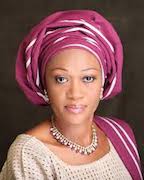
CAN: Tinubu Tasks Christians on Greater Unity
ShareBy Laide Akinboade, Abuja The first lady Senator Oluremi Tinubu, at the weekend urged all Nigerian Christians to ensure they...
Maka Oganiru Begins Operations, Pledges Africa’s Investment-ready Projects
ShareBy Tony Obiechina, Abuja New Africa-focused advisory firm aims to connect high-potential opportunities with global capital, institutional investors and strategic...