
NEWS
Oyetola Directs Transfer of Dry Port Functions to NPA


The Minister of Marine and Blue Economy, Dr. Adegboyega Oyetola, has ordered the transfer of Inland Dry Port (IDP) functions from the Nigerian Shippers’ Council (NSC) to the Nigeria Ports Authority (NPA).
Oyetola said the move was aimed at separating regulatory functions from operations and establishing clear institutional boundaries among agencies under the ministry.
The minister gave the directive in a statement issued on Thursday in Lagos by his Special Adviser, Dr Bolaji Akinola.
He also directed the immediate constitution of a ministerial committee to oversee the transition of the NSC into the newly established Nigeria Ports Economic Regulatory Agency (NPERA).
The transition follows President Bola Tinubu’s assent to the NPERA Act in August, formally establishing a substantive economic regulator for Nigeria’s port sector.
Oyetola said the reforms would provide a clear framework for the new port economic regulatory regime, eliminate overlapping responsibilities and ensure that agencies operated within defined mandates.
He said the NSC, which had served as the interim port economic regulator since 2014, would transition into NPERA with expanded statutory powers.
According to him, NPERA will be responsible for tariff regulation, promotion of competition, licensing, service standards, commercial dispute resolution and protection of port users nationwide.
The minister said the transition offered an opportunity to establish a regulator clearly separated from the operational, developmental and promotional responsibilities previously domiciled in the NSC.
“We must get the transition right. The establishment of NPERA is a landmark reform and must be carefully managed for seamless institutional alignment,” he said.
Oyetola said the ministerial committee would oversee the process to ensure that every function was domiciled in the appropriate institution and that no critical responsibility was lost during the transition.
He stressed that the credibility of an economic regulator depended on its ability to function as an impartial referee without operational duties capable of creating actual or perceived conflicts of interest.
“A regulator cannot be an operator and still be perceived as unbiased. Clear separation will strengthen confidence, transparency and predictability for investors and port users,” Oyetola said.
On the transfer of IDP functions to NPA, the minister said the decision did not signal reduced government commitment to the dry port programme.
Rather, he said, it was designed to strengthen the programme by placing the functions within the authority’s operational and infrastructure mandate.
“We are committed to efficient, integrated ports serving the entire country. Placing IDPs with NPA will improve connectivity and delivery across Nigeria’s logistics chain,” he said.(NAN)
By David Torough, Abuja
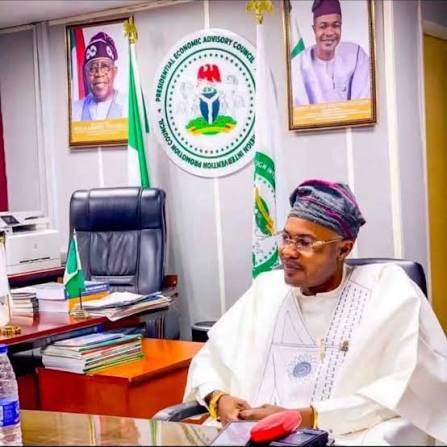
The Federal High Court in Abuja on Thursday declined to order the release of Prince Adeniyi Adeyemi, the detained self-styled Director-General of the controversial Presidential Foreign Investment Promotion Council (PFIPC), pending a response from the police and the Attorney-General of the Federation (AGF).
Justice Obiora Egwuatu, ruling on an ex-parte application filed by Adeyemi through his lawyer, M.
B. Abdulazeez, held that the applicant’s requests for bail, medical attention and other reliefs could not be determined without hearing from the respondents.The judge, however, granted Adeyemi’s request for unhindered access to his lawyers while in custody. He directed the Inspector-General of Police (IGP), the Nigeria Police Force and the AGF to allow the detainee access to legal practitioners of his choice at all reasonable hours.
Justice Egwuatu also ordered the respondents to, within 72 hours, show cause why the other reliefs sought by Adeyemi should not be granted. The matter was adjourned until September 9 for the respondents to respond.
Adeyemi had approached the court to enforce his fundamental rights, seeking six reliefs, including an order for his release on bail, access to medical practitioners of his choice and an injunction restraining the police from interrogating him or obtaining any statement from him without his lawyers present.
The application followed his arrest by the police after Justice Mohammed Umar, who is handling a separate criminal case against him, issued a warrant for his arrest on July 14. Adeyemi was subsequently apprehended in Osun State and has remained in police custody.
The police have accused Adeyemi of forgery and impersonation, alleging that he falsely presented himself as the Director-General of a federal agency that investigators say does not exist.
A pending eight-count criminal charge, marked FHC/ABJ/CR/562/2025, was filed against Adeyemi and two other suspects identified as “Femi Surname Unknown” and “Anu Surname Unknown.” The charges relate to alleged forgery, fraud and impersonation.
Justice Umar fixed September 30 for Adeyemi’s arraignment.
According to the police investigation, the case arose from a petition submitted by the Office of the Chief of Staff to the President to the IGP on October 17, 2025, over alleged forgery of official appointment letters.
Investigators alleged that the documents contained falsified signatures, reference numbers, official seals and the Nigerian Coat of Arms and were used to create the impression that the disputed PFIPC was a legitimate government agency.
The police further alleged that Adeyemi operated an office at the Federal Secretariat Complex, Phase III, Abuja, where he purportedly carried out activities in the name of the council.
Among the witnesses listed by the prosecution are the Chief of Staff to the President, Femi Gbajabiamila, officials of the Office of the Accountant-General of the Federation and a Deputy Superintendent of Police.
Adeyemi has denied wrongdoing and rejected the claim that the PFIPC is non-existent. He has also alleged that he paid N400 million through a proxy to Gbajabiamila to secure his appointment as the council’s Director-General. Gbajabiamila has been named by the prosecution as a witness in the criminal proceedings.
Adeyemi previously said he stayed out of public view because of alleged threats to his life, denying that he was evading law enforcement.
He has also called for an independent, multi-stakeholder investigation into the controversy, particularly allegations surrounding an alleged N1.3 billion budget insertion for the PFIPC in the 2026 Appropriation Bill.
For now, the court has stopped short of ordering his release, with the substantive reliefs in his fundamental rights suit awaiting the response of the police and the AGF on September 9.
By Tambaya Julius, Abuja
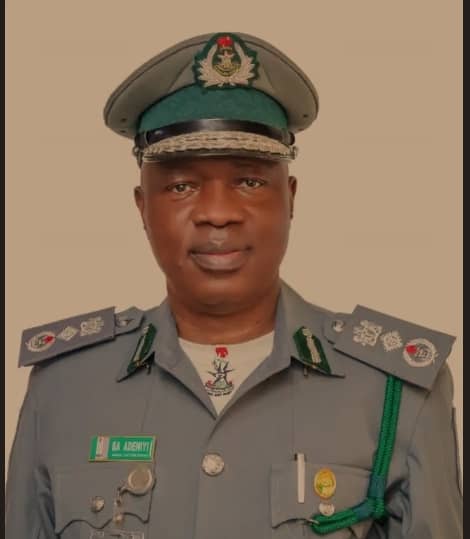
The Comptroller-General of the Nigeria Customs Service (NCS), Bashir Adewale Adeniyi, has inspected the Customs Training College, Goron Dutse, Kano, to ensure the facility is fully prepared for the 2026 Basic Training Programme for successful candidates of the 2025/2026 recruitment exercise.
The National Public Relations Officer of the NCS, Abdullahi Maiwada, disclosed this in a statement issued on Wednesday in Lagos, saying the inspection was part of the Service’s preparations to receive and train the newly recruited personnel.
Adeniyi assessed the college’s facilities, ongoing projects, logistics and other support infrastructure to determine its readiness ahead of the commencement of training in 2026.
The CGC was received by the Zonal Coordinator, Zone B, Assistant Comptroller-General Nsikan Umoh; Comptroller, Federal Operations Unit Zone B, Aminu Sule; College Commandant, Deputy Comptroller Umar Atiku; as well as other principal officers and heads of units.
During the inspection, Adeniyi reaffirmed the NCS’s commitment to providing the facilities, logistics and conducive learning environment required for effective basic training and capacity development.
He stressed that the college must be adequately equipped to deliver professional training capable of preparing recruits for the responsibilities they would undertake in the Service’s nationwide operations.
According to him, investment in training infrastructure has a direct impact on personnel efficiency, border security and revenue generation.
Adeniyi also emphasised the importance of personnel welfare, describing it as a key component of the Service’s transformation agenda.
The College Commandant, Atiku, briefed the CGC on the institution’s activities, ongoing projects and preparations for the arrival of the recruits.
Adeniyi thereafter toured the classrooms, hostels, parade ground, workshops and other support facilities, where he identified areas requiring urgent attention before the commencement of the training programme.
He directed immediate action on the identified gaps and charged officers at the college to maintain discipline and professionalism in preparing for the recruits.
By Tambaya Julius, Abuja
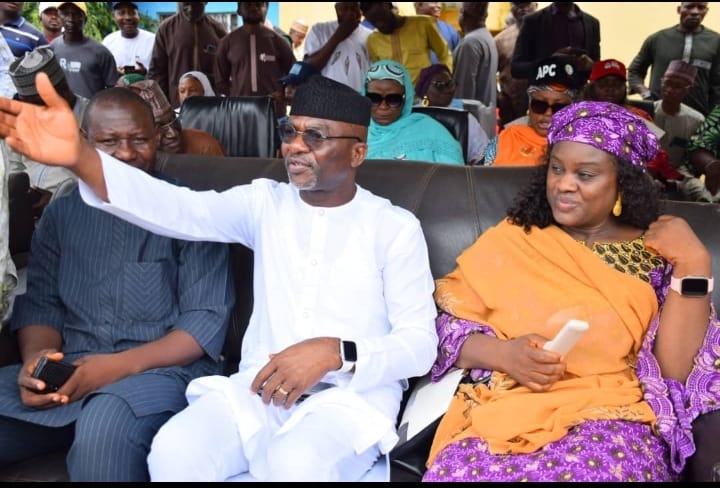
The Member representing Kokona East in the Nasarawa State House of Assembly and APC flag bearer for the Kokona, Karu and Keffi Federal Constituency, Hon. Daniel Ogah Ogazi, has donated ₦500,000 to support the 2026 Holiday Camp of the Boys Brigade Nigeria, Gunduma Battalion Council, held at Yelwa Soji in Karu Local Government Area.
Ogazi made the donation through the Senior Special Assistant (SSA) to the Nasarawa State Governor on the Greater Karu Development Control Agency (KAPDA), Hon.
Bawa Rabo, who represented him at the Camp.Addressing members of the Boys Brigade, Hon.
Bawa expressed delight over the large turnout of young boys and girls participating in the Christian youth programme, describing their presence as a source of joy and encouragement.He urged the participants to take the lessons and training received during the camp seriously, stressing that early moral and spiritual formation was essential to raising responsible citizens and future leaders.
Bawa said the biblical instruction to train children in the right way remained relevant to building a disciplined and morally sound society.
“Please, I charge you all to take advantage of this camp. Take the lessons of this camp, go and emulate and practicalise them, and become good ambassadors of society and Christendom,” he said.
He encouraged the young participants to remain committed to their Christian faith and preach Christ wherever they found themselves, expressing confidence that the experience gained at the camp would positively influence their lives.
Bawa prayed that the period spent at the camp would not be in vain, expressing hope that parents would return home to witness positive changes in their children as a result of the discipline, training and teachings received.
He commended the organisers and trainers of the camp for their commitment to mentoring young people, praying for renewed strength and grace for them to continue their responsibilities.
“I saw elderly men and women who have served this country and have retired, but they refuse to retire from serving the Lord,” he said.
He urged the participants to emulate such commitment, stressing that age should not become an excuse for abandoning service to God and society.
He also appreciated the participants for their prayers and support for the administration of Governor Abdullahi Sule, appealing for continued prayers for the government.
“As Christians, we are charged by the Bible that we should also pray for the government,” Bawa said, urging Christians to continue praying for leaders to discharge their responsibilities effectively and work for the wellbeing of the people.
Speaking on the 2027 general elections, Bawa appealed to Christians not to allow religious sentiments to determine their political choices.
He argued that the APC should not be portrayed as a political party that excludes Christians, maintaining that Christians had continued to worship freely and participate in religious activities under APC administrations.
He urged the gathering to resist attempts to manipulate them through religious narratives and instead assess political candidates based on their character, capacity, commitment and ability to deliver good governance.



Oyetola Directs Transfer of Dry Port Functions to NPA
ShareThe Minister of Marine and Blue Economy, Dr. Adegboyega Oyetola, has ordered the transfer of Inland Dry Port (IDP) functions...

PFIPC Scandal: Court Rejects Adeniyi Adeyemi’s Bail Application
ShareBy David Torough, Abuja The Federal High Court in Abuja on Thursday declined to order the release of Prince Adeniyi...

Tinubu Faces No Criminal Case in US, Presidency Rejects Claims
ShareBy David Torough, Abuja The Presidency has dismissed reports suggesting that President Bola Tinubu is facing a criminal case in...

Adeniyi Inspects Customs Training College Ahead of 2026 Basic Training
ShareBy Tambaya Julius, Abuja The Comptroller-General of the Nigeria Customs Service (NCS), Bashir Adewale Adeniyi, has inspected the Customs Training...


Ogazi Supports Boys Brigade, Urges Youths to Embrace Moral Discipline
ShareBy Tambaya Julius, Abuja The Member representing Kokona East in the Nasarawa State House of Assembly and APC flag bearer...


ADF Social Footprints Impactful-MAN, Others
ShareBy David Torough, Abuja Business leaders and media heavyweight in Kano State have applauded the Aliko Dangote Foundation (ADF) for...

A Birthday Tribute to His Excellency Senator Kashim Shettima, Vice President of The Federal Republic Of Nigeria
ShareYour Excellency, On behalf of the National Executive Council, National Executive Committee and the entire membership of the Alumni Association...

Tax Reforms: Kaduna IGR Hits N10bn Monthly — Uba Sani
ShareFrom Agbo Emmanuel, Kaduna Kaduna State Governor, Uba Sani, has said recent tax reforms have significantly improved Nigeria’s revenue mobilisation,...


ADC Inaugurates Reconciliation Committee, Seeks Unity Ahead 2027
ShareThe African Democratic Congress (ADC) has inaugurated a national reconciliation and peace committee to strengthen unity, rebuild trust and resolve...

Akpabio Celebrates Shettima at 60
SharePresident of the Senate, Godswill Akpabio has felicitated Vice President Kashim Shettima on the occasion of his 60th birthday. Akpabio...