
NEWS
PAP Deploys Over 140 Foreign Scholarship Beneficiaries

From Mike Tayese, Yenagoa
The Presidential Amnesty Programme (PAP) has deployed over 140 beneficiaries and awarded scholarships for post-graduate studies across universities in the United Kingdom.
Speaking at the pre-departure briefing/orientation ceremony for the foreign scholarship beneficiaries at the PAP headquarters in Abuja, recently, the Administrator, Dr.
Dennis Otuaro, expressed hope that they would add value to the socio-economic advancement of the Niger Delta and indeed Nigeria when they complete their studies.At the event, brand new laptops were distributed to the post-graduate scholarship beneficiaries aimed at enhancing their studies and research.
Otuaro said the human resource base of the Niger Delta would be enriched when they finished their programmes, and also contribute to efforts at reducing the region’s human capital development gap.
He stressed that the massive deployment under the PAP’s formal education component complemented President Bola Tinubu’s Renewed Hope Agenda for the region.
Otuaro explained that the beneficiaries were deployed for studies in industry-competitive and professional disciplines, noting that “with the knowledge they will acquire, they will contribute to the development of the region and the nation in general.”
The PAP boss further said, “If you put the number of beneficiaries we are deploying today together, over 140, all of them are going for post-graduate studies in universities in the United Kingdom.
“We are confident that when they complete their studies and return, they will add value to the socio-economic advancement of the Niger Delta, and the human capacity resource of the region will be enriched. They will add value to our communities, the region, and the nation.
“What we are doing today is a deliberate effort to take the development agenda of His Excellency, President Bola Tinubu to the people in the communities of the Niger Delta.
“When the President appointed me last year, he gave me a mandate and that is to take this programme to the people. That is what we are doing.
“We have other aspects of the PAP. However, this foreign post-graduate scholarship deployment takes cognizance of professional areas that are industry-competitive. We also deploy beneficiaries for other programmes in-country.”
He, therefore, advised them to shun distractions and take their studies seriously in order to justify the Federal Government’s investment in their education, and be good ambassadors of their families, communities, the Niger Delta and the country.
Also, the Technical Assistant to the PAP Administrator, Edgar Daniel; the Provost Marshal, Nigerian Army, Maj. Gen. M.O Erebulu; and the Head of PAP’s Education Department, Dr Charles Ariye delivered talks on cultural/social dynamics of studying in the UK and Europe, the diplomatic and security implications of studying abroad, and the academic dynamics of studying in the UK, respectively, to guide the beneficiaries’ conduct.
Some of the beneficiaries, including Gift Gbaminido and Amadimati Greatman, thanked the PAP Administrator for awarding them post-graduate scholarships to study abroad, and pledged to make good use of the opportunity.
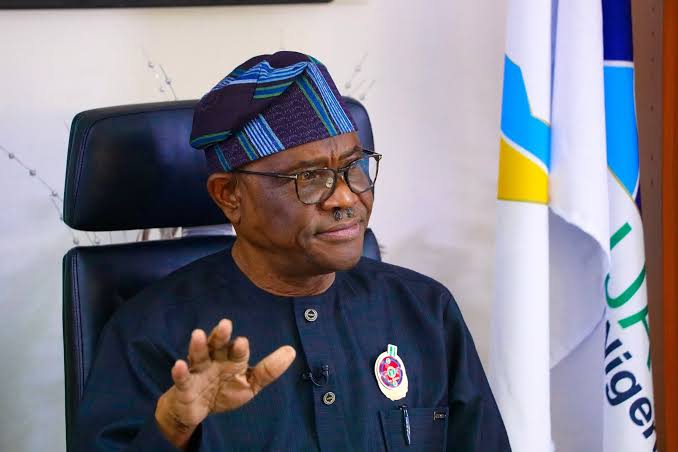
The Minister of the Federal Capital Territory (FCT), Nyesom Wike, has approved the award of contracts for the digitisation of the FCT High Courts, with the project expected to commence within two weeks.
General Counsel and Mandate Secretary, FCT Legal Services Secretariat, Salman Dako, disclosed this on Tuesday in Abuja after the FCT Administration Executive Council meeting chaired by Wike.
Dako said the approval was aimed at transforming the administration of justice in the territory by replacing the existing manual record-keeping system with a modern and automated judicial management platform.
He explained that the digital transformation project would cover 67 courtrooms across the FCT, providing the courts with electronic recording and case management facilities.
“The scope of this project is the digitalisation of the High Courts in the FCT, including digital transformation and implementation of an electronic court recording and case management system.”
Dako said the initiative would ensure that the High Courts transitioned from handwritten court records to digital documentation and electronic management of cases.
“Meaning that we are transitioning the High Court from manual recording to digital recording, and electronic case management,” he said.
He noted that the FCT judiciary had, over the years, faced challenges associated with handwritten court notes, manual filing procedures and the physical tracking of cases, which could contribute to delays in the administration of justice.
Dako explained that the newly approved contract was designed to address those challenges by introducing technology-driven processes capable of improving the speed, accessibility and organisation of judicial records.
“Transitioning to digital court management will resolve the persistent challenges linked to manual documentation and handwritten records,” he said.
He added that the system would also enable legal practitioners and litigants to embrace electronic case filing, thereby reducing dependence on physical documents and manual procedures.
“I believe that this will be a very great improvement for us. Some judicial divisions have already started this outside the FCT, so I think this is the future and it is time we go along this route,” Dako said.
He further disclosed that the contract period was two weeks, after which progress on the implementation of the digitalisation programme was expected to become visible,
He added that the initiative was expected to set a new benchmark for judicial efficiency and court administration in the nation’s capital. (NAN)
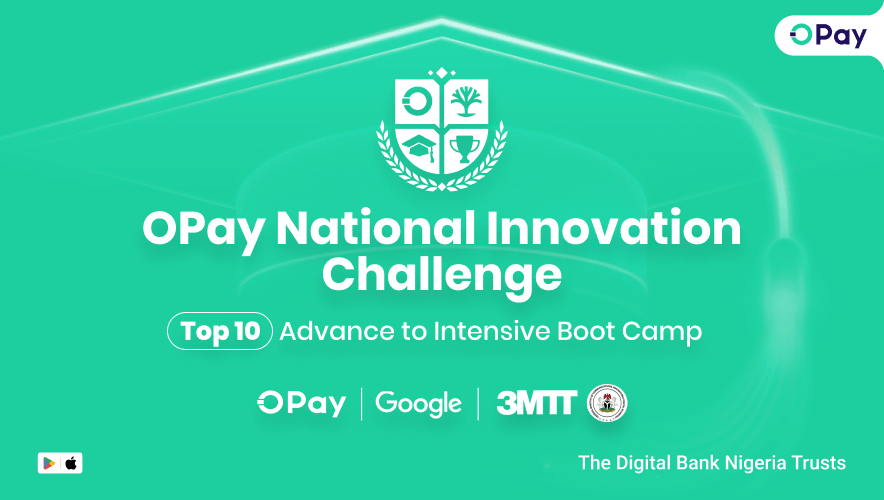
In a bid to empower young Nigerians with the skills, opportunities and support needed to build solutions for real-world challenges, OPay, a leading fintech company in Nigeria, in partnership with Google and the Federal Government’s 3 Million Technical Talent (3MTT) programme, has announced the top 10 teams advancing to the next stage of its National Innovation Challenge, an initiative under the expanded OPay Scholars Programme.
The call for applications attracted over 11,000 students and 2,200 teams, reflecting strong interest and a growing appetite among young Nigerians to develop innovative solutions to challenges across sectors.
Following a rigorous selection process, 48 teams were shortlisted to participate in a six-week employability Webinar designed to strengthen their knowledge, build workplace-relevant skills and prepare them for the next stage of the challenge.At the end of the Webinar stage, 10 outstanding teams emerged as the top teams of the National Innovation Challenge and will now advance to an intensive Boot Camp. At the Boot Camp, the teams will work with experienced mentors and industry professionals to further develop, test and refine their solutions ahead of the final stage of the challenge.
Speaking on the challenge, Itoro Udoh, CSR Manager, OPay, said the programme is focused on creating practical pathways for young Nigerians to turn their ideas and skills into opportunities.
“Beyond the challenge, our goal is to equip young Nigerians with practical skills, mentorship and pathways to opportunities that can create lasting impact.”
With a total prize pool of N18 million, the National Innovation Challenge goes beyond recognising innovative ideas. It provides participants with opportunities to gain practical experience, strengthen their solutions and engage with professionals within the innovation and technology ecosystem.
The initiative also creates opportunities beyond the competition. Students who score exceptionally well during the Webinar stage will be considered for the OPay Futures pipeline, providing access to potential three-month internship opportunities with OPay and other partner organisations.
Through the National Innovation Challenge, OPay is strengthening its commitment to supporting education, skills development, innovation and employability among young Nigerians. As the top 10 teams advance to the Boot Camp, they move one step closer to transforming their ideas into solutions that can address real-world challenges and create a meaningful impact.
Meet the Top 10 Teams of the OPay National Innovation Challenge:
Lyrclip – Miva Open University; ResearchFlow – Olabisi Onabanjo University; CampusCheck – Federal University, Oye-Ekiti; Veripay – MOAUM, Benue State University; CoursePass – Lagos State University of Science and Technology; Teamcobuild – Nnamdi Azikiwe University, Awka; Verified Hands – Ahmadu Bello University; SkoolConnectNG – Yaba College of Technology; Thrifty – Ahmadu Bello University; and Team Paye – Adeleke University.
For more information, visit www.opayweb.com/innovation-
About OPay
OPay was established in 2018 as a leading fintech company in Nigeria with the mission to make financial services more inclusive through technology. The company offers a wide range of payment services, including money transfers, bill payments, card services, airtime and data purchases, and merchant payments, among others. Renowned for its fast and reliable network and strong security features that protect customers’ funds, OPay is licensed by the CBN and insured by the NDIC with the same insurance coverage as commercial banks.

By Tony Obiechina, Abuja
The Central Bank of Nigeria (CBN) said recent reforms in the foreign exchange market, monetary policy framework and banking sector recapitalisation programme have strengthened the foundations of Nigeria’s financial system and positioned it for greater resilience.
CBN Deputy Governor, Corporate Services, Dr Mohammed Sani Abdullahi, disclosed this on Tuesday in Abuja while declaring open the 38th CBN Seminar for Finance Correspondents and Business Editors.
The seminar, themed “Towards a Robust and Resilient Financial System in the Post-Banking Sector Recapitalisation Era,” brought together financial journalists and business editors to examine the future of Nigeria’s financial system.
Abdullahi said the reforms were introduced to restore stability, rebuild confidence and refocus the apex bank on its core mandate following the assumption of office by the current management three years ago.
He acknowledged the role of the media in communicating and scrutinising policy decisions during a period of significant economic reforms.
“You reported difficult decisions when outcomes were still uncertain. You asked questions as markets adjusted and helped businesses and households understand what the changes meant. You also challenged us, as you should,” he said.
According to him, when the current management took over in 2023, Nigeria was confronted with significant macroeconomic and financial sector challenges, including a fragmented foreign exchange market, exchange-rate distortions, pressure on external reserves, rising liquidity levels and declining investor confidence.
He noted that the wide gap between official and parallel-market exchange rates created incentives for arbitrage and weakened confidence in the formal foreign exchange market.
To address the challenges, the CBN consolidated multiple foreign exchange windows, removed restrictions on 43 categories of imports that had previously been excluded from accessing official foreign exchange, cleared verified foreign exchange obligations and introduced measures to improve market transparency.
Abdullahi said the reforms were complemented by tighter monetary policy, stronger liquidity management and the gradual winding down of intervention financing programmes.
He added that the banking sector recapitalisation programme announced in 2024 was designed to ensure that banks have adequate capital buffers to support economic growth and withstand future shocks.
“Three years on, the foreign exchange market is showing greater stability, while the recapitalisation programme is strengthening the capacity of banks to support the economy as broader reforms take hold,” he said.
Earlier, the Director of Corporate Communications and Investor Relations, Michael Chukwuemeka Akuka, described the seminar as an important platform for engagement between the CBN and financial journalists.
He said the focus had shifted from whether banks could successfully raise fresh capital to how a recapitalised banking sector would deploy the additional resources to support economic development and sustain public confidence.
“It is no longer whether the banking sector can raise capital, but what a recapitalised banking sector does with the additional capital that has been raised,” he said.
Akuka urged journalists to interrogate policy issues beyond the headlines and develop a deeper understanding of economic reforms.
“The quality of public understanding of monetary policy and financial system reform depends substantially on the accuracy, context and judgement that finance correspondents and business editors bring to their reporting,” he added.
Also speaking, the Director of Stakeholder Engagement and Institutional Relations, Hakama Sidi-Ali, commended finance correspondents and business editors for their support and contributions to the transformation of the CBN’s communications strategy over the past three years.
She attributed many of the Bank’s communication successes and recognitions to constructive engagement with the media and urged journalists to extend the same support to the new leadership of the Corporate Communications and Investor Relations Department.The two-day seminar featured paper presentations by regulators, banking industry leaders and media professionals on banking sector reforms, financial stability and the evolving role of monetary policy in Nigeria’s post-recapitalisation environment.




Wike Approves Contracts for Digitization of FCT High Courts
ShareThe Minister of the Federal Capital Territory (FCT), Nyesom Wike, has approved the award of contracts for the digitisation of...

OPay Names Top 10 Teams in N18m National Innovation Challenge
ShareIn a bid to empower young Nigerians with the skills, opportunities and support needed to build solutions for real-world challenges,...


CBN Sets Agenda for Post-Recapitalisation Banking
ShareBy Tony Obiechina, Abuja The Central Bank of Nigeria (CBN) said recent reforms in the foreign exchange market, monetary policy...

Gunmen Abduct 18 Women in Benue, 47 Niger Farmers
ShareFrom Attah Ede, Makurdi, and Dan Amasingha, Minna Fresh fears over the worsening insecurity across the country emerged on Tuesday...


NASS Extends 2025 Capital Budget Again, Adjourns to Oct 13
ShareBy David Torough, Abuja The National Assembly on Tuesday extended the implementation of the capital component of the 2025 Appropriation...


Police Detain Woman for Alleged Killing of Co-wife in Bauchi
ShareThe police command in Bauchi State, said it has apprehended a housewife over alleged killing of her co-wife following a...


FRSC Deploys 170 Ambulances Nationwide for Emergency Rescue
ShareThe Federal Road Safety Corps (FRSC) has deployed more than 170 ambulances across the country as part of efforts to...


NBA Decries Rising Insecurity in Plateau, Urges Urgent Action
ShareThe Nigerian Bar Association (NBA) has decried the spate of security challenges currently confronting Plateau and other parts of Nigeria....


Benue Begins Compilation of Out-of-school Children
ShareThe Benue Government has begun compilation of out-of-school children as part of efforts to improve child protection and access to...


NAPTIP Uncovers Suspected Baby Trafficking Ring in C’River
ShareThe National Agency for the Prohibition of Trafficking in Persons (NAPTIP) has uncovered an alleged child trafficking operation involving newborn...