
Education
Payment for Revitalisation of Tertiary Institutions Underway – Minister

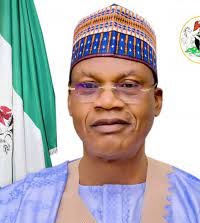
The Minister of Education, Prof.Tahir Mamman says payment for the revitalisation of the tertiary institutions in the country is underway.
Mamman also said the Federal Government had approved the payment of salary increase of 35 per cent to academic and 25 per cent to non-academic staff in further commitment to their welfare.
He said this in Abuja on Monday at an event to mark the 60 years anniversary of Committee of Vice Chancellors of Nigerian Universities (CVCNU).
The minister also challenged the committee to place Nigerian universities among global institutions that use science and technology as vehicles for solving their problems.
He also said that with regards to energy, steps had been taken to power the universities through gas-powered facilities using the PPP window provided by the government.
“The scheme is intended to start with 18 universities in the first instance and the shortlisted universities will be contacted appropriate stage of the project.
“The centrality of the power to service delivery, research and cost savings cannot be over emphasised.
” Due to the recognition of the centrality of the education sector, a committee was set up to provide a roadmap to guide policy, provide implementation plans, deliverables, key performance indicators (KPIs).
“And timeline was put in place and that the report of the committee is expected to be submitted this month,” he said.
He noted that arrangements had been concluded for a meeting with heads of key security outfits to review and enhance the security cover of the schools.
He added that the role of government is to continue to support the public sector universities with appropriate resources while encouraging the proper development of the private universities that are now in the greater numbers.
He however urged Nigerian universities to produce competent and skilled graduates as they are expected to tap, explore and exploit other sources of funding to run the system as the convention globally to support government funding.
“The government is also keenly interested in having a stable academic calendar for appropriate learning, research, collaboration and student exchange to take place,” he added.
Celebrating 60 years of existence, the minister called on the committee to do more to bridge the gap between industries and the institutions through their leadership.
Meanwhile, the President, Academic Staff Union of Universities (ASUU), Prof. Emmanuel Osodeke, said the problem of godfatherism had entered the university system causing big crisis.
Osodeke said universities should be run the way it should just like in the 60s and 70s where there was little or no interference from the government officials.
According to him, there is need to unbundle the stranglehold of the bureaucrats on Nigerian university system and let them run the way they were run in the past.
“We must take our universities to the uni-versatility of universities not to region universities,” he said.
The ASUU chairman explained that the university first generation lecturers are those with first class and second class upper who want to be lecturers even when they had opportunities to be in banks.
He said the then lecturers preferred to lecture than other jobs, saying those in second generation are those with same grade with first generation but for quest for money they left saying they don’t belong there and don’t want to be slaves.
He further said the third generation lecturers are those with third class and HND who went for post-graduate diplomas before entering into the university system through god-fatherism while the fourth are those who long to make money from the system.
“Unfortunately when the first and second generation of lecturers are retiring and leaving the country, the system is being dominated by third and fourth generation of lecturers,” he said.
He said universities no longer follow the process of advertising and letting people apply for the positions and get interviewed to get into the university but rather they come in through god-fatherism.
“Today, before a vice-chancellor can employ any lecturer, he has to go and get permission from the Head of Service (HOS) and when he employs, he has to go to the Accountant-General Office to beg for people employed to be paid salary.
“How can we run a system like that? We should be sad, there is nothing to celebrate.
“Our job as vice-chancellors are online, there is need for unbundling of the stranglehold of the bureaucrats on Nigerian university system,” he said.
Osodeke also decried the state of inadequate lecturers and funding in the system, saying, the least budget for education in Africa is 12 per cent; but in Nigeria it was 3.8 per cent in 2022.
The Chairman of CVCNU, Prof. Lilian Salami, said the event was out to discuss the gains, value which the committee had added to the system and its challenges.
Salami, while believing that the trajectory would change, promised to go to the drawing board and proffer solutions on the way forward to a promising university system.
“We are here to add value to the education system in Nigeria especially the tertiary education system in Nigeria.
“The gathering is not only to celebrate the 60 years anniversary or to receive or to be given but to reengineer the system so that we would have a better future and posterity will then judge us positively,” she said.
She said they never compromised in giving quality of education to Nigerian students as it is their commitment to continue to give in their best all in spite of the challenges in the system.
Also, the CVCNU Secretary-General, Yakubu Ochefu, said they expected value addition from the stakeholders while providing leadership to Nigeria university system.
“The Nigeria university system is 75 years old while globally the university system is over a thousand year old so if you put us in that time frame you will see that we are still taking baby steps.
” We are not where we use to be, we have made a lot of improvement in the system but there is room for improvement.
“We believed that now that we have open our doors to our stakeholders, they will look at us and support the system, it is not federal government alone, not the state government alone and not the people that have decided to invest in education alone but for all of us, ” he added. (NAN
The Founder and Chancellor of the Afe Babalola University Ado-Ekiti (ABUAD), Aare Afe Babalola has announced plans to forward proposals on his idea of quality, functional and impactful education to President Bola Tinubu and other key government officials.
The Founder and Chancellor of the Afe Babalola University Ado-Ekiti (ABUAD), Aare Afe Babalola has announced plans to forward proposals on his idea of quality, functional and impactful education to President Bola Tinubu and other key government officials.
Babalola disclosed this in his letter of appreciation to the Chairman of United Nigeria Airlines, Prof Obiora Okonkwo, who was a Guest Lecturer at the recent convocation ceremony of ABUAD held at university campus in Ado Ekiti.
The legal icon said he had constituted a committee of distinguished academics at ABUAD to examine the contents of the lecture and other related documents, particularly their functionality and relevance to Nigeria’s development.
The committee, according to him, would study Okonkwo’s 14th convocation lecture titled, “Functional Education and the Nigerian Project: Strategic Human Capital Development for National Renewal,” delivered at ABUAD during its 14th convocation ceremony.
The findings, he said, would be transmitted to appropriate authorities, including the President, the Minister of Education, the Minister of Health, the Minister of Agriculture and the Executive Secretary of the National Universities Commission, NUC, for consideration.
Babalola said the initiative was driven by his conviction that Nigeria’s development challenges could not be adequately addressed without quality, functional and impactful education.
He also called on the Federal Government to increase investment in education, while urging wealthy and patriotic Nigerians to emulate the culture of philanthropy prevalent in the United States and Britain, where individuals and institutions support educational establishments.Buy Maps
According to him, sustained private-sector support for education remains critical to building institutions capable of producing globally competitive graduates and addressing national development needs.
He said: “The feelers I have been getting on the well-researched and articulately delivered lecture point to the fact that the lecture was not only well understood, but that its contents will remain indelible in the minds of the audience for a long time to come.”
“It is now obvious that both of us have something in common: How to make this country better. When the result of the findings of my teachers are out, we will send them to the appropriate authorities such as the President and Commander-In-Chief, the Minister of Education, the Minister of Health, the Minister of Agriculture and the Executive Secretary of the National Universities Commission, NUC, among others for them to appreciate the place and import of quality, functional and impactful education.
“Government must be prepared to spend more on Education. Patriotic and well-to-do-Nigerians should emulate then practice in the United States of America and England where well-to-do individuals support private institutions in those countries, that is why our university, Afe Babalola University, Ado-Ekiti, ABUAD, is the clear leader even though it is barely 16 years old”.

By David Torough, Abuja
The founder of Menroi Rural Priority Organisation, Professor Kohol Iornem has challenged leaders of the National Union of Benue State Students (NUBESS) in the Diaspora to prioritise service delivery, accountability and measurable achievements over the mere pursuit of leadership positions.
Kohol, a Professor of Business Management and John Maxwell Certified Leadership Speaker, Trainer and Coach, gave the charge while delivering a keynote address at the inaugural NUBESS Diaspora Leadership Conference held virtually on November 14, 2026.
Speaking on the theme, “The Essence of Leadership: Making Today’s Opportunities the Foundation for Tomorrow’s Leadership,” he maintained that occupying an executive position does not automatically make one an effective leader, stressing that leadership credibility comes from problems solved, initiatives introduced and lasting improvements achieved.
“A position gives you authority, but your actions give you credibility. Your achievements give you a legacy,” he said.
Prof. Kohol urged chapter presidents to adopt a 90-day leadership challenge involving identifying students’ needs, developing practical solutions, mobilising resources and implementing measurable projects. He also stressed transparency in managing association funds and advised executives to document their achievements as evidence of their leadership experience.
Addressing factionalism and declining student participation in NUBESS activities, the professor recommended neutral mediation and urged leaders to make the association more attractive through scholarships, bursaries, entrepreneurial training, employability skills and career development opportunities.
He also pledged to facilitate entrepreneurial training and connect NUBESS leaders with Benue indigenes in the Diaspora to support student-focused initiatives.
Professor Kohol holds an MBA and PhD from Cardiff Metropolitan University, United Kingdom, and is a Fellow of Advance HE. He currently teaches Business Management at the London College of Contemporary Arts and serves as Director of Programmes at the London Graduate School.
A former Senior Lecturer at Regent College London, he is a member of the British Academy of Management and Fellow of the Institute of Management Consultants. He is also a published author, with his book, A Social Science Student’s Guide to Surviving Your PhD, published by Open University Press.
Beyond academia, Prof. Kohol served as President of Mzough U Tiv United Kingdom (MUTUK) from 2019 to 2023 and founded Menroi Rural Priority Foundation and Mzehemen u Tiv Foundation to promote rural development and improve opportunities for disadvantaged communities in Nigeria.
The conference, convened by NUBESS Diaspora President, Rt. Comr. Tsaha Ernest, in collaboration with the union’s Director of Inter-Camp Affairs, Rt. Comr. Iorwa Timothy Avalumun, also featured Dr Ejeh Sunday of the University of Abuja, who spoke on rebuilding NUBESS through accountability and leadership beyond office positions.

A graduate of the University of Maiduguri, Shianya Ebwaseh, said the Nigerian Education Loan Fund (NELFUND) helped improve her Grade Point Average (GPA) to 3.50 through financial support that enabled her to concentrate on her studies.
Ebwaseh, who graduated from the Department of Zoology, Faculty of Life Sciences, said this in an interview on Monday in Maiduguri.
She said financial difficulties had previously affected her academic performance, as she struggled to meet her daily needs while pursuing her degree.
The graduate said she resorted to selling fried chips and groundnuts on campus to support herself, sometimes missing lectures because of the time and energy required to run the business.
According to her, the introduction of NELFUND’s student loan scheme relieved her financial burden through tuition support and a monthly N20,000 upkeep allowance.
“Before NELFUND, I struggled with my GPA because of financial challenges. I sometimes missed lectures after spending hours frying and packaging chips for sale.
“But when NELFUND came, I stopped the business and concentrated on my studies. My GPA improved to 3.50, which is Second Class Upper,” she said.
Ebwaseh said the financial support also enabled her to attend lectures regularly, purchase learning materials and prepare adequately for tests and examinations without constant worries about money.
She added that her examination scores improved significantly after she began receiving the support, attributing the change to increased concentration and financial stability.
The graduate, who said she accessed the scheme in her third year, described the application process as simple and encouraged other eligible students to apply.
She also said the programme had helped financially disadvantaged students remain in school, particularly those whose parents could not afford tuition fees and upkeep.
Ebwaseh appealed to the Federal Government to sustain the initiative, emphasising that withdrawing the support could expose many students to financial difficulties and possible dropout.
She said the scheme had given beneficiaries an opportunity to pursue their academic ambitions with fewer financial distractions.(NAN)




Customs Unveils Novara to Spotlight Officers’ Challenges
ShareBy Tambaya Julius, Abuja The Nigeria Customs Service (NCS) has unveiled a 79-episode television drama series, Novara, to showcase the...


FCT Upgrades 20 PHCs Under World Bank-supported IMPACT Project
ShareBy Laide Akinboade, Abuja The Federal Capital Territory Administration (FCTA) has upgraded 20 Primary Health Centres (PHCs) across the territory...
DESOPADEC Set to Complete, Hand over Agweyom Civic Centre before Christmas
ShareFrom Francis Sadhere, Delta The Delta State Oil Producing Areas Development Commission (DESOPADEC) has assured residents of Agweyom, Agwetiti Community...


Delta Moves to Deploy Doctors to Underserved Rural Communities
ShareFrom Francis Sadhere, Delta The Delta State Government has unveiled plans to deploy more doctors and other medical personnel to...
BTOCARES: Ondo Families, Students, Farmers Celebrate as Tunji-Ojo’s Intervention Eases Hardship
ShareBy David Torough, Abuja Beneficiaries of the BTOCARES humanitarian initiative in Ondo State have expressed gratitude to the Minister of...
Prosperity Cup Organizers Mourn Bayelsa Boat Mishap Victims
ShareFrom Mike Tayese, Yenagoa The organisers of Nigeria’s biggest grassroots football spectacle, the Bayelsa Governor’s Football Tournament, popularly known as...


HIV/AIDS: 20 Per Cent of People Living with Don’t Know Their Status – FG
ShareBy Laide Akinboade, Abuja Director-General of Nigeria’s National Agency for the Control of AIDS (NACA) is Dr. Temitope Ilori, on...


INEC Tasks Media on Fight against Electoral Misinformation Ahead 2027
ShareBy Orjime Moses, Abuja The Independent National Electoral Commission (INEC) has urged journalists, media organisations and social media users to...
No Plans to Increase Electricity Tariff – Tegbe
ShareThe Minister of Power, Joseph Tegbe has assured Nigerians that there will be no increase in electricity tariffs in 2027,...

FCCPC Shuts Lagos Estate Firm over Property Breach
ShareThe Federal Competition and Consumer Protection Commission has shut the business premises of Meridian Park Real Estate Company in Lagos...