
POLITICS
PDP, APC Trade Words over Gov. Uzodinma’s Scorecard in Three Years

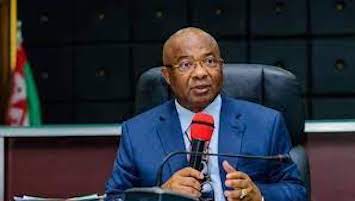
The Peoples Democratic Party (PDP) and the ruling All Progressives Congress (APC) in Imo have disagreed over Gov. Hope Uzodimma’s scorecard within three years in office.
The News Agency of Nigeria (NAN) reports that Gov.
Uzodimma assumed office on Jan. 14, 2020, following a judgment of the Supreme Court which affirmed his victory at the 2019 governorship election in the state.While the PDP Publicity Secretary, Mr Collins Opurozor, said Uzodimma’s three years were enmeshed in economic stagnation, mass penury, insecurity and infrastructural decay, the APC Publicity Secretary, Mr Cajetan Duke, dismissed the statement.
In a statement signed by the PDP publicity secretary and made available to the News Agency of Nigeria (NAN) in Owerri, Opurozor argued that the greatest casualties of Gov. Uzodimma’s emergence are the Imo people.
He alleged that Uzodimma had, in the past three years, worked so hard to ensure that all the institutions of democracy in the state are dismantled and full-blown dictatorship firmly established.
Opurozor further claimed that bloodshed, poor healthcare, collapse of education, dearth of agricultural productivity, conscription of the political space and violation of human rights have become the order of the day.
“For instance, the local government system, which is a mechanism put in place to expand and sustain the democratic space and spread democratic values, has been destroyed in Imo State.
“This is a huge tragedy! Imo is a state that has over 70 per cent of her entire population living in the rural areas.
“Yet, the only channel through which governance can be delivered to the people has been completely run aground,” he contended.
Opurozor also claimed that in last 36 months, Uzodinma had received from the Federation Accounts Allocation Committee (FAAC) a total of N180.6 billion meant for the Local Governments in the state.
“Today, there is nothing on ground that shows that even a kobo has gotten to the Local Government Areas.
“Sen. Hope Uzodimma must, without any further delay, tell Imo people where he kept the N180.6 billion belonging to the Local Governments,” he said.
He argued that Uzodimma had made incessant borrowings a state policy which had plunged the state into irredeemable debt slavery.
According to him, Imo is currently the most indebted Igbo state, with a debt profile which stands at N220 billion.
“That means that the regime of Sen. Uzodinma has doubled the debt profile in less than three years and the fundamental question is: What has the regime done with over N100 billion it has borrowed so far?”
He said in spite of the borrowings, Uzodimma had made no effort at re-jigging investments in the hugely vital agro-industrial sector where Imo has major comparative advantage.
“What Senator Uzodinma really needs to explain to Imo people is how he diverted a whopping sum of N56 billion on the pretence of constructing the 36-kilometer Owerri-Orlu road.
“Does the administration in Imo want the people to believe that a kilometer of road was done at the rate of N1.5 billion?
“This same Craneburg Construction Company, which works for Uzodinma, has also done the Lekki-Epe Road in Lagos State and the Ibadan Circular Road in Oyo State.
“In both instances, even drainages and terrains rougher than Imo, the cost never exceeded N450 million per kilometer, but in Uzodinma’s Imo, the cost of a single kilometer of road by the same company suddenly became N1.5 billion,” he said.
Opurozor estimated that the 2023 budget revenue of the state would be sourced from FAAC, 13 per cent derivation, internally generated revenue, intervention grants would amount to N120.6 billion.
He maintained that Gov. Uzodimma is already planning to spend N475 billion within the year with the deficit of N354 billion which would be raised through borrowings.
“The loans would be solely dedicated to expanding Uzodimma’s political war chest and financing sundry other electoral malpractices, including massive vote buying.
“Already, agents of Imo APC have started distributing forms, requesting for bank accounts and PVC details of Imo voters so as to commence the first phase of this brazen electoral fraud,” he alleged.
He claimed that the party had intercepted credible intelligence about the planned role which the Uzodinma-backed Ebubeagu Militia would play in this process of derailing democracy in the state.
He therefore urged the Inspector-General of Police to immediately disband Ebubeagu Militia, claiming that since Ebubeagu began its operations in the state, insecurity, killings, abductions and arson have risen astronomically.
But dismissing the claims however, the APC Publicity Secretary, Mr Cajetan Duke, said the PDP should rather praise Uzodimma for the giant strides of development in the past three years.
Duke said: “We are glad today that the opposition PDP has confirmed by the contents of their press conference of the reconstruction of the Owerri-Orlu road.
“Their argument on the cost of the project is neither here nor there!
“PDP should stop reminding Imolites of their seven months illegal occupation of Douglas House and the unimaginable looting of our common patrimony.
“When they talk about the January 14th, 2020, landmark judgment of the Supreme Court, Imo PDP validates our position that the insecurity in the state is politically contrived,” he added.
Duke contended that the PDP’s argument on borrowing had reduced opposition politics to a roadside gossip as borrowing to fund investment in the critical sector of the economy was not a crime.
“Almost three years in office, nobody, including the opposition PDP, has accused Gov. Hope Uzodimma of converting public wealth to personal and private uses.
“No one has accused the governor of building a new house or renovating his old house in the village.
“Nobody has accused Uzodimma of appropriating any public land or asset to himself or any member of his family since inception of this administration,” he argued.
The APC publicity secretary further described PDP’s accusation of borrowing money to compromise the forthcoming general elections as an “acknowledgement of defeat”.
He said Imo PDP was only intimidated by the popularity of the APC-led shared prosperity administration of Gov. Hope Uzodimma.
“Their strategy is to do everything humanly possible to discredit the outcome of the forthcoming election.
“While they were busy labouring, albeit in vain, to undermine this administration, the Supreme Court, today nullified the Imo West senatorial primaries of the PDP,” he added. (NAN)





By Elijah Oguche, Abuja
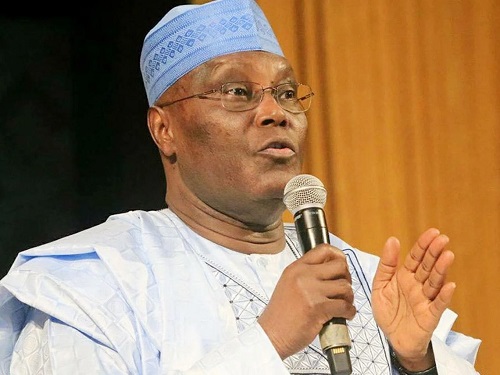
Former Vice President Atiku Abubakar has challenged President Bola Tinubu to identify those who allegedly collected billions of naira from ministers seeking appointments into his cabinet, as the president intensifies his campaign for a second term ahead of the 2027 general election.
Atiku’s demand comes amid renewed political exchanges between the ruling All Progressives Congress (APC) and opposition figures, with Tinubu appealing to Nigerians to renew his mandate while defending his administration’s economic policies and record in office.
The former vice president, who is a presidential candidate of the African Democratic Congress (ADC), raised the allegation in a post on X on Friday, citing remarks attributed to Alwan Hassan, a spokesperson for Tinubu’s Presidential Campaign Council.
“Bola @officialABAT, your campaign spokesman has admitted that ministers paid billions in bribes to secure their appointments. You appointed them, so who received the money? Nigerians deserve names, not silence,” Atiku wrote.
The allegation, which has not been independently established in the material available, has prompted calls for the presidency and relevant anti-corruption agencies to clarify the claims and determine whether any wrongdoing occurred.
Atiku also criticised the administration over the rising cost of living and alleged restrictions on funding to ministries, arguing that the consequences of government decisions were being borne by ordinary Nigerians.
“Your government’s reckless decisions have driven the cost-of-living crisis. And when you withhold funds from ministries because you distrust your own ministers, Nigerians are left paying for a government that has abandoned them,” he added.
In a related statement posted on X, Atiku’s Media Adviser, Paul Ibe, called on the Economic and Financial Crimes Commission (EFCC) and the Independent Corrupt Practices and Other Related Offences Commission (ICPC) to investigate the allegation and obtain any evidence available.
Ibe said the allegation was attributed to Hassan, who reportedly made the remarks while defending restrictions on funding to ministries.
He questioned which ministers allegedly paid for their appointments, who received the money, what evidence supported the claim and what Tinubu knew about it.
According to him, allegations that public officials paid to secure appointments raised serious questions about accountability and the purpose of public service.
“The danger is obvious: when public office becomes a purchased investment, public service risks becoming an exercise in capital recovery,” Ibe said.
He argued that, if substantiated, the allegation could undermine public confidence in the administration and raise concerns that some officeholders might prioritise recovering their alleged investments over delivering essential services.
Ibe maintained that restricting ministry funding could not replace a proper investigation into possible corruption, urging the anti-graft agencies to examine the claims and investigate anyone implicated, regardless of political affiliation or position.
He also called on Tinubu to address the matter directly, insisting that Nigerians deserved clarification on allegations involving members of the president’s cabinet.
However, Tinubu, speaking at the flag-off of the APC campaign in Kaduna on Saturday, appealed to Nigerians to give him another term, promising that his administration would continue working towards prosperity, economic recovery, growth and greater opportunities for citizens.
The president urged supporters to vote for the APC at all levels, including the presidency, governorships, the National Assembly and state Houses of Assembly.
He accused opposition parties of relying on criticism and hostility rather than presenting credible alternatives to the government’s policies.
Addressing concerns over hunger and poverty, Tinubu blamed previous administrations for creating the conditions his government was now attempting to address.
“I hear my opponents talking about hunger and poverty. Who created it? They did. They created hunger. They created poverty. We are trying to eradicate it,” he said.
The president also defended his administration’s economic direction, calling on Nigerians to support its policies and pointing to efforts to ensure regular salary payments and create opportunities for citizens.
He urged eligible voters to obtain their Permanent Voter Cards and participate in the forthcoming elections.
Tinubu’s appeal for a fresh mandate places the administration’s economic performance, infrastructure projects and social interventions at the centre of the emerging 2027 political contest, as opposition figures intensify scrutiny of its record.
Earlier, Kaduna State Governor Uba Sani expressed confidence that Northern Nigerians would support Tinubu for another term, citing federal and state interventions in infrastructure, security, education and healthcare.
Sani recalled Tinubu’s visit to Birnin Gwari during the 2023 presidential campaign, when the area was facing serious security challenges, and said the president had followed through on commitments relating to roads and security.
He cited the ongoing reconstruction of the Zaria–Funtua–Gusau–Sokoto road and the Abuja–Kaduna expressway, which he said was about 95 per cent complete.
The governor also highlighted the reopening of more than 300 schools and over 150 primary healthcare centres previously shut because of insecurity, alongside other interventions aimed at improving access to essential services.
On education, Sani said the North-West had benefited from approximately ₦250 billion in student loans, which he described as part of the administration’s support for young people.
He argued that the region’s political support should be based on the administration’s performance and the impact of its policies rather than sentiment alone.
Sani, however, cautioned APC members against underestimating the opposition, warning that political campaigns were increasingly using artificial intelligence and other digital tools to influence public opinion.
Also speaking at the rally, Senator Abdullaziz Yari, representing Zamfara West and Director-General of the APC Presidential Campaign Council, declared that political stakeholders in the North were prepared to work towards Tinubu’s re-election.
Yari argued that the administration’s record in the economy, infrastructure, health, education and human capital development provided grounds for seeking continuity.
He cited the removal of fuel subsidy, changes in the exchange-rate regime, trade performance and social intervention programmes as areas the APC intended to highlight during its campaign.
According to him, party stakeholders had been engaging traditional rulers, religious leaders and other influential figures to build support for Tinubu’s return in 2027.
Yari also rejected suggestions that Northern political leaders would abandon the understanding of power rotation between the North and South, insisting that the region remained committed to the president’s re-election bid.
The rally brought together APC governors and other party leaders, who presented the administration’s projects and policies as evidence of progress and urged voters to support continuity.
The contrasting developments underscore the issues likely to shape political debate ahead of the 2027 elections: economic hardship, public accountability, infrastructure delivery, social welfare and confidence in government institutions.
While Atiku and his associates are demanding answers over allegations of payments for ministerial appointments, Tinubu and APC leaders are seeking to consolidate support by highlighting what they describe as achievements in economic reform and development.
The allegation concerning ministerial appointments remains a matter requiring clarification and, where evidence warrants, investigation by the appropriate authorities.
For Nigerians, the emerging political contest is likely to test not only the competing claims of the ruling party and opposition but also their ability to demonstrate transparency, deliver public services and address the economic pressures confronting households and businesses.
POLITICS
2027: Don’t Call Benue People Shenanigans, Alia not answerable to you- Ex- Amb, Tarzoor Tells Ortom, Wike.
From Attah Ede, Makurdi
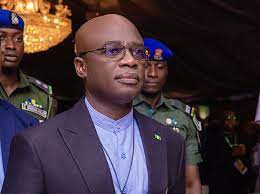
Ex -Nigeria’s Ambassador to Namibia, Terhemen Tarzoor, has warned the immediate past Governor of Benue State Samuel Ortom and the Minister of the Federal Capital Territory (FCT), Nyesom Wike, to stop making derogatory remarks about governor Alia and calling Benue people shenanigans.
He also frown on their recent comments on Governor Hyacinth Alia, the Catholic Church and Federal Allocation accruing to the State.
Tarzoor gave the warning while speaking with journalists in Makurdi, Thursday.
The former speaker of the Benue State House of Assembly, described the ex-governor Ortom’s outing on a TV programme, last week, as inappropriate saying the reported remarks by Ortom referring to Alia as a “419”, “a fake Reverend Father” and calling some Benue people “shenanigans” was uncalled for and condemnable.
Tarzoor insisted that political differences should not justify the use of language capable of undermining the office of the Governor and the dignity of the people of the state.
Tarzoor who is Benue State coordinator of Renewed Hope Initiative (RHI) campaign for President Bola Tinubu ahead of the 2027 general elections, said Ortom should be mindful of his public comments about the incumbent governor.
“My take is that the former governor is not in the position to call the number one citizen 419. He has no right to call him that.”
“Ortom as an elder brother whom I respect, made me worried that political disagreements are being expressed in ways I consider unnecessary and capable of worsening tensions in the state.
“I Ortom’s reported comments on the administration of the Catholic Church, shows that he is not sufficiently informed about the Church’s financial accountability mechanisms to make such assertions”, Tarzoor said.
He also expressed reservations that the former Governor had the audacity to pontificate on the Catholic Church administration quoting Ortom as saying that “The Reverend Father (referring to Alia) is running Benue State like a Parish where priests just earn moneys, offertories and spend as they want. Invariably, he is saying there is no accountability in the Catholic Church.
“As a Knight of St. John International, I want to disabuse his mind and the minds of people who listened to that programme that there is a high level of accountability in the Catholic Church,” Tarzoor said.
He explained that the Catholic Church vehemently upholds a strong administrative accountability structures, from the priests to the church faithful and reasons why they have church councils, elders and laity councils, to provide oversight and ensure that priests were accountable to the faithful.
“There is no Catholic priest that can just earn money and spend at ease in the Catholic Church and I therefore say Ortom does not have the equipage to pontificate on such a subject matter,” he said, urging him to be cautious about making statements on the internal administration of a religious institution.
Tarzoor maintained that public officials, particularly those who had occupied high political offices, should demonstrate responsibility in their public engagements and avoid comments that could be interpreted as attacks on religious institutions.
The former lawmaker, who also faulted what he described as an unfair comparison between Ortom’s eight-year administration and Alia’s government, which has served for three years plus, argued that any assessment of the two administrations should consider their respective periods in office, resources available and development targets before drawing conclusions about their performances.
Tarzoor further condemned Ortom’s reported description of the people of Benue as “shenanigans,” saying such language was unbecoming of a political leader who had benefited from the support of the state’s electorate.
“I see that as repugnant, I see that as unbefitting of a personality who have benefitted enormously from the votes of Benue people all his life.”
He urged political leaders to distinguish between disagreements with an incumbent administration and the need to respect the people they once governed, saying “If he has issues, he should apply the right language, apply decorum in the manner to address matters. That is the only legacy we can leave for our children, those yet unborn and not to talk down on someone in the person of the Governor because you are bitter.”
On Wike’s reported comments concerning the revenue accruing to Benue State and the need for the state government to disclose its income and expenditure, Tarzoor questioned what he considered the minister’s selective attention to the state’s finances.
The former Ambassador who wondered when Wike became the Minister of Finance or Minister of Information, argued that if the FCT minister’s objective was to promote transparency in the management of public funds, similar questions should be directed at other states rather than concentrating on Benue.
“Has he spoken about the one coming to Nasarawa, or the one going to Rivers State? Has he published the one in Rivers? Has he published the one in Kano?” Tarzoor asked stating that the disclosure of public revenue and expenditure was a legitimate issue but insisted that such demands should be pursued through appropriate channels and applied consistently across the country.
The former governorship candidate of PDP alluded that the Alia administration was open to scrutiny, noting that members of the public could request relevant government records through established procedures, including the Freedom of Information framework.
“Governor Hyacinth Alia is open to all criticisms. The law is clear on freedom of information. You test it; the records will be there for you to see,” he said.
“I must caution people against uncoordinated demands for financial information. Government officials should be allowed to concentrate on governance while legitimate enquiries were handled through appropriate channels.
“The media had an important role to play in promoting accountability by seeking accurate information from relevant government agencies rather than relying solely on political exchanges”, he said.
By Tambaya Julius, Abuja
The Independent National Electoral Commission (INEC) has completed nine of the 14 activities on its timetable for the 2027 general elections, while addressing complaints from political parties over alleged omissions and discrepancies in candidates’ lists.
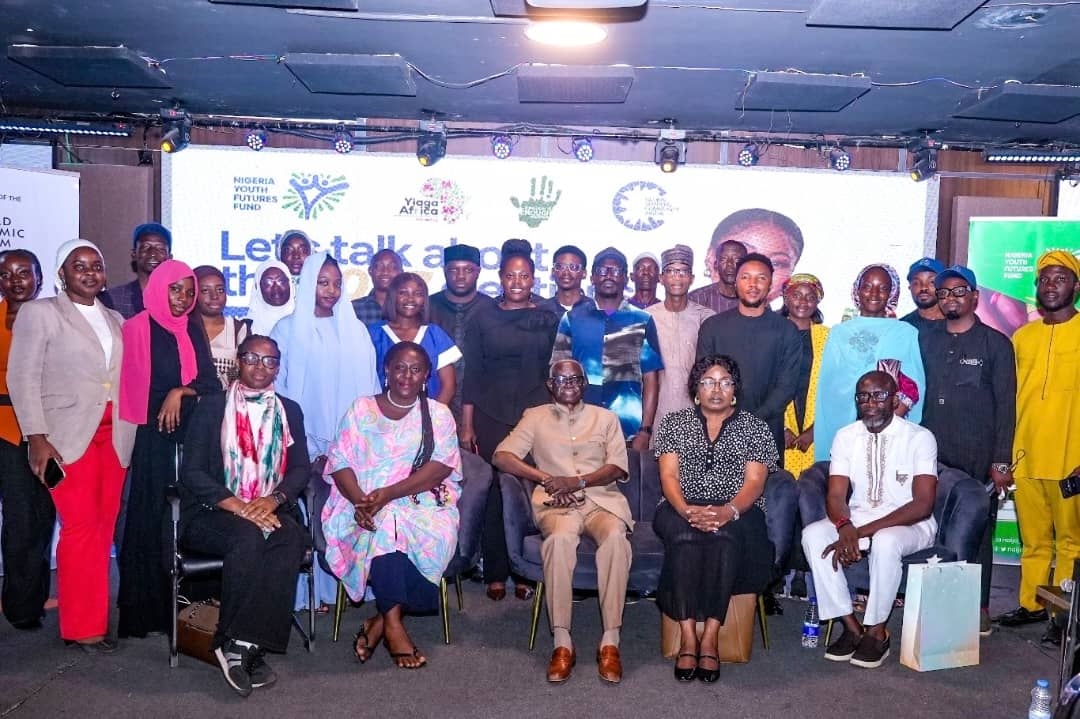
The development emerged at a youth engagement programme in Abuja, where electoral stakeholders also called for measures to protect young voters from violence and strengthen public confidence in the electoral process.
The INEC Chairman, Prof. Joash Amupitan, represented by the National Commissioner for Information and Voter Education, Dr.
Mohammed Haruna, said the commission was reviewing its preparations and working to resolve outstanding issues ahead of the polls.The event, titled “The Electorate: A Youth Dialogue with INEC,” was organised by Abuja Global Shapers Community (AGC) in partnership with Nigeria Youth Futures Fund, Yiaga Africa Abuja and Enough is Enough Nigeria, under the theme, “Let’s Talk About the 2027 Elections.”
Haruna said the commission had made progress on key activities, including the publication of candidates nominated by political parties for elective positions.
He acknowledged that the publication had generated complaints from some parties over alleged omissions and discrepancies, adding that INEC had invited the affected parties to submit petitions for consideration before finalising the list.
He described the voters’ register as central to the electoral process, noting that it would serve as the basis for identifying and accrediting eligible voters on election day.
Haruna also said INEC had increased the frequency of its meetings to review preparations, assess progress and take decisions necessary for the smooth conduct of the elections.
He explained that the commission comprises a chairman and 12 national commissioners responsible for policy decisions, alongside resident electoral commissioners across the 36 states and the Federal Capital Territory.
The Curator of Abuja Global Shapers Community, Solape Sonuga, urged participants to engage INEC on its readiness for the elections and the measures needed to ensure credible polls.
Sonuga described the 2027 elections as particularly important to young Nigerians, saying the engagement was designed to promote youth participation, strengthen voter education and encourage civic responsibility beyond election day.
The Programme Manager for Governance at Yiaga Africa, Yetunde Bakare, called for deliberate efforts to ensure that young Nigerians could participate safely and meaningfully in the elections.
Citing Yiaga Africa’s voting intention survey, Bakari said 84 per cent of Nigerians surveyed were likely or very likely to vote in 2027. She said 61 per cent feared electoral violence could prevent them from participating, while only 40 per cent of young respondents said they were very likely to vote.
She described the figures as a concern for electoral stakeholders, stressing that voter mobilisation alone would not be sufficient without a safe and accessible environment for participation.
Bakare commended INEC’s preparations, including online voter registration, printable Permanent Voter Cards, planned nationwide mock accreditation exercises and efforts to strengthen the governance of electoral technology and artificial intelligence.
She urged the commission to communicate promptly with voters when technical or operational challenges arise, ensure transparency in the use of electoral technologies and make adequate provisions for eligible voters in hard-to-reach communities.
She also encouraged young Nigerians to seek credible information, reject electoral violence and misinformation, and hold elected officials accountable beyond election day.
Bakari said transparency, effective communication and credible electoral processes were essential to building public trust and ensuring that the 2027 elections reflected the will of Nigerians.



WAHO, ECOWAS Countries Move to Tackle Health Worker Shortages, Brain Drain Through Regional Retention Plan
ShareBy David Torough, Abuja The West African Health Organization (WAHO) has called for stronger regional collaboration and practical policy interventions...

Ekpo Empowers Women, Supports Hospital Patients at 50
ShareBy Tambaya Julius, Abuja The All Progressives Congress (APC) flag bearer for Karu/Gitata Constituency in the Nasarawa State House of...


Ebola: Bayelsa Activates Emergency Response
ShareFrom Mike Tayese, Yenagoa The Bayelsa state government has intensified disease surveillance and emergency preparedness following reports of an Ebola...

FG Disburses N38.93bn to Tertiary Institutions
ShareBy Tony Obiechina, Abuja The Federal Government has disbursed N38.93 billion to 166 public tertiary institutions nationwide under the Needs...

Mbah Unveils Multi-billion Naira Pharmaceutical Company in Enugu
ShareFrom Sylvia Udegbunam, Enugu Governor Peter Mbah of Enugu State has commissioned Anchorage Pharmaceutical Industries Limited, a multi-billion naira pharmaceutical...
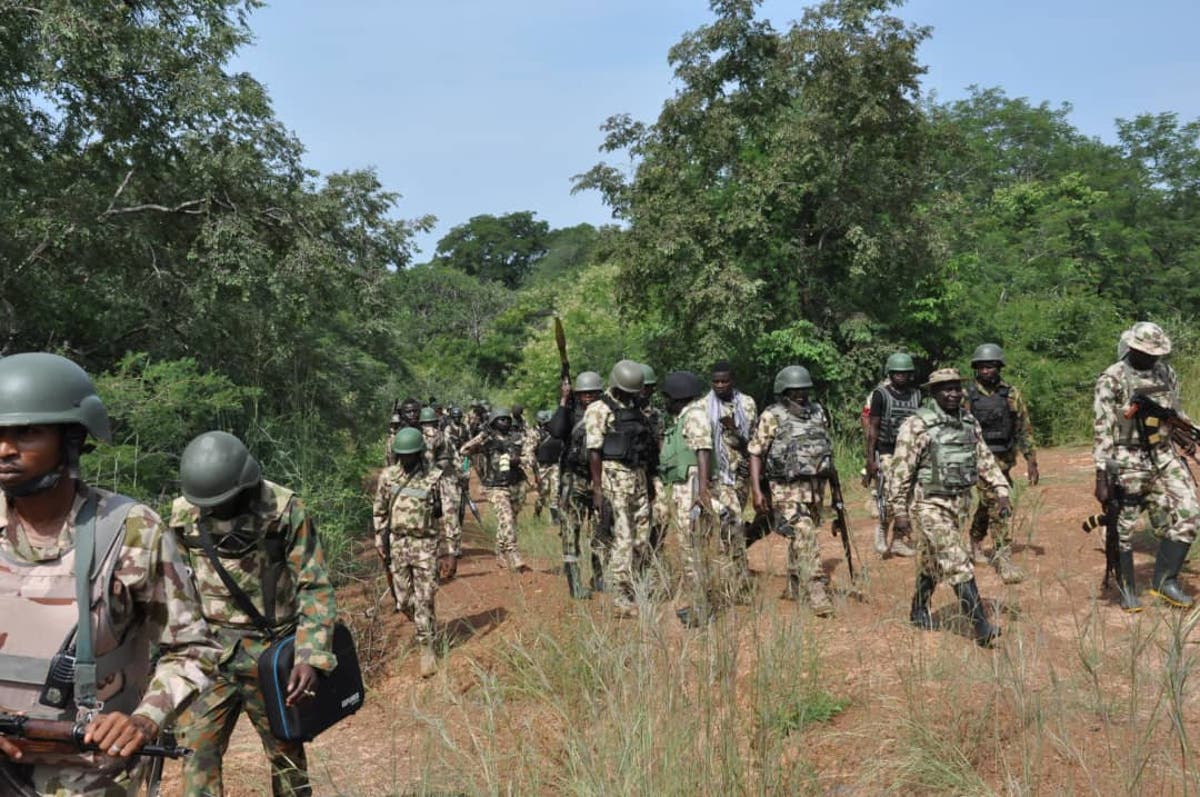
Troops Rescue Three Kidnap Victims in Kebbi
ShareTroops of Sector 2, Operation FANSAN YAMMA, have rescued three kidnapped victims following an operation in Sakaba Local Government Area...


Troops Neutralise Six Terrorists, Arrest 11 Suspected Collaborators in Borno
ShareTroops of the Nigerian Army have neutralised six terrorists, arrested 11 suspected collaborators and received the surrender of a Jama’atu...


JPMorgan’s Entry into Nigeria: Turning Global Finance into a National Development Opportunity
ShareBy Uche Joe Uwaleke The proposed establishment of JPMorgan Merchant Bank Nigeria Limited presents Nigeria with an important opportunity to...

Commissioner Hails Akwa Ibom Governor over Peace Initiatives
ShareVeteran Sports Journalist and Commissioner for Sports Development in Akwa Ibom State, Paul Bassey, has hailed the state Governor, Pastor...

Kogi Probes Mega Electronic Store Inferno
ShareFrom Joseph Amedu, Lokoja The Kogi State Government has commenced investigation into the fire incident that gutted Pee Links, a...