
POLITICS
PDP Crisis: Wike Withdraws from PDP Peace Talk

By Laide Akinboade, Abuja
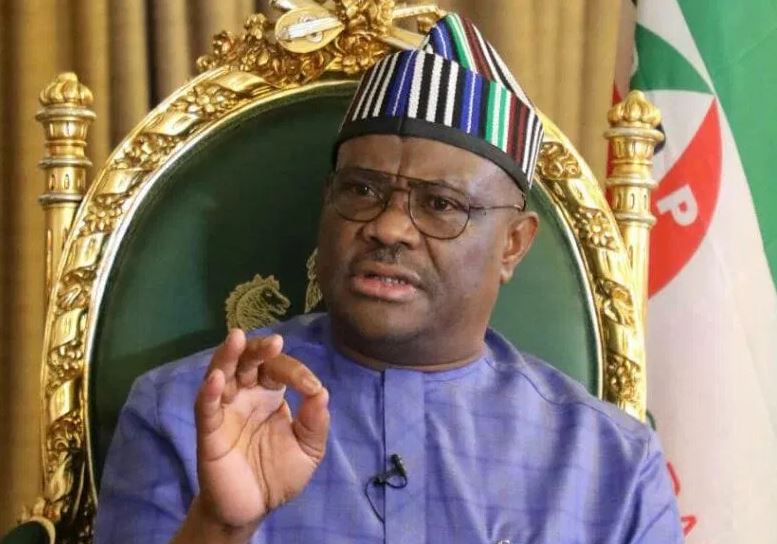
The Federal Capital Territory (FCT) Minister, Nyesom Wike, at the weekend, said that he was pulling out of all previous agreements reached to ressolve the lingering crisis in the People’s Democratic Party (PDP), vowed to “fight on until justice is attained.
”The FCT Minister, who said he had pointed out to the Oyo State Governor. Seyi Makinde, that he was the architect of the party’s present problems, disclosed that he told Governor Makinde that “non-adherence to agreements reached was the bane of the party, and that he was the chief culprit of this anomaly. ”This was contained in a statement titled; “PDP Crisis: My Position,” which he personally signed, the Minister insisted that resolutions reached that Senator Samuel Anyanwu remained the National Secretary of the PDP in tandem with the Supreme Court judgement, all legal matters relating to Rivers State must be withdrawn by the National Legal Adviser, the suit on the State of emergency be withdrawn forthwith and that nobody should deviate from the agreements so reached, must be respected by all the parties involved. The statement read; “Since after the 2023 General election, the PDP has been wantonly swinging from one part of a slippery precipice to another, owing fundamentally to dishonesty and lack of trust amongst its key stakeholders. To stem this ugly trend, efforts have been made to arrest this pernicious virus of dishonesty and treachery and enthrone fidelity to agreements with a view to stabilizing the party and moving it forward.”To this end, a meeting of the G5 was held in Lagos. In that meeting, I made it clear to the Governor of Oyo State, HE. Seyi Makinde, that he was the architect of our problems, pointing out to him that non-adherence to agreements reached was the bane of the party, and that he was the chief culprit of this anomaly. At the end of the meeting, we resolved to bury the hatchet and make progress.”As a follow-up to the aforementioned meeting, there was an expanded meeting in Abuja involving HE. Seyi Makinde, HE. Umaru Fintri, HE. Bala Mohammed, HE, Bukola Saraki, and I in Saraki’s guest house. In that meeting, I made it clear that I had no personal problems with HE. Bala Mohammed, except that he hides under the facade of Chairman of PDP Governors Forum to serially renege on agreements. Tensions rose mightily in the meeting and it took all concerned to calm frayed nerves. At the end of the meeting, we came to some resolutions, including: that Senator Samuel Anyanwu remains the National Secretary of the PDP in tandem with the Supreme Court judgement, all legal matters relating to Rivers State must be withdrawn by the National Legal Adviser, the suit on the State of emergency be withdrawn forthwith, and obody should deviate from the agreements so reached.”In the light of the foregoing, they pleaded with me to attend the stakeholders’ meeting at the Bauchi Government Lodge, regardless of my many engagements. I attended the meeting and clearly reiterated my earlier concerns, and to this end and in order to resolve all other lingering and pending issues, a committee was formed, headed by HE. Bukola Saraki.”It is disheartening to note that even before the Bukola Saraki Reconciliation Committee began its work, the gentleman’s agreement we reached at Saraki’s Guest House was already being crudely violated. To my chagrin, Seyi Makinde had connived with Peter Mba of Enugu State to orchestrate the summoning of the meeting of so-called South-East leaders to recommend that if Ude Okoye was not adopted as Secretary, they would pull out of the PDP. I have since granted an interview to the effect that, that resolution of the South-East leaders can not hold.”Again, Seyi Makinde organized some people in the National Secretariat to insist that the Deputy National Secretary should act as National Secretary, in violation of the agreement earlier reached. To attempt to give credence to this farce, a letter was written by the Deputy National Secretary, calling for a meeting of the NEC of the party. Furthermore, the letter confirming the candidacy of the Governorship candidate of the party in the forthcoming Governorship elections in Anambra State, duly signed by the National Secretary, Senator Anyanwu and the acting National Chairman, was portrayed as rejected by the party through a rebuttal letter signed by the National Publicity Secretary, acting on the orders of Seyi Makinde and Peter Mba. All these actions are in complete violation of the agreements reached and would not do the party any good whatsoever. On the 24th of May 2025, in Jos, for instance, a well publicized and properly attended zonal elective congress of the PDP was aborted because the letter inviting INEC to the congress was signed by the Deputy National Secretary of the party. INEC refused to attend because the proper signatory recognized by law, that is Senator Samuel Anyanwu was not a signatory to the invitation notice. This is undeniably distasteful, provocative and annoying, to say the least.”I have painstakingly put out all these facts so that PDP members and the general public would know the truth. I have been in this party since 1998 and have worked tirelessly for the survival of this party with all my strength and it is on record that none of these persons have done anything close to what I have done to sustain this party. What is more painful is that I contributed substantially to most of these governors winning their elections, yet I have not made any personal demands on any of them and I would never do so.”Most importantly, I had thought that we could keep the trust amongst us, but since it is now obvious that they would continue to play games to the detriment of the party, as is the case in the current debacle in the North-Central zonal elections, I have now firmly decided to pull out of all agreements hitherto reached. I have decided to fight on until justice is attained.”
From Sylvia Udegbunam, Enugu
The Enugu State Independent Electoral Commission (ENSIEC) have released a revised timetable for the 2026 local government elections.
ENSIEC Chairman, Prof. Christian Ngwu, presented the updated schedule to journalists in Enugu.
Ngwu said the framework outlines activities leading to elections on Sept.
26 and re-run polls on Oct. 10.He explained the adjustments followed the repeal of the Electoral Act 2022 and enactment of the Electoral Act 2026.
“The revised timetable aligns with the new law and other relevant statutes guiding elections in the state,” he said.
He recalled ENSIEC earlier issued a notice on Aug. 20, 2025 alongside an initial timetable.
According to him, party primaries will be held from Jan. 23 to May 26.
“Campaigns will begin on April 29 and end on Sept. 25, 24 hours before polling,” Ngwu added.
He said submission of nomination forms closes on May 29, while candidates’ particulars will be published on June 19.
“The final list of candidates will be released on July 27,” he stated.
Ngwu added that submission of polling agents ends on Aug. 31, while the official notice of poll comes on Sept. 11.
He confirmed elections will be held on Sept. 26, with voting from 8:00 a.m. to 3:00 p.m. using the open secret ballot system.
“In case of inconclusive results, re-run elections will be conducted on Oct. 10,” he said.
Ngwu stressed the timetable was issued under the commission’s constitutional mandate and in compliance with the Electoral Act 2026.
By David Torough, Abuja
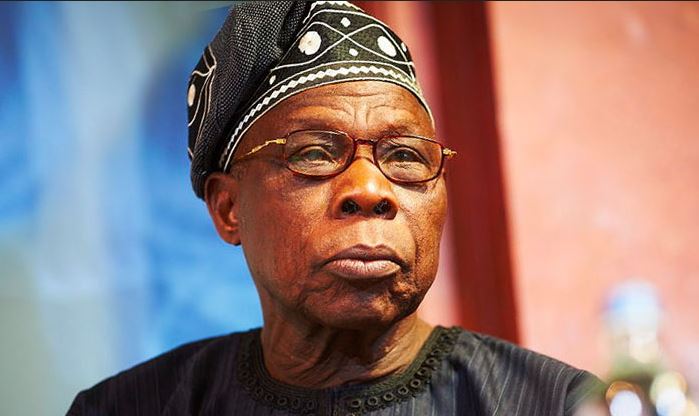
Former Presidents Olusegun Obasanjo and Goodluck Jonathan have issued a strong call for national unity, institutional reforms, and economic transformation, warning that Nigeria’s future depends on collective responsibility and a democracy that delivers tangible results.
Both leaders, who spoke at separate high-level engagements on Thursday, converged on a common message: Nigeria stands at a critical crossroads and requires urgent, coordinated action from citizens, leaders, and institutions.
At the 6th Annual Colloquium marking the 65th birthday of Itua Ighodalo, Obasanjo stressed that no external force would fix Nigeria’s problems unless Nigerians themselves unite across divides.
Represented by Prof. Adedeji Daramola, he emphasised that nation-building is a shared duty requiring contributions from all segments of society.“Until we come together to work and fix Nigeria, nobody will fix it for us,” Obasanjo declared, urging citizens—from grassroots traders to political elites—to take ownership of the country’s development.
He highlighted the importance of youth inclusion, describing young people as central to Nigeria’s future, and called for greater investment in technology and innovation to harness the country’s demographic advantage.
Echoing reformist sentiments, economist Eghosa Osagie advocated for increased local production, while Opeyemi Adamolekun of Enough is Enough Nigeria criticised the commercialization of politics. Technology investor Iyinoluwa Aboyeji pointed to infrastructural imbalances, noting that digital connectivity remains heavily concentrated in Lagos.
Meanwhile, at a policy convening in Abuja organised by the Goodluck Jonathan Foundation, Jonathan underscored the need to align democracy with economic growth to ensure its sustainability.
He warned that democracy, both globally and in Nigeria, faces increasing pressure from economic hardship, insecurity, and declining public trust. According to him, elections alone are insufficient without transparent institutions and policies that foster innovation and enterprise.
Jonathan raised concerns about governance effectiveness, comparing Nigeria’s democratic system with alternative models in countries like China and the United Arab Emirates, where structured leadership selection and economic progress have been notable.
Despite this, he maintained that freedom and justice remain democracy’s defining strengths, cautioning that any system that fails to uphold these values loses its legitimacy.
“Our democracy has endured, but endurance alone is not enough,” Jonathan said, stressing that economic performance is key to sustaining public confidence.
Both leaders agreed that Nigeria must not choose between democracy and development but instead ensure that both reinforce each other. They urged policymakers, civil society, and the private sector to act decisively in bridging governance gaps and delivering inclusive growth.
The convergence of views from the two former presidents reflects a growing consensus among stakeholders that Nigeria’s progress hinges on unity, accountable leadership, youth empowerment, and a democratic system capable of improving the lives of its citizens.
By Uzoma Ahamefule
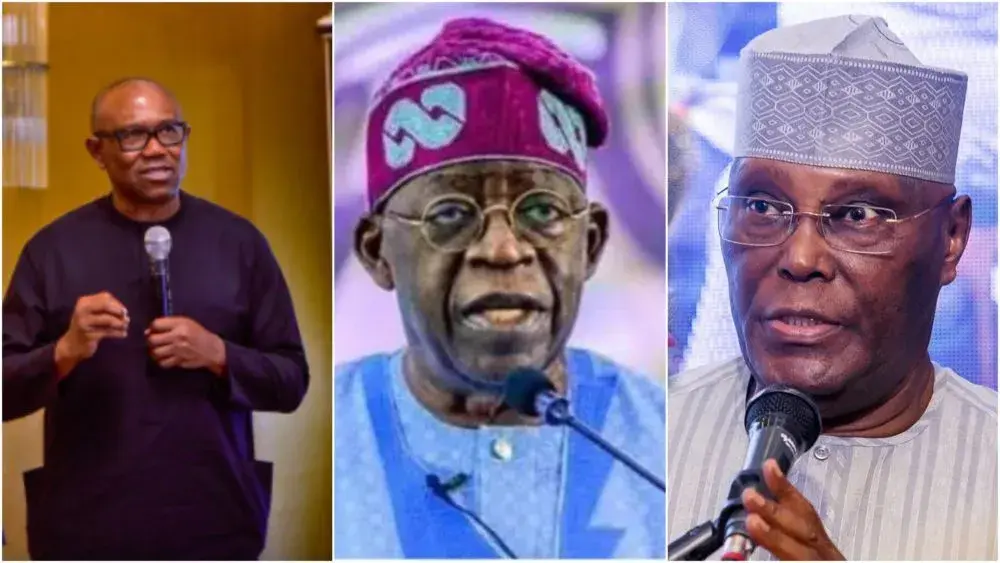
If Obi emerges as the presidential candidate for the ADC, the battle for Aso Rock in 2027 will be fundamentally altered, with up to 50 per cent of the advantage slipping from Tinubu’s grasp.
In light of the weight of existing evidence when subjected to objective analysis, the prospect of Tinubu winning a free, fair and credible presidential election in 2027 is exceedingly unlikely
If Atiku were to become the ADC’s presidential candidate, the passionate, citizen-driven momentum currently building nationwide, fuelled by “Obidient” volunteers willing to invest their own resources without expectation, would significantly wane.
This would mark a departure from the Labour Party phenomenon of 2023. This erosion of enthusiasm would diminish the ADC’s competitive advantage against the ruling APC and effectively strengthen Tinubu’s position.History is a cold sovereign, indifferent to the pleas of the powerful and the pride of the partisan. It has no allies to protect or enemies to spite. It moves only by the relentless engine of facts that remain immune to influence because it lacks the human capacity for favouritism. One must acknowledge this reality of history, and accept the stark choice or be consumed by its weight.
“Terrorists and bandits have continued to issue threats, maim and kill, expand their territories and collect taxes in sovereign land. How long will Nigerians continue to live in this state of fear and hopelessness?”
In retrospect, the strategic misstep of the PDP in 2023 was the foundational tragedy that precipitated today’s systemic collapse and the current national catastrophe. History teaches us that repeating the same mistakes without reform is a recipe for stagnation. Persisting in the same failed patterns year after year yet expecting a different outcome defies political logic and the basic tenets of human progress.
ADC members must understand this clearly, put their feelings aside, and face reality. Peter Obi is the one beacon of hope for those seeking an alternative to the current situation, and overlooking his potential would lead to certain defeat. Nigerians cannot afford another era of political vanity and must unite behind the most acceptable option, or face the harsh consequences of their own irrelevance – a tragedy of choice, not fate.
History will not be kind to the ADC if it repeats the same mistake as the PDP in 2023. That decision has now been etched into history as a profound mistake. It serves as a reminder that when political structures ignore the will of the people, the resulting stagnation is a burden shared by all citizens. History beckons, 2027 offers another chance for Nigerians to change this narrative that has long been defined by lamentation and regret. If Peter Obi were to secure the ADC presidential nomination for 2027, it would instantly shift the political landscape, stripping the APC of half its incumbency advantage before a single vote has been cast.
“Based on verifiable evidence and objective analysis, in a free, fair and credible election President Tinubu would not win the 2027 presidential election.”
However, for the ADC and Obi, the real challenge will be not just winning the votes and hearts of Nigerians, but also standing resolute against thuggery and manipulation to ensure the will of the people is respected. Appeal to the hearts of Nigerians is only half of the competitive process. The rest involves confronting electoral fraud, battling the weaponization of state apparatus, stopping ballot snatching and result swapping, preventing the use of fake security forces, stopping the mutilation of result sheets and ensuring that manufactured data intended to override the public will is not announced. None of these issues can be solved with manifestos and good speeches alone. Without achieving total victory over these forces, the pain of the Nigerian people will only be amplified for another four years.
In 2003, Atiku Abubakar’s influence in Nigerian politics was considered so significant that President Obasanjo was said to have personally appealed to him for support in his bid for a second term. As was widely reported at the time, had Atiku chosen to contest the PDP presidential primary, many believed that he had the necessary political machinery and delegate loyalty to defeat Obasanjo. In spite of that, he decided against it in the belief that Obasanjo would support his presidential bid after his second term. However, the middle of Obasanjo’s second term was marred by political turmoil surrounding the allegedly unsuccessful “Third Term” agenda.
Whatever may have happened, Obasanjo had his reasons for not supporting Atiku’s bid for the Nigerian presidency in 2007. Atiku felt betrayed because Obasanjo did not reciprocate his support when the opportunity arose. To this day, the two men are political enemies.
Atiku, Nigeria’s former Vice President still remains one of the most formidable figures in the country’s political landscape. Despite pursuing the highest office in the land on several occasions, the presidency has frustratingly continued to elude him. It is difficult to ascertain whether this persistent outcome reflects a cruel twist of fate, misaligned political timing, or the complex dynamics of power itself. The reason remains open to interpretations.
In keeping with the timeless maxim, one must give to Caesar what is rightfully his. Atiku is a very strong political opponent. His wealth of experience and loyal supporters have long established him as a formidable force, and a challenger of undeniable weight. However, despite his stature, the current momentum has eclipsed the viability of his candidacy. At this stage, any attempt he makes to emerge as the ADC flag bearer would be a trial-and-error gamble. Instead, party members should see themselves as engaged in a national rescue mission with Obi at the forefront, while encouraging Atiku to play the role of a statesmanlike kingmaker in support of his candidacy. Ultimately, they would all be winners. A holistic assessment suggests that any deviation would risk plunging the country into yet another collective disaster.
If this advice is not followed and Atiku secures the ADC’s presidential nomination, the fervent grassroots support that the “Obidient Movement” has organically mobilised across Nigeria – characterised by personal sacrifice and self-funding, as was evident during the Labour Party’s surge in popularity in 2023 – would likely dissipate. Such a decline would prove disadvantageous against an entrenched ruling party like the APC, and his emergence could ultimately strengthen the position of the APC and Tinubu.
ADC members have accused the APC of orchestrating moves to exclude them from the electoral process in 2027. Despite a wave of gubernatorial defections to the APC, anxiety within the party about the ADC’s involvement in the 2027 presidential race remains persistent.
Some political pundits and opposition figures have criticized the governors who defected to the APC, citing underperformance in office. Available evidence suggests that these defections are less an endorsement of the party’s achievements and more a reflection of self-interest and political expediency. Many of these governors now appear primarily focused on securing second terms or positioning themselves for Senate seats as their tenures draw to a close. Because they performed poorly, they lack the confidence in their ability to win in a credible electoral process, thus they seek refuge in APC. Their calculation is clear, by supporting President Tinubu they erroneously believe that they can leverage access to federal power to secure their ambitions, disregarding the democratic will of Nigerians in the process.
Mounting developments have left Nigerians increasingly frustrated and dissatisfied with the APC administration’s failure to honour its electoral pledges. Based on verifiable evidence and objective analysis, in a free, fair and credible election President Tinubu would not win the 2027 presidential election.
President Tinubu promised Nigerians a steady supply of electricity, and said that if he failed to deliver on this promise during his first term, Nigerians should not vote for him again. He removed the fuel subsidy, which caused great hardship, but Nigerians never saw the impact of its removal or where the money went. He has continued to borrow money, resulting in Nigeria’s foreign debt reaching embarrassing levels, and there have been no visible achievements commensurate with the amount borrowed.
In terms of security, Nigeria is currently experiencing its worst period. Presently, some villages in Kwara State have been forced to flee their ancestral homes due to terrorist and bandit activities. Many states in the northern part have been in similar or worse situation since the time of the late Buhari administration. The news from other parts of the country is not pleasant. Terrorists and bandits have continued to issue threats, maim and kill, expand their territories and collect taxes in a sovereign land. How long will Nigerians continue to live in this state of fear and hopelessness?
In this glaring evidence, how can anyone with integrity and honour start campaigning for a vote for the APC and President Tinubu in the name of connecting to the centre? Most people have indeed sold their conscience for money and recognition.
Conclusion
If you sell your dog and buy a monkey, you still have something that squats in your house.
If Obi is not the flag bearer of the ADC for the 2027 presidential election, then President Tinubu’s inauguration in May 2027 will be guaranteed with little difficulty.
Please note this warning, if Obi, Atiku, Kwakwanso or Amaechi etc. were to leave the ADC at this critical moment for whatever reason, none of them would become Nigeria’s president in 2027, regardless of the party they join. This is because, in effect, they would have inadvertently paved the way for President Tinubu. Consequently, what the opposition requires is not fragmentation, but cohesion. This is non-negotiable in the face of formidable power, since the ultimate battle is not just to secure votes, but also to protect them from manipulation and electoral malpractice. Imperatively, they must remain united, drawing on experience and exercising wisdom to balance disagreement with consensus. Sound judgement is essential at every step – otherwise, the pursuit of 2027 will prove to be yet another illusion.
Uzoma Ahamefule, a concerned patriotic citizen and a refined African traditionalist, writes from Vienna, Austria. uzomaah@yahoo.com. +436607369050 (Please messages only)



JAMB Adjusts Arrival Time for 2026 UTME
ShareThe Joint Admissions and Matriculation Board has announced a slight adjustment to the arrival time for candidates sitting the 2026 Unified Tertiary Matriculation Examination, particularly...


Frimpong Dies after Robbery Attack on Team Bus
ShareGhanaian footballer Dominic Frimpong has been killed during an armed robbery on his club side Berekum Chelsea’s team bus as they returned from an away...

Leo Becomes First Pope to Visit Algeria at Start of Major Africa Tour
SharePope Leo XIV wants to “turn the world’s attention to Africa”, according to a senior Vatican official, as he embarks on a...

FG Opens Applications for Second Cohort of TVET
ShareBy Tony Obiechina, Abuja The Federal Ministry of Education has announced the commencement of applications for the second cohort of...


Customs Deploys AI Training to Boost Revenue Drive
ShareBy Tambaya Julius, Abuja The Comptroller-General of the Nigeria Customs Service, Adewale Adeniyi, has called for deeper collaboration between the Service and...

Insurance Gross Claims Rise to N724.5bn in Q4 2025
Share The Insurance Market Performance Report says the insurance industry recorded a spike in its gross claims hitting N725 billion...

Again, Suspected Herdsmen Invade Benue Communities, Kill 14
ShareFrom Attah Ede, Makurdi No fewer than 14 persons, including a mobile police officer, have been killed in renewed attacks...

ICPC Slams Fresh Nine-count Corruption Charge on El- Rufai
ShareBy David Torough, Abuja The Independent Corrupt Practices and Other Related Offences Commission has filed an amended nine-count charge against...
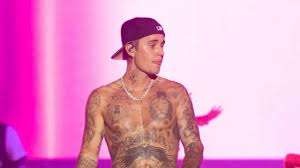

Justin Bieber Headlines Coachella with Nostalgia-fuelled Set
ShareJustin Bieber made a nostalgia-fuelled return to the major stage as Coachella’s much-anticipated headline act. The 32-year-old spent much of...
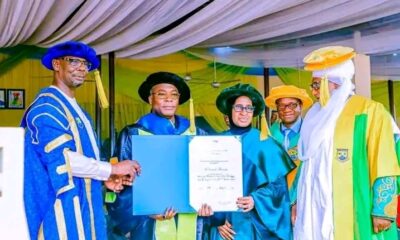

Sule Rewards First-Class Graduates, Honours Tanzania’s President at NSUK 8th Convocation
ShareBy Tambaya Julius, Abuja The Nasarawa State University, Keffi over the weekend celebrated its 25th silver jubilee anniversary and combined...