
NEWS
Petrol Imports Rise as Local Supply Plunges 21 Per Cent


By Tony Obiechina, Obiechina
Nigeria’s reliance on imported petrol increased in July as domestic refinery supplies fell sharply, reversing some of the gains recorded from the country’s growing refining capacity.
The latest July 2026 midstream and downstream petroleum data showed that domestic petrol receipts dropped by 21 per cent in one month, from 32.
5 million litres per day in June to 25.8 million litres daily in July. Over the same period, petrol imports rose by nine per cent, from 18.1 million litres to 19.7 million litres per day.Overall, petrol receipts fell by 10 per cent, from 50.
6 million litres per day in June to 45.5 million litres daily in July.The figures underline the continuing challenge facing Nigeria as it seeks to reduce its long-standing dependence on imported refined petroleum products and meet more of its fuel needs through domestic refining.
The latest decline followed a sharp shift recorded in June, when petrol imports had jumped by 207 per cent to 18.1 million litres daily, while domestic supplies fell by 22 per cent to 32.5 million litres.
With local supply falling again in July, imported petrol increased its contribution to the market.
The decline in domestic petrol supply coincided with an eight per cent fall in crude oil receipts by domestic refineries. Crude intake dropped from 632,000 barrels per day in June to 585,000 barrels per day in July.
The development highlights the importance of reliable crude feedstock to Nigeria’s expanding refining sector.
The Dangote Petroleum Refinery remained the dominant contributor to domestic petrol production during the period, operating at an average capacity utilisation of more than 71 per cent. Its average petrol production stood at about 25.9 million litres per day, almost matching the 25.8 million litres recorded as total domestic PMS receipts.
Despite the growth of private refining, the July figures show that imported products remain an important balancing source when domestic output weakens.
The pressure was not limited to petrol.
Automotive Gas Oil, or diesel, receipts surged by 46 per cent, rising from 16.2 million litres per day in June to 23.6 million litres in July.
Domestic diesel supply slipped slightly to 15.7 million litres per day from 16.2 million litres, while imports returned to the market at 7.9 million litres daily. No imported diesel had been recorded in June.
The development suggests that domestic refining capacity, although significantly stronger than in previous years, is yet to completely shield the Nigerian market from fluctuations in local production.
At the same time, domestic petrol consumption declined substantially.
Petrol volumes trucked out into the domestic market fell by 25 per cent, from 47.4 million litres per day in June to 35.7 million litres daily in July.
Petrol stock sufficiency, however, improved from 19.7 days to 22.4 days, indicating that available inventories could cover demand for a longer period despite the decline in daily consumption.
Diesel stock sufficiency also increased by 25 per cent, from 37.1 days to 46.5 days, while diesel consumption fell from 16 million litres to 14.7 million litres per day.
The cooking gas market recorded a contrasting performance, with domestic supply strengthening while imports declined.
Total Liquefied Petroleum Gas receipts rose from 5.1 kilotonnes per day in June to 5.3 kilotonnes daily in July.
Domestic LPG supply increased by 22 per cent, from 3.6 kilotonnes to 4.4 kilotonnes per day, while imports plunged by 40 per cent, from 1.5 kilotonnes to 0.9 kilotonnes daily.
LPG consumption also increased by seven per cent to 4.4 kilotonnes per day.
The figures point to growing domestic participation in the cooking gas market, in contrast to the petrol and diesel segments, where imports gained ground as local supply weakened.
Domestic gas supply also fell by eight per cent, from 5.116 billion cubic feet per day to 4.723 billion cubic feet daily. The figures include volumes supplied to Nigeria LNG Limited.
Aviation Turbine Kerosene receipts declined from 2.5 million litres per day to 1.9 million litres, while consumption fell from 2.9 million litres to 1.7 million litres daily.
The July data therefore presents a mixed picture of Nigeria’s energy transition from import dependence. Domestic refining has dramatically increased the country’s ability to produce petroleum products locally, but the latest decline in refinery supply shows that imports remain necessary to bridge supply gaps.
For Nigeria, the central challenge is no longer simply expanding refining capacity, but ensuring that refineries have sufficient and consistent crude supplies to operate at levels capable of meeting domestic demand.

Candidates seeking admission into Nigerian tertiary institutions can now upload and verify their O’Level results from the comfort of their homes, following a new initiative by the Joint Admissions and Matriculation Board (JAMB).
Under the new arrangement, candidates will no longer need to visit Computer-Based Test (CBT) centres solely to upload their Senior Secondary School Certificate Examination (SSCE) results, as JAMB will verify the results directly with the examination bodies, beginning with the West African Examinations Council (WAEC).
In a statement on Monday in Abuja, JAMB’s Acting Director, Public Affairs and Protocol, Dr.
Fabian Benjamin, said the Board would continue to deploy technology and collaborate with examination and government agencies to simplify its services and make them more accessible to candidates.According to him, the initiative was part of its renewed commitment to making its services “easier, faster, safer and more convenient” for candidates.
He said the integration of its e-Facility platform with examination bodies would enable candidates’ results to be verified against the records of the issuing bodies before being downloaded into their profiles.
The new system is also expected to address problems associated with manual O’Level result uploads, including misplaced or mixed-up paper results, presentation of fraudulent or unverified certificates and errors in the manual entry of subjects and grades.
The examination body said the initiative would particularly ease pressure on CBT centres during periods of high patronage and help reduce the effect of network challenges and long queues.
The statement reads: “Consequently, candidates can now upload their O’Level results from the comfort of their homes, while the Board undertakes the verification of such results directly with the issuing examination bodies.
“The initiative is part of the Board’s renewed commitment to making services easier, faster, safer and more convenient for candidates. By using technology to reduce unnecessary visits to CBT centres, queues and manual processes, JAMB is putting candidate ease of service delivery at the centre of its operations.
“The new arrangement also addresses challenges associated with manual O’Level result uploads, including misplaced or mixed-up paper results, presentation of unverified or fraudulent results, and errors in the manual entry of subjects and grades. Through the integration of JAMB’s eFacility platform with examination bodies, results can now be verified directly against the examination body’s records before being downloaded into the candidate’s profile.”
To use the new service, candidates are required to visit its website, enter their National Identification Number (NIN) and select the number of examination sittings and relevant examination body or bodies.
After providing their email address and GSM number, candidates are required to pay for the verification using a debit card or bank transfer before entering their examination number, examination series and examination year.
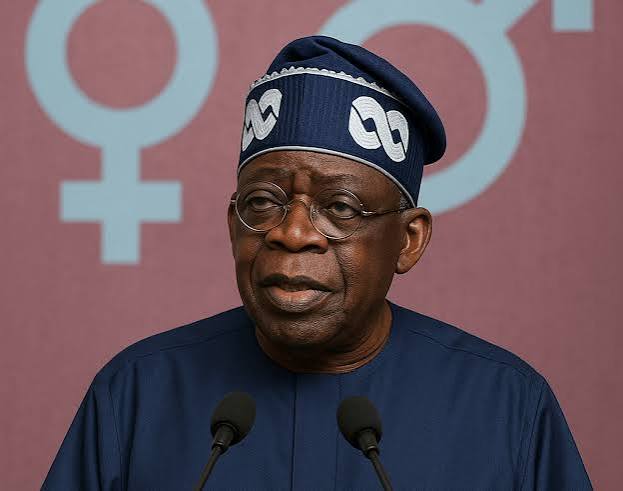
President Bola Tinubu has condoled with the family, friends and colleagues of veteran Nollywood actor, filmmaker and screenwriter Taiwo Hassan, popularly known as Ogogo, who died after decades in acting.
Tinubu described the late actor as a distinguished artiste whose decades-long career contributed significantly to the growth of Yoruba-language theatre and Nigerian cinema, particularly through memorable performances.
The President’s condolence message is contained in a statement issued by his Presidential Spokesperson, Bayo Onanuga, on Monday in Abuja.
Tinubu said Ogogo’s body of work would remain an important part of Nigeria’s cultural history, while his mentorship of younger artistes further strengthened his enduring legacy in Nollywood.
He said that through his distinctive acting style, powerful screen presence and dedication to his craft, Ogogo entertained generations while promoting Yoruba culture and Nigeria’s diverse cultural heritage.
“Alhaji Taiwo Hassan was a gifted artiste who used his talent to tell Nigerian stories, preserve our cultural heritage and entertain audiences at home and abroad.
“His passing is a great loss to his family, the Yoruba film industry, Nollywood and the entire Nigerian creative community.
“On behalf of the Federal Government, I extend my heartfelt condolences to his family, colleagues, friends and millions of admirers,” Tinubu said.
The President urged members of the creative industry and Nigerians to honour Ogogo’s memory by preserving and building on the cultural values and artistic traditions to which he devoted himself.
Tinubu also prayed for the peaceful repose of the late actor’s soul and strength for his family and loved ones, describing his death as an irreparable loss to those closest to him.
“I pray that Almighty Allah will grant him eternal rest and give his loved ones the strength to bear this irreparable loss,” Tinubu said.
Ogogo worked as a mechanic with the Ogun State Water Corporation for about 13 years before gaining prominence in acting and becoming a notable figure in Yoruba cinema.
He began acting in 1981 while combining the profession with his mechanic job, eventually leaving the employment in 1994 to pursue acting as a full-time career.

Nigeria is strengthening its border management architecture through digital technology, biometric identity systems, intelligence sharing and stronger collaboration with border communities.
The Comptroller-General of the Nigeria Immigration Service (NIS), Kemi Nandap, made this known at the African Borderlands Research Network (ABORNE) 2026 conference on Monday in Lagos.
She said the transformation was necessary as changing migration patterns, regional integration, cross-border economic activities and emerging security threats continue to reshape Africa’s borderlands.
The conference, with theme: “The Connected Borderlands: Socio-Cultural Integration and the Centrality of Policy, Research, and Security,” brought together scholars, policymakers, practitioners and development partners.
The stakeholders examined the changing nature of border management across Africa.
According to Nandap, borders should no longer be viewed merely as geographical lines separating sovereign states, but as dynamic spaces where families, communities and cultures interact and where legitimate trade and movement take place.
She said the challenge for governments was to keep these spaces secure while facilitating lawful mobility, strengthening regional cooperation and preserving the socio-cultural and economic relationships that sustain border communities.
She noted that the nature of border security had also evolved, with threats such as human trafficking, migrant smuggling, identity fraud, organised crime, terrorism and cyber-enabled crimes increasingly operating across national boundaries.
The NIS boss said that the service was therefore combining the experience and professional judgment of its officers with technology, intelligence and stronger institutional cooperation to respond to emerging threats.
She outlined Nigeria’s progression in modern border management, recalling that the country became the first African nation to introduce the electronic passport in 2007.
She said Nigeria had subsequently introduced an enhanced e-Passport with stronger security and biometric features, while automating passport applications, payment systems, processing and identity verification.
According to her, the centralisation of passport personalisation has also improved the integrity and efficiency of passport production.
She further said Nigeria’s participation in the International Civil Aviation Organization’s Public Key Directory (ICAO PKD) was strengthening international confidence in the authentication of Nigerian electronic passports.
She noted that contactless biometric passport services were making passport processes more accessible to Nigerians living abroad while maintaining required security standards.
The comptroller-general also highlighted the deployment of automated border control systems, including e-gates, at Nigeria’s international airports.
He said the systems were transforming passenger processing by combining biometric identity verification with faster, more efficient and secure border procedures.
These measures, she said, are being complemented by investments in surveillance systems, command and control capabilities, communications infrastructure, and integrated border and data platforms covering Nigeria’s air, land and maritime borders.
She stressed, however, that the investments were not about technology for its own sake.
The NIS boss also emphasised the continued importance of the human element in border management, saying technology could not replace professionalism, experience, judgment and integrity.
She called for greater involvement of border communities, describing them as strategic partners whose local knowledge could contribute significantly to effective border management.
The Chairman of ABORNE, Prof. Paul Nugent said emerging health threats such as Ebola, COVID-19 and regional insurgencies routinely placed borders at the center of political and security interventions.
He said that these often lead to prolonged closures.
Nugent said that bridging academia and policy, ABORNE aimed to move beyond isolated academic debate by actively engaging border enforcement agencies, policymakers, and field practitioners.
He said that in reframing African borderlands, rather than viewing borders purely through the lens of instability or poor reputation, ABORNE scholars emphasise borderlands as vibrant hubs of trade, urban innovation, and cultural creativity.
Prof. Anthony Asiwaju, a former Director of the Centre for African Regional Integration and Border Studies, commended the ABORNE conference.




JAMB Breaks New Ground, Allows Home Upload of O’Level Results
ShareCandidates seeking admission into Nigerian tertiary institutions can now upload and verify their O’Level results from the comfort of their...


Tinubu Mourns Ogogo, Extols His Creative Legacy
SharePresident Bola Tinubu has condoled with the family, friends and colleagues of veteran Nollywood actor, filmmaker and screenwriter Taiwo Hassan,...


Nigeria Upgrading its Digital, Intelligence-led Border Management System — NIS
ShareNigeria is strengthening its border management architecture through digital technology, biometric identity systems, intelligence sharing and stronger collaboration with border...

ShareGoodluck Jonathan Advises Leaders to Invest in Youths, Industry Former President of Nigeria, Dr. Goodluck Jonathan, has called on leaders...


First Quarter Pension Contributors Rise by 143,248 – PenCom
ShareThe National Pension Commission (PenCom) said cumulative Retirement Savings Account (RSA) registrations under the Contributory Pension Scheme (CPS) rose by...


Police Honour 10 Fallen Officers, Disu Vows to Crush Banditry
ShareBy Elijah Oguche, Abuja The Nigeria Police Force (NPF) on Monday honoured 10 officers of the Special Intervention Squad (SIS)...


Petrol Imports Rise as Local Supply Plunges 21 Per Cent
ShareBy Tony Obiechina, Obiechina Nigeria’s reliance on imported petrol increased in July as domestic refinery supplies fell sharply, reversing some...


NCS, WCO, UK Intensify Anti-Corruption Drive, Strengthen Customs Integrity
Share By Tambaya Julius, Abuja The Nigeria Customs Service (NCS), in collaboration with the World Customs Organisation (WCO) and the...
Bayelsa Receives Twon-Brass Draft Constitution
ShareFrom Mike Tayese, Yenagoa The Bayelsa State Government has received the final draft copy of the constitution of Twon-Brass Kingdom...
Nigeria’s Reforms Must Now Deliver Jobs, Higher Incomes – CPPE
ShareCentre for the Promotion of Private Enterprise (CPPE) has urged the Federal Government to shift its economic reform focus from...