
Metro
PHED Explains Higher Electricity Bills after Feeder Upgrades


The Port Harcourt Distribution Company (PHED) has attributed rising electricity bills being borne by some customers to feeder upgrades designed to improve power supply.
Head of Customers Service at PHED, Adamma Ogwuegbu, stated on the sidelines of the company’s Customer Appreciation event held in Port Harcourt.
Ogwuegbu said that some customers were experiencing higher tariffs following the migration of their feeders to Band A.
She stated that customers whose feeders were upgraded to provide 24-hour electricity were expected to pay the corresponding tariff.
Ogwuegbu said that some customers were still expecting to continue paying the same rates they had paid before their feeders were upgraded.
She said that the company was engaging customers to explain the differences in tariffs across the various electricity supply bands.
According to her, the challenge was partly due to customers’ limited understanding of the relationship between electricity supply levels and applicable tariffs.
The PHED official said that electricity distribution was a business that required operators to recover revenue to sustain their operations.
“For us to remain in business, when we sell, we should be able to recover the revenue that we receive.
Ogwuegbu stated that customers should be willing to pay for electricity when supply was adequate and reliable.
She said that PHED would continue engaging and educating customers on tariffs, feeder upgrades and the need for improved revenue collection.
She also reaffirmed the company’s commitment to improving customer service and responding more effectively to complaints.
“The journey has not been perfect. However, we are committed to improving, listening better, responding better and treating our customers better,” she said.
Ogwuegbu said that the customer appreciation event was organised to recognise customers whose patronage and support had sustained the company’s operations.
The Executive Coordinator, NEPA Wahala, Emeka Ojoko, urged PHED to improve its response to customers’ complaints.
Ojoko acknowledged improvements in electricity supply in some parts of Port Harcourt but noted that the company’s response to prolonged outages and other complaints remained inadequate.
He said that customers often had to rely on personal connections within the company to get their complaints addressed.
He described the situation as unfair, stressing that every customer deserved prompt attention, regardless of personal relationships.
“Every customer deserves to have a listening ear. Even if you cannot solve the problem at once, somebody should respond promptly,” he said.
Another customer, Festus Ola, said that electricity was critical to his steel production business, which required substantial power to operate.
Ola said that the company had experienced significant improvements in electricity supply over the past few months.
The Chairman, PHED Board of Directors, Chief Olice Kemenanabo, presented awards to the company’s best customers across the four states it covers such as Akwa Ibom, Bayelsa, Cross River and Rivers.
Bayo Yao Iron and Steel Company won the Best Customer Award, followed by Heliconia Park Hotel in second place and CWay Company in third place. (NAN)
Workers union at the Federal Medical Centre (FMC), Idi-Aba, Abeokuta, on Monday began a 72-hour warning strike over an alleged stabbing of a medical laboratory scientist by a patient’s relative.
The Chairman of the Medical and Health Workers’ Union of Nigeria (MHWUN), FMC Abeokuta, Abiodun Famuyiwa, disclosed this in an interview in Abeokuta.
Famuyiwa said the strike involved workers in the centre, excluding doctors, following an alleged stabbing of the scientist while on duty on Sunday night.
“Olasunkanmi Lawal, a medical laboratory scientist was stabbed in two places, including the head, with an object and he is now receiving treatment at the hospital.
“The incident has been reported to the police and referred to the appropriate authorities for further action,” he said.
He described the incident as an unacceptable act of violence against a healthcare worker performing his official duties.
He expressed concern over the safety of healthcare professionals in the hospital, saying that no worker should be subjected to physical attacks while providing essential medical services.
He also demanded that the incident be investigated and the alleged assailant be prosecuted in accordance with the law.
The MHWUN chairman urged the management to review and strengthen existing arrangements, particularly in clinical and laboratory areas, emergency units, and other vulnerable locations.
He added that the warning strike was intended to express members’ displeasure, demand accountability, and compel the management to address their security concerns.
Meanwhile the unions, operating under the Joint Action Committee (JAC), also announced the industrial action in a position letter dated Oct. 12 and addressed to the Medical Director of the hospital.
The letter stated that the strike commenced at 11 a.m. on Monday and was scheduled to end at 8 a.m. on Thursday.
The letter was endorsed by representatives of the Nigerian Union of Allied Health Professionals (NUAHP), MHWUN, the National Association of Nigeria Nurses and Midwives (NANNM),
Others are the Senior Staff Association of Universities, Teaching Hospitals, Research and Allied Institutions (SSAUTHRIAI), and the Non-Academic Staff Union of Educational and Associated Institutions (NASU).
The letter read: “This barbaric act of violence against a healthcare worker carrying out his professional responsibility is condemnable and must not be treated with levity.
‘We consider this incident a serious assault on the dignity, safety, and welfare of healthcare professionals who dedicate their time, knowledge, and energy to providing essential medical services to patients and the public.
It also stated that the incident was not merely an attack on the affected medical laboratory scientist, but an attack on the entire workforce of the centre.
“An injury to one member of our professional community is a matter of collective concern, and we cannot remain silent while the safety of our member is placed in jeopardy,” it stated. (NAN)
The Chief Justice of Nigeria (CJN) Justice Kudirat Kekere-Ekun has warned judges against romancing with political parties in the resolution of disputes that will arise in the conduct of the 2027 general elections.
Kekere-Ekun gave the advice during the opening of the 2026 legal year of the Supreme Court on Monday in Abuja.
She warned that on no account should any judge exhibit conduct or behaviour that jeopardises absolute impartiality expected of them.
“’Elections inevitably generate heightened political activity and strong emotions. They also bring before the courts disputes that may have significant consequences for individuals, political parties and the country.
“The judiciary must approach such matters with the same calmness, detachment and fidelity to the law that it brings to every other dispute.
“Judicial officers must remain conscious that every word they speak and every action they take during an electoral period will be subjected to scrutiny”.
She encouraged them to exercise restraint, avoid political association or conduct capable of creating an appearance of partiality and remain firmly within the boundaries imposed by their oath and the constitution.
“There is also a need for greater professional responsibility by lawyers in the institution of proceedings arising from political and electoral disputes.
“Forum shopping, whether by the deliberate choice of commencing an action in a court or division perceived to be more favourable to a particular party or by the institution of multiple proceedings seeking substantially similar reliefs, can result in conflicting orders, undermine orderly judicial process and expose the Judiciary to avoidable embarrassment.
She said counsel must exercise the professional judgment expected of members of the Bar before commencing proceedings, particularly where related proceedings are already pending before another court.
“The duty of counsel to the court requires full candour as to the existence of related proceedings and respect for the jurisdiction and processes of other courts.
“The responsibility of counsel extends beyond securing an immediate advantage for a client; it includes a duty to protect the integrity and orderly functioning of the judicial process”.
The CJN also canvassed for adequate protection of processes leading to the appointment of judicial officers for the judiciary of Nigeria
According to her, the appointment of judicial officers is one of the most consequential responsibilities entrusted to the National Judicial Council and the Federal Judicial Service Commission.
“A Judge does not merely occupy an office; he or she carries the authority of the Constitution and the confidence of the people.
“For that reason, the processes through which judicial officers are selected must command public confidence”.
She said that the recent appointments have reflected a deliberate effort to strengthen the evaluation of candidates through structured assessment, professional and peer feedback, background checks.
The CJN reiterated that the administration of justice cannot be left to anger, intimidation or trial by social media.
“A Judge should be able to decide according to law without fear of personal retaliation. A lawyer should be able to make a legitimate submission without being subjected to intimidation.
“A member of staff should be able to perform his or her duties without harassment. The dignity of the profession is the collective responsibility of the Bench and the Bar.
The CJN expressed happiness with the performance of the Supreme Court in the outgoing legal year despite the odd circumstances.
“My Lords, the performance of the Court during the Legal Year under review is encouraging, yet it reminds us that there is still much work to be done.
“During the 2025/2026 Legal Year, the Supreme Court handled 2,456 matters, comprising 1,179 general civil motions, 573 criminal motions, 13 Sharia-related motions and 676 appeals.
‘The appeals comprised 433 general civil appeals, 212 criminal appeals, 19 political appeals, 12 Sharia appeals and 10 Originating summons. From these matters, 411 judgments were delivered.
“Also during the preceding Legal Year, the Court handled 2,280 matters and delivered 369 judgments and rulings.
“These figures provide a useful measure of institutional activity, but they cannot tell the full story. One area to which I have continued to attach particular importance is the effective management of the court’s dock.
“When I addressed this gathering last year, I spoke about the need for deliberate case management strategies to confront delay and the accumulation of pending matters.
“I am pleased to say that we can now point to concrete steps taken in furtherance of that objective.
Between March 23 and Dec. 27 2026, she said, the E-Diary Office scheduled 1,385 matters for regular sittings of the Court, comprising 1,021 motions and 364 appeals.
Significantly, she said, 733 of these were old matters deliberately brought forward for hearing. In addition, 178 moribund matters were disposed of in Chambers, while 125 matters that had already been concluded were identified and removed from the active pool”. (NAN)
By Ebuka Ukoh
This columnist explores African public health, institutions, and governance, connecting global lessons to local challenges to promote systemic reform and investment in Nigeria’s human capital.
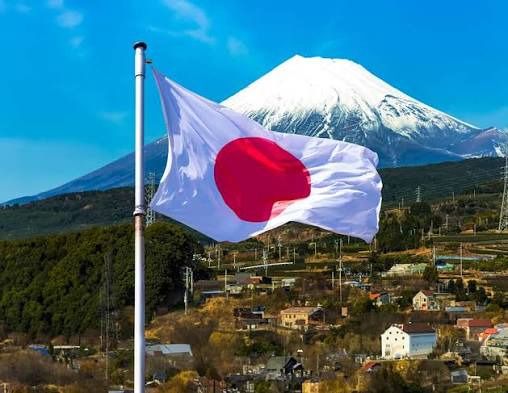
Japan has just crossed an extraordinary threshold.
As of September 1, the country had 107,677 people aged 100 or older, the first time its centenarian population has exceeded 100,000.
In 1963, Japan counted only 153 centenarians. The number has now risen for 56 consecutive years. Women account for nearly 88 per cent of the total today.One hundred and seven thousand, six hundred and seventy-seven people have lived for at least a century. I read that number and marvelled. Then, as a Nigerian, another thought entered my mind. Who will build the health systems that will enable our own people to grow old?
Not merely hospitals. Systems. Because perhaps one of the greatest differences between nations is not whether their citizens dream of longevity. We all do. It is whether their institutions make long life more possible.
Longevity Isn’t an accident
We should be careful not to romanticise Japan.
Its extraordinary longevity isn’t due to hospitals alone. Diet, genetics, sanitation, education, income, social conditions, public health, lifestyle and community all matter. An ag(e)ing population also presents Japan with enormous challenges, including rising healthcare needs, pension pressures, and a shrinking workforce.
But 107,677 centenarians do not emerge from nowhere. Somewhere along the journey from birth to 100, a society has to work. Children must survive infancy.
Mothers must survive childbirth. Vaccines must reach people. Clean water must flow. Diseases must be detected. Doctors must be trained. Nurses must be retained. Medicines must be available. Emergency services must function. And when people grow old, a system must still be able to care for them.
Longevity is therefore not simply a biological achievement. It is partly an institutional achievement. That is what Nigeria should think about.
We have the young people
Nigeria has something many ageing societies increasingly wish they had: youth. Most of our population is young. That is routinely described as our demographic advantage. And it can be. But a young population is not automatically a demographic dividend. It is only potentially so.
The dividend arrives when young people are educated, healthy, productive, skilled, and able to build institutions stronger than those they inherited. Otherwise, an unplanned demographic dividend can be disappointing. The question, therefore, is not simply how many young Nigerians we have.
It is: What are we preparing them to build? Who among today’s children will become the epidemiologists who stop the next outbreak? Who will become the nurses who transform maternal care? Who will design our emergency-response systems? Who will build diagnostic laboratories in communities where people currently travel hours for basic tests? Who will develop Nigerian medical technologies? Who will modernise primary healthcare? Who will research diseases that disproportionately affect Africans? Who will build the hospitals in which Nigerians will one day turn 100?
They are probably already here.
Some are sitting in overcrowded classrooms. Some are studying by generators. Some are brilliant children whose parents cannot afford university fees. Some are medical students wondering whether the future they want exists in Nigeria. And some of the doctors and nurses we have already trained are preparing to leave our shores for greener pastures.
We cannot keep training other people’s health systems
Nigeria’s health workforce problem should trouble us.
The WHO’s 2025 health-system profile says Nigeria’s supply of doctors, nurses, and midwives remains below recommended levels, with shortages compounded by uneven distribution, poor working conditions and the movement of health professionals abroad.
This is painfully ironic. Nigeria can educate a child from primary school. Subsidise parts of that child’s education. Train that child to become a doctor or nurse. Then create working conditions so frustrating that another country receives the mature product of that investment.
The Nigerian professional is not wrong for seeking a better life. People have families. They have ambitions. They want functioning equipment, professional development, reasonable compensation, and environments where doing their jobs doesn’t require daily heroism.
So perhaps the better question is not: Why are they leaving?
It is: What have we built that should persuade them to stay? Patriotism cannot substitute indefinitely for functioning institutions. A surgeon cannot operate with patriotism. A laboratory cannot run on patriotism. An ambulance cannot be fuelled with patriotism. And a nurse cannot feed a family with applause.
A hospital is built long before brick and mortar arrive
When politicians speak about healthcare infrastructure, we often see buildings. A new hospital is commissioned. There are cameras. There is a ribbon. There are speeches. But a health system is neither concrete nor brick and mortar. A beautiful building without nurses is architecture. An intensive-care unit without working equipment is just a room. An ambulance without an emergency network is a mere vehicle. A medical school without research investment is an incomplete promise. A hospital’s most important infrastructure is ultimately human. That human infrastructure takes decades to build. The consultant physician of 2050 may be sitting in a secondary school today. The biomedical engineer who will design equipment suited to Nigerian hospitals may currently be a child taking apart broken electronics somewhere in Aba.
The public-health specialist who will prevent an epidemic may be sitting in a classroom in Kano. The nurse who will hold a 99-year-old’s hand may not yet have been born. Nation-building requires the imagination to invest in people whose contributions may mature long after the politicians making today’s decisions have left office.
Real meaning of centenarian
Japan’s milestone should therefore not make us ask whether Nigerians can live to 100. Some already do. Nor should we turn longevity into a competition between countries. The better question is whether an ordinary Nigerian child born today can reasonably expect to live, supported by institutions that value survival.
Will pregnancy be safer? Will childbirth be safer? Will infancy be safer? Will cancer be detected earlier? Will emergency care arrive faster? Will people treat the elderly as human beings rather than burdens? Will quality healthcare depend less on whether your surname opens doors or your bank account can purchase treatment abroad? That is the journey from birth to 100.
And we must understand something else. The health system we refuse to build today is the one we will desperately need tomorrow, and won’t have.
Politicians grow old too. Civil servants grow old. Business leaders grow old. Presidents grow old. Governors grow old. The body eventually makes everyone equal.
Our young are the infrastructure
Nigeria’s youth are frequently described as a problem to be managed. Too many are unemployed. Many more are leaving. So are the frustrated. Countless have lost faith in their nation. Perhaps we should see them differently. They are the people who must build what does not yet exist.
Our responsibility is to give them the education, healthcare, laboratories, mentorship, research funding, employment opportunities, and functioning institutions that let their abilities become national assets.
Japan’s 107,677 centenarians tell one story about a country growing older. Nigeria’s millions of young people tell another story about a country still extraordinarily young. Neither youth nor longevity guarantees prosperity. Both require planning.
One country must ask how it will care for an ageing population. Nigeria must ask whether it will prepare its young population to build a country where growing old is worthwhile. That is our assignment. Because somewhere in Nigeria today is a child who could transform African medicine.
Somewhere is tomorrow’s surgeon. Tomorrow’s nurse. Tomorrow’s scientist. Tomorrow’s hospital administrator. Tomorrow’s biomedical engineer. Tomorrow’s public-health leader. The question is whether we will find them, educate them, equip them, and give them a country where they can do their best work.
Japan has more than 107,000 people who have reached 100. I celebrate them.
But in Nigeria, I think about the future. Who will build the health systems that will carry our children safely into old age? The answer is already among us. We have to stop wasting them.
Ukoh, a PhD student and coauthor of Built By The Ancestors, writes from his base in New York, the United States.


Abeokuta FMC Workers Begin 72-hour Warning Strike over Staff Assault
ShareWorkers union at the Federal Medical Centre (FMC), Idi-Aba, Abeokuta, on Monday began a 72-hour warning strike over an alleged...


PHED Explains Higher Electricity Bills after Feeder Upgrades
ShareThe Port Harcourt Distribution Company (PHED) has attributed rising electricity bills being borne by some customers to feeder upgrades designed...
CJN Warns Judges Against Romancing with Politicians in Dispute Resolution
ShareThe Chief Justice of Nigeria (CJN) Justice Kudirat Kekere-Ekun has warned judges against romancing with political parties in the resolution...

ASUU Sponsor My Education – Student
ShareMaryam Umar, a limb difference student, is set to graduate with a Bachelor of Science degree in Economics from the...
C’River Shuts 58 Unapproved Schools in Four LGs
ShareThe Cross River State government on Saturday said it had closed down no fewer than 58 schools in Calabar South,...

ABUAD Seeks Adoption of Locally Made Herbal Medicine in Nigeria
ShareAfe Babalola University, Ado-Ekiti (ABUAD), has called for a renewed commitment to Nigerian-made herbal medicines, urging Nigerians to reduce their...
Don Calls for Institutional Reforms, Public Awareness
ShareProfessor Valen Emeka Obinna, Dean of the Faculty of Humanities at Imo State University, Owerri, has called for comprehensive institutional...


Over 5,900 Education Officers Sit for 2026 FCTA Promotion Exams
ShareBy Laide Akinboade, Abuja The Federal Capital Territory Administration (FCTA), on Monday, conducted 2026 promotion examinations for nearly 6,000 education...


Nigeria’s Debt Interest Soars 124 Per Cent above Revenue
ShareThe Federal Government spent N7.7tn on interest payments in the first half of 2026, representing 124.2 per cent of its...

Recapitalisation: Labour Ministry Charges Banks to Protect Workers
ShareThe Federal Ministry of Labour and Employment has cautioned banks and insurance companies against allowing workers to bear the brunt...