
Agriculture
Plateau Faults Ex-Minister on AfDB Loan Figures


From Jude Dangwam, Jos
The Plateau State Government has debunked allegation made by the Former Minister of Youth and Sports Development, Solomon Dalung that the Plateau State Government took a loan worth $ 350 million (N140 billion) from the African Development Bank (AfDB) payable over a 25 years period, for the development of Plateau’s potato value chain.
The State Commissioner of Information and Communication Hon.
He said 70% of the loan was being committed to infrastructure, 20% for Capacity Building and 10% for Project Management.
Manjang said “Contrary to the bogus and imaginary figures quoted by the former minister, the Loan amount signed between the African Development Bank (AfDB) and Federal Ministry of Finance for the benefit of Plateau State is USD 11.2Million and not USD 350Million as claimed by Dalung.Of this loan, 70% is being committed to Infrastructure, 20% for Capacity Building and 10% for Project Management.
“While he painted a picture as though the money was approved and given to Plateau State Government in cash, the fact is that the disbursement of the loan to Contractors and Consultants is paid directly by the AfDB under strict guidelines that are set by the bank.
“This is done gradually under the terms of the agreement and not lump sum as he would want the people to believe. If he wanted to be truthful, he knows that no single kobo is managed by the State Government. This is done through the Potato Value Chain Management Project Office which is not a parastatal or agency of the State Government, but operated under the supervision of the AfDB just like Fadama project among others.”
He further explained that “Initially, the project covered only 10 out of the 17 LGAs based on the area of coverage of completed Fadama II project in the State. However, His Excellency Governor Simon Lalong demonstrated his passion for the progress of the programme and made a case for inclusion of the 7 other LGAs to benefit from the infrastructure component of the project during the appraisal mission which was accepted by the Bank.
“The whole 17 LGAs are today beneficiaries of the project. In addition, the Governor mandated the Ministry of Agriculture and Rural Development to carry out research on the possibility of growing the crop in all the Local Governments of the State. The research returned positive and today, potatoes can be grown in the entire State.”
The Commissioner of Information and Communication stressed that the Potato Value Chain facility has completed many projects while others were on-going at the moment across the state.
“Some of the projects include: Nine Community Markets (Barkin Ladi, Bassa, Bokkos, Jos East, Jos North, Jos South, Mangu, Riyom, Pankshin), Six(6) Community Markets have been completed and handed over to the Local Governments and Communities, three Community Markets and Diffuse Light Stores are awaiting handing over. Meanwhile, nine Diffuse Light Stores, two Processing Centres, 200km Spot Road Improvement across the 17 LGAs of the State, 17 Spring Captures and 26 Water Harvesting Structures for expansion of Dry Season Irrigation farming in Plateau State,” were the components of the project.
“It is on record that Mr. Dalung as then Minister “supposedly” representing Plateau State in the Federal Cabinet tried unsuccessfully to oppose the loan memo presented by the then Minister of Finance during the FEC Meeting presided over by President Muhammadu Buhari.
“Having failed in his bid, he has not rested in his fruitless effort to discredit the program ever since by fabricating lies. Does he want to drag the name of the Federal Executive Council, the highest executive decision making body in the land to disrepute?,” Manjang querried.







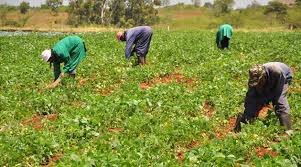
Wheat farmers in Gombe State have lamented the impact of climate change on wheat cultivation in the state, amid poor harvest.
Chairman, Gombe Chapter of the Wheat Farmers Association Bala Garba, said yesterday that many members of the association were expecting poor harvest in the state.
Garba said that the impact of climate change was increasingly becoming unbearable for most wheat farmers who often cultivated the commodity in the dry season between October and March.
According to him, many farmers are expecting a poor harvest as they begin harvesting due to the delayed harmattan season this year.
”The situation can threaten the cultivation of wheat as many farmers who recorded losses are already planning to abandon the commodity.
”This year, we didn’t see harmattan like we usually experienced in the past which helps us to cultivate wheat.
”You know the harmattan season is a good period for wheat cultivation, because of its cool, dry, and windy conditions which provide the necessary environment for wheat growing under irrigation.
”But this year is different as we didn’t witness any harmattan until slightly in February; making wheat farmers to suffer huge losses due to poor yield.
”Over 2,000 wheat farmers that planted the crop this year are lamenting because it is certain they won’t get value for their investments.”
Garba said there was a need for relevant stakeholders and the government to support wheat farmers with a view to encouraging its cultivation in the future.
He also appealed to both the state and the Federal Government to support farmers with climate resilient inputs to enable them tackle the impact of climate change on agriculture.
He further called on farmers to embrace climate smart agriculture practices and to seek extension services before carrying out farming activities to minimise losses associated with climate change.

Some agriculture experts have urged local farmers to adopt irrigation farming due to the inconsistent rainfall patterns.
The experts made the recommendation in separate interviews on Wednesday in Lagos.
The recommendation was made in line with the recent Nigerian Meteorological Agency’s (NiMet) forecast on the expected rains in some states and the need for farmers to delay the planting season.
The Chairperson, Nigerian Women in Agriculture, Chahul Ngizan, noted that the infrequent rains and changing weather patterns have made local farmers wary.
“We really do not know what to expect with the changing weather patterns. As we all observed, there was no harmattan from last year till January this year.
“And when there is no harmattan, it is difficult for farmers to have a good harvest. We don’t know if we will have enough rainfall this year.
“I would advise all farmers to adhere to the instructions of NiMet or get irrigation systems. It is just that some areas up north rarely have water.
“We just hope to have a great planting season and a good harvest because of the inconsistent weather patterns,” Ngizan said.
On his part, an agriculture analyst and co-founder Corporate Farmers, Akin Alabi, urged the farmers to invest in irrigation on their farms despite the costs.
“It is hard for us to determine climate conditions these days, climate factors and climate change, so we have to play it in a well-balanced format.
“So, we urge farmers to have irrigation in their farms. It might be expensive but it’s worth it. You can’t predict the weather, that’s the honest truth.
“NiMet will try to give you a forecast, but sometimes that forecast may change because regardless of rainfall or not, it is still dependent on Mother Nature.
“But as humans we have to just be prepared for whatever weather pattern we see.
“It’s advisable to have some form of irrigation on your farm, it doesn’t have to be expensive. There are other irrigation systems now that make use of solar energy,” Alabi said.
He noted that there are solar energy irrigation systems that use sun to ensure adequate water on the farm.
“Or the farmer can just have a well, just dig a well where you can actually get water. But it’s very important at this time and age that farmers have a standard and a standby irrigation system, whether rain comes or not,” the expert said.
From Attah Ede, Makurdi
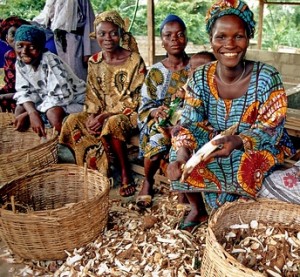
Olam Agri, in partnership with Sustainable Collective Advocacy for Africa Development (SCAAD) Initiative, is to launch the Community Resilience Opportunities for Women and Youth (CROWY) in Benue and Nasarawa States.
A press release by Elizabeth Nnoko Communication Manager, Olam Agri, said the CROWY Project is aimed at creating lasting positive change for women and youth across Nigeria’s North-Central region.
The Project ground-breaking initiative is designed to empower grassroots women and youth farmers, aligning with national development and gender equality objectives.
The project also, aims to strengthen livelihoods during off-farming seasons by equipping beneficiaries with strategic leadership skills, entrepreneurship training, and increased awareness on inclusion, gender equality, and early warning signs and systems related to Gender-Based Violence (GBV).
Delivered in collaboration with Rich-Oak Life Initiative, Sahel International Support Foundation, and Elikizi Foundation for Women and Youth Advancement, the CROWY Project seeks to close critical economic gaps by providing inclusive livelihood opportunities, access to cooperative financing, and leadership support for emerging women and youth-led enterprises.
“We aim to create 10 Village Savings and Loan Associations and support 100 of women and youth entrepreneurs within the first year in the fields of tailoring, baking amongst others.
“This intervention will expand economic opportunities, promote self-employment, and build sustainable and resilient livelihoods across the targeted communities.
“Across Nigeria, women, youth, and persons with disabilities continue to face systemic barriers to education, livelihoods, and leadership pathways. Recent statistics highlight the urgency of this challenge.
“In 2023, women’s labour force participation stood at just over 52%, down from nearly 57% in 2010 (Statista, 2023). Youth unemployment remains critically high, with 53% of Nigerians aged 15–24 unemployed or underemployed (World Bank, 2024).
“According to Nigeria’s Minister of Women Affairs, as of October 2025, approximately 70% of Nigerian women live in extreme poverty, unable to meet basic needs or sustain livelihoods
“These figures paint a stark picture of structural inequalities that continue to undermine national development and social stability”, the statement said.
On the part of SCAAD initiative, a Statement by Frances Okeke, Executive Director, stated that “Every day, we meet women and young people with immense creativity and resilience, yet without the support they need to thrive truly. Nigeria’s overlapping crises have made survival even harder for them, especially in farming communities where off-season periods often deepen economic vulnerability.
Okeke maintained the through the support of Olam Agri, the CROWY Project is stepping into this gap, offering practical skills, livelihood opportunities, and hope to grassroots women and youth.
Said he, “Together, we are equipping individuals not only to earn a living during non-farming seasons but also to lead, innovate, and uplift their communities. When women and young people are given the tools to succeed, entire communities become more resilient and rise with them.”
While Anil Nair, Country Head Olam Agri Nigeria added, “Our partnership with SCAAD Initiative on the CROWY Project reinforces our shared vision of resilient, empowered, and economically active communities. Women and youth are central to the future of agriculture in Nigeria and supporting them through targeted skills development and inclusive financing is essential for long-term national growth.
“Olam Agri will continue to champion initiatives that uplift vulnerable groups and strengthen the fabric of our communities.”
“Olam Agri and SCAAD Initiative invite government agencies, community leaders, NGOs, and development partners to join in supporting inclusive livelihood strategies. Collaboration is vital to building resilient, equitable communities.
“The partnership is committed catalyze efforts to enhance economic opportunities, promote self-employment, and build sustainable livelihoods for women and youth in conflict-affected communities”.




Tiwa Savage Unveils Music Foundation to Empower Young African Creatives
ShareInternational Afrobeats star, Tiwa Savage, has unveiled the Tiwa Savage Music Foundation to support young African creatives across multiple areas...


I’ve been Paid N40m for Boxing Match with Carter Efe – Portable
ShareControversial Nigerian street pop artiste, Portable, has been paid the sum of N40 million for agreeing to engage in a...

Army Kills Scores of Terrorists, Rescue Hundreds in February Offensive
ShareBy David Torough, Abuja The Armed Forces of Nigeria (AFN) said it intensified nationwide military operations in February 2026, killing...

Troops Crush IPOB/ESN Stronghold in Mother Valley Assault
ShareBy David Torough, Abuja Troops of Joint Task Force South East Operation UDO KA launched a decisive assault on 26...


Burna Boy’s Associate, Rahman Jago Confirms Singer Convert to Islam
ShareRahman Jago, a socialite and associate of Grammy-winning singer Burna Boy, has confirmed that the singer has converted to Islam....


UCL: Osimhen Slams Galatasaray Display Despite Win over Juventus
ShareSuper Eagles striker Victor Osimhen has expressed disappointment with Galatasaray’s performance despite their UEFA Champions League playoff victory over Juventus,...
NPFL: Enyimba Must Adapt Quickly To Deutsch’s Style of Play – Odeh
ShareEnyimba star Paul Odeh has disclosed that the players must adapt quickly to new head coach Emmanuel Deutsch’s style of...

Ronaldo Becomes Co-owner of Spanish Side Almeria
ShareCristiano Ronaldo has become co-owner of Spanish second division side Almeria after acquiring a 25% share in the club. The...


Germany, Austria Remain Europe’s Cash Strongholds, Survey Finds
ShareBearingPoint commissioned a new survey showing Germany and Austria still lead Europe in cash usage, defying the broader continental shift...


Hillary Clinton Testifies before U.S. Congress in Epstein Affair
ShareFormer U.S. Secretary of State Hillary Clinton is due to testify before the U.S. Congress on Thursday relating to the...