
Agriculture
Olam Agri Partners with SCAAD to Empower Women in Benue, Nasarawa

From Attah Ede, Makurdi
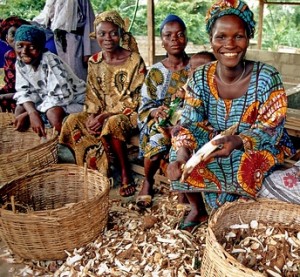
Olam Agri, in partnership with Sustainable Collective Advocacy for Africa Development (SCAAD) Initiative, is to launch the Community Resilience Opportunities for Women and Youth (CROWY) in Benue and Nasarawa States.
A press release by Elizabeth Nnoko Communication Manager, Olam Agri, said the CROWY Project is aimed at creating lasting positive change for women and youth across Nigeria’s North-Central region.
The Project ground-breaking initiative is designed to empower grassroots women and youth farmers, aligning with national development and gender equality objectives.
The project also, aims to strengthen livelihoods during off-farming seasons by equipping beneficiaries with strategic leadership skills, entrepreneurship training, and increased awareness on inclusion, gender equality, and early warning signs and systems related to Gender-Based Violence (GBV).
Delivered in collaboration with Rich-Oak Life Initiative, Sahel International Support Foundation, and Elikizi Foundation for Women and Youth Advancement, the CROWY Project seeks to close critical economic gaps by providing inclusive livelihood opportunities, access to cooperative financing, and leadership support for emerging women and youth-led enterprises.
“We aim to create 10 Village Savings and Loan Associations and support 100 of women and youth entrepreneurs within the first year in the fields of tailoring, baking amongst others.
“This intervention will expand economic opportunities, promote self-employment, and build sustainable and resilient livelihoods across the targeted communities.
“Across Nigeria, women, youth, and persons with disabilities continue to face systemic barriers to education, livelihoods, and leadership pathways. Recent statistics highlight the urgency of this challenge.
“In 2023, women’s labour force participation stood at just over 52%, down from nearly 57% in 2010 (Statista, 2023). Youth unemployment remains critically high, with 53% of Nigerians aged 15–24 unemployed or underemployed (World Bank, 2024).
“According to Nigeria’s Minister of Women Affairs, as of October 2025, approximately 70% of Nigerian women live in extreme poverty, unable to meet basic needs or sustain livelihoods
“These figures paint a stark picture of structural inequalities that continue to undermine national development and social stability”, the statement said.
On the part of SCAAD initiative, a Statement by Frances Okeke, Executive Director, stated that “Every day, we meet women and young people with immense creativity and resilience, yet without the support they need to thrive truly. Nigeria’s overlapping crises have made survival even harder for them, especially in farming communities where off-season periods often deepen economic vulnerability.
Okeke maintained the through the support of Olam Agri, the CROWY Project is stepping into this gap, offering practical skills, livelihood opportunities, and hope to grassroots women and youth.
Said he, “Together, we are equipping individuals not only to earn a living during non-farming seasons but also to lead, innovate, and uplift their communities. When women and young people are given the tools to succeed, entire communities become more resilient and rise with them.”
While Anil Nair, Country Head Olam Agri Nigeria added, “Our partnership with SCAAD Initiative on the CROWY Project reinforces our shared vision of resilient, empowered, and economically active communities. Women and youth are central to the future of agriculture in Nigeria and supporting them through targeted skills development and inclusive financing is essential for long-term national growth.
“Olam Agri will continue to champion initiatives that uplift vulnerable groups and strengthen the fabric of our communities.”
“Olam Agri and SCAAD Initiative invite government agencies, community leaders, NGOs, and development partners to join in supporting inclusive livelihood strategies. Collaboration is vital to building resilient, equitable communities.
“The partnership is committed catalyze efforts to enhance economic opportunities, promote self-employment, and build sustainable livelihoods for women and youth in conflict-affected communities”.
The Smallholder Women Farmers Organisation in Nigeria (SWOFON), Oyo State chapter, has said that the lack of irrigation facilities had become a major obstacle to dry season farming in the state.
The Chairperson of SWOFON in Oyo State, Atinuke Akinbade, said this in an interview in Ibadan on Monday.
Akinbade, who shared the experiences of women farmers in the state during the 2025 dry season, said that inadequate access to water for irrigation significantly affected the performance of many farmers during the period.
“It hindered many older farmers from participating in dry season farming and also prevented younger farmers from doing as much as they could in cultivating large acres of land,” she said.
Akinbade explained that farmers who managed to plant during the season struggled to access sufficient water to irrigate their farms, a situation worsened by the effects of climate change.
“Many farmers who depended on streams and wells to water their crops suffered major setbacks because those sources could not provide enough water for irrigation.
“Some farmers had to resort to buying water from commercial water tankers, which increased the cost of production, while at times it was even difficult to get water from the tankers,” she said.
The SWOFON chairperson warned that failure to address the problem could worsen food insecurity in the coming months.
“Even now, rainy season farming has not fully commenced because of the irregular rainfall pattern.
“This is a double burden, and if nothing is done, it may lead to serious hunger later,” she said.
Akinbade, however, acknowledged that the government had organised training for members of the association on home gardening.
She, however, said that little support was provided to address the challenges of dry season farming.
The chairman said that the home garden support package given to members consisted mainly of seedlings and one sprayer.
“They gave us two packs each of maize and pepper seeds, with six seeds in each pack, as well as one sprayer, so that we can grow food for household consumption,” she said.
Earlier, Oluwatoyin Oyedeji, SWOFON Coordinator in Oyo East, explained the severe hardship members of the organisation experienced in sourcing water for irrigation.
“Many farmers are already counting their losses because water was not available to irrigate their farms.
“Those who depended on streams and brooks were badly affected because many of them dried up, while the few that still had water had so little that farmers had to dig deeper into the ground in search of more,” Oyedeji said.
In the same vein, the Women Leader for farmers in Saki East, Musiliu Ashiru, said the absence of irrigation facilities also hampered dry season farming in her area.
According to her, many farmers still engaged in dry season farming have had to pay for water to keep their crops alive.
“Many of them buy water from the dam here to irrigate their crops. It has not been easy for them this year,” Ashiru said.
Nigeria’s agricultural sector has seen a significant surge in investment, rising 224 percent in one year amid escalating insecurity in the country.
Data from the National Bureau of Statistics (NBS) capital importation report showed that foreign direct investment (FDI) in the agric sector hit $167.
3 million in 2025, up 224 percent from $51. 7 million in 2024.On a quarter-on-quarter basis, investment into the sector surged 216 percent to $51.
2 million in the fourth quarter of 2025 from $16.2 million in the corresponding period of 2024.Prior to 2022, investments in the sector had grown consistently at an annual average of 82 percent since 2016, but then reversed in 2022 and continued to decline through 2024, before rebounding in 2025, according to BusinessDay’s analysis.
Experts in the sector attributed the surge to renewed investor interest amid favourable government policies, including importation waivers.
“The economic reforms that restored investors’ confidence and the government’s continuous support to the sector are major drivers of these investments,” said AfricanFarmer Mogaji, chief executive officer, Agbado Value-Chain Ltd
“Also, the country’s growing population always makes the industry attractive for investors, as people must eat. This increased the number of investors, domestically and foreign, who invested in the industry,” Mogaji said.
Nigeria’s agricultural industry experienced several shocks in 2025 that disrupted the food systems and hampered productivity.
High insecurity has significantly impacted farming activities in the country, with the situation intensifying in 2025, forcing many farmers to abandon their farmlands.
Prices of key inputs such as seeds, herbicides, pesticides, fertilisers, and agro machinery tripled in 2025 due to the naira devaluation and spikes in headline inflation.
The surge in production costs, combined with low food prices, eroded farmers’ ability to recover investments made during the 2025 season, leaving many with huge financial losses.
Similarly, the increasing impact of climate change on communities disrupted farming activities during the year. While no country is immune to the impacts of climate change, Nigeria is among the countries that are most vulnerable and least able to cope with the impacts of a changing climate.
The fishing industry, which is one of the sub-sectors of the agricultural industry, attracted a $5.1 million investment in 2025 from zero investments in 2024.
The sector grew by 2.92 percent in 2025 as its performance was significantly impacted by increased youth participation and rising investment in mechanised farming.

The All Farmers Association of Nigeria (AFAN), Lagos State Chapter, has lauded the Federal Government’s approval of 57 crop varieties to strengthen agricultural productivity in the country.
The Lagos State AFAN Chairman, Sakin Agbayewa, disclosed this in an interview yesterday in Lagos.
The Nigerian Federal Government approved 57 new improved crop varieties to boost food security, improve nutrition, and strengthen agricultural productivity.
The crops, selected for early maturity, higher yields, and resistance to pests and diseases, include 14 different types of staples, with notable advancements in rice, maize, yam, soybean, and plantain.
Agbayewa noted that the approval of the crop varieties would help improve the yields of farmers in the state.
“We are excited to hear about the 57 new varieties of crops recently approved.
“What we desire currently in crop farming is not just about planting, it is about increased yield.
“A farmer can have a plot of land and have a high yield and another can have big plots of land and have a low yield.
“So, if we are talking about food security, it starts from the varieties you are planting and it starts from the seedlings.
“Improved seed varieties as well as improved seedlings will always give you higher yield on minimal land.
“You can barely imagine the higher yield farmers with larger land size will get with improved seedling varieties,” Agbayewa said.
He described the introduction of the crops as a new development for crop cultivation.
“So, for us as an association, the introduction of the 57 crop is a good development for crop cultivation.
“It will help to curb the food insecurity we are talking about and shortage of food in the near future. It is a good one.
“This newly approved 57 crop varieties should however be popularised among local farmers because not everyone is aware of this latest development.
“There are a lot of issues currently affecting the cultivation of crops and the development of improved crop varieties will help the farmer’s productivity.
“Issues such as climate change effects, inconsistent rainfall patterns and weather clash among others are affecting farmers’ yield.
“So, what we want now is to have improved crop varieties that will give us higher yield,” he said.
Agbayewa said there should be massive advocacy of the approved crop varieties across the board for farmers.
“There should be a massive advocacy of the approved crop varieties across the board so that our farmers will be able to eat from their sweat and at the same time save the nation.
“We are excited that this new crop variety was done in Nigeria and not by foreigners. It shows that our researchers are now waking up.
“The government is now waking up to their responsibility.
“So, we are now growing our own and eating our own varieties, which is good. And we are calling for more research like this to be done.
“With more researches done,



Nigeria To Host 5th High Level Ministerial Meeting On AMR
ShareBy Laide Akinboade, Abuja Nigeria said it has concluded arrangement to host the 5th high level ministerial meeting on Antimicrobial...


Sule Inaugurates N2.8bn Loko Township Roads
ShareNasarawa State Governor, Abdullahi Sule has inaugurated a 3.2-kilometre Loko Link and Township Roads project worth N2.8 billion in Nasarawa...


2026 Unity Cup: Don’t Exclude NPFL Players from Eagles, Ekpo Tells Chelle
ShareFormer Nigerian international Friday Ekpo has advised Super Eagles head coach Eric Chelle not to exclude players from the Nigeria...


Cameroon Separatists Pause Fighting Ahead Pope Visit
ShareAnglophone separatists in Cameroon have announced a period of “safe travel passage” and halted fighting ahead of Pope Leo XIV’s visit to the conflict‑hit region this week. Leaders...


Over 2,000 PhD Candidates Jostle for PTDF Overseas Scholarship
ShareThe Petroleum Technology Development Fund (PTDF) has commenced the second phase of interviews for the 2026/2027 PhD award under its...
Akpabio Ties Worsening Insecurity to Gang up Against Tinubu
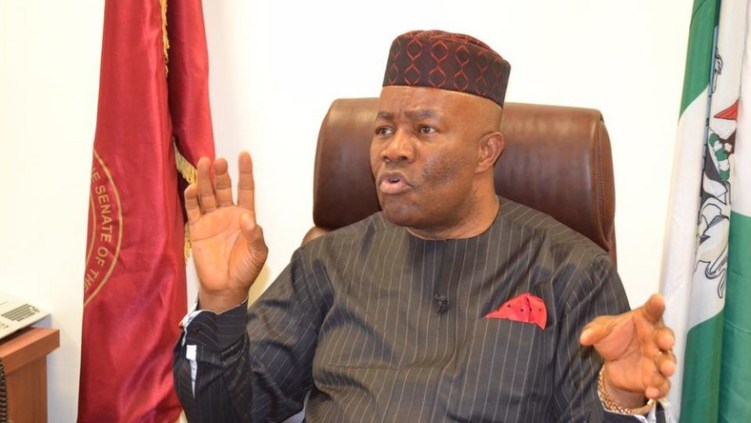
ShareBy Eze Okechukwu, Abuja The Senate President, Godswill Akpabio has linked the worsening insecurity across the country to a gang up by opposition politicians,...


Yobe Hits 100 Per Cent Budget Implementation in Five Years
Share Yobe State Governor, Mai Mala Buni said the state has recorded 100 per cent budget implementation from 2021 to...

ADC Braces Odds, Holds National Convention amid Court Tussle
ShareBy David Torough, Abuja The African Democratic Congress (ADC) on Tuesday held its national convention in Abuja despite ongoing legal...


Tinubu Unveils New Tax Order, Ends ‘Broken’ Revenue System
ShareBy Tony Obiechina, Abuja President Bola Tinubu has declared that Nigeria is charting a new economic course, vowing to abandon...


Otu, Retired Naval Chief Bag UNICAL Honorary Degrees
ShareFrom Ene Asuquo, Calabar The Governor of Cross River State, Prince Bassey Otu, has been conferred with an honorary doctorate...