
Agriculture
Farmers Laud FG’s Newly Approved 57 Crop Varieties


The All Farmers Association of Nigeria (AFAN), Lagos State Chapter, has lauded the Federal Government’s approval of 57 crop varieties to strengthen agricultural productivity in the country.
The Lagos State AFAN Chairman, Sakin Agbayewa, disclosed this in an interview yesterday in Lagos.
The Nigerian Federal Government approved 57 new improved crop varieties to boost food security, improve nutrition, and strengthen agricultural productivity.
The crops, selected for early maturity, higher yields, and resistance to pests and diseases, include 14 different types of staples, with notable advancements in rice, maize, yam, soybean, and plantain.
Agbayewa noted that the approval of the crop varieties would help improve the yields of farmers in the state.
“We are excited to hear about the 57 new varieties of crops recently approved.
“What we desire currently in crop farming is not just about planting, it is about increased yield.
“A farmer can have a plot of land and have a high yield and another can have big plots of land and have a low yield.
“So, if we are talking about food security, it starts from the varieties you are planting and it starts from the seedlings.
“Improved seed varieties as well as improved seedlings will always give you higher yield on minimal land.
“You can barely imagine the higher yield farmers with larger land size will get with improved seedling varieties,” Agbayewa said.
He described the introduction of the crops as a new development for crop cultivation.
“So, for us as an association, the introduction of the 57 crop is a good development for crop cultivation.
“It will help to curb the food insecurity we are talking about and shortage of food in the near future. It is a good one.
“This newly approved 57 crop varieties should however be popularised among local farmers because not everyone is aware of this latest development.
“There are a lot of issues currently affecting the cultivation of crops and the development of improved crop varieties will help the farmer’s productivity.
“Issues such as climate change effects, inconsistent rainfall patterns and weather clash among others are affecting farmers’ yield.
“So, what we want now is to have improved crop varieties that will give us higher yield,” he said.
Agbayewa said there should be massive advocacy of the approved crop varieties across the board for farmers.
“There should be a massive advocacy of the approved crop varieties across the board so that our farmers will be able to eat from their sweat and at the same time save the nation.
“We are excited that this new crop variety was done in Nigeria and not by foreigners. It shows that our researchers are now waking up.
“The government is now waking up to their responsibility.
“So, we are now growing our own and eating our own varieties, which is good. And we are calling for more research like this to be done.
“With more researches done,

Some residents in Lagos State have expressed concern over the recent surge in the price of tomatoes, forcing many households to adopt alternatives.
The residents made their views known in separate interviews on Wednesday in Lagos.
A market survey showed that a 50kg basket of tomatoes now sells between N115,000 and N125,000, compared to between N35,000 and N40,000 recorded last month.
Olachi Igwe, a resident of Ago Palace, said the scarcity and high cost of tomatoes had disrupted her household’s meal plans.
“I contacted my usual vendor, but she said tomatoes were scarce and difficult to source.
“A small bowl we used to buy for between N3,500 and N4,000 now sells for as high as N6,000 to N7,000, when available.
“For now, my family will resort to palm nut stew (ofe akwu) until prices stabilise,” she said.
Another resident, Mercy Okeleye of FESTAC, said although her family prefers fresh tomatoes, rising prices have forced her to consider cheaper options.
“I cannot do without fresh tomatoes because of the taste, but I may have to buy broken ones, popularly called ‘esha’, which are relatively cheaper.
“I do not consider tomato paste a suitable substitute because it is not purely made from tomatoes,” she said.
Also speaking, Tope Babalola from Dopemu, said she might adjust her cooking methods if prices remain high.
“I have not bought tomatoes in over a month, but if the price is still high, I will use more onions and peppers.
“I will not resort to artificial additives; I prefer natural ingredients for my meals,” she said.
Joan Ogugua, another resident, said she had already switched to tomato paste to cope with the situation.
“I asked my son to buy tomato paste for our meals. I cannot justify spending excessively on fresh tomatoes when other basic needs must be met,” she said.
Also, Oge Ugwu, a civil servant at Lekki, said she would resort to cucumber stew with the recent price hike.
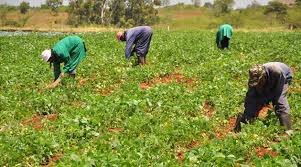
The Tomatoes Growers and Processors Association of Nigeria (TOPAN) has predicted a steady increase in the price of the produce between May and June 2026.
The Kaduna State Chairman TOPAN, Rabiu Zuntu, disclosed this in an interview recently in Lagos.
Zuntu noted that although there is no particular time for tomatoes planting season up north, seasonal weather variations can affect the production of the produce.
“Although we can plant tomatoes all-year-round, we cannot assure quality harvest all-year-round.
“Some farmers are harvesting now, while others are transplanting, and others are harvesting.
“Tomatoes are still available for sale but the price of the produce is gradually on the increase.
“Come May/June, the prices of tomatoes will be very expensive, so now is a good time to stock up the produce. There’s always a scarcity within that period.
“This is because of the nature of the weather in the north around that period, the weather is usually very hot and tomatoes cannot resist such hot temperature,” he said.
Zuntu said the price of tomatoes have started rising up in the north.
“A 50kg rafia basket of tomatoes sells from N20,000 as against N7,000 to N10,000 that was sold earlier in the year.
“While a crate of tomatoes up north is sold between N10,000 and N15,000 as against N5,000 to N6,500 sold earlier in the year.
“In most part of Kano State, where there is bumper harvest, they are rounding off their harvest. So, tomato is not that available there and most buyers have turned to where they can find it now, mostly within Kaduna State and some parts of Plateau State.
“So, that’s why the supply has decreased and the tomato supply and cost is determined by the law of demand and supply,” he said.
A 50kg basket of tomatoes in Lagos, at the moment, sells between N40,000 and N60,000 depending on the size and quality.

The Smallholder Women Farmers Organisation in Nigeria (SWOFON), Oyo State chapter, has said that the lack of irrigation facilities had become a major obstacle to dry season farming in the state.
The Chairperson of SWOFON in Oyo State, Atinuke Akinbade, said this in an interview in Ibadan on Monday.
Akinbade, who shared the experiences of women farmers in the state during the 2025 dry season, said that inadequate access to water for irrigation significantly affected the performance of many farmers during the period.
“It hindered many older farmers from participating in dry season farming and also prevented younger farmers from doing as much as they could in cultivating large acres of land,” she said.
Akinbade explained that farmers who managed to plant during the season struggled to access sufficient water to irrigate their farms, a situation worsened by the effects of climate change.
“Many farmers who depended on streams and wells to water their crops suffered major setbacks because those sources could not provide enough water for irrigation.
“Some farmers had to resort to buying water from commercial water tankers, which increased the cost of production, while at times it was even difficult to get water from the tankers,” she said.
The SWOFON chairperson warned that failure to address the problem could worsen food insecurity in the coming months.
“Even now, rainy season farming has not fully commenced because of the irregular rainfall pattern.
“This is a double burden, and if nothing is done, it may lead to serious hunger later,” she said.
Akinbade, however, acknowledged that the government had organised training for members of the association on home gardening.
She, however, said that little support was provided to address the challenges of dry season farming.
The chairman said that the home garden support package given to members consisted mainly of seedlings and one sprayer.
“They gave us two packs each of maize and pepper seeds, with six seeds in each pack, as well as one sprayer, so that we can grow food for household consumption,” she said.
Earlier, Oluwatoyin Oyedeji, SWOFON Coordinator in Oyo East, explained the severe hardship members of the organisation experienced in sourcing water for irrigation.
“Many farmers are already counting their losses because water was not available to irrigate their farms.
“Those who depended on streams and brooks were badly affected because many of them dried up, while the few that still had water had so little that farmers had to dig deeper into the ground in search of more,” Oyedeji said.
In the same vein, the Women Leader for farmers in Saki East, Musiliu Ashiru, said the absence of irrigation facilities also hampered dry season farming in her area.
According to her, many farmers still engaged in dry season farming have had to pay for water to keep their crops alive.
“Many of them buy water from the dam here to irrigate their crops. It has not been easy for them this year,” Ashiru said.


Mining Marshals Defend Stone Rockers Shutdown, Say Quarry Remains Crime Scene
ShareBy Elijah Oguche, Abuja The Mining Marshals have defended the continued closure of Stone Rockers Nigeria Limited’s quarry site in...
Nigeria Thailand Deepen, Cooperation with New Agreement on Agriculture, Cooperatives, Innovation
ShareBy Raphael Atuu Abuja The Federal Government of Nigeria and the Kingdom of Thailand have deepened bilateral cooperation with the...


Enugu Trains over 15,000 Civil Servants on E-Governance, Digitalization
ShareFrom Sylvia Udegbunam, Enugu The Enugu State Government has trained over 15,000 civil and public servants on e-governance and digitalisation...
Navy Disrupts Two Illegal Refining Sites in Rivers
ShareThe Nigerian Navy has sustained efforts to disrupt illegal refining activities in Rivers with personnel of Nigerian Navy Ship (NNS)...
Troops Recover Terrorists Planted IED Zamfara Community
ShareFrom Ifeanyichukwu Nwannah, Gusau Troops of Joint Task Force North West Operation Fansan Yamma recorded another operational success in Zamfara...


Army Neutralises Key Terrorist Commander in Katsina, Recover Arms and Motorcycles
ShareBy David Torough, Abuja Troops of Joint Task Force North West, Operation FANSAN YAMMA, have neutralised a key terrorist commander...


Troops Neutralize Suspected Terrorist, Recover Two AK-47 Rifles in Plateau
ShareBy David Torough, Abuja Troops of Operation ENDURING PEACE have neutralized a suspected terrorist and recovered two AK-47 rifles and...


How Newborn Baby Abandoned At Birth Rescued in Benue Forest
ShareFrom Attah Ede, Makurdi An abandoned newborn baby girl has been rescued alive near Ashar forest at Wuese community in...


Capital Market: Adoption of T+1 Moving Smoothly — SEC
ShareBy Tony Obiechina, Abuja The Securities and Exchange Commission (SEC) said the adoption of the T+1 settlement cycle in Nigeria’s...


RMAFC, NEITI Collaborate to Boost Transparency in Revenue Generation
ShareBy Tony Obiechina, Abuja The Chairman of the Revenue Mobilisation, Allocation and Fiscal Commission (RMAFC), Dr. Mohammed Bello Shehu has...