
Foreign News
Ghana’s Parliament Passes Anti-LGBTQ+ Bill

The parliament in Ghana has approved a new bill criminalising homosexuality and the promotion of LGBTQ+ activities.
It proposes that identifying as lesbian, gay, bisexual, transgender or queer be punished by up to three years’ imprisonment.
The bill also introduces a “Duty to report” prohibited acts to police.Religious leaders have pressured President John Dramani Mahama, who still needs to ratify the legislation, to strengthen anti-gay laws since he came to power last year.
The ban has been sharply criticised by international organisations, including Human Rights Watch, which said it placed LGBTQ+ peoples’ lives at risk while also “encouraging citizens to surveil and denounce one another”.
Same-sex relationships have been banned in Ghana under laws dating from the British colonial era.
In an address to parliament, the bill’s sponsor Reverend John Ntim Fordjour said it would protect Ghanaian family and cultural values.
He said the new bans would make existing laws “more robust, more encompassing and more stringent in dealing with the practices of LGBTQI”.
Anyone who identifies as an “ally”, a general term for a supporter of LGBTQ+ people, could also face a prison sentence.
Exemptions were included for legal, media and healthcare professionals who report on LGBTQ+ issues or provide medical treatment or other services for gay people.
Human Rights Watch recommended the bill be abandoned in a formal submission to the constitutional and legal affairs committee scrutinising the legislation in the capital, Accra.
Ghana passed a similar bill in 2024 but it did not become law after former President Akufo-Addo failed to sign it amid legal challenges.
The current President Mahama has indicated he would support the bill’s passage, saying shortly after he took office that “I believe in the principles and values that only two genders exist – man and woman – and that marriage is between a man and a woman.”
Several African countries have cracked down on LGBTQ+ rights in recent years.
Senegal’s parliament approved similar legislation in March prescribing a maximum prison term of 10 years for sexual acts by same-sex couples and criminalising the ”promotion” of homosexuality.
Uganda introduced a death penalty for certain same-sex acts in 2023.
Guinea has banned the export of unrefined gold in an effort to promote domestic processing of the precious metal.
The policy – effective immediately – comes after Guinea’s President Mamadi Doumbouya met industrial and artisanal gold producers and buyers, and aims to boost the economy and create more jobs.
“Guinea will now require its gold to be processed within its own borders.
Raw gold will no longer leave Guinea,” he said, adding that other countries have been reaping the economic benefits of processing and trading their raw materials.Guinea is Africa’s sixth largest gold producer, according to the World Gold Council.
Other African nations have taken similar steps to increase domestic processing and value addition in the mining sector in recent years.
In Tanzania and Uganda, the export of unprocessed minerals and metals such as gold and copper is already banned, while Ghana is set to ban raw gold exports by 2030.
Africa’s top lithium producer, Zimbabwe, has banned concentrate exports of the metal used to make batteries from 2027.
Gold is one of Guinea’s main exports, shipping more than 22 tonnes of the metal in the first quarter of this year, according to the authorities.
A new refinery is near completion in the capital, Conakry, where the country’s gold will be sent before processing and export. It has a reported capacity of 250 tonnes a year so should be able to handle the country’s current production.
Foreign companies operating in the country have been warned that they risk losing their licenses and having their mining contracts terminated if they violate the directive.
Guinea is also the world’s largest producer of bauxite, used to make aluminium.
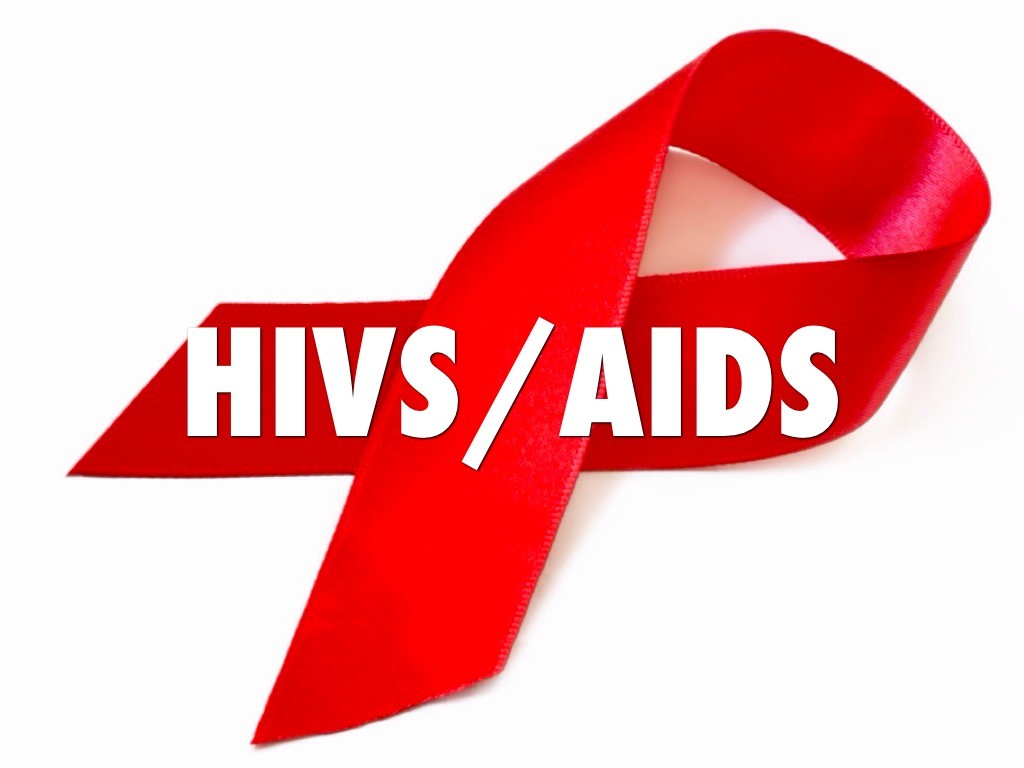
The US government says it will stop funding programmes in South Africa intended to tackle the spread of HIV and Aids.
More than eight million South Africans are living with HIV – the highest number of any country in the world.
The US State Department appeared to link the decision to South Africa’s alleged failure to protect the white-minority Afrikaner community – an allegation the South African government has repeatedly rejected.
South Africa’s health ministry responded by saying that though it had not been informed of this decision, it had “long been working on a self-reliance plan”.
Until 2025, the US was supporting South Africa’s efforts to deal with the virus with an estimated $400m (£300m) a year through the President’s Emergency Fund for Aids Relief (Pepfar).
But since the inauguration of President Donald Trump, relations between the two countries have increasingly soured.
Shortly after he came into office, Trump issued an executive order alleging that “countless” South African policies dismantled equal opportunities and fuelled violence “against racially disfavored landowners”.
This is disputed by the South African government, which says its Black Economic Empowerment policy is needed to correct economic inequality dating from the apartheid era.
The executive order also highlighted South Africa’s case against Israel at the International Court of Justice and its links to Iran.
The White House said that given these “unjust and immoral practices”, further aid to South Africa would not be provided.
Trump has also alleged that there is a “white genocide” taking place in South Africa, which has led to the administration setting up a refugee programme for Afrikaners – descendants of western Europeans who settled in southern Africa in the 17th Century. They are now just about the only refugees being allowed into the US.
The genocide claim has been widely discredited.
Pepfar funding, which had been providing about a fifth of South Africa’s total spending on HIV programmes, got a reprieve last October with what was called a “bridge plan”.
But a US State Department official has confirmed that a “phased drawdown” of Pepfar funding would now start.
This was because of “South Africa’s failure to make demonstrable progress on policy requests by the administration”, the official said.
The intention of the US government was to “foster self-reliance” and reduce dependency on American funding, they added, pointing out that “South Africa is a middle-income country and is more than capable of supporting its own health programs”.
South Africa’s health ministry has said that while Pepfar contributed to the country’s HIV programme, the provision of life-saving antiretroviral drugs was funded entirely separately, with most coming from the government.
Attempts to mend US-South Africa relations have floundered. These include a high-profile White House meeting between Trump and South African President Cyril Ramaphosa just over a year ago when the US president confronted his counterpart with his claims of white persecution.
The US also boycotted the G20 meeting, a gathering of the world’s major economies, hosted by South Africa last November.
African delegates attending seminars in China have condemned reported xenophobic attacks against foreign African nationals in South Africa and called for greater unity across the continent.
The delegates made the condemnation on the sidelines of training programmes organised by the Academy for International Business Officials (AIBO) under China’s Ministry of Commerce.
They described the reported attacks as disturbing and contrary to the ideals of Pan-Africanism, solidarity, and peaceful coexistence.
Yusupha Bojang of The Gambia’s National Council for Civic Education said Africans must see themselves as one people irrespective of colonial-era boundaries.
“We first have to recognise that in Africa we are all one. These boundaries are artificial creations. We should treat each other as brothers and sisters,” he said.
Bojang said frustrations over domestic challenges should not be directed at fellow Africans lawfully residing in another country.
“If you have any problem, it should be channelled to your government, not innocent citizens legitimately carrying out their activities,” he said.
He urged Africans to speak with one voice against xenophobia.
“We need to unite. When we see wrongs happening, we should all come out to condemn them because it can happen to anybody,” he added.
Also speaking, Jallow Gibbi, a journalist with Dunia Radio in The Gambia, said he was saddened by reports of Africans attacking fellow Africans.
“When I watched the news, I was embarrassed to see Africans fighting Africans. It is not humanitarian and it should not happen,” he said.
Gibbi called on African leaders and international organisations to promote peace and unity across the continent.
“We are all the same. One Africa, one people. We should unite and stay together,” he said.
He said information from Gambian diplomatic authorities indicated that no Gambian citizen had been reported affected, while advising nationals to remain vigilant.
Mr Richard Jombi James of South Sudan’s Ministry of Culture, Museum and National Heritage described African unity as essential to the continent’s progress.
“We are all Africans from the north to the south, east and west. We cannot attack ourselves. We are one Africa, one people,” he said.
Kawu Muhammed Lawan of Nigeria’s Federal Ministry of Arts, Culture, Tourism and Creative Economy said the reports were particularly troubling given the support many African countries provided during South Africa’s anti-apartheid struggle.
“Looking at all the efforts other African countries made to end apartheid in South Africa, it is embarrassing to witness hostility against fellow Africans today,” he said.
Lawan urged African leaders to take practical steps to protect citizens across the continent and strengthen regional integration.
Similarly, Emmanuel Nok, a legal practitioner with South Sudan’s Ministry of Culture, Museum and National Heritage, said Africans should reject violence and discrimination against one another.
“We feel hurt as Africans when we see fellow Africans being hunted by other Africans. We should condemn such behaviour because it goes against the spirit of African brotherhood,” he said.
Nok noted that many African countries host citizens from neighbouring states and stressed that peaceful coexistence remained vital for economic development and regional cooperation.
The delegates called on governments, regional organisations and civil society groups to promote tolerance, strengthen social cohesion and uphold the principles of African unity.
They also urged Africans to focus on common development goals, saying stronger cooperation would advance peace, prosperity and integration across the continent.




Again, Benue Journalists Tackle Alia’s CPS over Comments
ShareBy Elijah Oguche, Abuja Twelve concerned chapels of the Nigeria Union of Journalists (NUJ), Benue State Council, have again taken...
Fresh Lassa Fever Outbreak Kills Medical Doctor in Benue
ShareFrom Attah Ede, Makurdi Fresh Lassa Fever outbreak has claimed the life of a senior medical doctor working with APIN Foundation in Konshisha local government...


Ighalo Credits Houseman for Launching His 19-Year Football Career
ShareFormer Super Eagles striker, Odion Ighalo, has credited Argentine football scout, Marcelo Houseman, with playing a key role in launching his professional football career. Ighalo said that Houseman...
Guinea Bans Exports of Raw Gold to Boost Local Refining
ShareGuinea has banned the export of unrefined gold in an effort to promote domestic processing of the precious metal. The policy – effective immediately – comes after Guinea’s President Mamadi...
Kano Businessman Burnt to Death in Girlfriend’s Apartment
ShareFrom Aliyu Askira, Kano A 30-year old boutique and provision owner Ismail Makaye was feared dead in his girlfriend’s apartment named...

Katsina Extends Automatic Jobs to First-class Graduates
ShareKatsina State Gov, Dikko Radda has extended the offer of automatic employment to indigenes of the state who graduate with first-class degrees from higher institutions across the country. Radda...

Manufacturing Sector Records Sharp Decline in Tax Remittances
ShareBy Tony Obiechina, Abuja Manufacturers’ Company Income Tax (CIT) payments fell by 68.25 per cent year-on-year to N74.48 billion in...
Court Remands Sowore in Kuje Prison, El-Rufai Battles DSS Charges
ShareBy David Torough, Abuja The Federal High Court in Abuja on Monday witnessed significant developments in two separate cases involving...
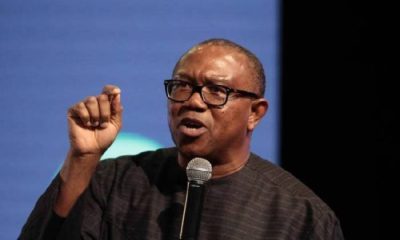

Presidency Fiercesly Tackles Peter Obi over Tinubu Resignation Call
ShareBy David Torough, Abuja A war of words erupted on Monday between the Presidency and former Anambra State Governor Peter...
Benue to Resuscitate N70bn Taraku Mills after 15 Years
ShareFrom Attah Ede, Makurdi Benue State Government through the Benue Investment and Property Company Limited (BIPC) has worked out modalities to commence immediate...