
Foreign News
Unity Cup: Super Eagles Must Improve Despite Zimbabwe Victory — Chelle

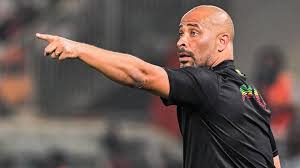
Super Eagles head coach Éric Chelle has demanded more work from his players despite the impressive victory over Zimbabwe.
Nigeria defeated the Warriors 2-0 in the semi-final of the Unity Cup at the Valley on Tuesday night.
Femi Azeez emerged the hero for the Super Eagles, scoring twice to guide the three-time African champions into the final, where they will face either Jamaica or Iran.
The 24-year-old who plays for Millwall FC in the English Championship, swiftly put the Super Eagles in the lead after only five minutes, when he finished off a great team move with a left-footed rocket that Zimbabwe goalkeeper Future Sibanda could not stop.
Alhassan Yusuf, Tochukwu Nnadi and Philip Otele all came close to increasing Nigeria’s lead afterwards.
Azeez netted his and Nigeria’s second of the night in the 62nd minute after beating Sibanda in the box following another swift team move, with Otele finding Terem Moffi who then located the Millwall man in the vital area.
Moffi also set up Azeez for the opening goal.
Chelle is expecting a better performance from his players in the final.
“This is only a friendly game. This is not the World Cup qualifier. They need to work hard,” Chelle said at his post-match interview after the game at The Valley in London.
“They need to try to understand what I want, what the technical staff want and the high level is difficult.
“So you see, we made some mistakes with the ball. For sure, you see tomorrow we will work out during training,” he said.
In Saturday’s final at the Valley, the Super Eagles will take on the winner of Wednesday’s second semi-final between last year’s runners-up Jamaica and India.

Ghana has welcomed Pope Leo XIV’s apology for the Catholic Church’s historic role in slavery, describing it as an “act of moral courage” that was important in the global pursuit of “truth, human dignity and justice”.
The Pope issued the clearest apology yet for the Church’s involvement in legitimising slavery and its delay in condemning it for centuries.
The apology was published on Monday in the Pope’s first major teaching document of his papacy, which also focused on the dangers of artificial intelligence (AI).
Ghana was a major hub for the transatlantic slave trade when millions of people were captured and loaded on to ships, never to return home.
Between the 16th and 19th Centuries, 12-15 million Africans were shipped to the Caribbean, with about two million dying during the journey.
Ghana has long been a leading efforts for compensation and apologies from Western nations for the slave trade.
The West African nation’s government said the Pope’s recognition of the painful past was an important step towards healing, reconciliation and a just society.
”[The apology] reinforces the growing global understanding that confronting historical injustices demands truth-telling and moral responsibility as essential foundations for justice and reconciliation,” its statement, released late on Tuesday, said.
The Pope’s apology was delivered in what is known as an encyclical – technically a letter to Catholic bishops, but which over recent decades have been how a pontiff passes on messages to the world.
In the papal letter – titled “Magnifica Humanitas” (“Magnificent Humanity”) – Pope Leo sincerely asked for pardon in the name of the Church, adding that it was “impossible not to feel deep sorrow when contemplating the immense suffering and humiliation endured by so many”.
Leo said Church authorities had at times responded to requests of rulers by “regulating and legitimising forms of subjugation, including the enslavement of [non-Christians]”.
He also acknowledged that earlier in the Middle Ages, ecclesiastical institutions had their own slaves.
“This constitutes a wound in Christian memory,” he said of the Church’s record.
In April, Pope Leo completed a 11-day, four-nation of Africa – his first visit to the continent as pontiff – and where he made several forthright remarks including lashing out at foreigners who exploit Africa’s wealth for profit.
Ghana said the Pope’s acknowledgment of the “painful history” was significant, at a time the world was having a “deeper reflection” on the effects of slavery and colonialism.
The country successfully pushed for a UN resolution in March, which recognised the enslavement of Africans as the “gravest crime against humanity”.
Submitted by Ghana’s President John Mahama and backed by the African Union, it aims to provide a pathway to healing and the payment of reparations.
It also seeks to address the enduring consequences of slavery like inequality and racial discrimination.
Ghana, which still has some of the forts that were used for holding captives under inhuman conditions as they waited to be shipped to the Americas by European powers, is due to host a conference in June to discuss the next steps following the adoption of the UN resolution.
On Tuesday, Human Rights Watch said the Pope’s apology marked an important step, but stressed apologies alone were not enough and that real reparative justice needed to go further.
Religious institutions, along with states and corporations that benefited from slavery, should “reckon seriously” with their histories and take part in reparative efforts, the rights group added.

The US said it launched new strikes on southern Iran on Monday, targeting Iranian missile sites and boats attempting to place mines.
The strikes were in “self-defence” and designed “to protect our troops from threats posed by Iranian forces”, US Central Command (Centcom) said in a statement.
Iran’s Islamic Revolutionary Guard Corps (IRGC) said on Tuesday it had downed a US drone and fired at a fighter jet and another drone that entered Iranian airspace, state media reported.
It did not specify when this happened.It added that Iran had the “legitimate and definite” right to retaliate against any US ceasefire violations.
“US forces conducted self-defence strikes in southern Iran today to protect our troops from threats posed by Iranian forces,” Centcom spokesperson Capt Tim Hawkins said in a statement on Monday.
“US Central Command continues to defend our forces while using restraint during the ongoing ceasefire.”
Capt Hawkins added the US strikes targeted an area near Bandar Abbas, a southern port city and home of an Iranian naval base that sits on the Strait of Hormuz, according to the New York Times.
Iranian state media had earlier reported that local officials in Bandar Abbas were investigating after explosions were heard.
It is unclear what impact the latest US strikes will have on any potential peace agreement between the US and Iran.
Following the US attack, Secretary of State Marco Rubio said a deal was still possible and pointed to talks on Tuesday between Iran’s top negotiator and foreign minister and Qatar’s prime minister.
“We’ll see if we can make progress. I think there’s a lot of back and forth going on about specific language in the initial document, so it’ll take a few days,” Rubio told reporters during an official visit to India.
He said President Donald Trump had “expressed his desire to make it”.
“He’s either going to make a good deal or no deal,” Rubio said.
Asked again later about Monday’s strikes, Rubio said: “The straits have to be open.
“They’re going to be open one way or the other, so they need to be open.
“What’s happening there is unlawful, it’s illegal, it’s unsustainable for the world, it’s unacceptable.”
Meanwhile, Iran’s Supreme Leader Mojtaba Khamenei said the Middle East “will no longer serve as shields for US bases”.
Khamenei, who has not been seen in public since succeeding his late father as supreme leader earlier this year, made the comments on Tuesday in a message marking the annual Hajj pilgrimage.
He added: “In addition to no longer having a safe haven for evil and establishing military bases in the region, America is moving away from its previous status day by day.”
Earlier in May, a clash between Iran and US naval destroyers in the Strait of Hormuz – for which each side blamed the other – led Trump to insist a ceasefire was still in place.
At the weekend, Trump had suggested the sides were close to a deal, but later said he had instructed negotiators “not to rush into” one, while Rubio had said an agreement could possibly be reached on Monday.
But Iranian foreign ministry spokesman Esmail Baqai responded: “It is correct to say that we have reached a conclusion on a large portion of the issues under discussion. But to say that this means the signing of an agreement is imminent – no-one can make such a claim.”
The memorandum of understanding being discussed reportedly involves a 60-day ceasefire extension, the reopening of the Strait of Hormuz and a plan for further negotiations over Iran’s nuclear programme.
Mojtaba Khamenei is thought to have been injured in an Israeli strike that killed his father and predecessor on the first day of the war more than three months ago.
According to US media, the discussions will not immediately lead to a final settlement. Contentious issues will likely be negotiated later, including details of Iranian sanctions relief, the release of frozen Iranian funds, and US demands for Iran to curb its nuclear ambitions.
The International Atomic Energy Agency (IAEA) estimated that at the start of the war, Iran had about 440kg (970 lbs) of uranium enriched up to 60 percent purity.
This is a short process away from being enriched to the weapons-grade 90 percent, which theoretically could allow it to create a nuclear bomb.
On Monday night, Trump said the enriched uranium would either be “immediately” turned over to the US, or “preferably, in conjunction and co-ordination with the Islamic Republic of Iran, destroyed in place”.
US and Iranian forces have observed a ceasefire since 8 April. Iran has maintained controls on Gulf shipping through the Strait of Hormuz and the US Navy has sought to blockade Iran’s ports.
The US and Israel launched wide-ranging strikes on Iran on 28 February, sparking conflict across the Middle East.
Iran responded by attacking Israel and US-allied states in the Gulf, and effectively closed the Strait of Hormuz. The move sent oil prices soaring globally.
Local authorities on Monday announced that 28 people were killed when a landslide struck an illegal gold mining site in Angola.
According to the authorities this was the deadliest illegal mining accident in Angola, northwestern Bengo province.
The province’s civil protection and fire service said four people were rescued from the site adding that search operations had been completed.
The deceased from Saturday’s accident were aged between 16 and 35 years old, authorities said.
Illegal mining in Angola had historically been associated with the diamond industry.
The country’s mining diversification drive has fuelled a boom in artisanal mining of other metals such as gold.
Angola, a major diamond producer is diversifying into metals such as copper and gold as diamond prices fall and synthetic diamonds rise.


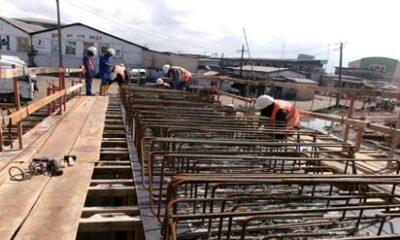

Carter, Iddo, Third Mainland Bridges: Julius Berger Tackles Years of Severe Structural Deterioration
ShareBy Mike Odiakose, Abuja Top-notch engineering construction company, Julius Berger Nigeria PLC is leading an extensive bridge rehabilitation programme in...


Children’s Day 2026: CAN Urges Urgent Action To Protect Nigerian Children From Fear, Violence And Neglect
ShareBy Laide Akinboade, Abuja The Christian Association of Nigeria, (CAN,) has tasked Nigerian leaders, three tiers of government and security...
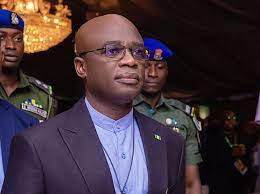

Alia Postpones Benue at 50, Third Year Anniversary Celebrations
ShareFrom Attah Ede, Makurdi Benue State Governor, Hyacinth Alia, has announced immediate postponement of the planned activities marking the Benue at 50 and the Third Year Anniversary Celebrations...

Unity Cup: Super Eagles Must Improve Despite Zimbabwe Victory — Chelle
ShareSuper Eagles head coach Éric Chelle has demanded more work from his players despite the impressive victory over Zimbabwe. Nigeria defeated the Warriors 2-0 in the semi-final of the Unity Cup...
Ghana Welcomes Pope’s Apology over Catholic Church’s Role in Slavery
ShareGhana has welcomed Pope Leo XIV’s apology for the Catholic Church’s historic role in slavery, describing it as an “act of moral courage”...
Benue NUJ Passes ‘No-confidence Vote’ on Alia’s CPS over Alleged Misconduct
ShareFrom Attah Ede, Makurdi The Nigeria Union of Journalists, Benue State Council, has passed a vote of no confidence on the Chief Press Secretary to Governor...
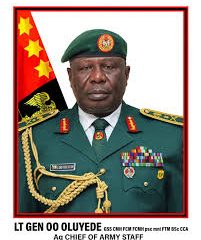

Eid-el-Kabir: CDS Urges Unity, Salutes Troops’ Sacrifices
ShareThe Chief of Defence Staff, Gen. Olufemi Oluyede, has called on members of the Nigerian Armed Forces to continue to embrace sacrifice, unity and patriotism...

Capital Market Adopts T+1 Settlement Framework June 1
ShareThe Nigerian capital market is set to transition to a T+1 settlement cycle effective Monday, June 1. The Director-General of...
US Report Indicts Fulani Militants over Nigeria’s Worsening Insecurity
ShareBy David Torough, Abuja A report by the United States Commission on International Religious Freedom (USCIRF), has revealed that an...

Children’s Day: Tinubu, Makinde Reassures Safe Return of Abducted Pupils
ShareBy David Torough, Abuja President Bola Tinubu and governors of Oyo and Ogun states on Wednesday intensified efforts to address...