
NEWS
Alia Postpones Benue at 50, Third Year Anniversary Celebrations

From Attah Ede, Makurdi
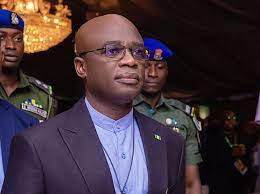
Benue State Governor, Hyacinth Alia, has announced immediate postponement of the planned activities marking the Benue at 50 and the Third Year Anniversary Celebrations of the present administration.
The State deputy governor, Sam Odeh disclosed this in a statement on Wednesday.
According to him, the decision to postpone the event was taken to allow for necessary adjustments and consultations to ensure a more successful and inclusive commemoration.
He said a new date for the celebrations will be communicated to the public in due course.
“The Benue State Government under the leadership of His Excellency, Rev. Fr. Dr. Hyacinth Iormem Alia wishes to inform the general public that the activities marking the two events have been postponed.
“The Government regrets any inconvenience this postponement may have caused individuals, groups, and organisations, and appreciates the understanding, patience and continued support of the good people of Benue”, Ode intimated.
NEWS
Carter, Iddo, Third Mainland Bridges: Julius Berger Tackles Years of Severe Structural Deterioration
By Mike Odiakose, Abuja
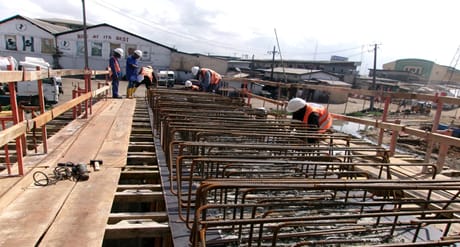
Top-notch engineering construction company, Julius Berger Nigeria PLC is leading an extensive bridge rehabilitation programme in Lagos State, following its engagement by the Federal Ministry of Works in 2023.
The assignment is designed to address years of severe structural deterioration in the critical infrastructures.
Construction works commenced in January 2024, targeting four key transport links: the Third Mainland Bridge, Carter Bridge, Iddo Bridge, and the Iddo Bridge Underpass.
The project focuses on addressing long-standing structural damage, particularly in underwater components impacted by marine corrosion, tidal forces, and sustained heavy traffic.
At Carter Bridge, rehabilitation works concentrated on degraded underwater sections and substructure elements to mitigate the effects of corrosion and tidal movement.
Physical works were completed in January, and the project has now entered its close-out phase.
For the Third Mainland Bridge, engineers are carrying out structural repairs on critical components, including the deck soffit, piers, and underwater pile caps.
The project is currently about 80% physically complete, with only the monitoring phase outstanding.
This phase, expected to last one year, is now in its third month. Financially, approximately 60% of the budget has been allocated, with 21% of the total project value executed to date.
At press time last week, no major construction work is outstanding on this bridge as the focus is entirely on performance validation.
Essentially, the monitoring phase acts as a quality assurance and risk management step, ensuring that the extensive rehabilitation work translates into a safe, stable, and durable bridge for years to come, said a member of the project team, Friday.
The Iddo Bridge rehabilitation involves a more intensive reconstruction due to severe deterioration.
Significant portions of the bridge have been demolished and are being rebuilt using reinforced concrete girders, enhanced reinforcement systems, and strengthened structural supports.
The project is actively ongoing and stands at 30% physical completion.
At the Iddo Bridge Underpass, the existing structure was completely removed to enable full reconstruction.
The scope includes continuous reinforced concrete pavement (CRCP), improved drainage systems, and the installation of modern street lighting and utility infrastructure. Construction progress has reached 38%.
CRCPs are designed to control cracking, not eliminate it as cracks occur at regular, closely spaced intervals. The reinforcement keeps cracks tight, preventing them from widening
Overall, these rehabilitation efforts are designed to enhance commuter safety, extend the lifespan of critical infrastructure, and reduce structural risks along some of Lagos State’s busiest transport corridors.
In addition, the improvements are expected to ease traffic flow and strengthen economic activity across the state.
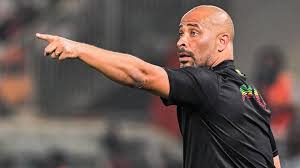
Super Eagles head coach Éric Chelle has demanded more work from his players despite the impressive victory over Zimbabwe.
Nigeria defeated the Warriors 2-0 in the semi-final of the Unity Cup at the Valley on Tuesday night.
Femi Azeez emerged the hero for the Super Eagles, scoring twice to guide the three-time African champions into the final, where they will face either Jamaica or Iran.
The 24-year-old who plays for Millwall FC in the English Championship, swiftly put the Super Eagles in the lead after only five minutes, when he finished off a great team move with a left-footed rocket that Zimbabwe goalkeeper Future Sibanda could not stop.
Alhassan Yusuf, Tochukwu Nnadi and Philip Otele all came close to increasing Nigeria’s lead afterwards.
Azeez netted his and Nigeria’s second of the night in the 62nd minute after beating Sibanda in the box following another swift team move, with Otele finding Terem Moffi who then located the Millwall man in the vital area.
Moffi also set up Azeez for the opening goal.
Chelle is expecting a better performance from his players in the final.
“This is only a friendly game. This is not the World Cup qualifier. They need to work hard,” Chelle said at his post-match interview after the game at The Valley in London.
“They need to try to understand what I want, what the technical staff want and the high level is difficult.
“So you see, we made some mistakes with the ball. For sure, you see tomorrow we will work out during training,” he said.
In Saturday’s final at the Valley, the Super Eagles will take on the winner of Wednesday’s second semi-final between last year’s runners-up Jamaica and India.

Ghana has welcomed Pope Leo XIV’s apology for the Catholic Church’s historic role in slavery, describing it as an “act of moral courage” that was important in the global pursuit of “truth, human dignity and justice”.
The Pope issued the clearest apology yet for the Church’s involvement in legitimising slavery and its delay in condemning it for centuries.
The apology was published on Monday in the Pope’s first major teaching document of his papacy, which also focused on the dangers of artificial intelligence (AI).
Ghana was a major hub for the transatlantic slave trade when millions of people were captured and loaded on to ships, never to return home.
Between the 16th and 19th Centuries, 12-15 million Africans were shipped to the Caribbean, with about two million dying during the journey.
Ghana has long been a leading efforts for compensation and apologies from Western nations for the slave trade.
The West African nation’s government said the Pope’s recognition of the painful past was an important step towards healing, reconciliation and a just society.
”[The apology] reinforces the growing global understanding that confronting historical injustices demands truth-telling and moral responsibility as essential foundations for justice and reconciliation,” its statement, released late on Tuesday, said.
The Pope’s apology was delivered in what is known as an encyclical – technically a letter to Catholic bishops, but which over recent decades have been how a pontiff passes on messages to the world.
In the papal letter – titled “Magnifica Humanitas” (“Magnificent Humanity”) – Pope Leo sincerely asked for pardon in the name of the Church, adding that it was “impossible not to feel deep sorrow when contemplating the immense suffering and humiliation endured by so many”.
Leo said Church authorities had at times responded to requests of rulers by “regulating and legitimising forms of subjugation, including the enslavement of [non-Christians]”.
He also acknowledged that earlier in the Middle Ages, ecclesiastical institutions had their own slaves.
“This constitutes a wound in Christian memory,” he said of the Church’s record.
In April, Pope Leo completed a 11-day, four-nation of Africa – his first visit to the continent as pontiff – and where he made several forthright remarks including lashing out at foreigners who exploit Africa’s wealth for profit.
Ghana said the Pope’s acknowledgment of the “painful history” was significant, at a time the world was having a “deeper reflection” on the effects of slavery and colonialism.
The country successfully pushed for a UN resolution in March, which recognised the enslavement of Africans as the “gravest crime against humanity”.
Submitted by Ghana’s President John Mahama and backed by the African Union, it aims to provide a pathway to healing and the payment of reparations.
It also seeks to address the enduring consequences of slavery like inequality and racial discrimination.
Ghana, which still has some of the forts that were used for holding captives under inhuman conditions as they waited to be shipped to the Americas by European powers, is due to host a conference in June to discuss the next steps following the adoption of the UN resolution.
On Tuesday, Human Rights Watch said the Pope’s apology marked an important step, but stressed apologies alone were not enough and that real reparative justice needed to go further.
Religious institutions, along with states and corporations that benefited from slavery, should “reckon seriously” with their histories and take part in reparative efforts, the rights group added.



Carter, Iddo, Third Mainland Bridges: Julius Berger Tackles Years of Severe Structural Deterioration
ShareBy Mike Odiakose, Abuja Top-notch engineering construction company, Julius Berger Nigeria PLC is leading an extensive bridge rehabilitation programme in...


Children’s Day 2026: CAN Urges Urgent Action To Protect Nigerian Children From Fear, Violence And Neglect
ShareBy Laide Akinboade, Abuja The Christian Association of Nigeria, (CAN,) has tasked Nigerian leaders, three tiers of government and security...

Alia Postpones Benue at 50, Third Year Anniversary Celebrations
ShareFrom Attah Ede, Makurdi Benue State Governor, Hyacinth Alia, has announced immediate postponement of the planned activities marking the Benue at 50 and the Third Year Anniversary Celebrations...

Unity Cup: Super Eagles Must Improve Despite Zimbabwe Victory — Chelle
ShareSuper Eagles head coach Éric Chelle has demanded more work from his players despite the impressive victory over Zimbabwe. Nigeria defeated the Warriors 2-0 in the semi-final of the Unity Cup...
Ghana Welcomes Pope’s Apology over Catholic Church’s Role in Slavery
ShareGhana has welcomed Pope Leo XIV’s apology for the Catholic Church’s historic role in slavery, describing it as an “act of moral courage”...
Benue NUJ Passes ‘No-confidence Vote’ on Alia’s CPS over Alleged Misconduct
ShareFrom Attah Ede, Makurdi The Nigeria Union of Journalists, Benue State Council, has passed a vote of no confidence on the Chief Press Secretary to Governor...
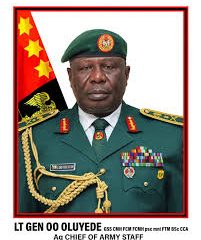

Eid-el-Kabir: CDS Urges Unity, Salutes Troops’ Sacrifices
ShareThe Chief of Defence Staff, Gen. Olufemi Oluyede, has called on members of the Nigerian Armed Forces to continue to embrace sacrifice, unity and patriotism...

Capital Market Adopts T+1 Settlement Framework June 1
ShareThe Nigerian capital market is set to transition to a T+1 settlement cycle effective Monday, June 1. The Director-General of...
US Report Indicts Fulani Militants over Nigeria’s Worsening Insecurity
ShareBy David Torough, Abuja A report by the United States Commission on International Religious Freedom (USCIRF), has revealed that an...
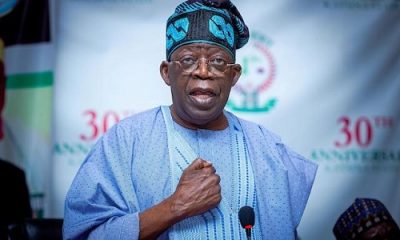

Children’s Day: Tinubu, Makinde Reassures Safe Return of Abducted Pupils
ShareBy David Torough, Abuja President Bola Tinubu and governors of Oyo and Ogun states on Wednesday intensified efforts to address...