
NEWS
US Report Indicts Fulani Militants over Nigeria’s Worsening Insecurity

By David Torough, Abuja
A report by the United States Commission on International Religious Freedom (USCIRF), has revealed that an estimated 30,000 armed Fulani militants are currently operating across Nigeria, worsening insecurity and religious freedom violations in several parts of the country.
The report, released in May 2026 and titled “Non-state Violators of Religious Freedom in Nigeria: Fulani Militants,” described the armed groups as some of the deadliest non-state actors responsible for violent attacks across the Middle Belt and Southern Nigeria.
According to the commission, the militants operate in clusters ranging from 10 to 1,000 fighters, carrying out coordinated assaults that have led to thousands of deaths, mass displacement and heightened religious tensions.
USCIRF stated that attacks linked to Fulani militants accounted for the highest number of deaths among religious communities in Nigeria in the past year, surpassing casualties attributed to organised insurgent groups and criminal gangs.
The report noted that although many attacks targeted Christian communities, Muslim communities had also suffered killings, kidnappings and raids.
It stated: “Violence by Fulani militants caused the highest number of deaths among all religious communities in Nigeria over the last year compared to attacks by organised insurgent groups and criminal gangs.”
The commission explained that while the groups lacked a central leadership structure, some factions occasionally collaborated with bandit networks and extremist organisations.
“These actors operate in a variety of contexts and with a multiplicity of likely aims and motivations,” the report said.
“While many Fulani militant groups wage independent attacks, others periodically coordinate with a wide range of actors, from conventional bandit gangs seeking financial enrichment to recognised terrorist organisations that espouse violent interpretations of Islam.”
USCIRF further disclosed that the militants often attack vulnerable rural communities at night, using motorcycles, automatic weapons and machetes to instill fear and force residents off their lands.
“They often wield machetes and descend on vulnerable communities during the night, eliciting terror as a way to force victims to quickly leave and to achieve greater control of desired land,” the report added.
According to the commission, attacks by Fulani militants and other armed groups have displaced at least 1.3 million people across the Middle Belt, with many victims now living in overcrowded camps lacking adequate security and sanitation.
The report highlighted several major attacks recorded in 2025 and early 2026, including killings in Benue and Plateau states.
It cited a June 2025 attack in Benue State in which at least 200 persons, including internally displaced persons taking shelter in a Catholic mission, were reportedly killed.
USCIRF also referenced the Yelwata massacre in Benue State, where more than 200 Christians, mostly women and children, were allegedly killed, while over 3,000 others were displaced.
The commission stated that some attacks were deliberately carried out during Christian religious celebrations to maximise psychological impact.
“Militant actors have often carried out operations during Christian holidays such as Christmas or Easter to further maximise the psychological impact,” the report noted.
It further disclosed that in February 2026, suspected Fulani militants killed at least 32 persons in Niger State and attacked Holy Trinity Parish in the Kafanchan Diocese of Kaduna State, killing three persons and abducting 11 others, including the parish priest, Father Nathaniel Asuwaye.
The report also documented attacks on Muslim worshippers.
According to USCIRF, armed men abducted an imam and seven worshippers from a mosque in Plateau State in February 2026 and later demanded a ransom of N16 million.
The commission said Palm Sunday and Easter attacks in April 2026 also left dozens dead across Plateau, Kaduna and Benue states.
“On Easter Sunday, Fulani militants reportedly killed five worshippers at two churches in Kaduna State while abducting 31 others,” the report stated.
USCIRF noted that conflicting narratives surrounding the violence had complicated efforts to establish the exact motives behind the attacks.
While some analysts attributed the violence to environmental pressures, land disputes and economic competition, others viewed the attacks as part of a broader campaign targeting non-Muslim communities.
“In fact, multiple and overlapping factors, including religion in many cases, likely spur Fulani militants to attack communities or individuals,” the commission observed.
The report also criticised the response of federal and state authorities, alleging that security agencies were often slow in responding to attacks.
“Victims have long reported that security forces are consistently slow to respond to attacks on their communities,” USCIRF stated.
It added that some Christian advocacy groups accused security operatives of showing bias toward Muslim communities during investigations and security operations.
The commission, however, noted that efforts were being made to address the crisis.
It disclosed that governors from 11 states launched an initiative in June 2025 to establish ranches for herders as part of measures to reduce clashes over grazing routes and farmlands.
At the federal level, the report linked renewed government actions to the October 2025 decision by the United States government under President Donald Trump to designate Nigeria as a Country of Particular Concern over religious freedom violations.
According to the report, President Bola Tinubu subsequently classified kidnappers and violent armed groups, including Fulani militants, as terrorists in December 2025.
USCIRF further stated that Nigerian security agencies rescued 309 kidnapped victims in January 2026 during operations in Kogi and Kwara states, while 129 suspected Fulani militants were arrested and 55 others killed.
The report also drew attention to the Miyetti Allah Cattle Breeders Association of Nigeria, which has faced criticism from some Christian leaders over alleged failure to curb militant activities and land invasions.
However, the association denied any involvement in criminality.
“We do not support, condone, harbour, finance or protect any form of criminality, extremism or violence,” the association said, according to the report.
USCIRF disclosed that the US Congress introduced the Nigeria Religious Freedom and Accountability Act of 2026 in February, proposing sanctions against the association over alleged involvement in severe religious freedom violations.
Despite ongoing security operations and peace-building initiatives, the commission warned that insecurity remained widespread across central Nigeria.
“As a result, central Nigeria remains entrenched in an intense, daily and seemingly perpetual crisis of insecurity,” the report concluded.
It added that the violence was likely to persist until both federal and state governments created conditions capable of guaranteeing the safe practice of religious freedom across affected communities.
By David Torough, Abuja
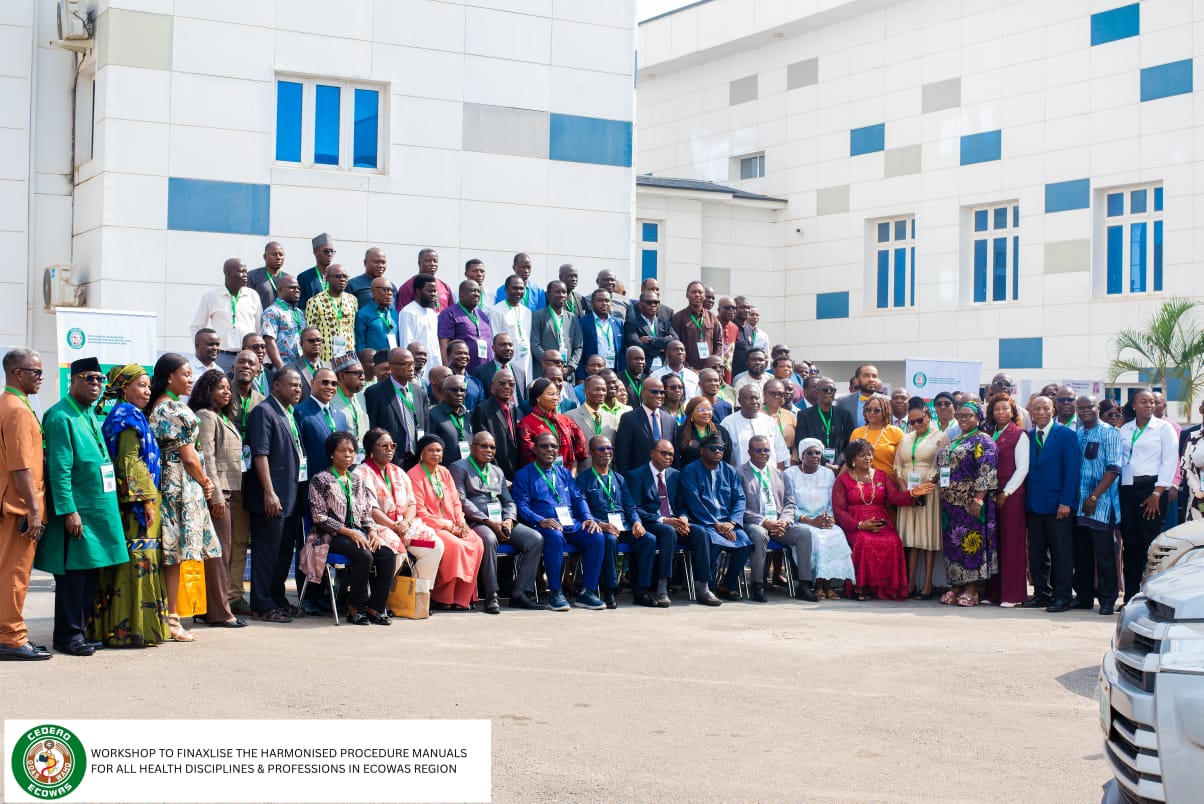
The West African Health Organization (WAHO) has commenced a regional workshop in Abuja to finalize procedural manuals for health professionals across the Economic Community of West African States (ECOWAS), in a move aimed at standardising professional practice, strengthening healthcare delivery and improving patient safety across the sub-region.
The workshop, which opened on Thursday, brought together health experts and stakeholders from across the ECOWAS region to review and finalize the manuals designed to provide common standards for the training, professional conduct and clinical practice of different categories of health professionals.
Speaking at the opening ceremony, the Coordinating Minister of Health and Social Welfare, Professor Muhammad Ali Pate, represented by Dr. Dakum Londji, described the initiative as a timely and strategic intervention towards strengthening health systems and harmonising the education and practice of health professionals in West Africa.
He commended WAHO for its leadership in advancing regional health cooperation, stressing that the effectiveness of any health system depends largely on the competence and professionalism of its workforce.
According to him, the procedural manuals will standardise knowledge, strengthen training, promote best practices and improve the quality of healthcare delivery across the region.
He explained that the manuals would provide clear, step-by-step guidance on what health professionals should be taught, how they should be trained and assessed, as well as standards for safe, ethical and evidence-based clinical practice.
The Minister further noted that the documents would address professional ethics, discipline, patient safety and continuous professional development.
He emphasised that regional harmonisation should not undermine the peculiarities of individual countries but rather establish a common foundation of excellence while respecting national contexts.
Pate urged participants to ensure that the manuals are evidence-based, practical and responsive to emerging healthcare needs, including digital health, emergency preparedness, patient safety and professional ethics.
He also reaffirmed Nigeria’s commitment to developing a competent, compassionate, ethical and innovative health workforce, describing human resources for health as a key pillar of the Federal Government’s Renewed Hope Agenda.
He challenged participants to ensure that the value of the manuals would be measured not by their production but by their adoption, implementation and eventual impact on healthcare practices and health outcomes.
The Minister formally declared the workshop open, assuring WAHO, ECOWAS member states, regulatory bodies, training institutions and development partners of Nigeria’s continued collaboration in advancing the regional initiative.
In his address, the Director-General of WAHO, represented by the organisation’s Head of Training and Human Resources for Health, Professor Joseph Olorunda, described procedural manuals as essential instruments for improving consistency, accuracy and compliance with professional standards in healthcare facilities and communities.
Delivering the Director-General’s message, Olorunda said the manuals would provide a central reference point for healthcare workers, improve communication among staff and minimise errors, misunderstandings and inconsistencies in service delivery.
He added that clearly defined procedures would also make it easier for newly recruited health professionals to understand their responsibilities and adapt quickly to workplace expectations.
The WAHO Director-General stressed that the development of competency-based procedural manuals for every category of health professional was critical to addressing the region’s healthcare priorities.
He noted that the documents would streamline processes, reduce unnecessary duplication, enhance productivity and improve patient outcomes while ensuring that healthcare practices remain aligned with evolving medical technologies and global best practices.
Olorunda urged participants to demonstrate commitment and teamwork in completing the exercise, noting that the harmonised manuals would strengthen service delivery, expand access to Universal Health Coverage (UHC) and facilitate the free movement of health professionals across ECOWAS member states.
He further explained that the initiative would promote stronger networking among health facilities, including hospitals, teaching hospitals, laboratories, training institutions and research centres.
He expressed appreciation to the Federal Government of Nigeria and the Minister of Health for their continued support to WAHO and regional health development.
Also speaking, the President of the Regional Council of Health Professionals, Professor Koffi Balogou, welcomed participants and expressed confidence in their ability to deliver quality work within the three-day workshop.
Balogou pledged that the experts would work collectively to produce well-developed procedural manuals, assuring the Minister, through his representative, of their commitment to completing the assignment successfully.
He called for cooperation, mutual respect, peace and reconciliation among participants, emphasising the importance of teamwork in achieving the objectives of the workshop.
The Abuja meeting represents an important step in WAHO’s efforts to strengthen regional health integration through common professional standards, improved workforce competencies and more effective healthcare systems.
Upon completion and adoption, the procedural manuals are expected to serve as a shared framework for improving the quality, safety and consistency of healthcare services across the ECOWAS region.
By Laide Akinboade, Abuja
The Christian Association of Nigeria (CAN) on Wednesday, disassociate itself from Archbishop Chivir Chianson and the group he represents, following attempts to present himself as the General Secretary of the Association and associate CAN with a purported church mobilisation in support of a political candidate ahead of the 2027 general elections.
This was contained in a statement issued by the CAN President, Archbishop Daniel Okoh in Abuja.
Okoh insisted that Archbishop Chivir Chianson is not the General Secretary of CAN and has no authority or mandate to speak or act on its behalf.
According to the CAN boss, “Furthermore, the group he represents has no official affiliation, working relationship or institutional connection with CAN.
“CAN has not authorised, endorsed or mandated the individual or his group to organise, promote or undertake any political mobilisation in its name. Any political position, endorsement or activity attributed to them must not be mistaken for the position or activities of the Association.
“As the umbrella body representing Christians across Nigeria, CAN has a responsibility to defend the interests of the Christian community and contribute to national development. It will not allow individuals or groups with no official relationship with the Association to appropriate its identity or exploit its name to advance political or personal interests”.
Okoh therefore reiterated the commitment of CAN, “The Association wishes to reaffirm its commitment to political neutrality as the country approaches the 2027 general elections. CAN will continue to engage national issues objectively and hold political leaders accountable, irrespective of party affiliation, without endorsing or mobilising support for any political party or candidate”.
He also urged the members of the public, particularly Christians, as well as media organisations, to disregard any claim of official representation of CAN by the individual or his group.
“We also call on TVC News and other media organisations to exercise due diligence in verifying the credentials and institutional affiliations of individuals presented as representatives of the Association.
“CAN will take all appropriate steps to protect its name, identity and institutional integrity against unauthorised representation and misrepresentation”.
The National Drug Law Enforcement Agency (NDLEA), arrested 1,200 suspects and seized more than 30 tonnes of illicit substances in Edo in 2025, according to its Chairman, retired Brig.-Gen. Mohamed Buba Marwa.
Marwa disclosed this on Wednesday in Benin during a visit to the palace of the Oba of Benin, Oba Ewuare II.
Marwa, who was accompanied by senior agency officials, including NDLEA commandants in Edo and Delta, sought the traditional ruler’s support in the fight against drug abuse and trafficking.
He said that more than 15 million Nigerians were abusing drugs, representing about three times the global average, with devastating consequences for young people, families and communities.
“The drug scourge has continued to devastate our youth, our families and our communities,” he fumed.
Marwa said the problem affected all communities, including the Benin Kingdom, and required a collective response involving traditional institutions, religious organisations, civil society groups, government and the media.
“But most importantly, the traditional institution, which is arguably the most respected institution in Nigeria today,” he said.
He explained that the NDLEA’s responsibilities included enforcing drug laws and providing counselling, treatment and rehabilitation for people struggling with drug dependence.
Marwa also highlighted alternative development as a new pillar of the agency’s drug control strategy aimed at encouraging cannabis farmers to cultivate legal crops such as cassava, yam and maize.
He said cannabis accounted for 75 per cent of the 16 million kilogrammes of illicit substances seized by the agency nationwide in the past six years.
According to him, the initiative seeks to help farmers abandon illicit cultivation for legitimate livelihoods, with government support for infrastructure, including roads, schools, clinics and water supply.
Marwa said the programme had commenced as a pilot project in three communities in Ondo State, with the possibility of extending it to Edo.
He added that he had presented the proposal to the Edo governor, who welcomed the initiative.
The NDLEA chairman sought the Oba’s blessing and support in encouraging communities across the kingdom to shun drug abuse and trafficking.
Responding, Oba Ewuare II commended Marwa for his efforts against drug abuse and other social problems.
The traditional ruler said he had a suggestion for improving the agency’s operations and would communicate it privately to Marwa.
“I have a suggestion I will make in writing that I will not want to say here in public to NDLEA, as my own thinking on how to improve the work of NDLEA,” he said.
The Oba also acknowledged the importance of collective efforts in addressing societal challenges and wished Marwa and his delegation well.(NAN)



WAHO Advances Regional Health Integration Through Standardised Procedure Manuals
ShareBy David Torough, Abuja The West African Health Organization (WAHO) has commenced a regional workshop in Abuja to finalize procedural...


2027 Elections: CAN Disowns Man Claiming its General Secretary
ShareBy Laide Akinboade, Abuja The Christian Association of Nigeria (CAN) on Wednesday, disassociate itself from Archbishop Chivir Chianson and the...

INEC Seeks UN Partnership in Tackling Disinformation on 2027 General Elections
ShareThe Independent National Electoral Commission (INEC) has called for the partnership of the United Nations in combating disinformation in the...

2025: NDLEA Arrests 1,200, Seizes 30 Tonnes of Drugs in Edo – Marwa
ShareThe National Drug Law Enforcement Agency (NDLEA), arrested 1,200 suspects and seized more than 30 tonnes of illicit substances in...

JAIZ Bank Denies Involvement in N104m Investment Fraud in Jos Branch
ShareBy Tony Obiechina, Abuja Jaiz bank has denied involvement of alleged N104m fraud in its Jos branch. In a statement...

Trump-backed Republican Senate candidates pay the price
SharePresident Donald Trump asked voters to pretend he was on the ballot in the midterm elections and handpicked Republican candidates...


Court to Deliver Judgment in El-Rufai’s N10bn Rights Suit
ShareThe Federal High Court in Abuja has fixed Dec. 8 for judgment in a N10 billion rights suit filed by...
Women and Land: Why Nigeria’s Land Administration Cannot Afford to Leave Half the Nation Behind
ShareThe ongoing conversations on land reform in Nigeria tend to focus on speed, cost and documentation. Seemingly disregarded is the...


Caverton Revenue Rises to N20.74bn
ShareBy Tony Obiechina, Abuja Caverton Offshore Support Group Plc recorded a 1.4 per cent increase in revenue to N20.74bn for...

Tinubu Slashes External Loan Request to $7.7bn, Seeks Senate Nod
ShareBy David Torough, Abuja President Bola Tinubu has revised the Federal Government’s 2026 external borrowing proposal, seeking Senate approval to...